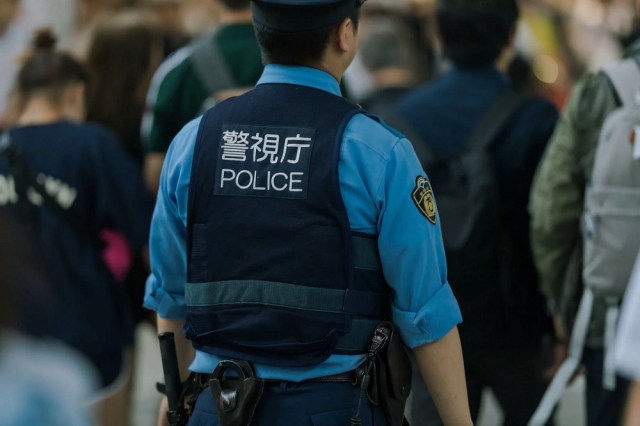

Seems like the people doing on-the-street immigration checks should know what immigration documents look like, doesn’t it?
As we’ve talked about before, police officers in Japan sometimes engage ins something called shokumu shitsumon. Though it literally translates to “type of employment questioning,” in actuality shokumu shitsumon is a police tactic in which officers will stop someone on the street and ask them to show their ID and answer questions such as what they’re doing in the neighborhood.
The rationale is that this gives officers a reason to directly engage with people whose behavior or appearance they find suspicious, which could then lead to would-be lawbreakers tipping their hand and the police stopping them before they commit any foul deeds. To be fair, there have been cases of shokumu shitsumon doing just that, but the practice is also seen as an intrusive hassle by law-abiding citizens who get stopped and questioned for arguably arbitrary reasons. Shokumu shitsumon is especially unpopular among foreign residents of Japan, as being made to show ID can also double as an on-the-spot accusation of violating immigration policy, as the identification that expats are asked to show is their residence card, or zairyu card, as it’s called in Japanese.
Annoying as it may be to be stopped, shokumu shitsumon is legally allowed, and so usually the smoothest way to resolve the situation is simply to show your residence card in a non-confrontational manner. That’s what a Nepalese man did on Thursday when he was stopped by officers from the Tokyo Metropolitan Police in the Shibuya neighborhood, and then they arrested him and took him into custody anyway.
So why did he get arrested? Had his visa expired? Was his card a forgery? Nope. The problem was that the officers who hauled him in didn’t know what Japan’s new residence cards look like.
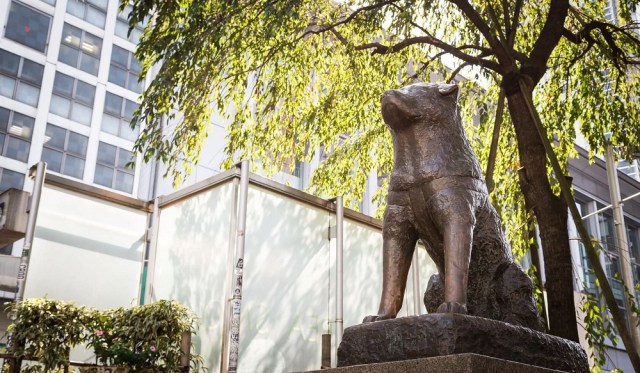

There are a lot of ways in which the details get stupider from here, so let’s go step by step. First of all, the incident didn’t occur in some shady back alley, late at night, where they only people lurking around would be those up to no good. The Nepalese man, who is in his 20s, was walking through the Hachiko Plaza in front of Shibuya Station at around 10:10 on Thursday morning. You might recognize this as one of the most crowded landmarks in all of Japan, and also one located right outside a major rail hub.
With this being a time of day when it’s not at all unusual for there to be a steady stream of commuters, tourists, and shoppers passing through the plaza, surely the Nepalese man must have done something to draw suspicion to himself, right? According to the officers who stopped him, after they noticed the Nepalese man looking at them, they saw him then look down at the ground, and so they decided to question him.
“Person looked away from us” is a fairly common shokumu shitsumon justification, as mentioned by an officer we previously discussed the topic with. It’s not like maintaining steely eye contact with a cop until he blinks would look any less suspicious, though, so in this case, it doesn’t seem like there was anything the Nepalese man could have done to avoid getting questioned once he’d looked at the officers and they looked back.
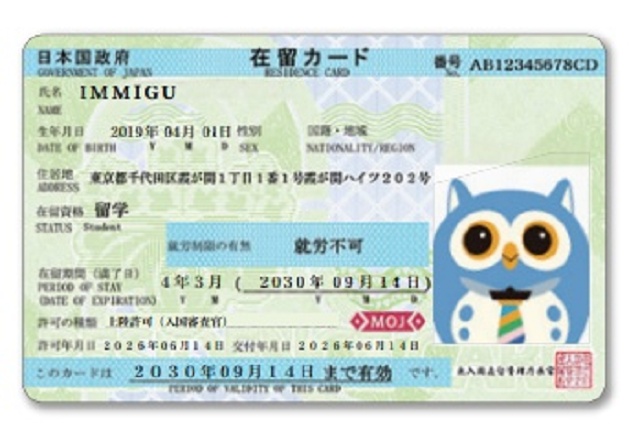
The officers approached the man and his companion, another Nepalese national, and asked them to display their IDs. They found no problems with the friend’s residence card, which, for reference, followed this format.
▼ Yes of course the official example image from the Japanese government’s Immigration Services Agency has a cute mascot character.

But when the police looked at the soon-to-be-arrested man’s card, it was different, with a pink-and-purple color scheme. The fonts, layout, and listed information didn’t match the format shown in the example above either, so they declared it a fake.
This came as a surprise to the Nepalese man, who said that he’d just received his residence card at work a few days ago, after his workplace handled the necessary processing for him. The two officers who’d stopped him didn’t buy the story, though, and they called in for backup, having two members of the detective division come to the scene and check things out. They arrived about 20 minutes after the on-the-street questioning had started, and all four law enforcement officers agreed that the card the man had shown was a fake. They didn’t tell him to head to the immigration office and sort the issue out, either, instead placing him under arrest right then and there, taking him into custody, and transporting him to the Shibuya Precinct police station.
It was only after they got to the station that another officer, one much more qualified to perform immigration status spot checks, stepped in and told the four officers that the man’s residence card is perfectly valid, because the Immigration Services Agency changed the card’s format earlier this month.
▼ The new residence card
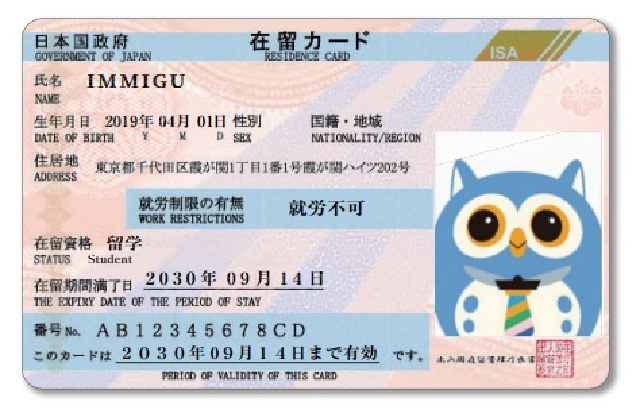

There are actually two new residence card formats, which the Japanese government began issuing as of June 14. The one shown above functions only as a residence card, and foreign residents also have the option of applying for a “specified residence card,” or tokutei zairyu card, which combines their residence card and My Number Card, a government-issued numbered ID card similar to a Social Security Card which is also used for public health insurance verification. It hasn’t been explicitly reported if the Nepalese man was carrying the new residence card or the new specified residence card, but regardless, he had shown proper documentation to the officers.
▼ Specified residence card…and yes of course the My Number system also has a cute mascot character (it’s the bunny rabbit in the upper right corner).
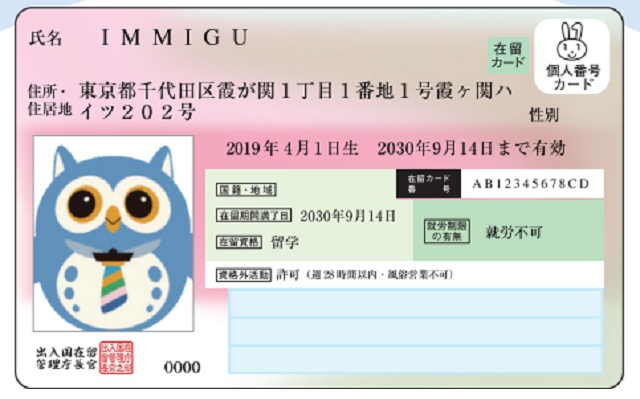

With the fifth police officer to declare himself judge of the man’s immigration documents finally actually being someone who knows what they look like, the man was released from custody, with the department’s apologies, at 11:32 a.m., roughly one hour after being arrested in one of the country’s most iconic landmarks. Naotaka Hayakawa, head of the Shibuya Precinct’s General Affairs Division, later issued a statement saying “We wish to offer our deepest apologies. We will provide thorough guidance to officers so that this does not happen again.”
For the record, the older-format residence cards remain valid as well.
The Tokyo Metropolitan Police Headquarters claims that it sent out multiple notifications about the new residence card formats to individual precincts between June 5 and 12. Apparently, though, that information didn’t properly trickle down to everyone, which is a huge problem when rank-and-file patrolmen are in a position to arrest an innocent person based on their lack of knowledge.
Source: Asahi Shimbun, Tokyo MX, Sankei Shimbun, Mainichi Shimbun
Top image: Pakutaso
Insert images: Pakutaso, Takasaki City
● Want to hear about SoraNews24’s latest articles as soon as they’re published? Follow us on Facebook and Twitter!