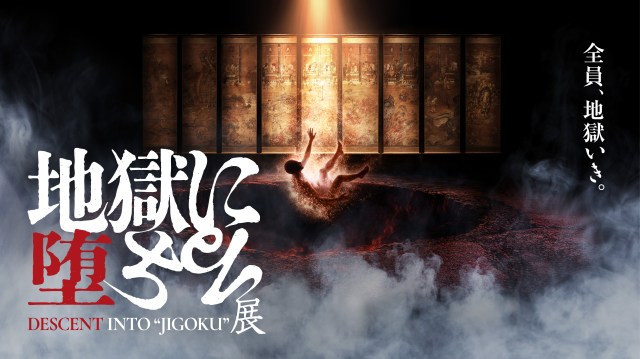

It’ll be a hell of a good time.
The concept of hell has existed in Japan for a long time, but it’s a much more nebulous one compared to the clear-cut fire-and-brimstone version of Western countries. For example, saying things like “this job is hell” to a Japanese person is perfectly normal, but saying “it’s hot as hell” might come across a little weird as there is no immediate preconceived notion of hell being hot as opposed to also being cold, sharp, dark, urine-soaked, bloody… you get the idea.
Two versions of hell make up Japan’s overall view of it, the earliest being the Shinto concept of Yomi, which was more of a dark and foreboding place than a “hell” in the sense of people getting punished for their transgressions. But it still wasn’t really a nice place to be either, so it would be fair to call it a prototypical Japanese hell.
Later on, around the sixth century, Buddhism was introduced to Japan by way of China and Korea. By this time, China had really fleshed out an extremely intricate system of hells, with some counts in the tens of thousands and potentially an infinite amount beyond that, as each hell is tailored to an individual’s karmic infractions.
▼ One of the more comprehensive representations of Japanese hell can be seen in the Great Hell Painting (Dai-jigoku-e), a set of hanging scrolls kept in Chogaku Temple in the city of Tenri, Nara Prefecture.
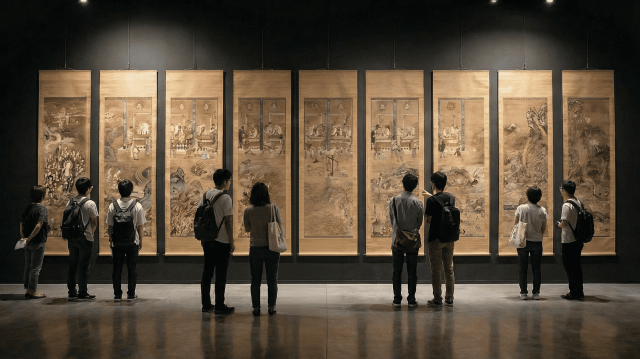
Japanese Buddhism took these concepts and crafted an admittedly vague layout of this hell, also known as “Jigoku” to use the Buddhist terminology. It is so vague and convoluted that not many people in Japan really understand what it entails exactly. So to help with that, the Descent into Jigoku Exhibition Production Committee was assembled and created a traveling art exhibit to show how hell has been traditionally seen in Japan.
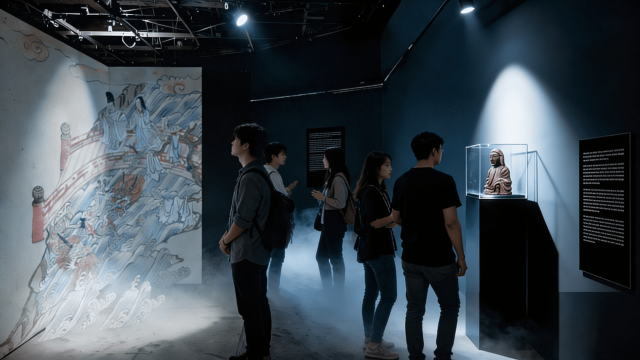
The exhibition takes guests through the process of death and the afterlife in order, starting with Kusozu (the nine stages of decay). The stages start with the last moments of life, then go through all the ideal metal band names such as “distention,” “exudation of blood,” and “putrefaction.” According to some historical texts, viewing these stages of decay either directly or through imagination can help one understand the impermanence of the physical form or resist urges of lust.
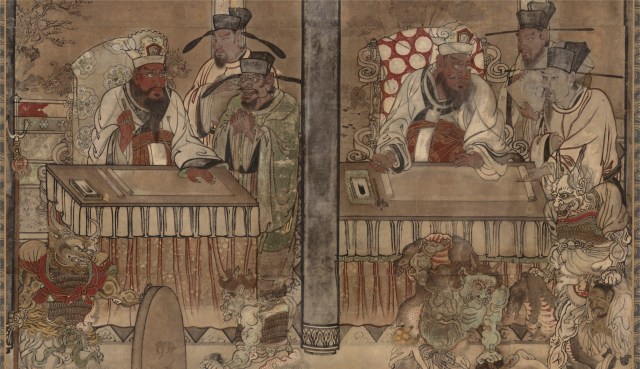
From there, you can visit Chu-u, also known as Bardo in Buddhism, which is a transitional space one goes to after death and before rebirth. Some schools say this is space in which you might encounter the Ten Kings of Jigoku who ruthlessly judge your mortal deeds and, in an almost comically bureaucratic fashion, assign you to the appropriate level of hell.
▼ Just another manic Monday at the office for the Ten Kings of hell.

One bright side to Buddhist hell is that it’s rarely eternal, unless you did something truly heinous. The purpose of hell here is to burn away your sins until your soul is pure enough to be reborn again. So don’t panic too much about that library book you returned late. You’ll only have to climb the Hell of the Mountain of Knives for one… two days tops.
The exhibition also shows you the Eight Great Hells, also known as the Eight Hot Hells as fire searing your flesh plays a big part in most of them. They involve a range of tortures from having animals devour your flesh and being repeatedly murdered to getting molten metal poured into your mouth and/or butt.
▼ This 13th-century work shows the bottom level of the Eight Great Hells. After death, one would fall for 2,000 years before reaching it, at which point they slam into that iron mesh and get diced up on impact. However, this being hell, they’re instantly regenerated and constantly seared by the unending fire as iron dogs and wardens with clubs relentlessly attack them. The wardens and dogs are a little hard to make out in all that fire, but you can see them at the bottom of the picture.
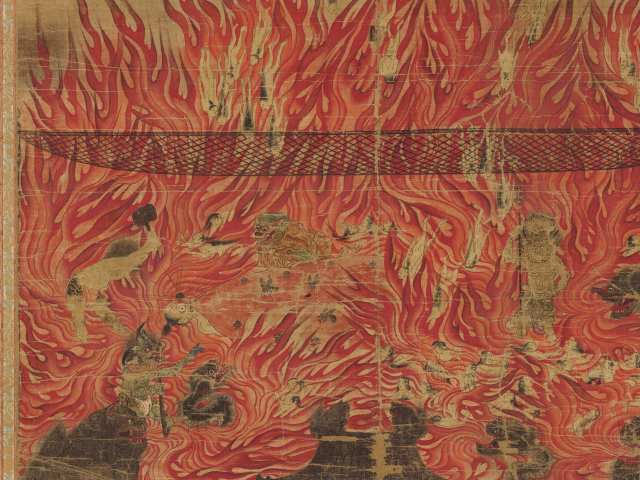

This would be the closest equivalent to a Western concept of hell, but many forms of Buddhism aren’t limited to just that. There’s also the Eight Cold Hells, which, as you can probably guess, involve freezing to death in a variety of ways, only to be instantly regenerated and forced to do it all over again. There are also a lot of sub-hells with more niche torture where dogs have fire for teeth, giant birds drop you from great heights, and chunks of iron rain from the skies.
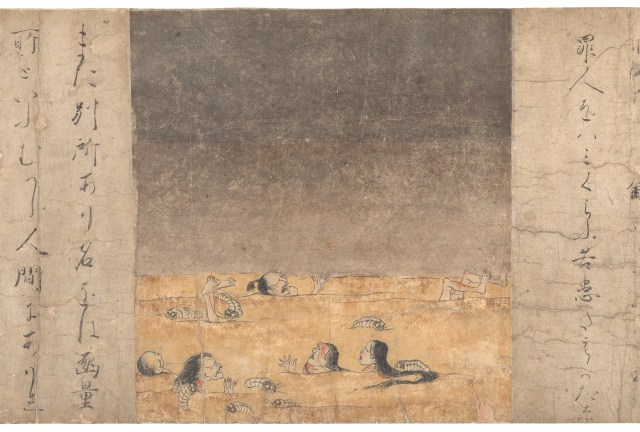
▼ This work from the 12th century depicts the ancillary hell known as The Hell of Excrement, in which those who lived a spiritually corrupt life of greed must wade through a neck-deep pool of feces and urine while beset upon by giant maggots with needles for teeth.

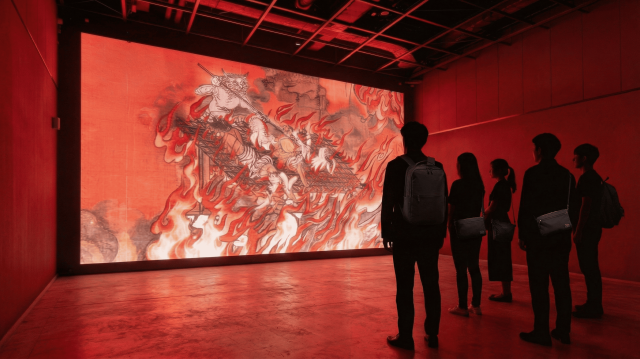
The Descent into Jigoku exhibition presents these concepts using various works of art developed throughout Japan’s history. However, since some of these works have been deemed national treasures and important cultural properties, they are strictly regulated. Because of that, many pieces have been digitally recreated by the visual effects and spatial design wizards at KOO-KI using projection mapping and animation to make the wardens of hell literally leap off the page at you.
▼ “Better flip that person on the left! They’re a little overdone on that side.”
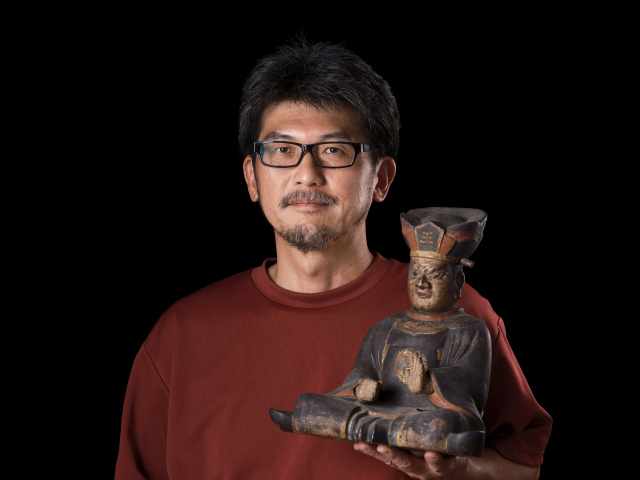
On the other hand, some real works will be present too, such as a statue of King Emna, one of the Ten Kings of Jigoku, owned by the exhibition’s supervisor and prominent expert in Japanese hell, Masahiko Tamura.
The exhibition’s next stop will be the Namba Parks Museum in Osaka from 28 November to 27 December. Admission is 2,800 yen ($18) for adults, 1,500 yen for students, and children under 3 get in for free, but I’m not sure how frequently or vividly the whole getting molten lead poured into the anus thing is depicted there, so parental discretion is advised.
Exhibition information
Descent into Jigoku / 地獄に堕ちる展
Namba Parks Museum
なんばパークスミュージアム
Osaka-fu, Osaka-shi, Naniwa-ku, Nambanaka 2-10-70
大阪市浪速区難波中 2-10-70 なんばパークス7F
Open: 28 November – 27 December
Hours: 11 a.m. – 7 p.m.
Admission: Adults – 2,800 yen, Elementary to High School Students – 1,500 yen, Children 3 and Under: Free
Website
Source, images: PR Times
● Want to hear about SoraNews24’s latest articles as soon as they’re published? Follow us on Facebook and Twitter!