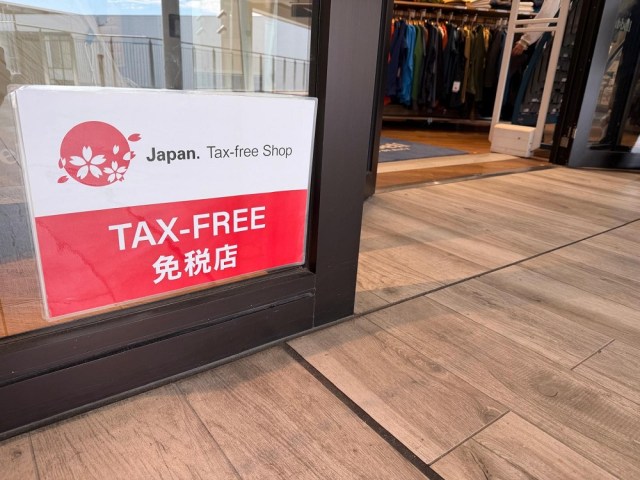

What to be aware of as Japan tightens the rules for tourists saving 10 percent on their purchases.
As of November 1, Japan has ended its tax-free shopping system for foreign tourists. Up until now, non-residents making purchases in Japan could avoid paying sales tax when shopping at participating stores by showing their passport as long as their total purchase price came to 5,000 yen (US$31.50) or more. As sales tax in Japan is generally 10 percent, and most major retailers, as well as a great many smaller ones, offered this service, overseas visitors to Japan were able to save a considerable amount of money, especially with shopping having become an especially popular activity for foreign tourists benefiting from the weak yen.
The tax-free arrangement has now been replaced by a tax-refund system. Foreign tourists will now be required to pay sales tax in full at the time of purchase, and then apply for the amount to be refunded prior to their departure flight from Japan.
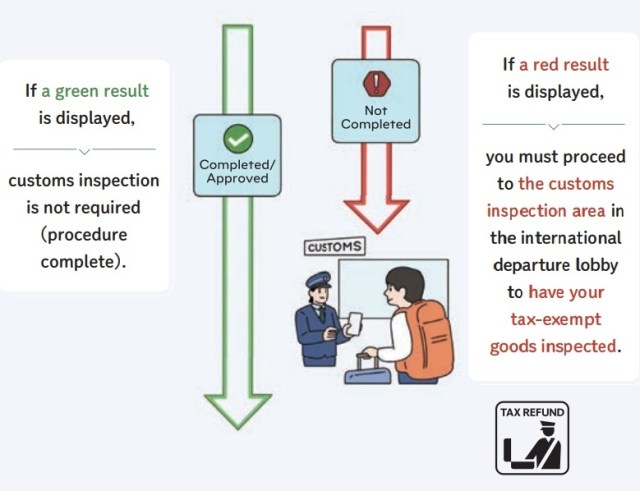
Under the new system, travelers will still need to show their passport when purchasing items at retailers. Then, at the airport or seaport that you’re leaving Japan from, you’ll need to complete a tax refund application process at a kiosk or electronic self-service terminal. After showing your passport, the customs agent or terminal screen will inform you whether or not your application requires an additional inspection, and if it does, you’ll need to show all of the items that you’re seeking a tax refund for. In other words, you’ll need to complete the application process, and the inspection too, if required, before checking in your luggage.
▼ Self-service terminals will display either a green or red notice after you present your passport.

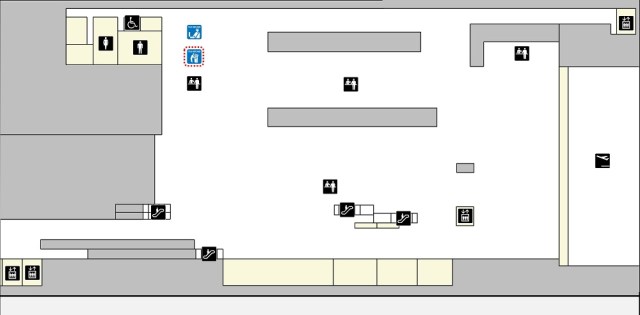
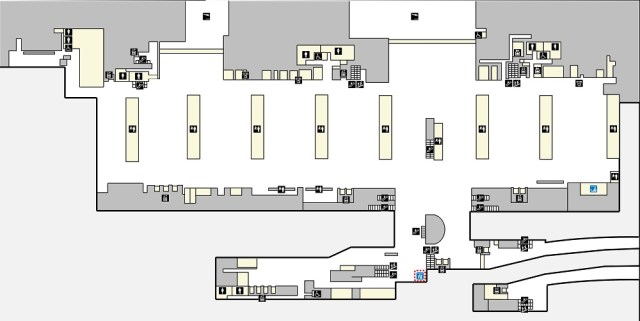
Maps showing the locations of the terminals and inspection areas inside Japan’s major airports can be found online here.
▼ Terminal and inspection areas (marked in blue) inside Haneda Airport’s Terminal 2, International Flights Area (3rd floor)

▼ Haneda Airport Terminal 3 (3rd floor)

In addition, travelers departing from Narita, Haneda, Kansai, Chubu Centrair International Airport, Fukuoka, New Chitose, and Naha airports can perform the application online through the Visit Japan Web website. However, doing so requires being connecting to a dedicated Wi‑Fi network for the procedure within the international departure lobby, so you’ll need to be at the airport either way.
Once the procedure is complete, you can designate whether you wish to receive your refund via your credit card company or a bank transfer. The Japan Customs website does not mention a timeframe for refund processing, but a few weeks is likely, so you’ll want to make sure you’re not counting on that money for anything critical like rent or groceries.
▼ Narita International Airport Terminal 1 (4th floor)
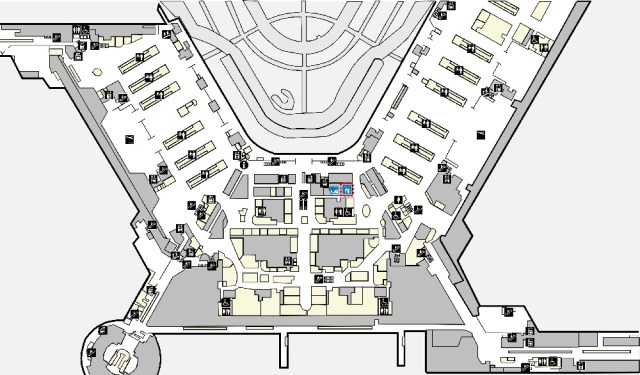

▼ Narita International Airport Terminal 2 (3rd floor)
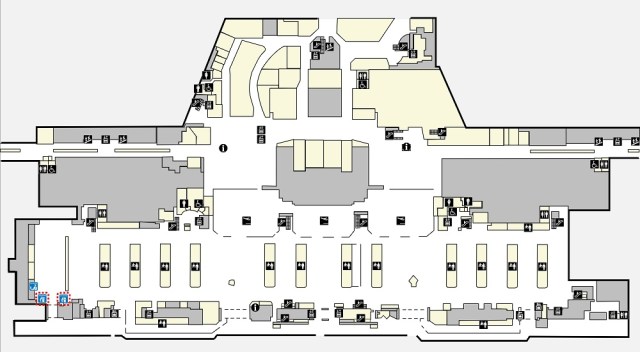

So what prompted this change? Well, Japan’s sales tax is technically a “consumption tax,” and proponents of waiving it for foreign tourists figure that if the items aren’t going to be used/consumed in Japan, there’s no need to levy a tax on those purchases, which makes prices lower for tourists and helps boost sales for retailers. Japan’s tax-exemption system was basically operating on the honor system in that regard, though, which left the door open for dishonorable types to pass off or resell the tax-free items within the country. Changing to a tax refund system gives customs officials a way to confirm that the items really are going to be taken out of Japan before the purchasing tourist benefits from the untaxed price, and while not all travelers requesting a refund will be subject to inspection, it’s probavbly something you should be prepared for if you’ve done a lot of shopping during your trip.
Something to be careful about regarding the tax refund system is that all items purchased at the same time (i.e. on the same receipt) are counted as a single, unbreakable unit. So, for example, if you purchase five items at the same time, and you get flagged for an inspection, you have to be able to present all five of those items to qualify for the tax refund for that purchase. If you’re missing even one, you won’t be eligible for a refund for the other four item, either. Likewise, if you purchase, say, multiple bottles of skincare lotion and opened one of them to use during your time in Japan, you won’t be able to claim a refund for the others unless they were purchased as a separate transaction/on a separate receipt. In addition, tax refund requests must be made within 90 days of an item’s purchase, though since 90 days is the standard tourist visa length for international visitors to Japan, this won’t be an issue for most shoppers.
▼ Narita International Airport Terminal 3 (2nd floor)
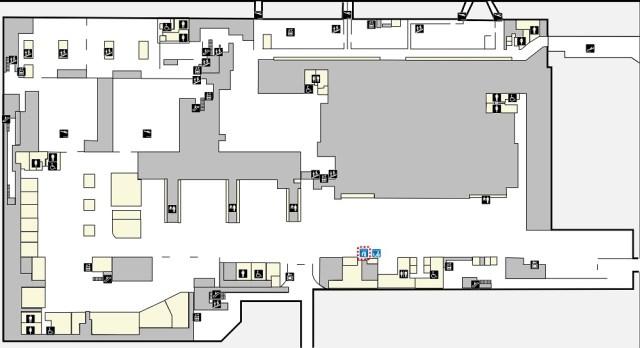

Finally, under the new regulations it is the traveler’s responsibility to complete the procedure within time to check in for their flight. If you don’t, there’s no framework for requesting refunds at a later date, so if you stand to get a lot back, you’ll want to make sure to get to the airport early, though with the system being brand-new, there are not yet any official guidelines as to how long the procedure will take.
Source: Japan Customs (1, 2, 3, 4)
Top image ©SoraNews24
Insert images: Japan Customs (1, 2)
● Want to hear about SoraNews24’s latest articles as soon as they’re published? Follow us on Facebook and Twitter!