

It sounds like the worst Pokémon ever, but it’s actually an important medical breakthrough that will benefit humans.
There are certain wonders of the future that mankind has been dreaming about for years but which have yet to materialize. Flying cars. Self-cleaning houses. Glowing sperm.
Oh, what’s that, you haven’t been fervently waiting for our world’s brightest minds to create history’s brightest sperm? Well it’s here anyway, thanks to researchers at Japan’s Hokkaido University, who have successfully created a mouse with sperm that glows.
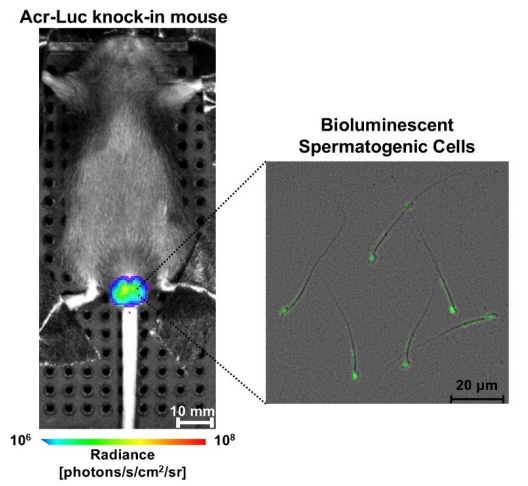

“Mice that can bust a nut in fancy colors” might sound like it’s primed to shoot past “cloned amusement park dinosaurs” as the new best example of scientists being so preoccupied with whether they could create something that they forgot to ask themselves if they should, but the team behind this genetic advancement says there’s actually a perfectly valid reason to give mice glowing sperm,
▼ This is all sounding highly unorthodox, Hokkaido University, but let’s see where you’re going with this…


Mice are often used in male reproductive health studies, including investigating the possible negative effects of new medicines, chemicals, and treatments such as radiation therapy on sperm production. However, with shrink rays being another one of those sci-fi technologies we’re yet to develop in real life, it’s not like researchers can actually go for an in-person look at what’s going on inside mice balls, so they have to rely on different methods to estimate whether or not any damage has occurred. One method is simply to have the male mouse mate with a female after he’s been exposed to the substance/treatment being tested and see if she gets pregnant. This is imprecise and time-consuming, though, since not every romantic mousy encounter is guaranteed to result in babies even if the male’s sperm count and quality are perfectly healthy.
The alternative? Remove the male’s testicles and dissect them. Aside from the debate of whether this constitutes animal cruelty, removing the testicles is, of course, a one-time-only technique, thus requiring researchers to use more animals for testing and also eliminating the ability to see if the diminished sperm production was a permanent effect or something that could recover with time or treatment. The pregnancy-check and dissection methods are also both incapable of telling researchers precisely when the damage began occurring.
Now that we know this, the idea of giving a mouse glowing sperm doesn’t sound so craz- …, no, no, it still sounds pretty crazy, but it starts to sound useful too, because it will allow researchers to accurately determine whether sperm production has been affected without needing to dissect, and so it’ll also allow them to track the same mouse’s reproductive health to see what, if any, recovery is possible.
▼ Without glowing sperm, there’s a pretty good chance this guy wouldn’t have made it through 84 weeks of testing and still be in possession of his nuts.


The Hokkaido University team was able to achieve this breakthrough by administering lucifern, a bioluminescent substance, to the mouse’s cells, which is then passed on to the sperm which are produced, resulting in a brighter glow when sperm production is highly active, and a dimmer illumination as production drops. The goal of the project is both to improve understanding of male reproductive health and apply that knowledge to human medicine and treatments, and also to reduce the number of animals necessary for testing, as well as more humane treatment test subjects that are used.
Since we’ve already gone this far into our discussion of glowing sperm, we may as well be as thorough as possible, though they’re both still question marks. First, while the photos seen within this article were taken with a special camera that can detect the light from the sperm from outside the mouse’s body, it’s not clear if external ejaculations from such a mouse would have a glow that can be perceived with the naked eye. Also, the researchers don’t address whether or not the same technique could be used to grant glowing powers to human sperm, so we’re probably at least a few years off from that becoming a new adult video genre in Japan.
Source: Nazology via Jin, Japan Science and Technology Agency/Hokkaido University (1, 2), MedComm
Top image: Pakutaso (edited by SoraNews24)
Insert images: Japan Science and Technology Agency/Hokkaido University, Pakutaso
● Want to hear about SoraNews24’s latest articles as soon as they’re published? Follow us on Facebook and Twitter!