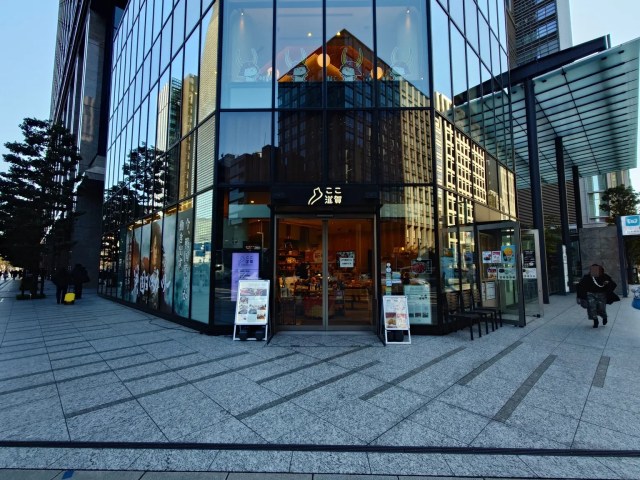

We found one antenna that gets a ten, uh…
A unique kind of shopping experience in Japan can be found at its “antenna shops.” These are stores run by governments in other prefectures, as a way to show off particularly good products that can be found there, especially when it comes to food, and give local producers a chance to get footholds in other markets.
When in Tokyo, you can find an antenna shop for nearly every prefecture in Japan within a one-kilometer radius of Tokyo Station. Our writer Tasuku Egawa found one such shop just outside Nihonbashi Station and decided to check it out. It’s called CocoShiga, and as its name suggests, it deals in goods from Shiga Prefecture, a relatively rural neighbor of Kyoto Prefecture.
A lot of people might be hesitant to go to antenna shops, mainly because they have no idea what they should get from the range of often unknown merchandise. Realizing this, CocoShiga had a large sign inside, listing the five most popular items and four things that are in season.
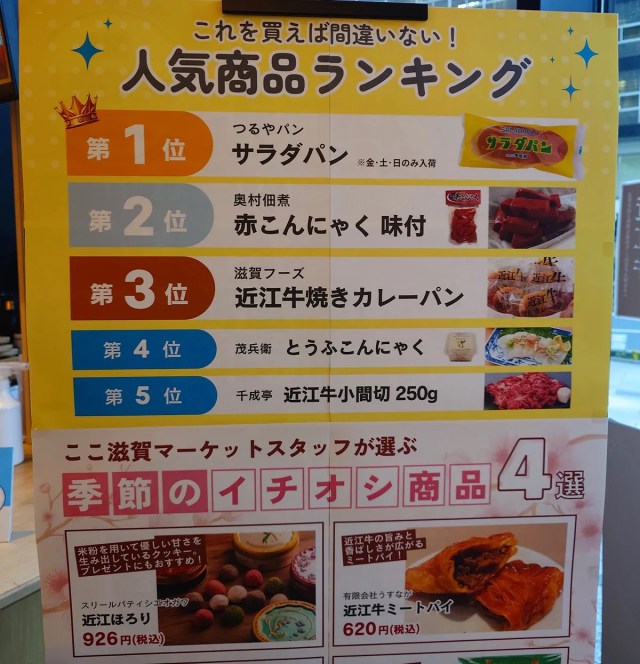

Tasuku wasn’t about to be a slave to knowledgable signs, but it was certainly a good starting point. He decided to go with the first and second most popular items because they looked good, and then browsed around for other things that piqued his interest.
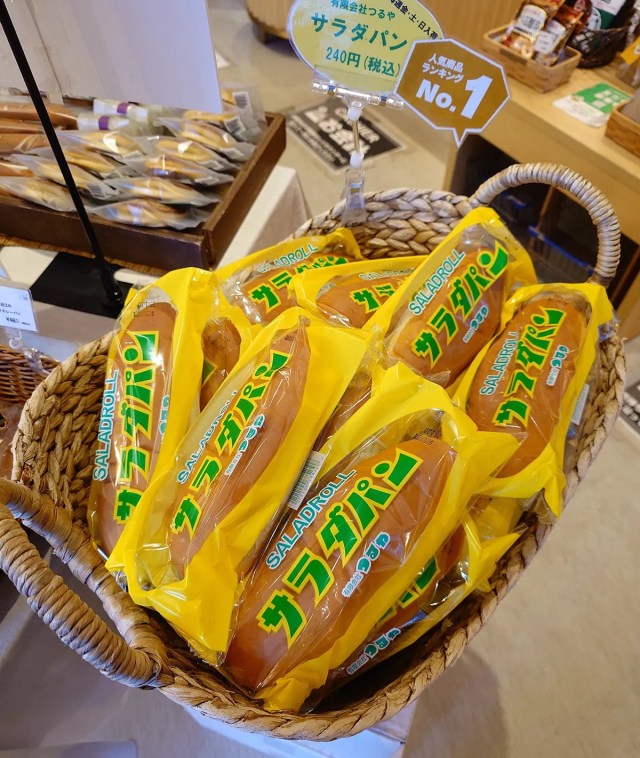
The most popular item out of Shiga Prefecture was Salad Bread, which seemed like it was bread meant to be eaten with salad. Tasuku had heard of it from TV segments, but knew little about it. The very reasonable price of 240 yen (US$1.50) likely contributed to its reputation.

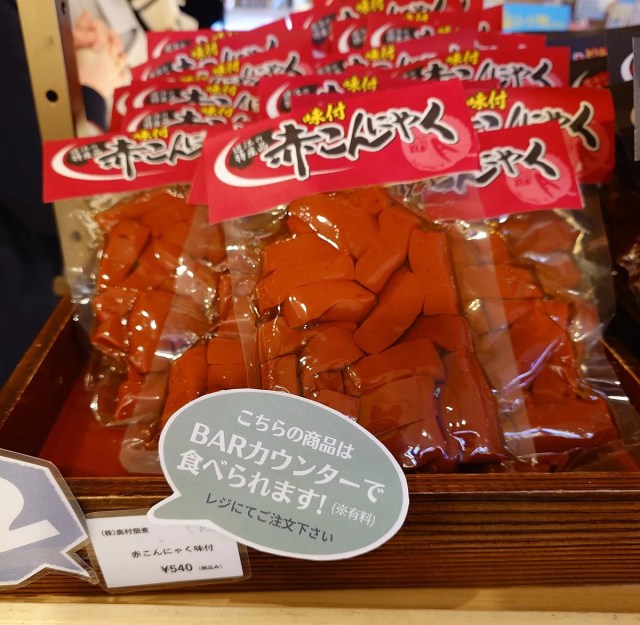
In second place was Flavored Red Konjac for 540 yen ($3.50). Konjac is a gelatinous plant-based food that’s usually grey or white, but perhaps only in Shiga can you find it with such a deeply red color. According to the display, it makes for a great bar snack.

To round out his Shiga shopping, our writer picked up a couple other items that looked good and made his way home. While in the store, he also noticed that there was Omi beef, one of the most prestigious brands of wagyu around. It was a little too steep for him, but he was surprised to see some customers ordering it like the deli counter of any old supermarket.


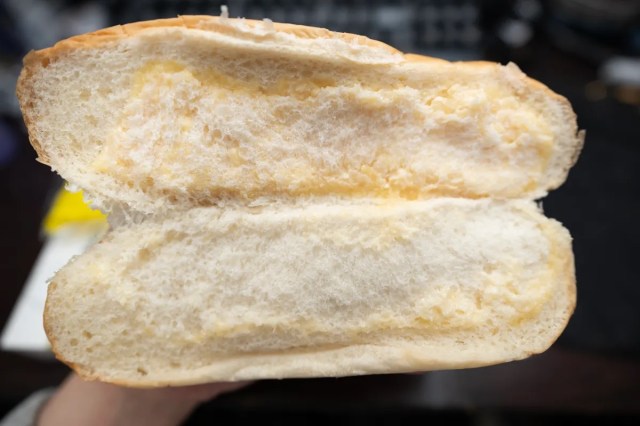
When he got home, Tasuku decided to dig into the Salad Bread first. It’s simple in design, being a plain koppe pan roll with mayonnaise and pickled daikon radish inside. But despite this, there was a strangely exotic taste, and the combination of mayo and daikon was surprisingly good. He could easily see why it was a hit, and finally understood that the name is a reference to the mayo, as in potato salad.
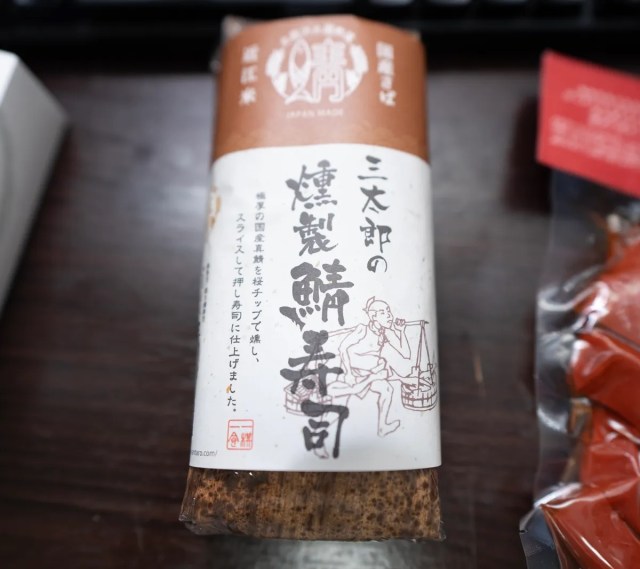
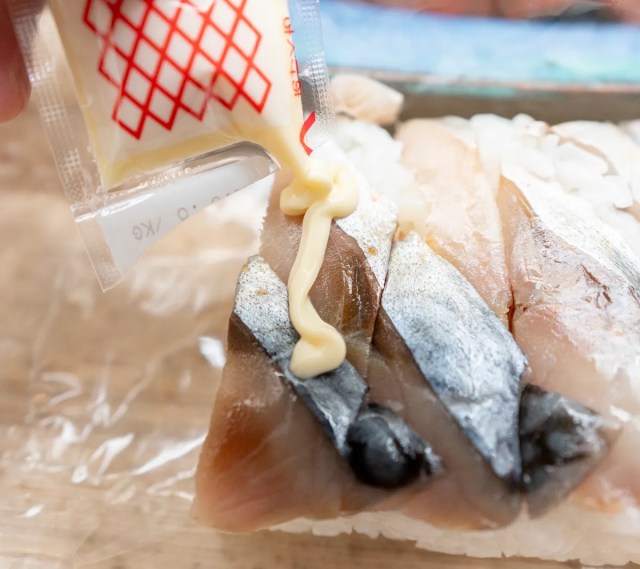
Next, he opened up a pack of Santaro’s Smoked Mackerel Sushi that he bought for 1,404 yen ($9).

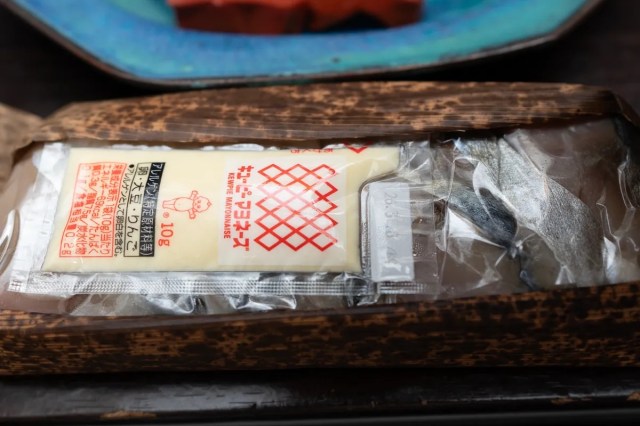
That one was pretty self-explanatory, but what made it interesting was a little packet of mayonnaise tucked into the package. Apparently, that’s how it’s eaten in Shiga Prefecture.
After opening, he was hit by a delicious, smoky aroma. The mackerel was cut in a prosciutto style and was apparently simmered in wine as well. The smoking also gave the fish a firmer texture and very bold flavor that really hit the spot.
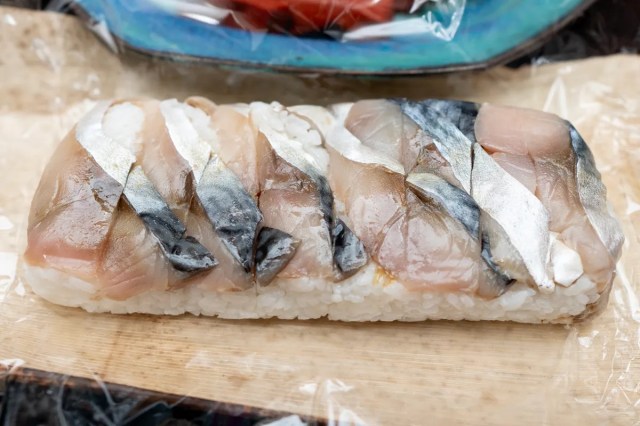
Tasuku also tried some with the mayonnaise. It helped to tame the powerful flavor and gave it a sweet tinge that was also very nice.
Then came the Flavored Red Konjac. The deep red coloring of this snack is achieved by ferric oxide, which you might recognize by its more common name of “rust.” While that might sound strange, it’s actually a very common food coloring used in lots of candies, baked goods, pet foods, and more to provide brownish, yellowish, and reddish tinges as needed. It’s not like they scrape it off a hubcap or anything, either. It’s made under very sanitary conditions.
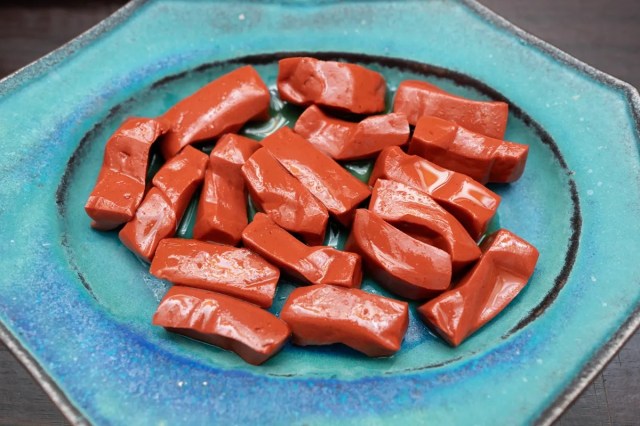
When used on konjac, it takes on the appearance of raw meat. That only makes the pleasantly sweet teriyaki taste of sugar and soy sauce much more of a surprise. There was also just a hint of chili pepper for a very slight zing. Actually, a full-on spicy version was also for sale, but Tasuku felt these would be suitable for anyone’s taste.
Last but not least was the Umoregi, in three-packs for 594 yen ($3.80) at CocoShiga. At the time our writer visited the shop, a seasonal version with the flavor of kinako roasted soybean was available, so he bought one of those and a regular matcha-flavored box.
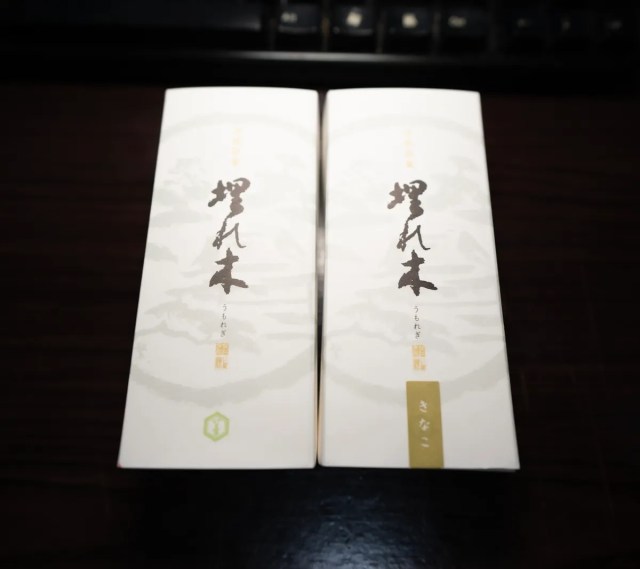
They have a coating of wasanbon sugar, which has a consistency somewhere between icing sugar and the kind you might put in your coffee.
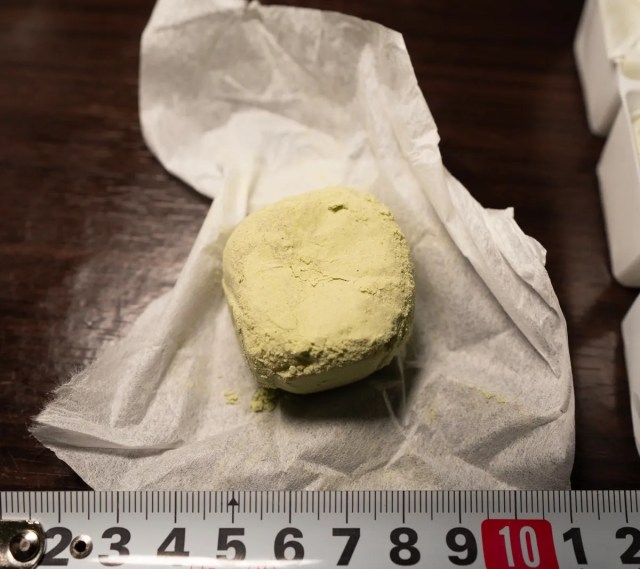
Meanwhile, the inside was a velvety smooth sweet bean paste wrapped in gyuhi, which is a softer version of mochi. This gave the entire treat a blissful texture that’s a little crispy at first, but melts in your mouth and lets the sweet paste take over.
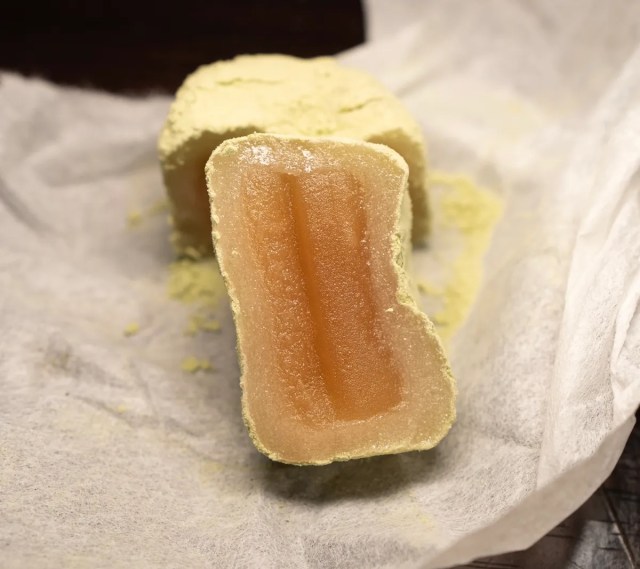
It would go great with some tea, but Tasuku’s only complaint was that they get eaten way too quickly, and he was left wanting more.
All in all, he was very pleased with following his sudden impulse to shop at an antenna store. They’re a great way to find hidden gems from all over the country and get a change of pace from the usual things to eat.
Store information
CocoShiga / ここ滋賀
Tokyo-to, Chuo-ku, Nihonbashi 2-7-1, Nihonbashi Tower Bldg. 1F
東京都中央区日本橋2丁目7−1 日本橋タワービル 1F
Open: 10 a.m. – 8 p.m.
Website
Photos ©SoraNews24
● Want to hear about SoraNews24’s latest articles as soon as they’re published? Follow us on Facebook and Twitter!
[ Read in Japanese ]