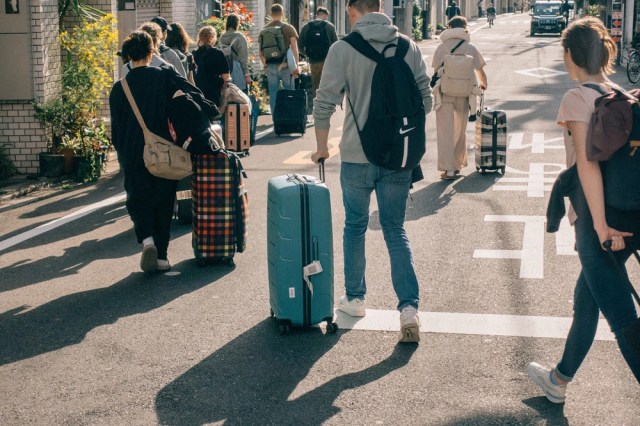

One country is clearly the cause, but fewer foreign tourists might not put the pressure it expects on Japan.
On Wednesday, the Japan National Tourism Organization announced its latest statistics regarding foreign tourists. In January, nearly 3.6 million travelers from abroad arrived in Japan, and while that might sound like a lot, it’s actually the first same-month decrease, compared to the previous year, since the end of the pandemic.
Japan welcomed approximately 3,597,500 foreign visitors last month, but that’s a 4.9-percent drop from the 3,781,629 who showed up in January of 2025. To find the last same-month foreign tourism drop, you have to go all the way back to January of 2022, when Japan still had COVID-prevention protocols in place, and also prior to the historic drop in the value of the yen which has made the country a travel bargain in many foreign tourists’ eyes.
The JNTO’s report breaks down visitor numbers by country of origin, and if you’ve been keeping up on Japan travel developments, you can probably guess that the decrease is pretty much entirely due to a drop in the number of visitors from China. In November, the Chinese government issued a statement warning its citizens to refrain from travel to Japan after prime minister Sanae Takaichi expressed that Japan would not look favorably upon a hypothetical invasion of Taiwan by the Chinese military.
This didn’t result in the immediate disappearance of Chinese tourists in Japan, many of whom had already locked in their travel plans, but it appears to have had the delayed effect of making Chinese citizens who started planning trips after the warning was issued shy away from Japan as a destination. Last month, 385,300 Chinese tourists visited Japan, a massive 60.7-percent decrease from the 980,520 in January of 2025. Also significantly down were the tourist numbers from Chinese-controlled Hong Kong, which fell to 200,000, a 17.9-percent drop.
Further indicating that the drop in tourist numbers is largely an effect of political tensions: out of the 24 countries and regions in the study, only three, China, Hong Kong, and Malaysia (down 3.3 percent) had fewer tourists to Japan in January of 2026 than in 2025. Passing China as the largest source of inbound tourists was South Korea, with 1,176,000 travelers (a 21.6-percent increase). Somewhat poetically, at the same time that China is discouraging its people from traveling to Japan over a lack of support for its Taiwan-related ambitions, the number of Taiwanese tourists visiting Japan has surged. With 694,500 travelers to Japan last month, a 17-percent increase over 2025, Taiwan was the second-largest source of visitors, sending 1.8 times as many as China did. The U.S. was fourth on the foreign tourist list, with 207,800 (up 13.8 percent), and there were double-digit percentage increases from Australia, Canada, and the U.K. as well.
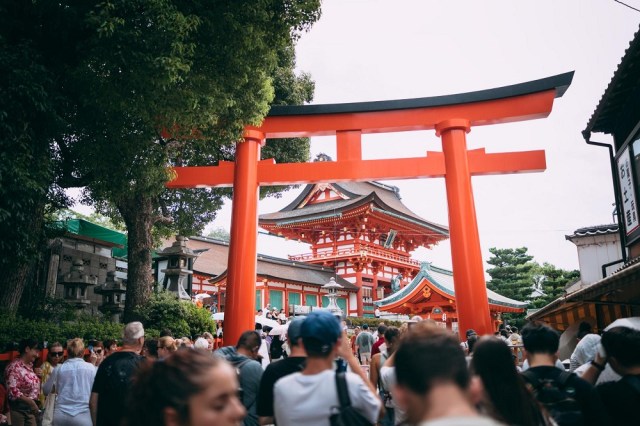
But with Japan seeing its first same-month inbound tourism drop since becoming the world’s hottest travel destination, is the Chinese government’s ploy going to prove effective in influencing foreign policy? It’s probably way too early to come to that conclusion. Even before the tourist number dip, there’s already been a growing sense from many Japanese people that Japan is in danger of becoming over-touristed. Hotels, tourist attractions, and surrounding shops and restaurants in high-profile areas are often far beyond the visitor capacity they were designed with, leading to congestion and rising prices that can alienate local residents, especially those who aren’t working in the hospitality industry and don’t stand to profit from the Japan travel boom. As such, a moderate dip in foreign tourist numbers isn’t likely to have average citizens pestering politicians to smooth things over by apologizing to China.
Even looking at things from a purely bottom-line perspective, the drop in foreign tourists isn’t, in and of itself, a bad thing. The goal of the hospitality industry, after all, isn’t to increase the number of visitors, but to increase revenue and profit. While the decrease in Chinese travelers isn’t being entirely offset by increases from other countries, travelers from Western countries tend to stay longer on their trips to Japan (what with the greater amount of time it takes for them to get to the country in the first place), and so the redistribution of visitor demographics may not necessarily mean that any less tourist money is coming into Japan. If that turns out to be the case, the Chinese government’s travel warning will end up putting little to no social or economic pressure on Japan.
Source: JNTO via Yomiuri Shimbun
Top image: Pakutaso
Insert image: Pakutaso
● Want to hear about SoraNews24’s latest articles as soon as they’re published? Follow us on Facebook and Twitter!