

Free-to-use system helps disaster victims connect with loved ones in times of crisis, and is worth remembering for anyone traveling or living in Japan.
This week marks 15 years since the March 11, 2011 Tohoku earthquake and tsunami that devastated coastal communities in northeastern Japan’s Fukushima, Miyagi, and Iwate Prefectures. Even a decade and a half later, the suddenness with which the tragedy occurred serves as a solemn reminder of the necessity of disaster preparedness, and while many people are conscious of the need to maintain a supply of things such as preserved food and water, something that often gets forgotten is the importance of knowing how to deal with communications infrastructure being disrupted or destroyed.
When everything is running smoothly, modern personal electronic devices make staying in touch with friends and family a snap. Just whip out your smartphone, open up your favorite messaging app, and add a new text message to the thread or tap on the other person’s icon to start a voice or video call. However, that system goes to pieces if power has been knocked out in a disaster-hit area and victims have no way to recharge a dead battery, or if their phone was lost or destroyed in a quake or flooding, or had to be abandoned during a hurried evacuation.
So as part of disaster preparation when traveling or living in Japan, there’s an important number to remember: 171. That’s the number you need to dial to access telecommunications provider NTT’s Disaster Message Call (“Saigai Dengon Dairu”) service. Essentially an audio message board, Disaster Message Call allows users to record and store audio messages of up to 30 seconds. When recording a message, the sender also gives the phone number of the person it’s intended for, and those calling in to the service can input their phone number to play back messages that have been left for them. The key thing is that playback doesn’t require the service to be called from the same number that the message was left for, meaning that as long as a person has access to a phone of any sort, they can receive the messages that have been left for them, even if they’ve lost their mobile phone or landline.
The 171 Disaster Message Call system is compatible with landlines, mobile, IP, and ISDN. It even works with payphones, which allow 171 calls to be placed for no charge at all. A total of 20 messages can be stored at one time, with newer messages then replacing the oldest.
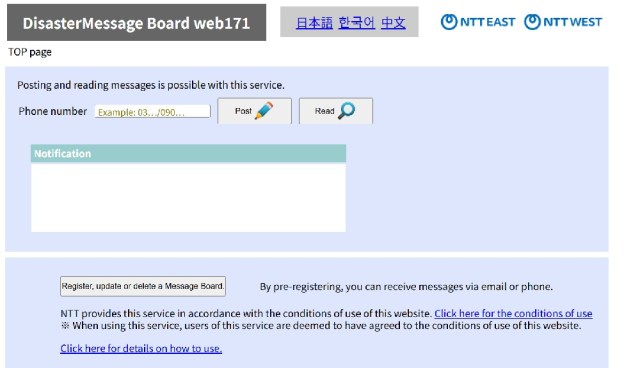
Given the open access allowed to the messages, it’s probably wisest not to use Disaster Message Call to relay sensitive or private information. For those looking to confirm that loved ones are OK, though, it can provide immense peace of mind, as even when people in disaster-struck regions still have their smartphones, wireless networks can become temporarily overloaded. Audio messages recorded through the Disaster Message Call system are also linked to its web-based version, Disaster Message Board 171, which also allows for the posting of text messages designated for/accessed by entering the intended recipient’s phone number.
▼ The English page for Message Board 171 can be found here and the Japanese one here, with an English explanation of how to use the system available here.

As you’ve probably realized, 171 isn’t the only number you’ll want to know as part of your disaster preparedness: you’ll also need to know the phone number of whoever you’re trying to contact. While this isn’t an issue for those outside the disaster-stricken area who still have their phone and its stored data, victims who’ve lost access to their device will need to have the numbers stored in their head. Considering how wide the average person’s social network has grown in today’s society, memorizing the phone numbers for your entire contacts list is probably out of the question for most people, but remembering the digits for your most critical personal connections will help you find each other should another disaster strike.
Source: NTT (1, 2, 3)
Top image: Pakutaso
Insert images: NTT
● Want to hear about SoraNews24’s latest articles as soon as they’re published? Follow us on Facebook and Twitter!