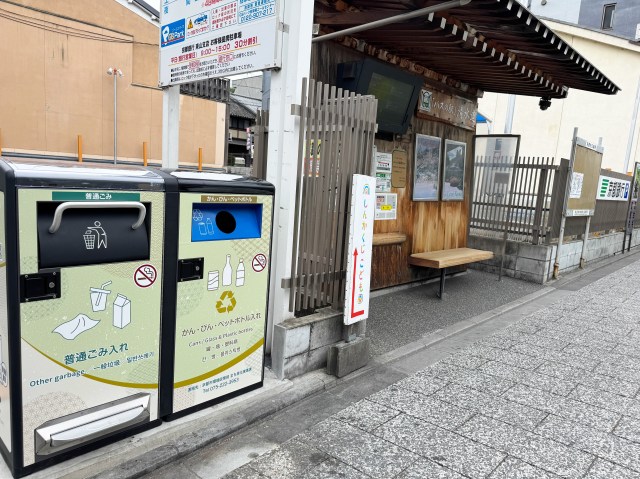

Bringing futuristic solutions to historic streets.
Upon coming to Japan and exploring the cities, I soon came to one of many realizations: the country has a near-complete lack of public trash cans. While it’s technically possible to call into one of the many convenience stores to unload your pockets of snack wrappers into the store’s waste receptacles, there are almost always signs asking you to refrain from doing so, and you could potentially face criminal charges for dumping garbage from products not purchased in-store.
Instead, it is socially expected for any and all trash generated from snacking to be carried and disposed of at your house or hotel, so much so that it’s quite normal for people to carry around small plastic bags in your handbag or backpack to hold onto accumulated wrappers and napkins until the end of the day. As such, for those who are accustomed to having public trash cans being easily accessible, they can often end up with pockets filled with sticky waste and crumb-filled backpacks when they go sightseeing.
This cultural difference has been exacerbated considerably due to the post-pandemic boom in tourism, with millions of enthusiastic travelers flocking to sightseeing hotspots, like Kyoto, seeking to delve into the region’s charming history and food, which naturally increases the volume of sidewalk snacking. When you’re wandering through the picturesque streets of Kyoto’s Higashiyama ward, miles away from your hotel, the last thing you really want to be doing is holding the wrapper from your mid-morning Family Mart fried chicken snack for the rest of the day. So, the few trash cans available tend to fill up quickly and potentially overflow.
Fortunately, Kyoto has started tackling this problem with some high-tech efficiency. On May 27, two futuristic, eco-friendly smart trash cans called SmaGO, made by Forcetec, were introduced near the busy southbound Kiyomizu-michi bus stop, a highly traversed area for anyone looking to explore the area’s streets and temples.
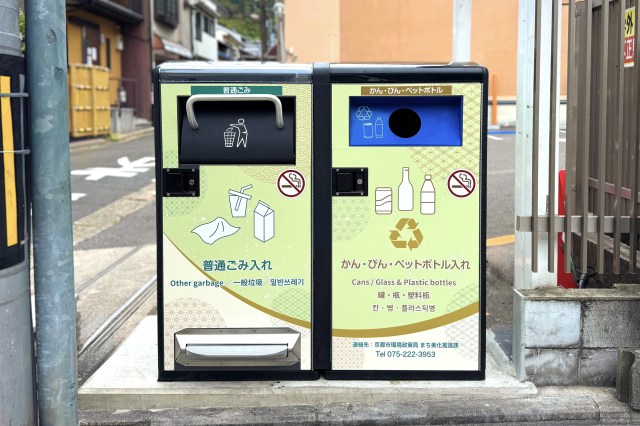

The SmaGO units run entirely on solar power and feature an automatic trash-crushing mechanism that compacts waste down to just one-fifth of its original volume. They also connect to the internet to report exactly how full they are in real-time, allowing collection crews to swoop in before the trash starts to overflow and propagate to the nearby vicinity.
While these are the latest two units of a total of 34 throughout Kyoto, these eco-bins were actually donated to the city by the famous Kiyomizu temple and the nearby Rokuharamitsuji temple, with the Bank of Kyoto stepping in to provide the installation location, in the hopes of creating a more comfortable and beautiful city for both citizens and tourists.
So, the next time you venture into the historic former capital of Japan, you can rest assured that waste management will be one less thing to factor into your travel itinerary.
Source and images: PR Times
● Want to hear about SoraNews24’s latest articles as soon as they’re published? Follow us on Facebook and Twitter!