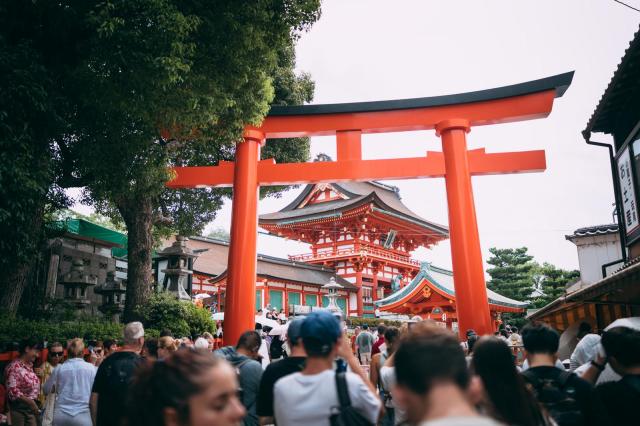

Official city survey highlights the issues that left some visitors less than satisfied with their Kyoto experience.
Kyoto has long been one of Japan’s most popular tourist destinations, but now the city’s popularity is breaking records, attracting more visitors than ever before. According to Kyoto City’s latest annual tourism survey, 62.79 million people visited the city in 2025 for sightseeing and other leisure purposes, making it the first year that visitor numbers have exceeded 60 million since records began in 1958.
International tourists played a major role in that growth, with a record 12.68 million traveling to Kyoto during the year, up 17 percent from 2024. Domestic visitors also grew, rising to 50.11 million, an 11 percent increase. Throughout the year, visitor numbers remained surprisingly consistent, with around four to five million people arriving every month.
▼ Tourists at Kyoto’s Fushimi Inari (ふしみいなり)
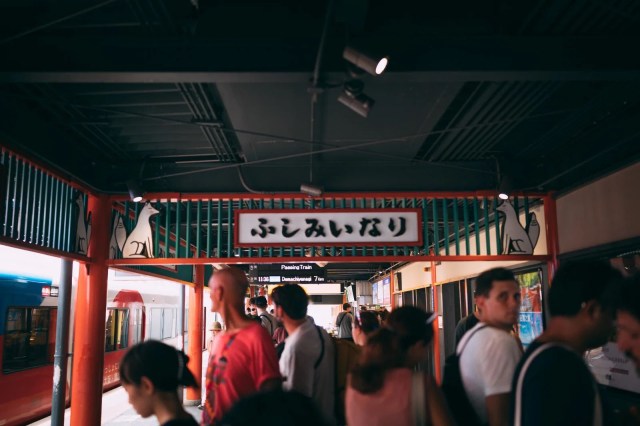
The number of overnight visitors reached a record 16.59 million, with overseas travelers increasing by 14 percent to 8.09 million, making up almost half of all stays. Conversely, domestic overnight guests fell eight percent to 8.49 million, suggesting that rising accommodation costs may be prompting Japanese residents to stay in hotels outside the city or treat Kyoto as a day-trip destination instead.
▼ Thanks for the memories, Kyoto, but we’ll be sleeping somewhere else.
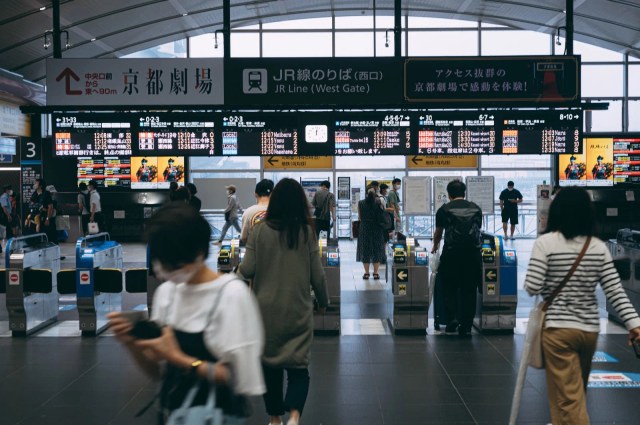
Among overseas visitors staying in Kyoto, travelers from China topped the polls, accounting for around 20 percent of all overnight stays, followed by the U.S. and Taiwan. Although Chinese visitors no longer dominate Japan’s inbound tourism market like they once used to – South Korea now ranks as the country’s largest source of international arrivals – their affinity with Kyoto remains strong.
Tourism spending also reached an all-time high of 2.0474 trillion yen (US$13.6 billion), exceeding the previous record by 163.5 billion yen (US$1 billion) and surpassing the 2 trillion yen mark for the first time ever. This spending on accommodation, shopping, food, transport and attractions reportedly helped to support around 230,000 jobs, equating to roughly one in every three people employed in Kyoto City.
Overall, satisfaction levels remained exceptionally high, with 97.3 percent of international visitors saying they were satisfied with their trip, compared to 90.9 percent of Japanese visitors.
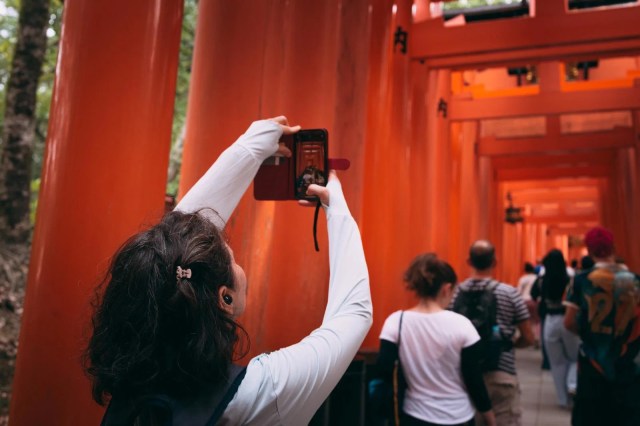
Not everything was perfect, though. Around 21 percent of overseas visitors and 47.2 percent of Japanese tourists said something had disappointed them during their stay. For both groups, the biggest complaint was crowding, followed by poor manners and the weather.
While the city is located in a basin, making summers feel especially hot and winters especially cold, the weather is something the city can’t control. Crowds and manners, though, have long been two thorns in the side of what is otherwise a beautiful city. In recent years, the city has been ramping up efforts to ease congestion by encouraging people to visit major tourist sites outside of peak visiting times, and requesting they travel on public transport without suitcases by using luggage forwarding and storage services.
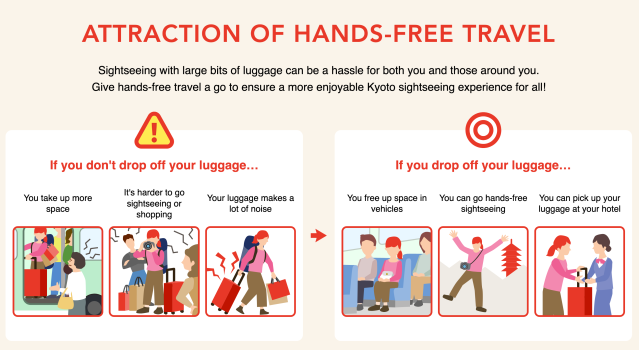

Kyoto has also been cracking down on poor manners by restricting access and photography on certain streets after tourists repeatedly used private alleyways as shortcuts and ran after maiko and geisha to take their photos. The city has also distributed a wide variety of manners posters and pamphlets to help ease tensions between tourists and local residents.
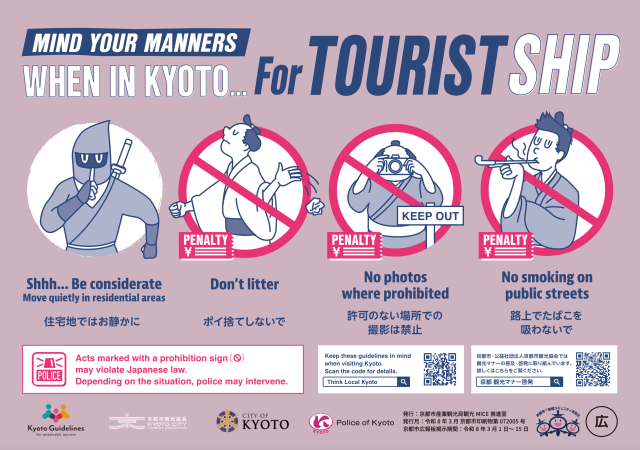

Despite the city’s best efforts, these issues remain a pressing concern, as the survey also found that the proportion of both Japanese and international visitors who said they would strongly recommend Kyoto to others or definitely visit again has declined, reflecting a downward trend that’s been continuing over the past few years. While visitors continue to love the city, growing crowds appear to be affecting the enjoyment of their stay.
It’s a bitter irony that visitors who contribute to Kyoto’s congestion can also find themselves frustrated by the crowds around them. However, just as visitors can contribute to the problem, they can also be part of the solution. By following local etiquette guidelines, making use of luggage forwarding and storage services to reduce crowding on public transport, and exploring some of Kyoto’s less-visited but equally awe-inspiring sights, visitors can help make the city a more enjoyable place for everyone, so that more people will want to return in future.
Sources: Kyoto City Official Website, Hands Free Kyoto, Kyoto Tourism Comprehensive Survey via The Sankei Shimbun, Nikkei, Yomiuri Shimbun via Yahoo! News Japan
Featured image: Pakutaso
Insert images: Pakutaso (1, 2, 3), Kyoto City Official Website, Hands Free Kyoto
● Want to hear about SoraNews24’s latest articles as soon as they’re published? Follow us on Facebook and Twitter!