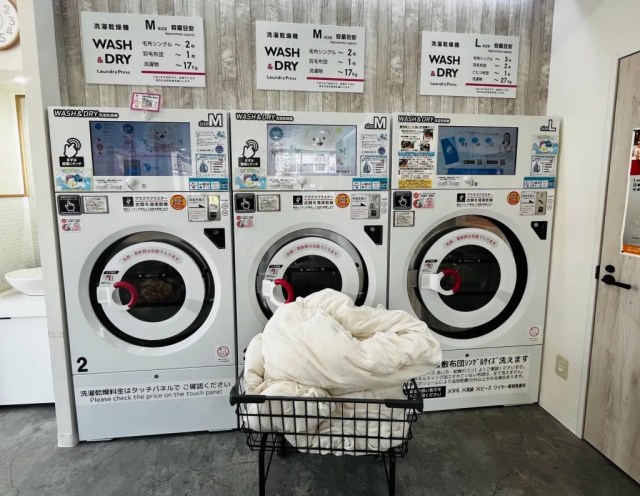

Sure, that big, fluffy down blanket is a must for making it through a Japanese winter, but how are you supposed to clean it when summer comes around?
Generally, living in Japan means hanging your laundry outside, and the residential housing market is designed with this in mind. Even the smallest dwellings will have a balcony or some other exterior space with hooks for hanging drying poles, and architects design both houses and apartment complexes so that these sections are facing south to maximize the amount of sunshine they get.
Because of that, it’s rare for Japanese homes to include a spot to hook up a dedicated clothes dryer next to your washing machine. You can get dual-purpose appliances, where the same drum handles both washing and drying functions, but their drying capabilities aren’t anywhere near those of a dedicated dryer. Again, though, this isn’t really a major issue, since homes are designed to make outdoor drying easy.
A major exception, though, is when it’s time to wash your futon, or duvet, if you want to use the fancy occidental term. Japan gets very cold in the winter, so a big, fluffy down blanket to take shelter under is a must for making it through the coldest months.
▼ My natural habitat for several months of the year.
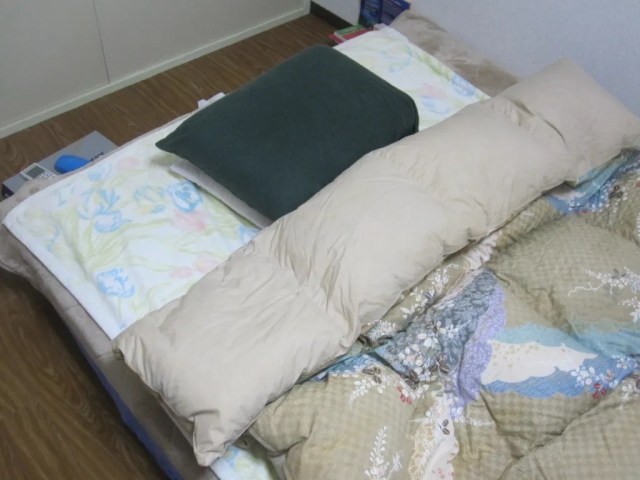

But with Japanese washing machines not generally up to the challenge presented by such a bulky item, is your only option shelling out for an expensive dry cleaning service?
Nope! With the midsummer heat here and not even a trace of chill left in the nighttime air, Japanese laundromat chain Laundry Press knows it’s time to put your duvet into storage, and before you do that, they’ve got advice for how to wash and dry it at a laundromat. In order to save you the time, hassle, and cost of repeating the process, Laundry Press has prepared a list of advice points for how to smoothly get your futon clean, soft, and fluffy for the next time you need to crawl underneath it.
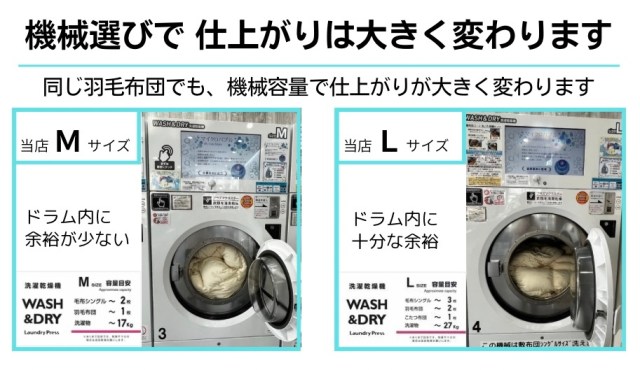
The first point, and the most important, is to make sure you choose a machine that has more space than you need to fit the duvet inside. Sure, with some forceful shoving, you might be able to squeeze the futon into a smaller machine, but it’s going to swell as it soaks up water, and if it’s too cramped inside the machine, it won’t wash properly, and the initial drying effectiveness of the spin cycle will be compromised as well.
▼ You want to choose a machine where you have the kind of interior space shown in the machine on the right, not on the left.

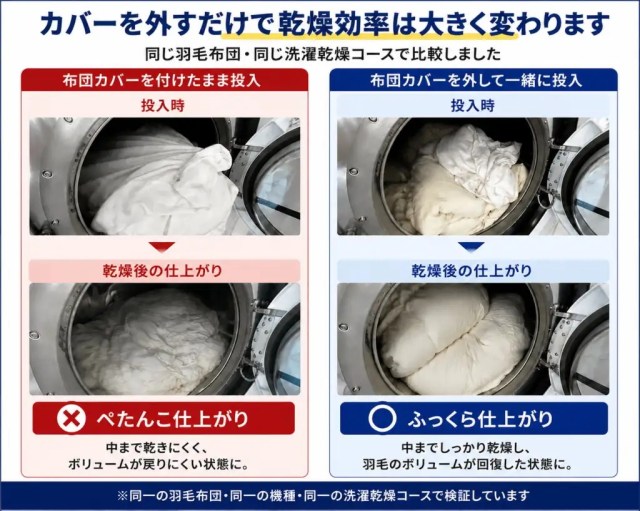
Speaking of putting your futon into the machine, the second point of advice is to remove the duvet’s cover. You can wash both the cover and the duvet together, in the same machine at the same time, but separating them will help ensure that water and detergent can reach all of their surfaces. This more thorough cleaning will also help restore fluffiness to the duvet, so while it can be a hassle to untie or unzip the cover, it’s something you’ll want to make sure to do.
▼ Duvet and cover washed while still attached to each other on the left, washed separated from each other on the right

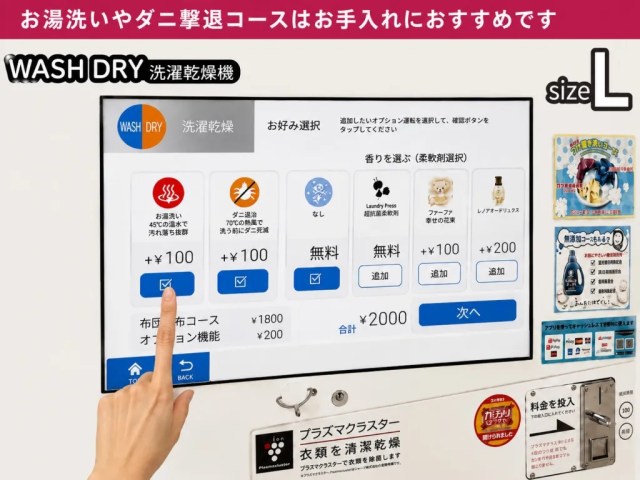
The third thing to remember is, if you have the option, to wash your futon in warm water. Even if you only used it when the weather was cold, your body will still sweat and excrete oils as you sleep, and those will have soaked into the futon’s fabric little by little. Selecting a warm-wash option will help cut through the grease and grime, and if your laundromat has an extra-warm setting as a countermeasure against mites, that’s even better.
▼ A laundromat control panel, with warm and anti-mite setting icons on the left
Finally, after your futon has entered the drying stage (either as part of a combo washer/dryer or because you transferred it to a dedicated dryer), when you’ve got about 20 minutes left in the cycle, stop the machine and take the futon out. Because of how big and fluffy it is, the futon will probably have folded over onto itself, which can create damp pockets that the dryer isn’t reaching, so give the futon a manual fluffing, fold it back the opposite way from how it was, and put it back in to finish the cycle.
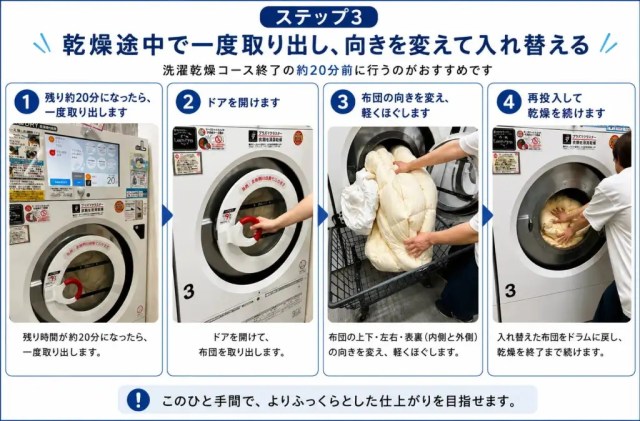

Laundry Press says that if your futon is especially big or luxuriously thick, you might also want to extend the drying time by an additional 20 to 40 minutes to make sure everything is as dry and fluffy as possible.
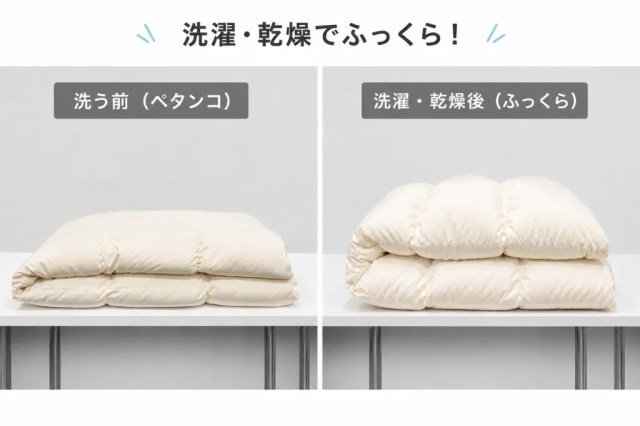
▼ Fluffiness levels before (left) and after (right) following these steps outlined above

With heat and humidity hitting Japan after a surprisingly mild June, preparations for cold weather are probably the farthest thing from many people’s minds. But just like how the best time to fix your roof is when the sun is shining the best time to wash your futon is when the frozen treats are hitting convenience stores.
Source: PR Times
Top image: PR Times
Insert images: SoraNews24, PR Times
● Want to hear about SoraNews24’s latest articles as soon as they’re published? Follow us on Facebook and Twitter!