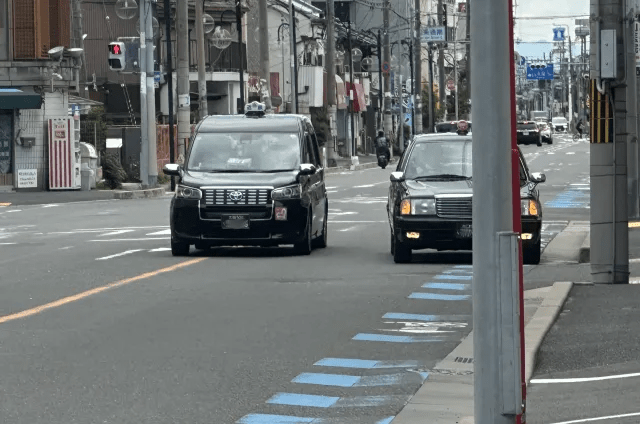

Some rules are meant to be broken.
A few months back, Japan made some sweeping changes to bicycle laws, introducing the notorious “blue tickets” for infractions such as riding too fast on a sidewalk, riding with an umbrella, or riding while using a smartphone. The laws came into effect along with a fairly large crackdown on such behavior by police departments across the country.
And for a while it worked. People by and large traded in their umbrellas for raincoats. However, once the full force of the summer sun kicked in and after a few torrential rainstorms, many people decided to hell with it and started using umbrellas again. The problem with that is these same cyclists are still adhering to the no-sidewalk rule, which means drivers now have to put up with these slow-moving vehicles that are sometimes up to over a meter wide.
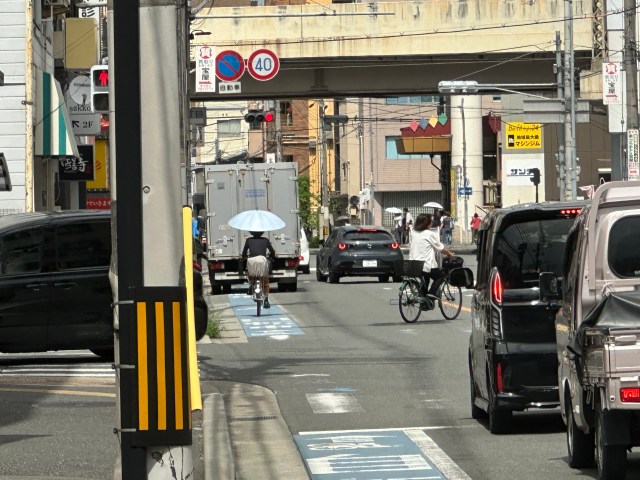

Quite a few roads do have bicycle lanes to accommodate this, but they’re pretty absurd in practice. Cars and trucks often park right in them, mopeds frequently make them their own personal passing lane, and the bike lanes often just don’t fit. Especially in major cities, there are a lot of roads that are literally ancient and can’t be expanded due to the dense buildings along them.
▼ An all-too-common scene: A cyclist going around a car parked in the bike lane while another car goes extra wide to overtake the bicycle at the same time.
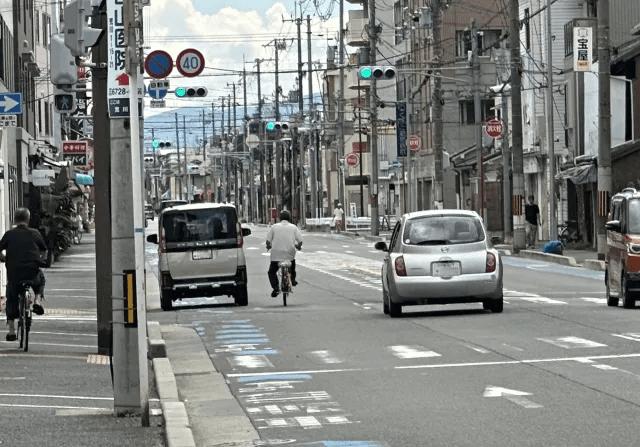

To make matters worse, traffic rules dictate that cars must give at least one meter (three feet) of distance when passing a bike. At the same time, if the road has a yellow center line, then you must never cross over it, so there are many instances where a car might be legally unable to pass a bicycle. You’re technically not even allowed to honk your horn at them to move over, because that is also a violation known as “abuse of the horn.”
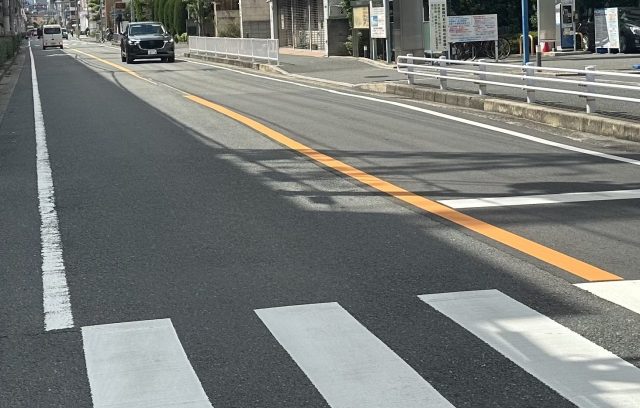

Of course, in reality, when faced with this situation, most cars would just go over the yellow line to pass anyway. I’d also like to think that any cop would consider that to be the most reasonable course of action and let it slide despite it being a violation. I actually learned firsthand from taking a driving test with the police that crossing the yellow line was tolerated to a certain degree rather than an automatic failure.
Still, that’s a worry normal drivers are best left without, and there’s really no point in having paradoxical traffic rules in the first place. So, the Tokyo Metropolitan Police announced they will repaint about 1,700 kilometers (1,056 miles) of yellow lines white. Unlike yellow lines, it is permitted to cross over white lines in cases such as overtaking bicycles. Tokyo’s Nakano Ward is even going as far as repainting all of its yellow lines white.
In online comments, readers of the news felt this was just another way the new blue ticket laws are spreading misery even beyond the cyclists they directly target.
“These rule changes are just screwing up everything.”
“Didn’t they consider this before making the new rules?”
“On a lot of narrow roads in Tokyo they just got rid of the line altogether.”
“Honestly, they should have just been stricter on the speeds of bikes on sidewalks. Some idiot said they should ride on the road, and now look at this mess.”
“It’s a broken system for anyone who follows the rules.”
“I’ve seen this so many times on the road since April. Even cop cars are doing it, lol.”
“Repainting them white? So why were they yellow in the first place?”
“The people drafting these laws don’t ride bikes or drive. They’re just chauffeured everywhere they go.”
“This will never get better until the infrastructure improves.”
It’s hard to blame the urban planners for this problem, as it’s an impossible situation to begin with. In order for cities like Tokyo to widen their roads, it would require tearing down literally thousands of buildings.
▼ This road currently being built has a nicely demarcated bicycle lane and space for everyone to enjoy. Unfortunately, it’s only about 500 meters long, required tearing down several blocks of shops and houses, and is basically a drop in the ocean.
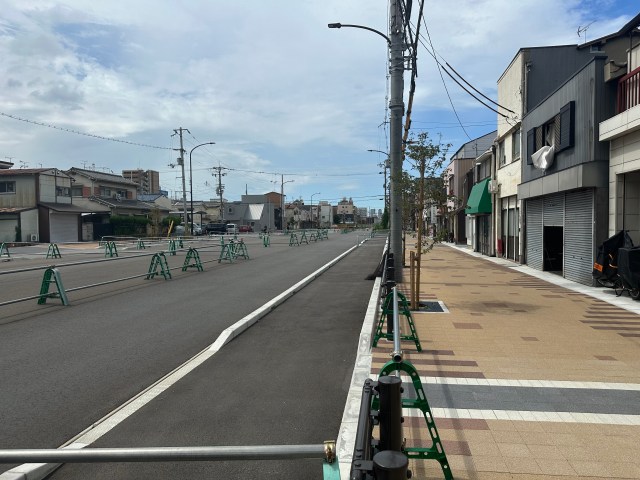
▼ At the end of the finished construction, you can see the old road on the right, which is narrower than the new sidewalk.
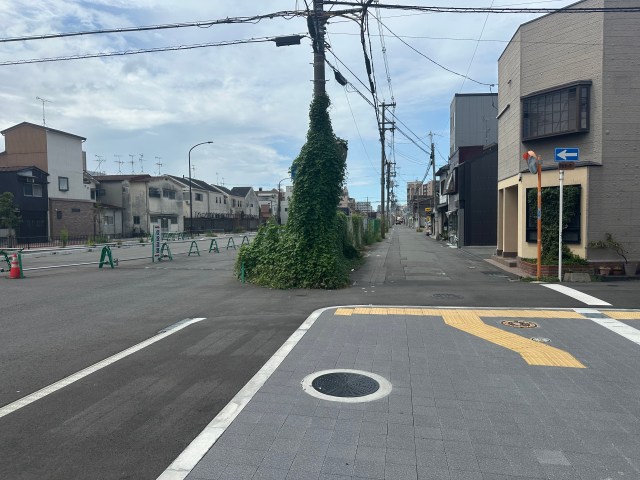
With no practical solution in sight, motorists, cyclists, and pedestrians will just have to keep on winging it as we go. However you do move about in Japan, just be sure to do it safely, because many of the roads we share aren’t big enough for everyone.
Source: FNN Prime Online, Hachima Kiko
Photos ©SoraNews24
● Want to hear about SoraNews24’s latest articles as soon as they’re published? Follow us on Facebook and Twitter!