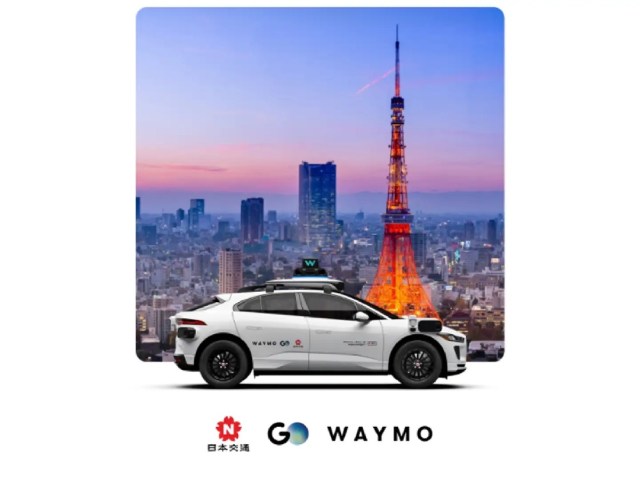

It’s hard to see why Tokyoites would prefer self-driving cabs to regular ones, but that might not be what Waymo is betting on.
Japan has, by and large, passed on ride-sharing services. Though they’ve flourished in many other parts of the world, Japan’s demographics and public transportation infrastructure is such that owning your own car is a discretionary luxury in urban and suburban communities, and so car-owners usually aren’t in income brackets where they have a strong incentive or need to make a few extra bucks as drivers. Meanwhile, there’s not much passenger demand among residents of rural Japan, where having a car of your own is pretty much a necessity on a daily basis.
The result is that Uber’s presence in Japan is far larger in the food delivery business than the people moving one. However, even if the country is largely skipping ride-sharing, Waymo still thinks it has a chance to shake up the Japanese taxi industry, and it’s looking to introduce fully self-driving cabs in Tokyo soon.
Last year, the U.S.-based Waymo entered into a strategic partnership with Japanese taxi operator Nihon Kotsu and Go, a Japanese taxi-hailing app partly owned by Nihon Kotsu. In the year since, they’ve been conducting tests of Waymo vehicles on Tokyo streets, with a Nihon Kotsu driver onboard to ensure safety and take over when needed. The three companies now feel they’re ready to start taking steps towards the next phase of their plan, launching Japan’s first fleet of fully self-driving, unmanned taxis, which they hope to have running about Tokyo’s streets sometime in 2027.
The companies say that safety will be their highest priority as they gradually introduce a growing number of self-driving taxis, with an initial goal of approximately 100 vehicles in Tokyo. Tokyo’s road network is a complex mixture of congested major thoroughfares and narrow backstreets, with a very large percentage of uncontrolled or irregularly shaped intersections, all of which make self-driving a challenge from a technical standpoint.
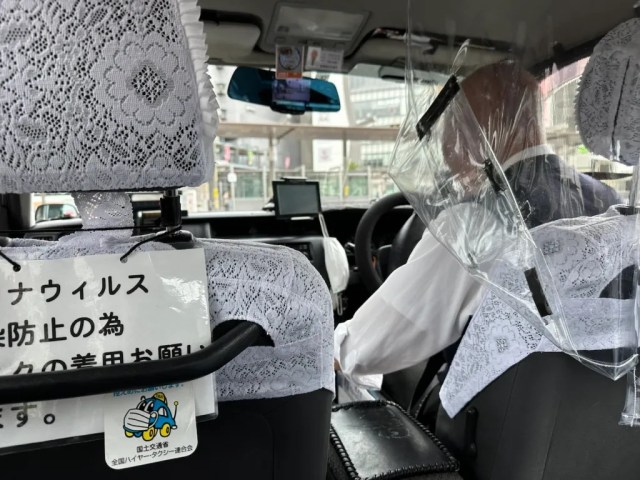
▼ There’s no word as to whether or not Waymo’s self-driving cars will follow the Japanese taxi norm of lace doilies on the seats.
Even if Waymo’s vehicles can learn to navigate Tokyo’s streets, though, there’s still the question of how much consumer demand there is in the city for self-driving taxis. Ostensibly, eliminating the driver would allow for lower operating costs, which could, theoretically, be passed on to consumers in the form of lower fares. However, because Tokyo has such convenient train, subway, and bus networks, taxi travel is already seen as something of a luxury among locals and travelers. Most people who are looking for a cab aren’t particularly concerned about the price, and Waymo would probably have to offer fares that are substantially cheaper than conventional taxis’ in order to entice rail or bus users strongly enough to take a ride in their self-driving cars.
The added pickup convenience presented by self-driving cabs might also not have such significant appeal, since taxi usage in Tokyo tends to be either between two downtown locations or, if the trains have already stopped running for the night, from downtown back to the suburbs. In either case, the rides are starting in a developed location, where it’s usually not hard to find a taxi on the street. By comparison, calling a taxi to come pick you up at your home in the suburbs is a far less common scenario.
All that said, it is true that Japan’s professional driver workforce, including taxi drivers, has been steadily growing older, with fewer new drivers coming into the industry than veteran drivers retiring. As such, Waymo and Nihon Kotsu might not be looking to launch driverless taxis because they think customers will prefer them to conventional cabs, but as preparation for an expected coming labor shortage that could make it difficult to find and hire enough human drivers. If/when that happens, there’s bound to be a portion of the population that still feels uneasy riding in a self-driving car, but if they have to, they’d probably rather ride in one from a provider that isn’t a complete newcomer to the market, so Waymo’s starting fleet in Tokyo is probably more about trying to build trust and recognition than making a quick profit.
Source, top image: PR Times
Insert image ©SoraNews24
● Want to hear about SoraNews24’s latest articles as soon as they’re published? Follow us on Facebook and Twitter!