
Governor asks offseason hikers to “stop waving around their freedom to climb the mountain as if it’s the only thing that matters.”
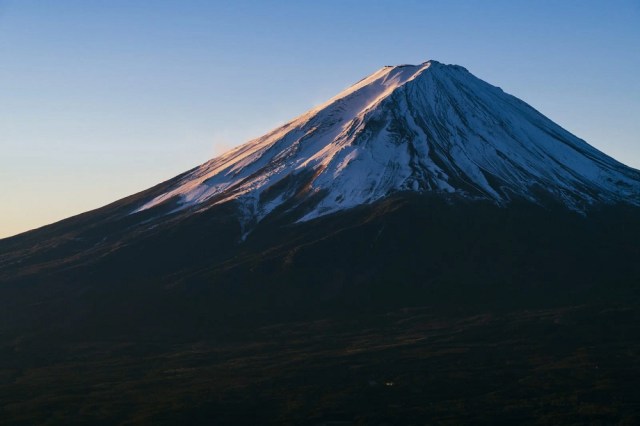
As the country’s most famous landmark, Mt. Fuji inspires musings on Japan’s history, culture, and natural beauty. Unfortunately, in recent years it also evokes thoughts of irresponsible, overconfident offseason hikers who ignore safety warnings and need someone to come and save them, and growing public frustration has lead to a new rule under which some of them will have to pay the bill for their own rescue.
To recap, the official climbing season on Mt. Fuji runs from early July to early September. Outside of that period, Mt. Fuji is said to be “closed,” but its off-season status is somewhat complicated. Technically, it’s the trails that lead from Mt. Fuji’s fifth station (where paved streets stop) up to the top of the mountain that are off-limits. The trails are classified as prefectural roads, and so Yamanashi and Shizuoka, the two prefectures Mt. Fuji straddles, have the authority to bar their use during the fall, winter, and spring.
However, ascending past the fifth station during the offseason, in and of itself, is not illegal, and in recent years an increasing number of people have been trying to summit Fuji outside the climbing season. An increasing number of them have also been failing to do so, requiring rescue teams to be dispatched to come and pick them up and carry them home. During the offseason, when there’s less daylight, more snow, and fewer support personnel on/near the mountain, rescue operations become more difficult, as well as more dangerous for the workers involved.
And so, in a press conference on September 14, four days after Yamanashi Prefecture’s Yoshida Mt. Fuji trail closed for the year, Governor Kotaro Nagasaki announced that the prefecture will be installing a new ordinance in which offseason climbers requiring evacuation by helicopter from Mt. Fuji will be charged for the operation.
▼ “Will you be paying by cash, credit, or Suica card, sir?”
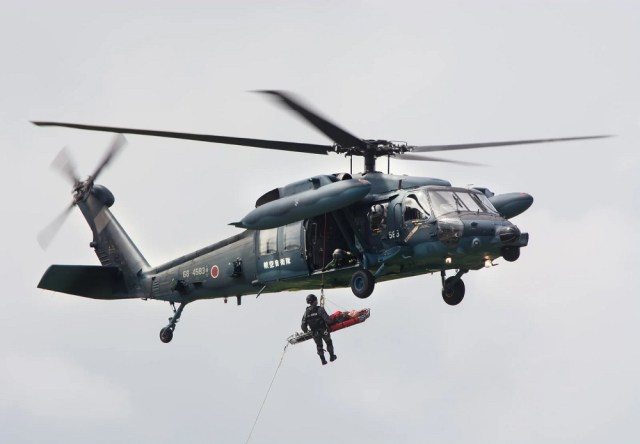

The amount rescued hikers will have to pay will be based on expenses such as fuel and personnel costs. As such, the bill will likely vary depending on the complexity of the operation and the distance of the flight to necessary medical facilities. For reference, in Saitama Prefecture, which already has ordinances charging negligent hikers for their rescues, a five-minute helicopter ride carries a charge of around 8,000 yen (US$50).
▼ Governor Nagasaki’s press conference

Addressing the ostensible sentiment of offseason hikers that, because it’s not illegal, they’re free to climb Mt. Fuji outside the official season, Nagasaki said:
“In the event that they do end up needing to be rescued, we are obligated to help them, which puts rescue workers in danger, so I would like them to stop waving around their freedom to climb the mountain as if it’s the only thing that matters.”
Nagasaki did add, though, that rescue fees could be reduced or waived for offseason hikers who file an offseason hiking notification and are judged to have properly prepared for their climb. However, with the prefecture’s official stance being that Mt. Fuji is too dangerous to climb during that part of the year, it seems unlikely that the authorities will be prone to judging offseason climbers’ preparations as adequate, especially when those hikes ended up unable to get home from Mt. Fuji under their own power.
Online reactions to the plan to charge offseason hikers for helicopter rescues have included:
“There’s no need to use taxpayer money to rescue people who don’t follow the rules.”
“The people who have to go rescue them end up having to put their lives in danger too.”
“They should have done this years ago.”
“No need to reduce the charges for anyone. Whether you’re ‘prepared’ or not, if you’re hiking in the offseason, you take responsibility.”
“How about if we just say ‘Offseason hiking is dangerous, so there will be no rescue operations. Please take responsibility for yourself.”
“Freedom comes with responsibilities.”
“Honestly they should just make it illegal to hike Mt. Fuji in the offseason.”
That last idea likely is something that Yamanashi and Shizuoka would like to do, but the current system of barring access to the prefectural-road trails suggests that making the mountain as a whole off-limits during the offseason is probably something that can’t be easily done from a legal-framework standpoint.
Yamanashi’s offseason helicopter rescue charges are expected to go into effect in the fall of 2027.
Like Yamanashi, Shizuoka Prefecture is also planning to introduce a new ordinance that would require hikers to file a notification before attempting to climb Mt. Fuji in the offseason. Neither prefecture has clarified what the process for filing the notification will be, but it’s unlikely to be quick and convenient, since the notification system’s main purpose seems to be to act as a de-facto deterrent to offseason hiking by making possible penalties for noncompliance even if the prefectures can’t yet make offseason hiking itself illegal.
Source: YBS News via Yahoo! Japan News, Teleasa News, YouTube/YBS山梨放送 公式チャンネル
Top image: Pakutaso
Insert image: Pakutaso
● Want to hear about SoraNews24’s latest articles as soon as they’re published? Follow us on Facebook and Twitter!