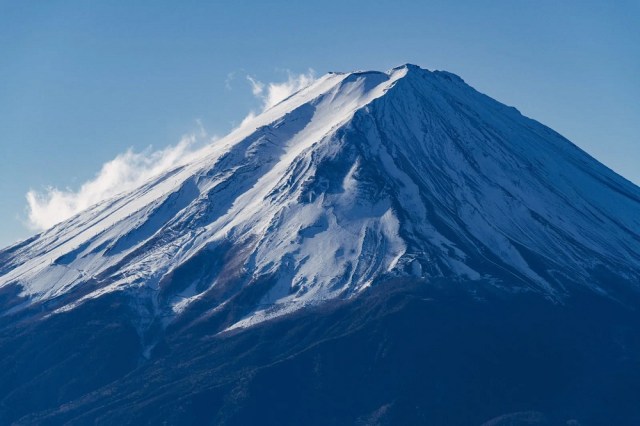
The question of whether it’s illegal to hike Mt. Fuji in the off-season is complex, and so is the question of who should pay for it.
With this year’s Mt. Fuji climbing season now finished, forestry officials in Shizuoka, one of the two prefectures in which Japan’s tallest mountain has a footprint, are getting set for a meeting to analyze and evaluate things like the flow of hiking traffic on the trails and how well they were managed. They’ll also be discussing something related to climbing Mt. Fuji outside of the hiking season, and their decisions could lead to changes requiring lost or injured hikers to pay for the cost of their own rescues.
To recap, Mt. Fuji has an officially designated hiking season. The exact dates vary by year and trail, but in general the hiking season runs from early July to early September. The question of whether or not climbing outside of the official season is illegal or not is somewhat complex. As posted on the Mt. Fuji Official Climbing Website, under Article 46 of the Road Act, all official trails leading to the summit of Mt. Fuji are closed and prohibited from use during the off-season, and those who violate the restriction can face penalties of up to six months in prison and a fine of 300,000 yen (US$1,890). This restriction is based on the trails’ status as prefectural roads, which places them under the jurisdiction of their respective prefectures and allows for local authorities to prohibit their use.
▼ “Hey man, what’re you in for?”
“I hiked the Yoshida trail in December.”

On the other hand, ascending Mt. Fuji outside the climbing season, in and of itself, does not appear to constitute a criminal act. It is, however, strongly discouraged, and for several reasons. Attempting to climb the mountains without utilizing the trails means taking more dangerous routes, and even if off-season climbers were to illegally use the trails, they’re not maintained to a safe extent during that part of the year. Weather patterns on Mt. Fuji are more severe and unpredictable during the off-season, and mountain huts, relief centers, and other support facilities are not staffed, since no one is supposed to be on the mountain then. Together, these factors not only make climbing Mt. Fuji in the off-season a much riskier endeavor, but also means that off-season rescue operations are more difficult and expose rescue workers to greater dangers.
Currently, the expense of rescue operations are all paid for by the prefectural government, which is another way of saying that they’re paid for by residents who pay taxes to the prefectural government. With an increasing number of off-season incidents coming as the economy is doing poorly and many Japanese families are feeling the pinch in their household budgets, there’s been increasing anger at overconfident off-season hikers getting a free ride home after ignoring the warnings to stay off Mt. Fuji. Under the current laws, though, the government can’t stick hikers with the bill for their own rescue, since that’s classified as a guaranteed government service for people in distress.
What they might be able to do, though, is institute penalty fees for hikers who have failed to perform prior responsibilities, and so Shizuoka Prefecture is considering creating a new regulation that would require individuals to file an off-season climbing declaration with the local government if they’re going to hike Mt. Fuji outside of the official season. Off-season hikers who do not file the declaration would then be in violation of their responsibilities, which would, theoretically, open up the possibility of charging them for the cost of their rescue or imposing other penalties even if they were not found on the prohibited trails.
As the plan is still at the conceptual phase, it’s not clear whether all declarations would be automatically accepted, or if the process to file them would be purposely expensive or inconvenient in order to act as further discouragement. The committee is also said to be planning to discuss other measures such as making off-season climbing, whether on the trails or not, illegal. Yamanashi, the other prefecture Mt. Fuji is part of, is also reportedly looking for ways in which it could impose fines on off-season hikers who require rescue services.
Source: SBS News, Teleasa News, Mt. Fuji Official Climbing Website
Top image: Pakutaso
Insert image: Pakutaso
● Want to hear about SoraNews24’s latest articles as soon as they’re published? Follow us on Facebook and Twitter!