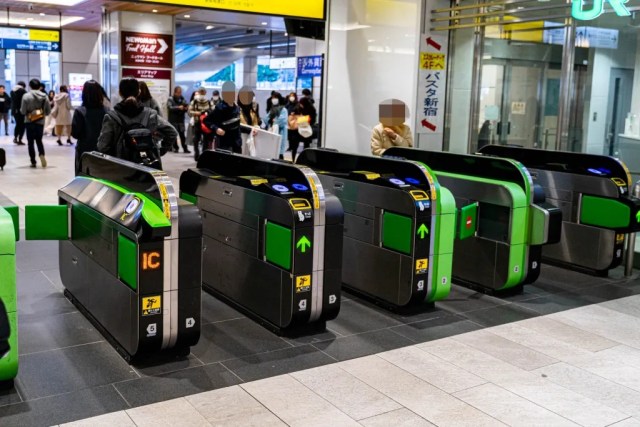

End of an era is coming for ecological and economic reasons.
Train travel in Japan is going to be looking a little different, as East Japan Railway Company, a.k.a. JR East, has announced that it’ll be making a major change to its ticket design. Right now, JR East tickets have your starting station and fare printed on the front, and a magnetic strip on the back. At the gate, you slide your ticket into the slot, the gate opens up, and your ticket pops back up from another slot on the other side of the machine for you to grab as you continue on your way, then put into the other ticket gate at the exit from your destination station.
▼ A traveler inserting tickets into a gate at Nikko Station

However, JR East has announced it will be phasing out magnetic-strip tickets beginning next spring, with the eventual goal being to do away with them entirely for short-distance rides. In their place JR East will be introducing new non-magnetic tickets with a QR code that you scan at the gate instead.
▼ A video showing the front of the current magnetic-strip tickets on the left, and the upcoming QR-code tickets on the right.

The mockups in the above video are obviously jumbo-sized to make them easier to see, but the new tickets really will be larger than the current ones. JR East’s Magnetic-strip tickets measure 3 by 5.75 centimeters (1.2 by 2.3 inches), but the QR ones will be 5.75 by 8.5 inches, to make them easier to scan.
JR says there are two reasons it’s making the switch, one of which is an effort to be more environmentally friendly. JR East’s produces about 160 metric tons of ticket trash every year, and the magnetic backing has to be chemically treated before they can be disposed of. Because the QR-code tickets rely on optic scanning, though, they can be made of just regular old paper, eliminating both the potential ecological harm caused by disposed of magnetic strips and the cost to JR East to treat them.
A switch to QR codes will also reduce ticket gate machinery complexity, as they’ll require fewer moving parts than the currently complex array of gears and motors needed to propel a magnetic-strip ticket through the gate, and making QR code scanning the standard should also help promote smartphone digital ticketing services.
While the changeover will mark the end of a major chapter in Japanese train travel, many passengers stopped using magnetic-strip tickets quite some time ago. JR East’s Suica prepaid IC card became an instant hit following its launch in 2001, and it’s only grown in popularity in the years since thanks to its tap-payment simplicity and cross-functional capabilities as a way to pay for shopping, restaurant, and vending machine purchases too. JR East says that magnetic-strip tickets now account for only 2.5 percent of the rides taken on its trains, and for those who have already transitioned to Suica or other such IC cards, they’ll still be paying fares and passing through the gates as usual.
However, for some rail fans the tactile aspects of sliding the ticket into the gate, hearing the internal machinery whir and click, and grabbing the ticket as it comes out without breaking stride is a familiar and satisfying part of taking a train in Japan, so there will no doubt be people said to see it go. If this bittersweet news has them looking for comradery, they can find it among those who still remember the days before magnetic-strip tickets became the standard, when Japanese train stations were staffed with human ticket inspectors and the rhythmical ringing of their ticket punching tools during rush hour, as seen in the point queued in the video below.

JR East says it will be gradually discontinuing the magnetic-strip tickets come spring, so they won’t all be disappearing at once. In addition, magnetic-strip tickets will continue to be issued for Shinkansen and long-distance special express trains. This is likely because, depending on the passenger’s destination, these trains sometimes end up at stations in parts of Japan managed by one of the other divisions of the Japan Railways Group, which have not yet announced plans to get rid of magnetic-strip tickets. If you’re a rail fan, though, the next time you’re at a JR East station you might want to consider buying a lowest-fair magnetic-strip ticket, though, as something to remember the era by.
Source: Nitele News via Livedoor News, TBS News Dig
Top image ©SoraNews24
● Want to hear about SoraNews24’s latest articles as soon as they’re published? Follow us on Facebook and Twitter!