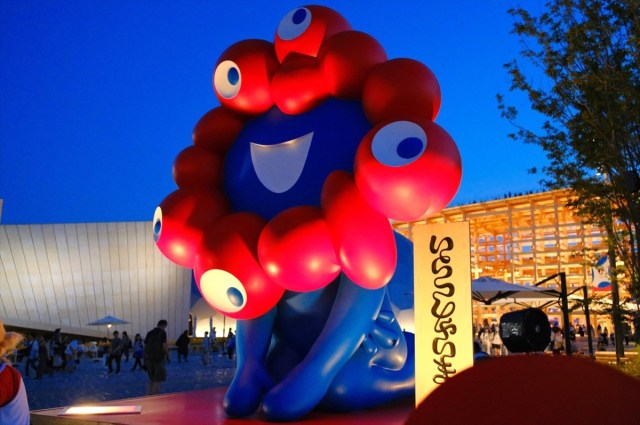

Multi-million-dollar Myaku-Myaku donation.
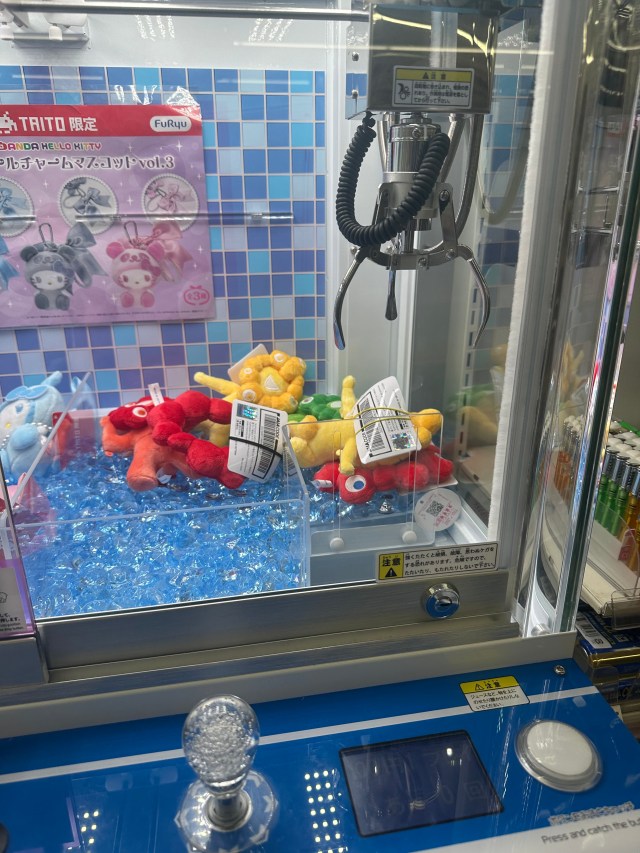
It’s been nearly a year since the closing of the 2025 World Expo in Osaka, but its official mascot, the gooey humanoid Myaku-Myaku has managed to secure a popularity that has transcended the event it was created to represent. Myaku-Myaku goods are still widely sold, and game centers are still well stocked with crane games offering chances at plush toys and other goods bearing its moist likeness.

It’s a rather surprising turn of events for the mascot after its debut in 2022, which left people unsure of how to feel about its characteristics, both cute, such as its big smile and stubby little legs, and grotesque, such as its head looking like bloody entrails.
▼ Early Myaku-Myaku fan art.
But over the years, people by and large seemed to really warm up to Myaku-Myaku. Its post-Expo activities have only continued to grow into projects such as a tastefully erotic photo book.
And now, a surprise donation to the City of Osaka may very well cement the mascot’s legacy for generations to come. Reports have recently come in that business owner Keihachi Fukunishi and his wife Akiyo Fukunishi, both 85, have given 200 million yen each, for a total of 400 million (US$2.5 million) yen to the city.
▼ There were already several statues at the venue, but the materials weren’t intended for permanent use.
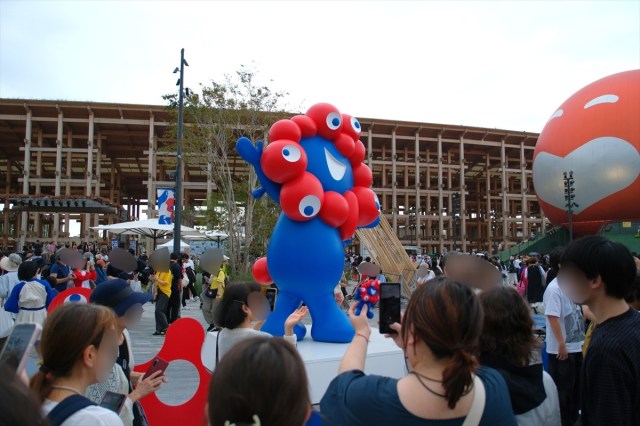

The couple’s donation came with a request that a statue of Myaku-Myaku be erected on the site where the Expo was held. At a press event where Keihachi and Akiyo received letters of appreciation, the husband told reporters the Myaku-Myaku “is a symbol. Just as the Tower of the Sun defined the Senri Expo Park, Myaku-Myaku defines the Osaka-Kansai Expo.”
He makes an interesting comparison too. The Tower of the Sun was the centerpiece of the 1970 Expo, which was also held in Osaka and also wasn’t without controversy when first unveiled. Its creator, Taro Okamoto, created it in almost direct opposition to the post-moon-landing Expo’s overarching theme of technological progress by filling his statue with organic and tribalistic imagery.
▼ The Tower of the Sun
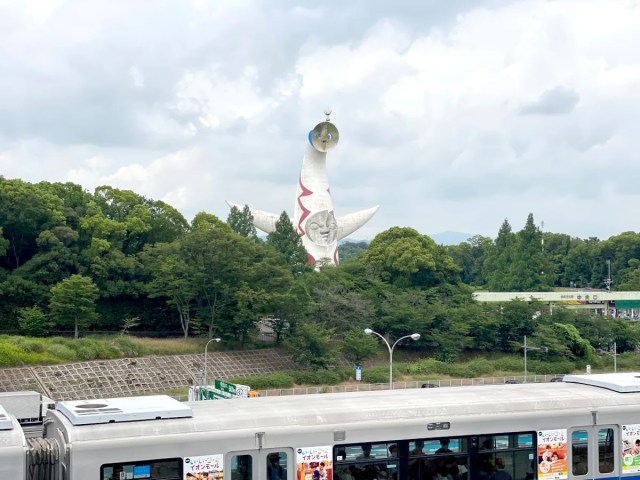

However, by the end of that Expo, it was widely lauded as a masterpiece and still stands today, designated as a national tangible cultural property. Perhaps Myaku-Myaku’s own shockingly organic appearance and subsequent rise to prominence reminded the Fukunishis of the Tower of the Sun, and they wanted to entrench the mascot’s legacy in the same way.
In response, Osaka mayor Hideyuki Yokoyama said, “I would like to accelerate deliberation so that Myaku-Myaku can take its place alongside the Grand Ring as a new symbol of this site.”
Another of the Expo’s highlights was the massive wooden Grand Ring that encompassed much of the venue and measured about two kilometers (1.2 miles) in circumference. All but a 200-meter stretch of it has been slated for demolition to make room for Japan’s first integrated resort and casino, which will be built next to a commemorative park that honors the Expo.
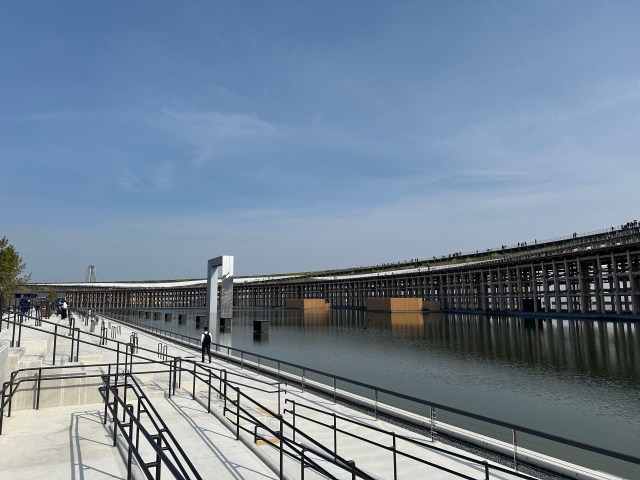
However, many readers of the news online were irked by Yokoyama’s promise to “accelerate deliberation” (kento wo kasoku), a typical non-committal phrase used by politicians to essentially say, “We’ll think about whether we want to do this or not as soon as we can.” On the other hand, some wonder if building a giant Myaku-Myaku statue might end up costing the people of Osaka in the long run.
“So, will they give the money back if they decide not to do it after their accelerated deliberations?”
“What is this accelerated deliberation nonsense? Just get it going so it’s built in time for that elderly couple to see it!”
“I hate hearing ‘accelerate deliberation,’ because it means it’ll probably never happen.”
“They’d do a lot more good by donating that money to fix the many deteriorating drainage pumps in the southern part of the city.”
“I wonder if the donors thought about maintenance costs. Seems a bit arrogant to me.”
“If they love Myaku-Myaku so much, why not build the statue in their own home?”
“Asking for a Myaku-Myaku statue just because you donate money gives me the same unsettling vibes as a corporation donating money for certain favors.”
“That’s a wonderful idea. They probably decided to donate the money while they’re still alive rather than just have it taken in inheritance taxes.”
The theory in that last comment seems very plausible. Given the age of the donors, it is entirely possible that they have no one who they need to leave the money to. Even if they do have heirs, a large chunk gets taken out in taxes, so why not pre-empt that along with a request as to how they’d like to see it spent?
They didn’t even say all the money needed to go into the statue, just that they’d like that to be done as a part of the donation. That being said, the idea of a giant Statue-of-Liberty-style Myaku-Myaku in the harbor of Osaka, defining the city’s skyline and welcoming everyone arriving by air and sea, is very appealing to me, and I’m not even that big a fan of the character.
Source: ABC News, Hachima Kiko
Photos ©SoraNews24
● Want to hear about SoraNews24’s latest articles as soon as they’re published? Follow us on Facebook and Twitter!