
Christmas is less than a week away and I’m sure many of you in the Americas and Europe are looking forward to a (hopefully) relaxing day spent with family, good food and, of course, presents.
Here in Japan, Christmas seems to be getting bigger and bigger every year, but the flavor of the holiday is probably much different than it is abroad. For example, Christmas was originally popularized here as a holiday for couples to have a special night out in the city: have dinner at a fancy restaurant, exchange gifts and then spend the night together ‘celebrating’ at a hotel.
While still viewed as a ‘lover’s holiday’, Christmas has since spread to the household, with many families feasting on the now-traditional Japanese Christmas foods of cake and—thanks to an incredibly successful marketing campaign by KFC—fried chicken.
But for most Japanese families, the real holiday spirit is felt during the time around New Years. In fact, New Years is probably to Japan what Christmas is to the US and other Western countries.
Thursday Throwback is your peek into the archives of RocketNews24, featuring articles from back when we were just getting started. We’d hate for you to miss any of the quality quirky news from Asia and Japan just because you recently stumbled upon our site. And if you’re a devout RN24 reader, thanks for sticking around! Enjoy this blast from the past!
(Originally posted on December 17, 2011)
One of my American friends living in Japan even told me is planning to go back home for Christmas and then come back to Japan for New Years to get the best of both worlds!
My plan this year, which is probably representative of most typical Japanese people, goes something like this:
Dec 31: Eat toshikoshi soba (lit. year-crossing soba noodles, explained in more detail below) with my family. At night, watch the annual year-end combat sports program on television. (Watching TV on New Year’s Eve is an important modern Japanese custom. The most-watched program is by far the music competition Kohaku Uta Gassen)
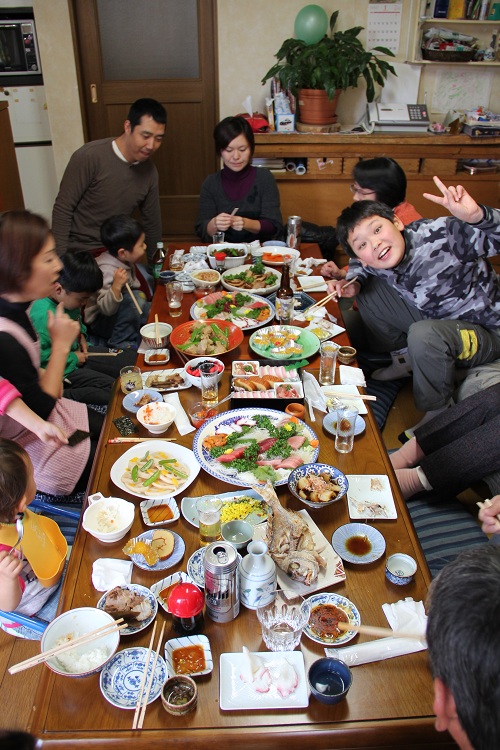
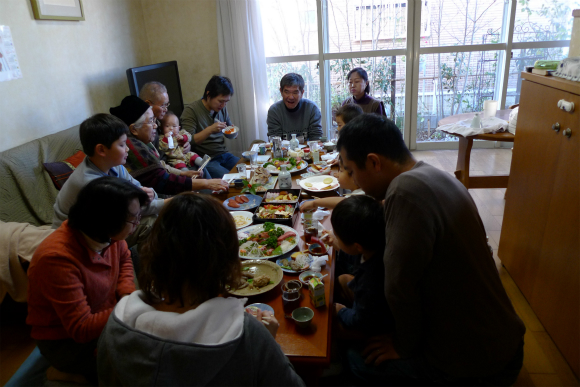
January 1: Celebrate the New Year with an even larger family get-together, eat traditional New Years food and enjoy conversation while keeping each other’s glass filled with booze. Adults will also give children otoshidama, a monetary gift given in a small, decorated envelope. The amount given is usually around 10,000 yen (US $100), so kids can build up quite a nice little fortune depending on how many generous relatives they have.
January 2: Go to the neighborhood Shinto shrine with my friends for the first shrine visit of the year and pray for a safe and happy 2014, a practice called hatsumōde. There, we will also purchase omikuji, a random fortune written on a small piece of paper (like a fortune cookie you buy at shrines and temples, but without the cookie). After that, I’ll head to the department store to purchase a sealed mystery bag called fukubukuro (also detailed below) and do some year-end sale shopping.
January 3: Go to beautiful Hakone for a 2 day, 1 night hot springs trip!
Eat, drink, shop and spend time with family and friends: The essence of Japanese New Years.
Of course, much of this is difficult to do if you’re just a visitor to Japan and don’t have any Japanese family or friends to spend time with. Therefore, I’d like to introduce 7 different ways even foreign visitors to the country can experience the Japanese ‘New Years spirit.’
1. Shop
New Years could perhaps be considered the Black Friday of Japan. It’s definitely the cheapest time to shop of the whole year, with most stores marking goods down by 50% or more. I like to stock up on new clothes, but there is something for everyone!
2. Visit a shrine for hatsumōde – the first shrine visit of the New Year
Like me, it’s custom for most Japanese people to head out into the cold weather on January 1 and visit their local shrine to pray for health, happiness and good fortune in the year to come. Accordingly, any shrine you visit that day is likely to be filled with locals walking about lightheartedly. On the shrine grounds, business owners set up small shops to sell food or talismans and shrine staff pass out cups of warm, sweet sake to visitors. It’s like a New Years festival!
3. Buy a fukubukuro (lucky grab bag)
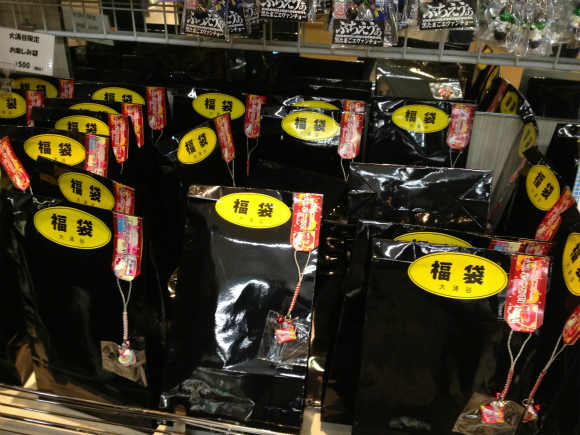
Available for purchase starting Jan 1 at almost any kind of store, fukubukuro is a grab bag filled with random products left unsold from the previous year and sold at a fixed price, usually 3,000 yen ($30), 5,000 yen ($50) and 10,000 yen (US $100), depending on the size and quality of the contents. The items themselves are heavily discounted, usually 50% or more off the list price. Recently, some clothing stores have been known to stuff 100,000 yen ($1,000) worth of merchandise in some of their 10,000 yen ($100) grab bags.
Like Black Friday in America, many Japanese people line up outside the most popular stores hours before they open to grab a fukubukuro before they run out. If you don’t mind taking a little risk for big savings, why not try joining their ranks next month?
4. Walk the streets on January 1 and let the mood soak in
Men and women dressed in traditional kimono, people carrying lucky talismans with them on the way to the shrine for hatsumode: There’s just something about walking around the town on New Years Day that puts you in a special mood that you probably can’t feel anywhere else other than Japan!
5. Enjoy a cheaper, less-crowded Tokyo
Many people leave the city once their winter holiday starts in December to return to their hometowns. Accordingly, the bustling city of Tokyo always seems to bustle a little less during New Years. The always-crowded weekday trains have plenty of room to sit and even some of the most luxurious of hotels cut room prices to try and increase demand.
6. The New Years countdown

Cities across Japan participate in this international tradition in a number of ways. Here in Tokyo, people fix their eyes on a large electric bulletin board at Tokyo Tower as it changes from 2013 to 2014.
7. Eat
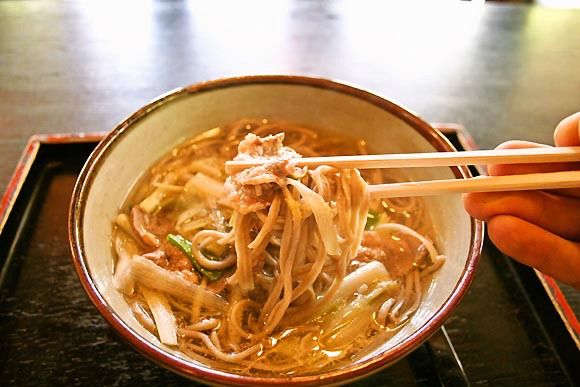
As I mentioned before, Japanese people eat a special noodle dish called toshikoshi soba on New Years Eve. The reasoning behind this is that, like the long and thing soba noodles, we hope to live a long and healthy (thin) life. It might be interesting to visit a soba shop on the 31 to try toshikoshi soba for yourself, but be warned: New Years Eve is usually the busiest day of the year.
The real feast, however, is with osechi, a collection of traditional Japanese New Year foods, each with a special meaning, arranged in a special, 3-tiered box. While, osechi isn’t something you can eat a restaurant, you could always buy it ready-made—just make sure you have enough people to help you take it down as it is A LOT of food.
And there you have it! Japan is just an awesome place to be at the end of the year!
I hope the seven reasons above are enough to encourage some of you to consider planning a New Years trip to Japan. I’m sure you’ll find it more fun than New Years back home—and maybe even Christmas as well!
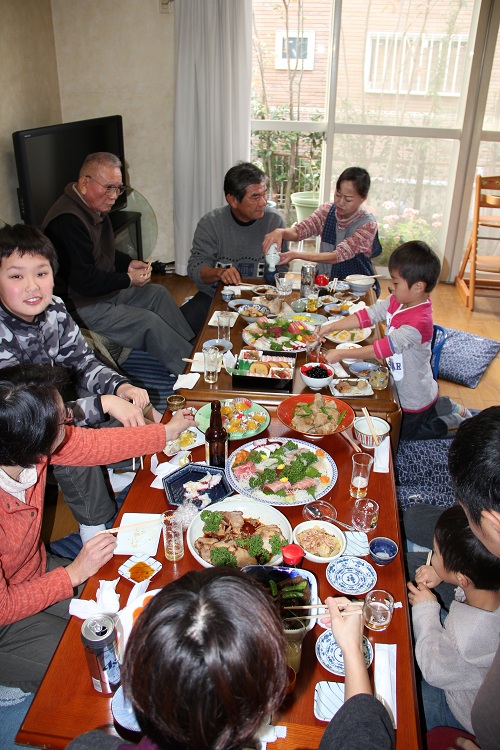
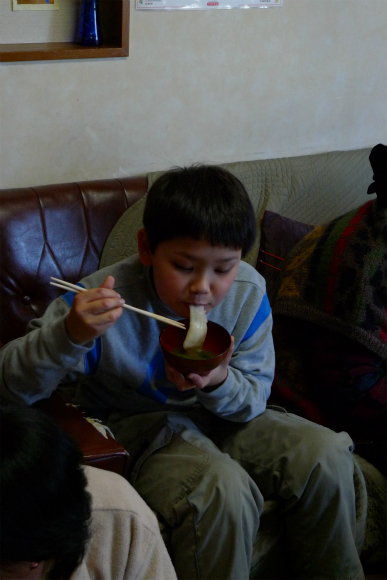
▼ Eating ozoni, a delicious soup with mochi eaten on New Years Day.