Like the aroma of fresh-baked bread or the sweet fragrance of a flower shop, the stench of a toilet can be just as memorable, albeit not in as nice a way.
Despite Japan’s reputation for high-tech toilets and Washlets that do everything except brush your teeth (thank God), a surprising number of households in Japan still have the old-style “pit toilets.” These toilets have a porcelain bowl, but no running water to flush in or out. You just squat over the hole and drop your goods into a cement pit waiting at the bottom. It’s basically an in-house outhouse.
Almost all the houses are this style on the islands in the Seto Inland Sea as well as many dwellings in Japan’s countryside. Our toilet reporter takes an in-depth look at how these pit toilet systems work. We bet you’re just dying to know!
The most surprising thing about these bathrooms, perhaps, is that they don’t smell foul. This is because each house has a fan connected to the toilet pit that works continuously to propel the stench outside rather than letting it creep back into the building.
▼The tell-tale sign of a pit toilet: the toilet fan. We hope the birds don’t mind.
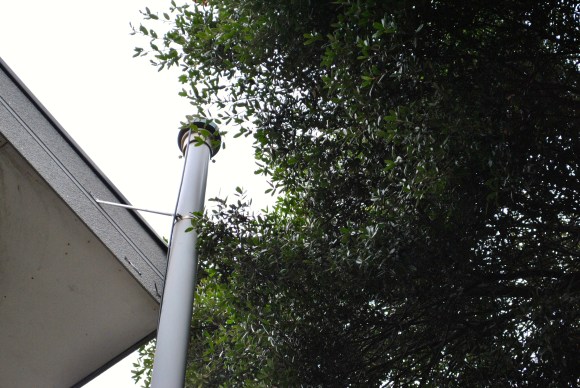
▼Some houses have their fans lower. They like to share their smells.
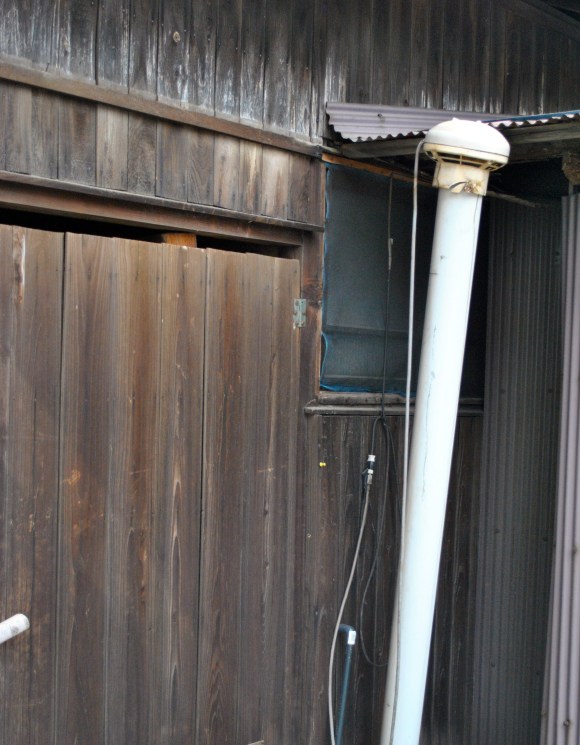
▼One of the old, old latrines in the town where I live which, believe it or not, is still in use. Electricity to power fans allowed the outhouses to be moved inside but hey, the scenery here is still pretty good.
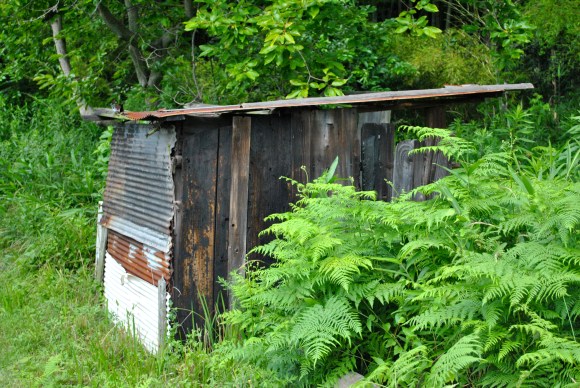
When I first moved into my house on Shiraishi Island (also known as the Land of the Amanos), it had one of those oblong porcelain Japanese toilet bowls you straddle, one leg on each side. These squat toilets can still be found all over Japan (albeit most flush nowadays), and may be modeled after the first public toilets in Japan. During the Nara Period (710-784), a drainage system was constructed in the capital city of Nara by digging ditches 10-15 cm wide and diverting water through them. These were the first public toilets users could squat over. Various styles of “toilet paper” were used, including seaweed, washi paper and even a wooden scraper called a chūgi (ouch!).
The problem with the Japanese washiki-style of pit toilet is that it gives you a very close-up view of what everyone in the household has eliminated over the past few weeks. It’s no wonder that in Japan kids believe a ghost named Hanako-san lives in the school toilet! Pretty scary stuff.
This is also surely the reason for Ususama Myou-o, who purifies the unclean, is the guardian deity of the toilet.
▼Ususama Myou-o

So the first thing I did when I moved into my house was buy a plastic, Western-style toilet bowl that fits over the hole, made expressly for this purpose. Later, I upgraded to a porcelain one. But still there’s that hole, and the possibility of an encounter with toilet ghosts.
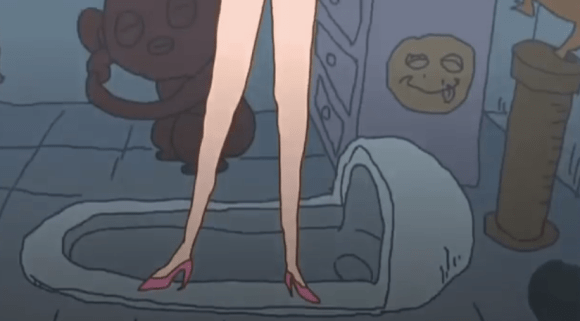
▼Hanako-san is a toilet ghost who lives in the third stall on the third floor of most schools. She is said to have a short, bobbed haircut.

▼She’s also, apparently, busty and wears a red skirt

▼All in all, not too scary to have in your school bathroom, I wouldn’t think.
At least with a Western toilet I do not have to face my feces, nor worry about dropping something such as a cell phone down there (lots of people have lost cell phones to Japanese squat style toilets when the phone dives out of the shirt pocket when leaning over).
▼This looks like a normal Western-style toilet, but it has no flushing system.
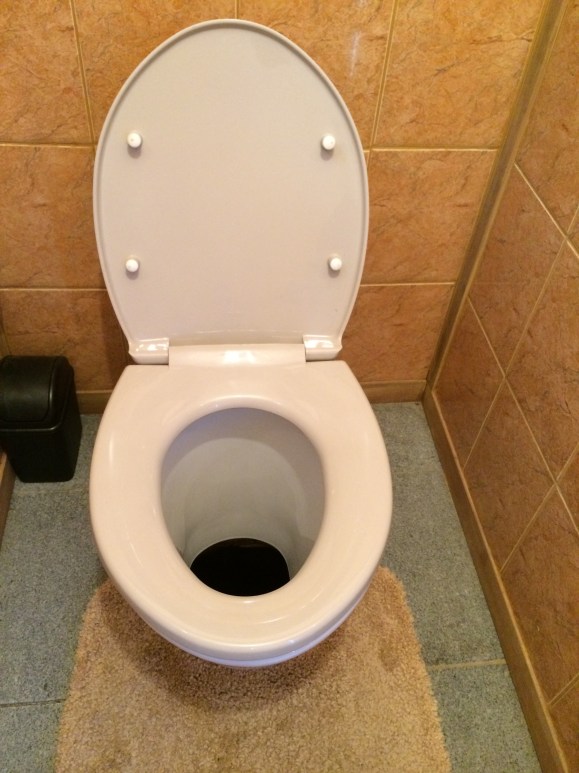
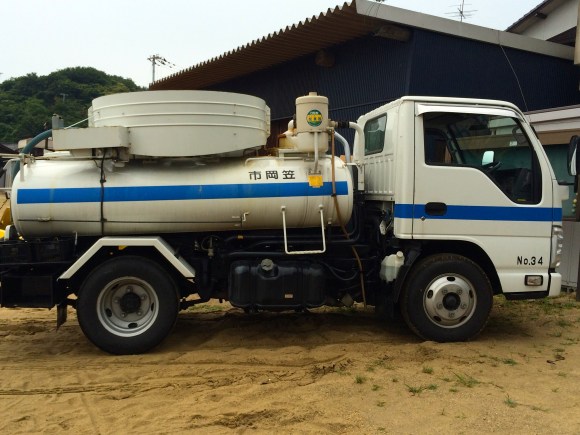
Once a month, special trucks are ferried out from the mainland to come clean the toilets on our island. This celebrated event, repeatedly announced via the island PA system, is called kumitori, a combination of two verbs: kumu (to dip) and toru (to take out). So basically, “dip and take.” Special men in jumpsuits are dispatched with the trucks to dip and take our waste.
I imagine “dip and take” refers to the original method of cleaning out the earthen pit at the bottom of the toilet with a bucket. These days, however, the toilet men carry large hoses and merrily suck out the accumulated contents of the pit into a holding tank mounted on the truck. It’s surprising how much these guys seem to enjoy their jobs!
▼These vacuums on wheels make the rounds of all the houses on the island.
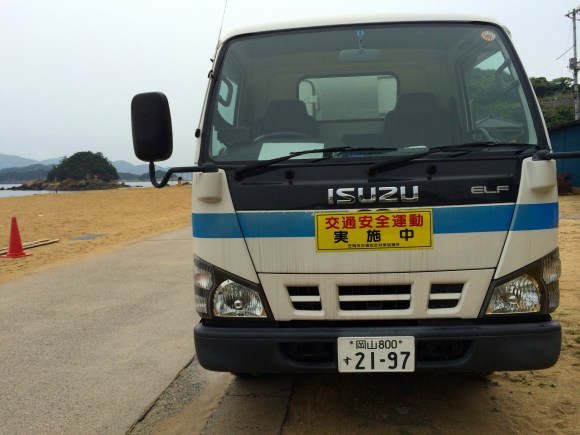
▼I don’t know about you, but I’m glad these guys are part of the Traffic Safety brigade, as noted on the sign on the front of the truck. I would hope they drive safely with all that methane inside!
▼The “honey cart” then transfers the stuff into a cesspool.
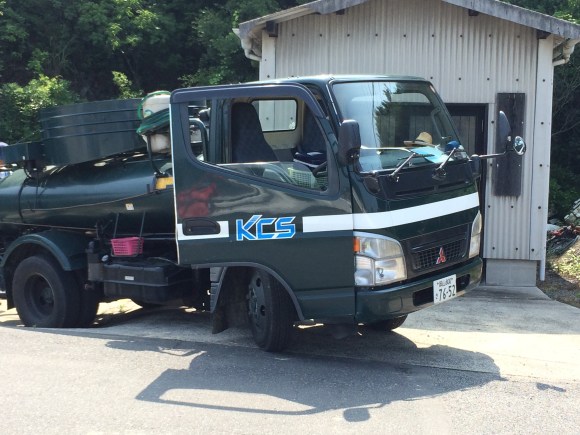
These trucks run back and forth all day long as they suck out the sludge from the houses and transfer it by truck to the cesspool.
▼I know this because these trucks run past my house all day long on kumitori day. And the smell ain’t pretty.
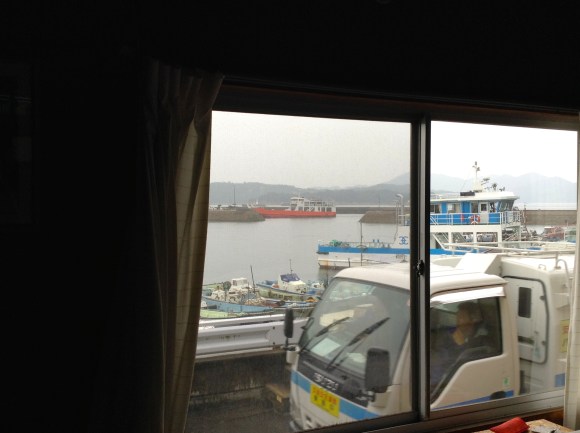
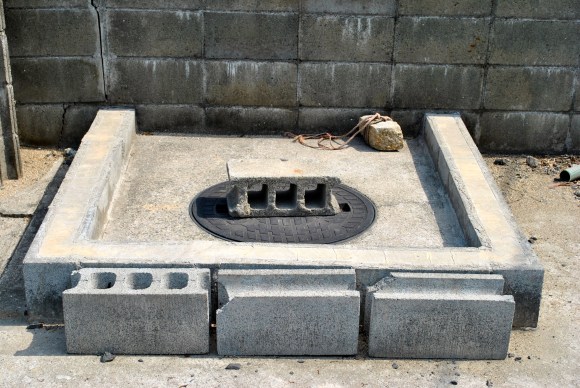
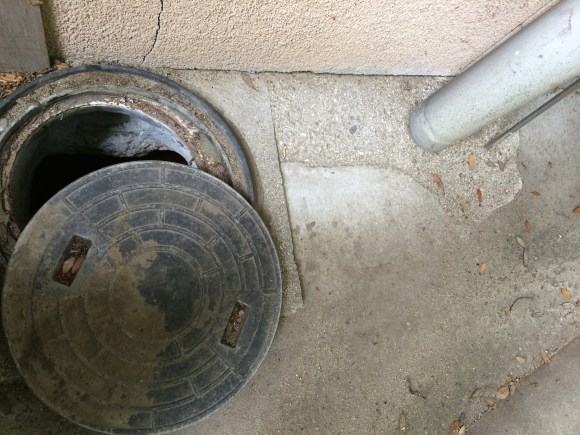
▼This is the cover to the cesspool. Notice it has a cement brick on top. Perhaps Hanako-san’s older sister lives in there…
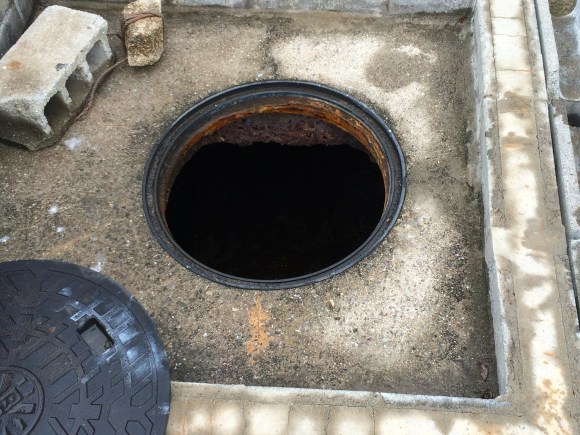
▼I took off the lid to check if she was. Fortunately for you, the flash wasn’t working on my camera when I took this picture.
How much does one pay for this toilet cleaning service? Glad you asked!
In polite Japan, you’d never pay cash for removal of your feces. Oh no, no, no, no! Instead, you buy toilet tickets, a type of currency you use to pay the men in jumpsuits. How much do you pay? Ah, that is decided according to your output. The number of toilet tickets you need each month will vary. I have discovered that the number of tickets one needs is directly related to how much beer one drinks.
▼ Toilet ticket currency, not unlike the tickets you buy to ride attractions at those carnivals that breeze into town.
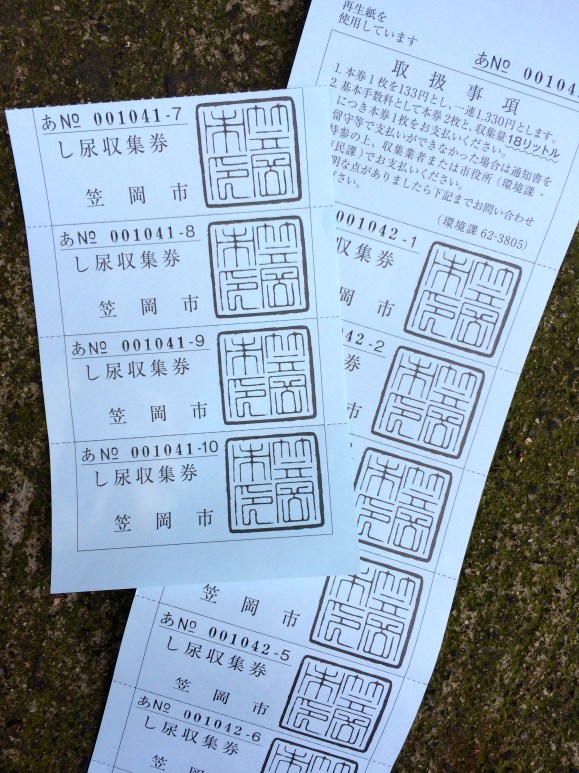
Each ticket costs 133 yen (US$1.30) and is worth 18 liters (4.7 gallons). Apparently, I’m a 90-liter kinda girl, so I paid five tickets, or 665 yen, plus two tickets (266 yen) for the service, or a total of 931 yen (US$9.14) last month. That’s, like, one of the cheapest things you can do in Japan!
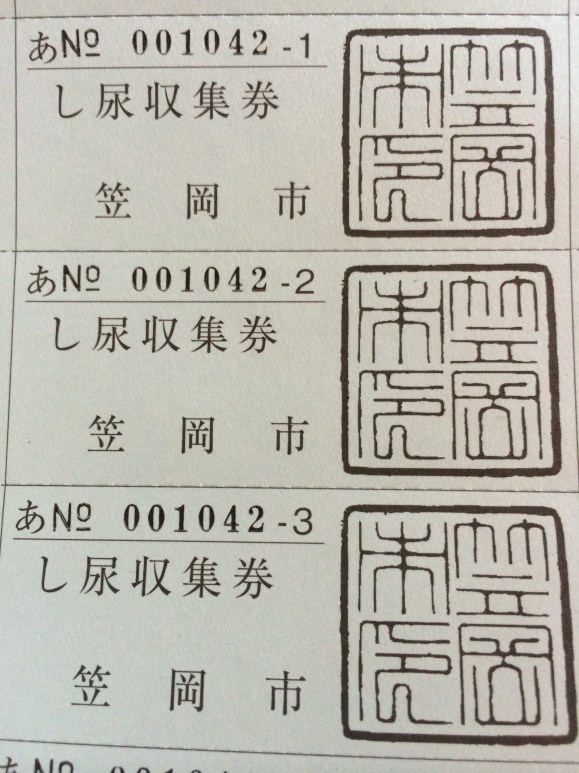
And yes, you do get a receipt!
Unless of course, you prefer not to pay at all and instead clean the toilet out yourself. And believe it or not, some people do!
▼But you’ll need a fork lift.
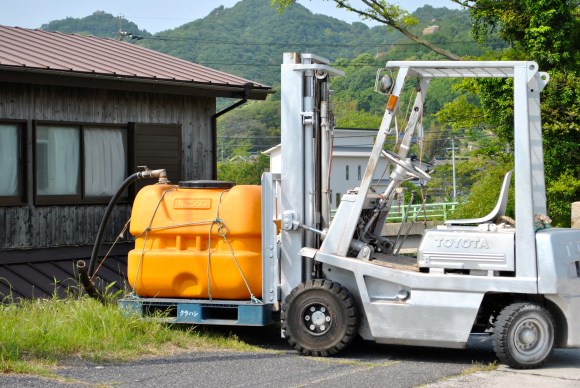
▼My neighbor, who must really love his family, first hooks up hoses from the toilet pit to a holding tank mounted on the forklift.
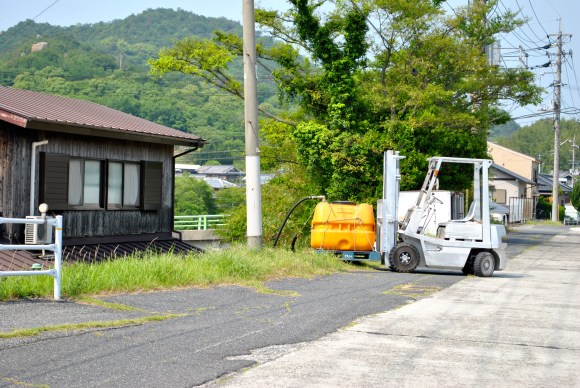
▼This all takes place outside the house as there is an opening to the pit next to the outside toilet wall. Notice the toilet fan on the right.
▼When the tank is full, he transports the tank to the cesspool.
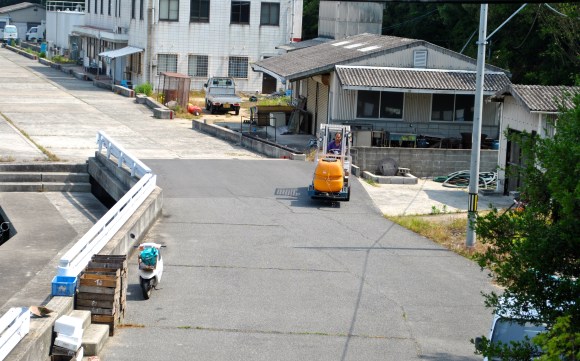
▼After he finishes the dirty deed, he drives the forklift back home
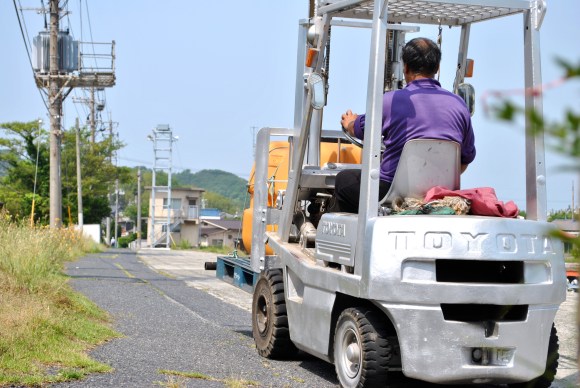
The toilet men come once a month and we have to sign up for the service each time, so occasionally people forget and have to go a month longer than they planned with a full toilet pit. But I am usually reminded by the toilet itself, when I feel a bit of back-splash. Good ole’ toilet monsters hard at work down there!
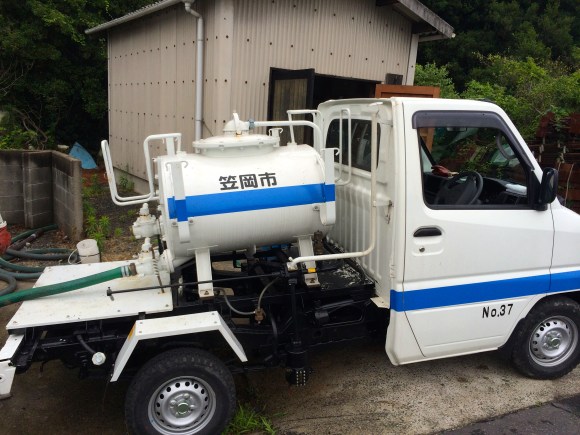
But some people on the island can’t get a vehicle to come and haul their excrement away because they live down narrow lanes where the toilet trucks can’t go. And not everyone owns a forklift. But there is a small mini-truck that can get down some of the narrow streets.
▼This mini-truck holds 400 liters.
▼But Shriaishi Island also has pedestrian-only streets that were built before cars were invented. Some are hundreds of years old…
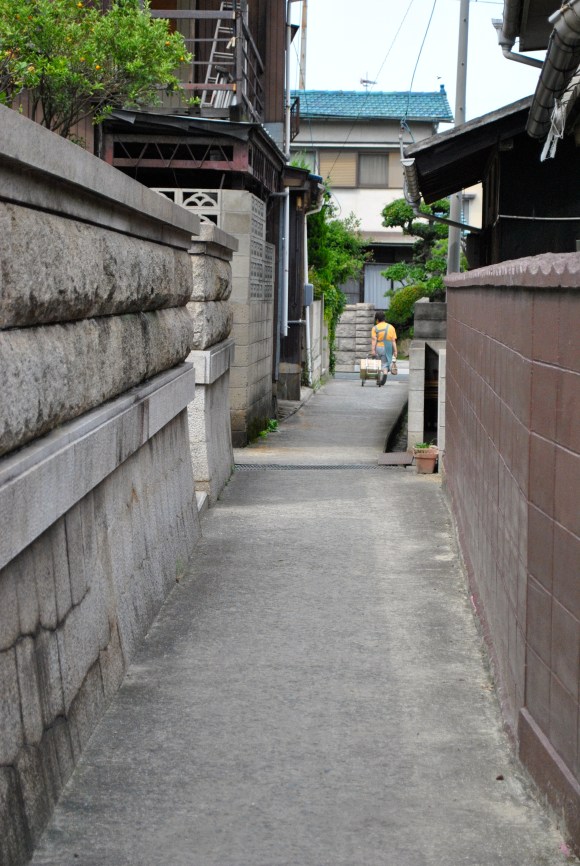
…and have extremely tight corners.

Here’s one that goes to the beach.
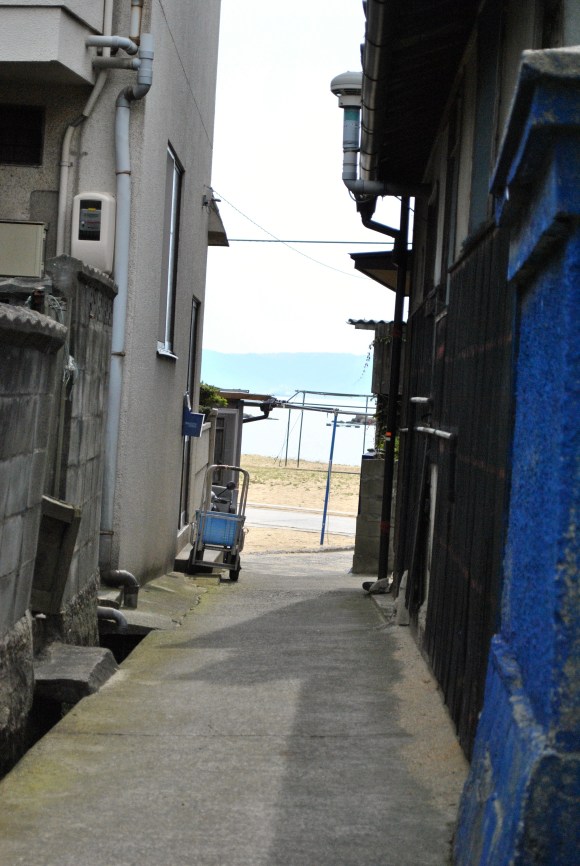
And another that goes through a neighborhood.
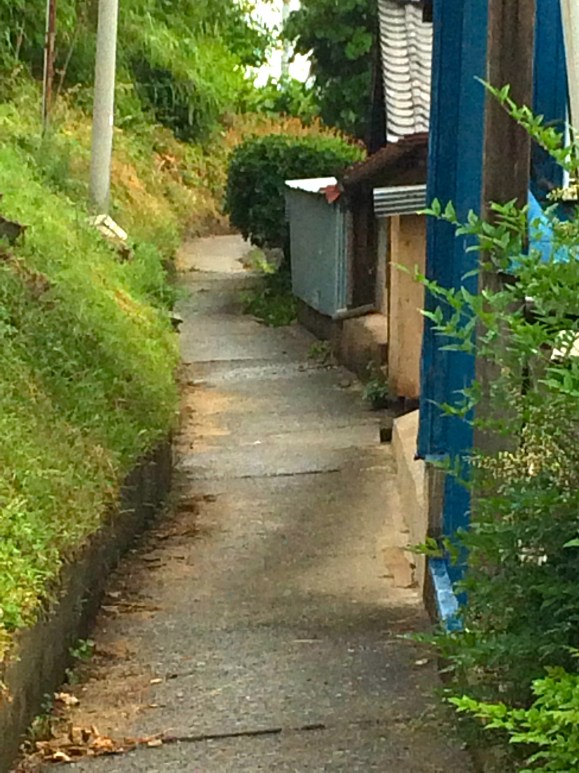
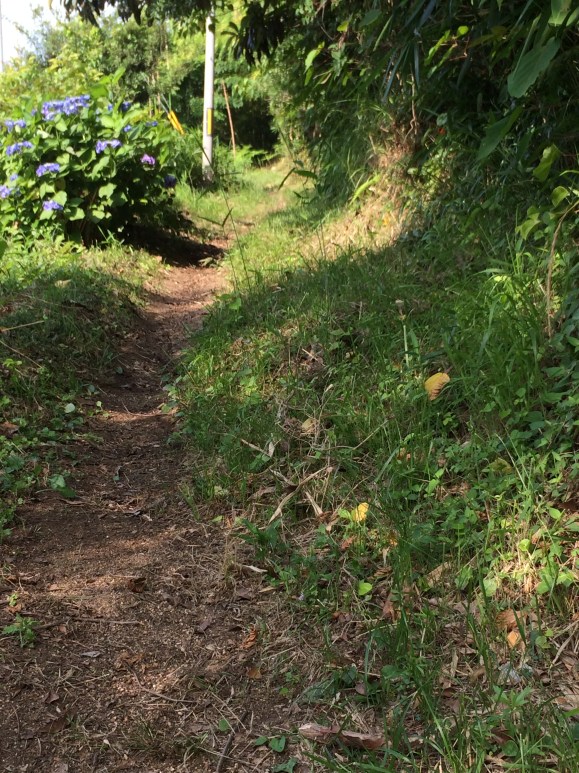
Other houses are still located on dirt paths.
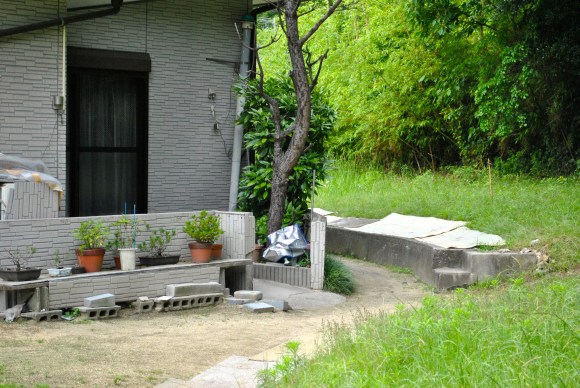
▼ Yep, someone lives back there. Waaaaaaay back there.
.
And some entire neighborhoods are inaccessible by even a mini toilet truck.
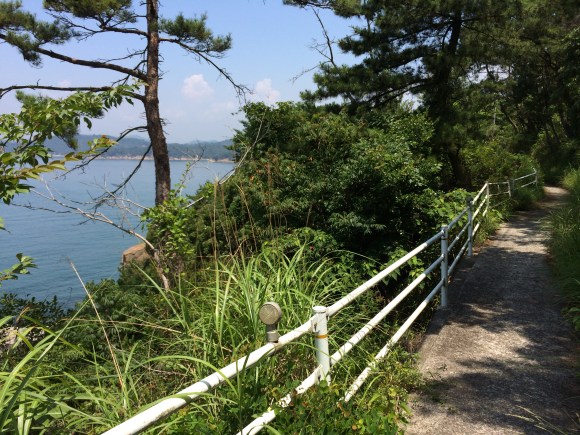
How do these people get their toilets cleaned out? In this case, you leave it to your fellow islanders to help. This is the job for the super mini toilet truck!
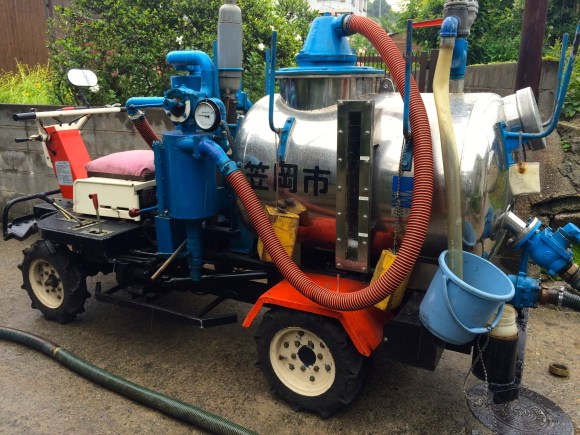
▼Looking a little like a one-man band, it’s hard to imagine what this truck can’t do!
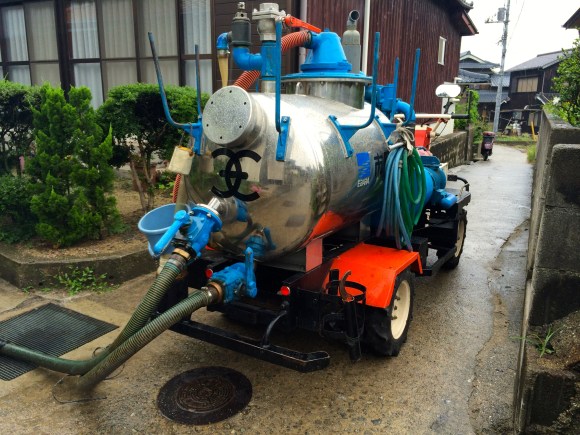
The super mini has a tank that can hold 400 liters and it has a 60-meter-long hose! So it can clean toilets in houses that are way off the road.
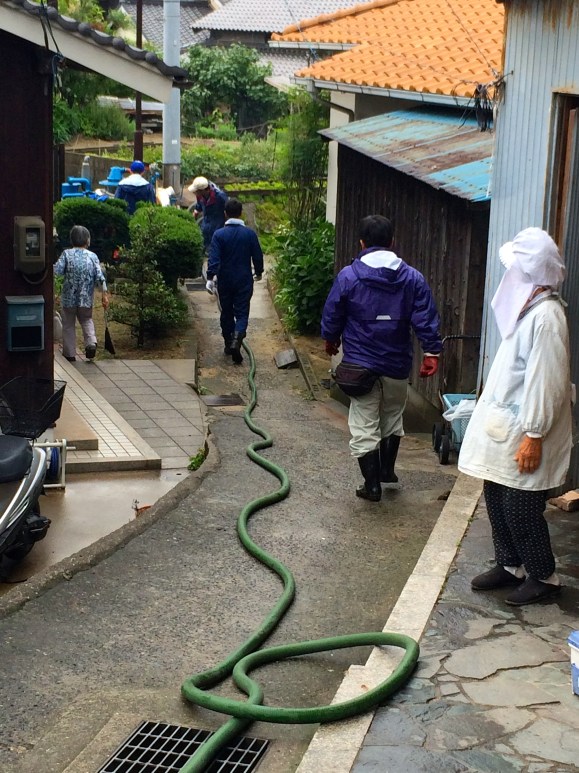
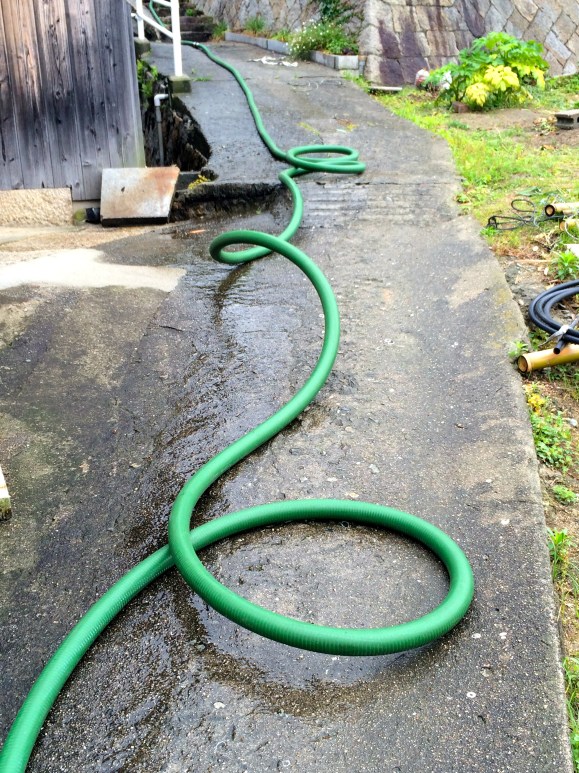
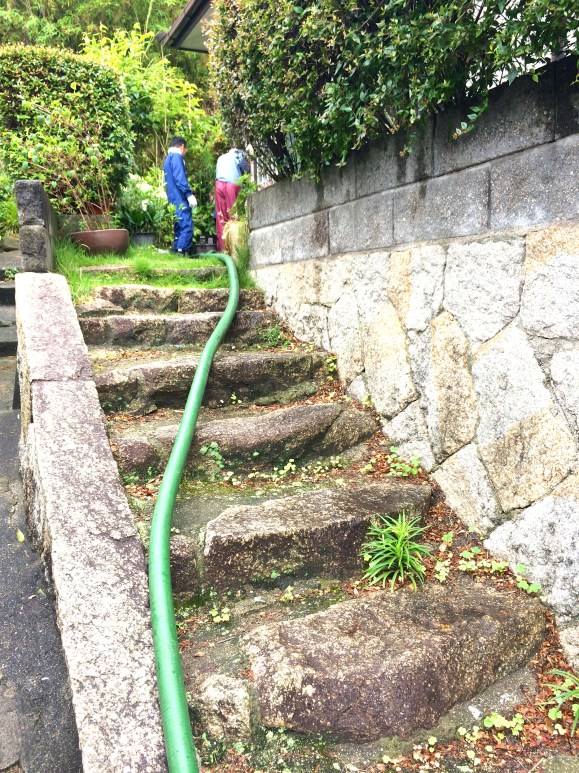
▼Okay, so the hose isn’t perfect.

Kumitori is an environmentally friendly way to dispose of human waste. But the odoriferous act of churning up the stuff when transferring it out of the toilet pits into the truck, and then from the truck into the “cesspool,” just stinks. Let me tell you, a whiff of the feces of 570 islanders – all at once – is enough to knock you out. This odor will permanently lodge in your Smell-O-Vision memory.
Why is it that animals have nice, fragrant names for their defecation, like “cow pies,” “meadow muffins” or “doughnuts?” Human waste will never smell as good as day-old horse manure, for example. Instead, ours just smells like crap.
So why don’t more people break down and get indoor plumbing for their toilets? My guess is that, believe it or not, you get used to it.
But being so up close and personal with food and what it turns into just a few hours later, I have to wonder about some of those Japanese snacks.
▼Take these Kumamon doughnuts, for example.
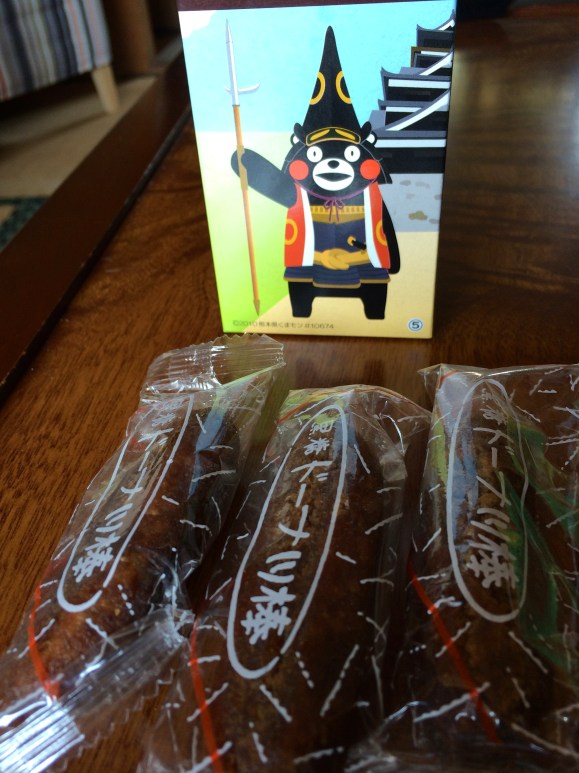
They’re called doughnut sticks. Low on the gross index, but still kinda unappealing.
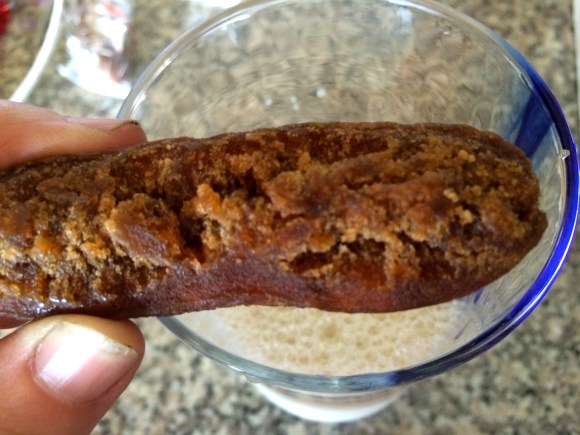
And look at these brown sugar karintou snacks.
▼High on the gross index
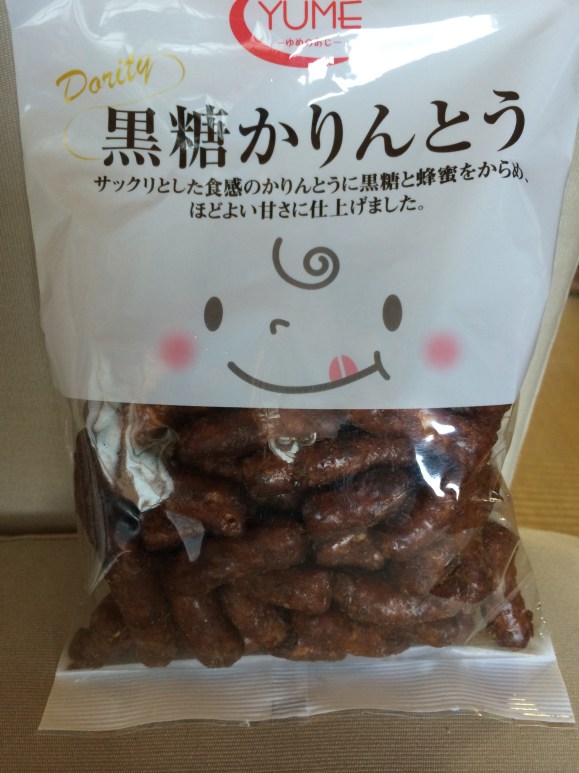
▼I dunno. I just can’t get excited about eating these karintou snacks.
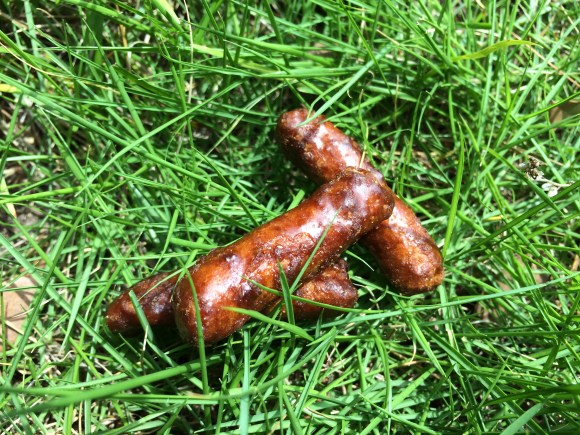
These might be good snacks to take to the baseball game though, as you could properly celebrate every time your team has a player who makes it to turd base. Ok, so that was a pretty shitty joke…
We leave you with a song by Japanese singer and song-writer Kana Uemura called “The Toilet God.” In the song, Uemura’s grandmother tells her that if she cleans the toilet, she’ll grow up to be a beautiful woman. We think you’ll agree that the grandmother was right, even though Uemura probably would’ve become even more beautiful if she’d cleaned a pit toilet.
And remember, should you ever drop your cell phone into a pit toilet, never jump in to rescue it–it could cost you your life.
Photos: Amy Chavez/RocketNews24
Feature image: YouTube