
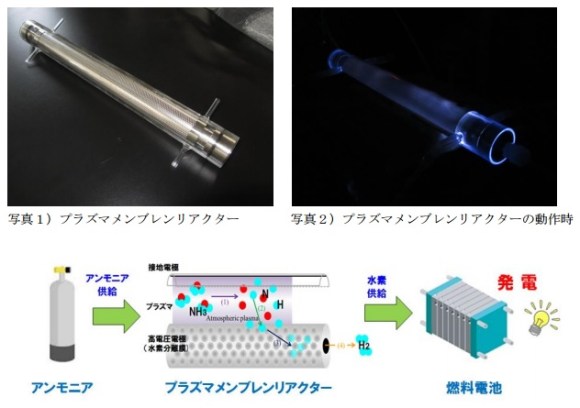
The Plasma Membrane Reactor can take a jug of ammonia and convert it into pure hydrogen cleanly and cheaply to power anything from portable generators to cars.
● What ever happened to Hydrogen?
Remember a few years back when everyone was talking about the advent of hydrogen fuel cell vehicles (FCV)? Toyota even jumped the gun and released a hydrogen car, the Mirai, to go along with Japan’s first ever hydrogen fueling station. But in the three years since then things have been relatively quiet on the FCV front.
Sure there are the superficial problems: there aren’t hydrogen stations on every street corner to fill up with and people are probably still a little skeptical about its safety after that whole Hindenberg disaster. Sure it’s been 80 years, but that’s no reason to let hydrogen get off easy.
 Image: Wikipedia/US Navy
More importantly, there have been deeper challenges, including storing the hydrogen. Calamity aside, the Hindenburg used hydrogen in the first place because it was extremely light. The problem with that is condensing it all together into a fuel tank so you can have a usable amount. Doing that will take a fair bit of pressure – 700 atm (10,000 psi) to be exact or about three times that of a typical scuba diving tank. Another way is to cool it enough so that it becomes a liquid, which would take temperatures of about -259℃ (-434°F).
Needless to say, storing and transporting fuel at either 700 times earth’s atmosphere or near the lowest temperature known to humanity at all times isn’t very cost effective. Even worse are the complex ways to acquire the hydrogen. Current methods to extract hydrogen from other substances often require considerable amounts of energy, meaning widespread usage of it might not even prove to be an environmentally friendly energy source at all.
So we need a better way.
● Ammonia: so much more than just a mirror cleaner
Ammonia, which is made up of one nitrogen atom and three hydrogen atoms, has long been considered a potential way to get pure hydrogen safely. It’s liquid at room temperature and although it is rather toxic in its undiluted state, it is relatively stable and much less flammable.
▼ The molecule also looks like it could give a mean foot massage
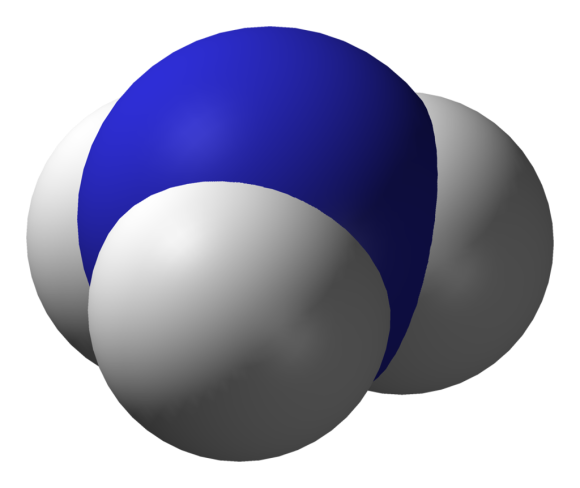 Image: Wikipedia/Benjah-bmm27
As desirable as it is, the problem is how to pull the hydrogen out of the ammonia. As I just mentioned, traditional methods are taxing and involve using temperatures of 400℃ to 800℃ (752°F to 1472°F) and rare materials like ruthenium as a catalyst. This brings us right back to the expensive environmental hazard of crazy temperatures and the possibility of making Canada really rich…you know, because they’re sitting on a lot of the ruthenium.
Luckily, Professor Shinji Kanbara of Gifu University and Sawafuji Electric have developed a way to easily, cheaply, cleanly, and compactly get the hydrogen out of ammonia without any extreme temperatures or pressures.
● The Plasma Membrane Reactor
This futuristic sounding device harnesses the often unsung hero of states of matter: plasma. Without getting too technical, plasma is a gas that has electricity passed through it and is split into positively and negatively charged components but still united as a single body of matter. Examples include fluorescent or neon lights and lightning.
▼ Those crazy lightning balls I used to love as a kid are a great example of plasma.
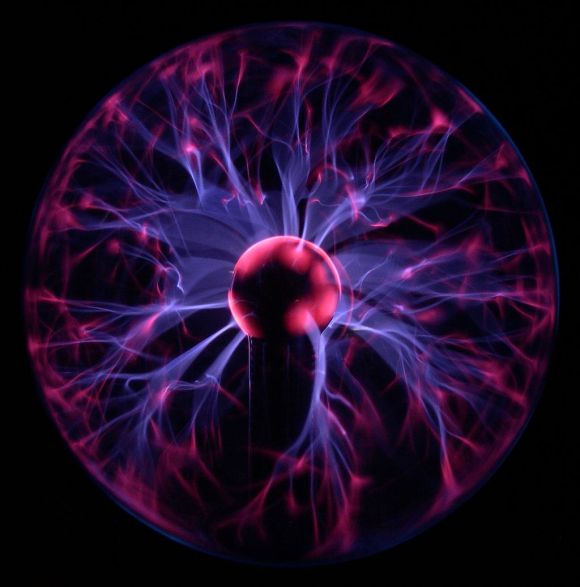 Image: Wikipedia/Luc Viatour/www.Lucnix.be
The design of the plasma membrane reactor is actually quite simple. It is made up of two tubes with one inside of the other. The outer tube is made of two-millimeter-thick quartz glass. Inside is a tube made of perforated iron wrapped in a thin film of palladium alloy.
Ammonia gas is passed through the small gap between the tubes while a high voltage current runs from the inner tube to the ground on the outer surface, thus creating ammonia plasma and separating the nitrogen and hydrogen atoms.
▼ As an added bonus, the plasma causes the reactor to emit a cool sci-fi glow
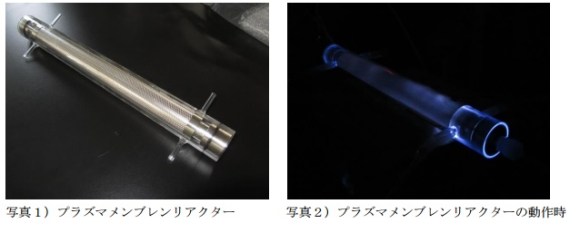 Image: Value Press
Only the single hydrogen atoms are able to pass through the palladium alloy and into the iron tube. On the other side they combine to form hydrogen gas which can then be fed directly into a hydrogen fuel cell.
▼ In this diagram showing how the Plasma Membrane reactor works, the red dots are nitrogen atoms and the blue dots are hydrogen atoms.
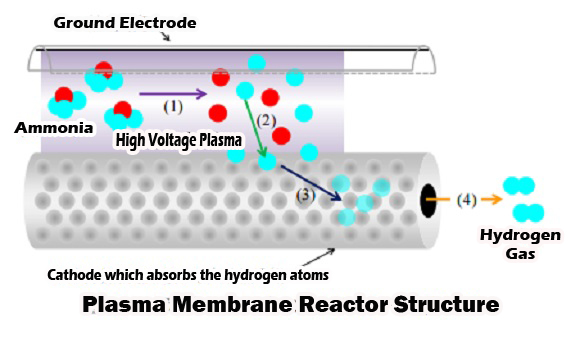 Image: Value Press (Edited by RocketNews24)
This process can be done at regular temperature and air pressure with considerably less energy and materials than other established methods. Not only that, a common problem with extracting hydrogen from ammonia had been that residual ammonia remains and corrodes the equipment over time. However, the Plasma Membrane Reactor produces hydrogen that is 99.999 percent pure.
● Big Deal?
It sure is. Ammonia to produce hydrogen is more cost-effective in pretty much every regard. Ammonia is relatively cheap and easier to transport and store as a fuel. It can be a great replacement for oil or diesel in generators without any of the harmful emissions providing clean power to rural areas or developing countries which don’t have access to gas or electricity.
With enough modifications it could also be incorporated into a hydrogen fuel cell powered vehicle. The device itself only measures about 4.2 by 40 centimeters (1.6 by 16 inches) and can produce enough hydrogen to reduce the fuel tank size from 120 Liters to 70 Liters (32 gallons to 18 gallons). With enough modification we may even have light enough gear to be able to have hydrogen fuel cell motorbikes as well.
▼ This video shows the inner workings of a Toyota Mirai with its two hydrogen tanks seen as yellow cylinders. Their size can be significantly reduced by the Plasma Membrane Reactor.
Granted, ammonia is rather toxic and therefore isn’t the safest material in the world, but we wouldn’t need any specialized and expensive facilities like hydrogen fuel stations to manage it. Anyone could sell ammonia with considerably fewer safety concerns than that of hydrogen or even gasoline.
The Plasma Membrane Reactor clears a major hurdle in hydrogen fuels cells by providing a cost-effective and environmentally friendly way of getting the hydrogen as well as a safer and more efficient way of storing it. It’s hard to imagine FCV and other hydrogen fuel cell manufacturers not wanting to utilize it.
And so, it certainly looks as if the future of cleaner energy is upon us, and it is very pungent smelling.
Source: Value Press
Feature image: Wikipedia/Benjah-bmm27
Top image: Value Press
 Toyota’s hydrogen fuel cell powered car ready for sale this December
 Japan’s hydrogen fuel cell stations begin to open, but are they worth the switch?
 Studio Ghibli unveils new anime calendars and diary planners for 2027
 Japan’s final Penguin Suica train cards have already shipped, and when they’re gone, they’re gone
 Hikaru Utada sings new song in Shinkansen commercial for Japan’s Supreme Class cabins
 Farewell Final Ceremony announced for Tokyo’s life-size Gundam statue, will stream live
 Hobonichi unveils new 2027 planners, diaries and stationery with One Piece, Suica Penguin, Hello Kitty and a must-buy Mini Techo
 Mister Donut releases new doughnuts that look and taste like Japanese sweet potatoes
 Tokyo’s Haneda Airport opens new Terminal 1 North Satellite next month
 Foreign travelers arrested in Japan following smash-and-grab robbery in Tokyo shopping mall
 Starting this fall, you’ll be able to take a Pokémon Jet flight to Japan
 Pizza Hut Japan creates moon-viewing sukiyaki chrysanthemum pizza for tsukimi season
 Japan approves foreign resident visa renewal fee increases of up to 967 percent, starts soon
 Japan tripled its departure tax to fund tourism but is using the money on cherry blossoms and bears
 Nike x One Piece collection brings Devil Fruits to sneakers and streetwear in Japan
 We recommend not buying one pack of Japan’s new convenience store corn soup-flavor fried chicken
 Police in Japan looking for who’s responsible for dumping 80 loaves of bread on side of road [Video]
 Japan’s double-decker portable rice cooker/bento maker is better than ever with new version
 Nephew of Studio Ghibli director Hayao Miyazaki serves up Totoro Shaved Ice in Tokyo
 12-year-old British girl who went missing in Tokyo found safe after visiting anime sites around Yokohama
 7-year-old boy left behind on Mt. Fuji by his own dad
 Air-conditioned dress shirts arrive in Japan to save working professionals from sweltering heat
 Sushi Bus: Japan’s first conveyor-belt bus lets you eat sushi while sightseeing around Tokyo
 Pokémon Center Online designates first Pokémon items that will require Japanese ID card to buy
 Japanese toilet aims to attract foreign tourists but not everybody is happy about it
 Tokyo’s newest viral dessert is like a Japanese parfait inside a bread bun [Taste test]
 New Japanese vending machine at Shinkansen station sells cups of ice on platform
 Study finds hundreds of people in Indonesia legally named after Naruto, Inuyasha, other anime stars
 Japan announces sudden 400-percent increase in visa fees for foreigners entering the country
 Japan’s human washing machines will go on sale to general public, demos to be held in Tokyo
 Studio Ghibli has a new anime out, and there’s only one place in the world where you can see it
 Starbucks Japan releases new drinkware and goods for Valentine’s Day
 Starbucks Japan releases new sakura goods and drinkware for cherry blossom season 2026
 Japan’s newest Shinkansen has no seats…or passengers [Video]
 Tokyo subway installing new ticket gates that don’t accept payment through Suica or other IC cards
 Japanese ninja certification exam attracts 131 candidates from Japan and abroad
 Salomon releases Japan-exclusive Mt. Fuji hiking gear that doubles as an amazing souvenir
 Put sesame oil in your coffee? Japanese maker says it’s the best way to start your day【Taste test】


#/media/File:Plasma-lamp_2.jpg)
