
Simply add hot water and you can easily make hot spring eggs at home.
Our reporter Go Hatori is addicted to hot spring eggs, or “onsen tamago” as they’re known in Japanese. While he doesn’t have the means or patience to make them himself – onsen tamago are traditionally slow-cooked in hot spring water to give them their runny, silken texture – he has been buying them from the supermarket and eating them whenever he can, even popping them into salads to get his runny egg fix.
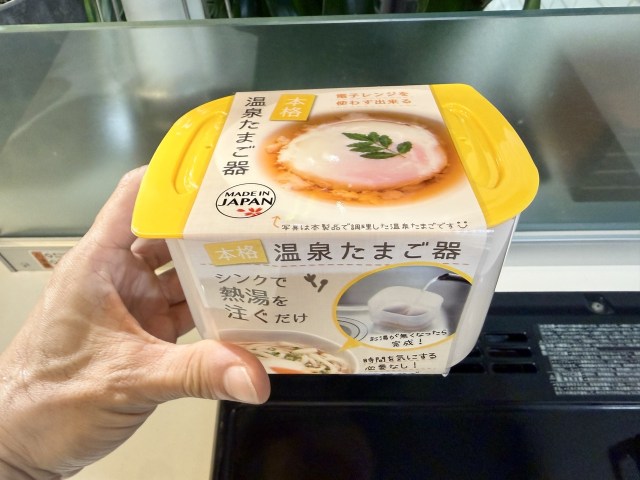
Just the other day, though, he found a product that could level up his onsen tamago obsession, allowing him to make them fresh at home. Called the “Honkaku Onsen Tamago Ki” (“Authentic Hot Spring Egg Maker“), this nifty little item was made by respected local manufacturer Yamada, and sold at chainstore Daiso for 110 yen (US$0.69).
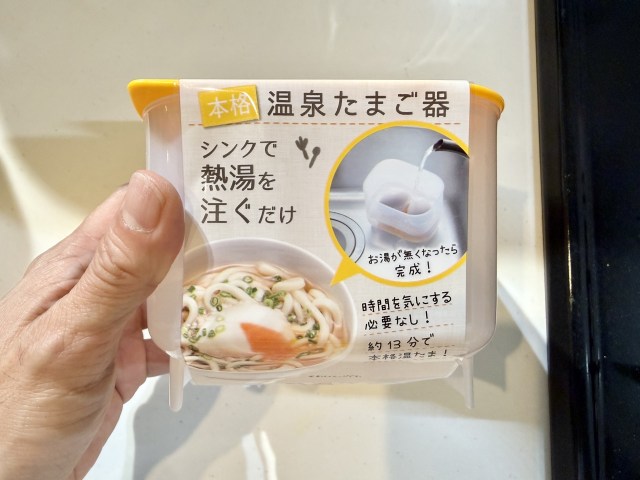
According to the blurbs on the pack, this handy gadget lets you make onsen eggs with nothing else but eggs and hot water, and what’s more, there’s no stovetop or microwave cooking involved. This seemed way too easy, and like a dream come true for Go, so he immediately purchased one and took it home to try out straight away.
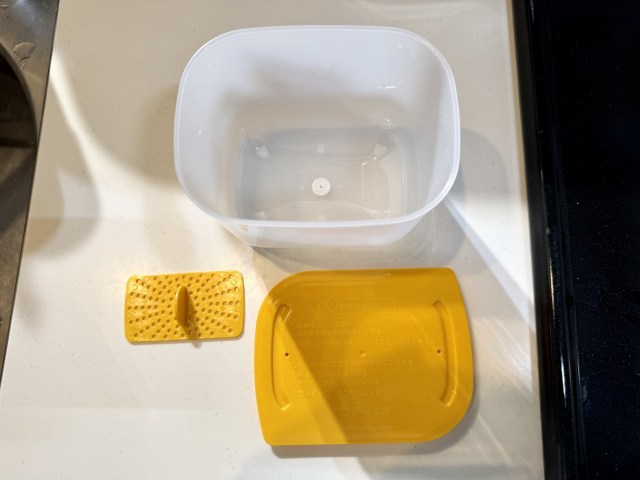
The product actually consists of three parts – the main body, a drainage tray on the bottom, and the lid.
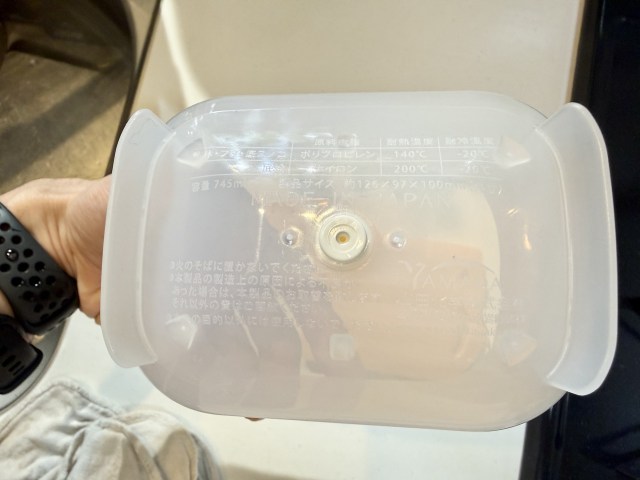
▼ The bottom of the main body had what looked to be a drainage hole.
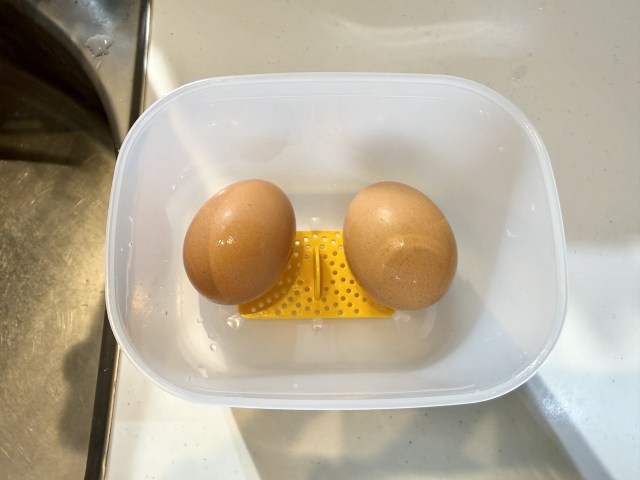
The whole thing is incredibly easy to use – first, lay the tray on the bottom of the container and place two raw eggs, still in their shells, on top of it.
Then, move the container over to the sink and pour freshly boiled water into it, up to the specified line. Go measured the amount of hot water he used, and it turned out to be about 550 millilitres (18.6 ounces), so it’s good to prepare that amount of water beforehand.
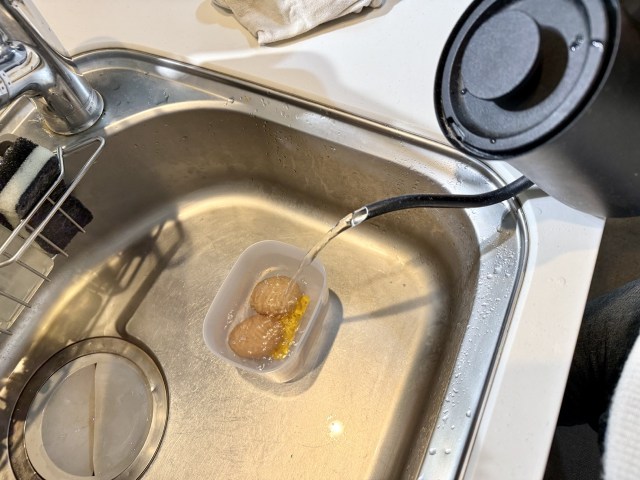
After adding hot water up to the line, simply put the lid on the container and leave it in the sink for around 13 minutes.
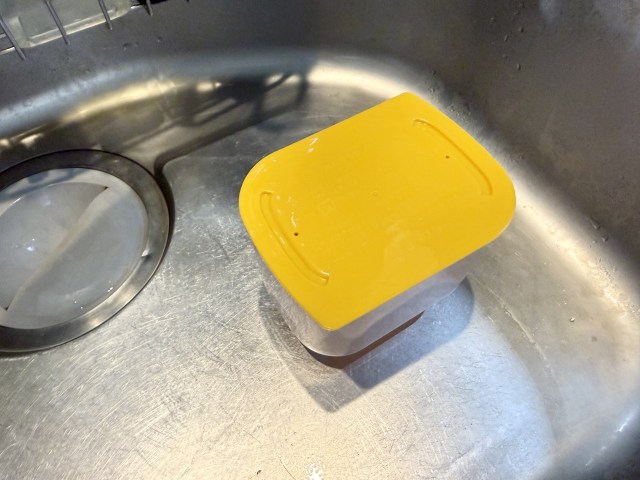
During this time, hot water flows slowly out of the small hole at the bottom, so the water level gradually drops.
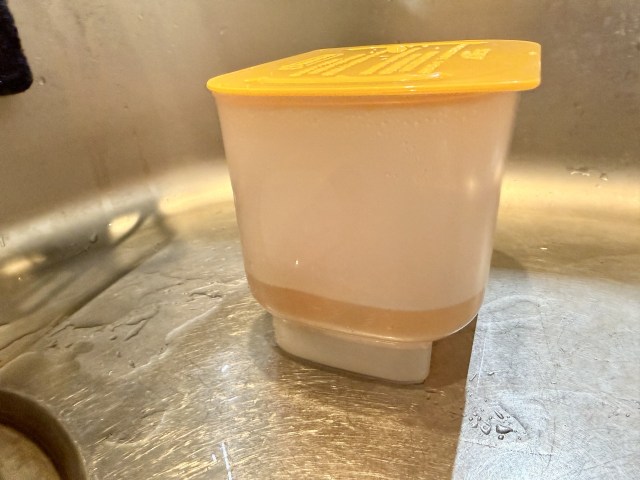
After 13 minutes, Go opened the lid, where he discovered that although most of the hot water had been drained away, there was still some left in the container.
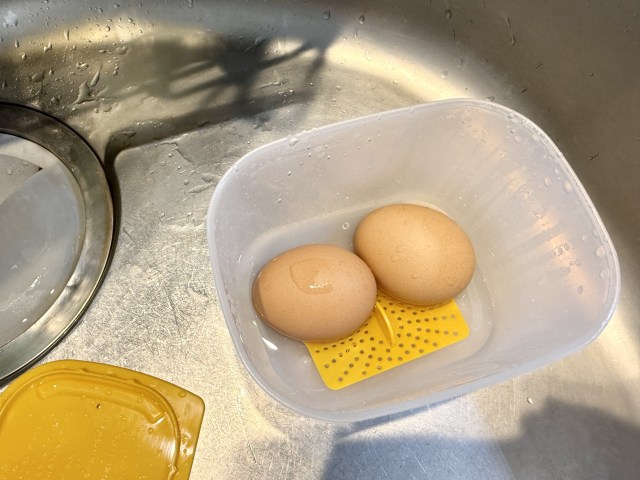
With the manual stating both “13 minutes” and “until the water is completely gone” as the benchmark for when the eggs are ready, Go wasn’t entirely sure what to do. Deciding to err on the side of caution, he left the container for a few minutes more, until, at the 16-minute mark, the water had completely drained away.
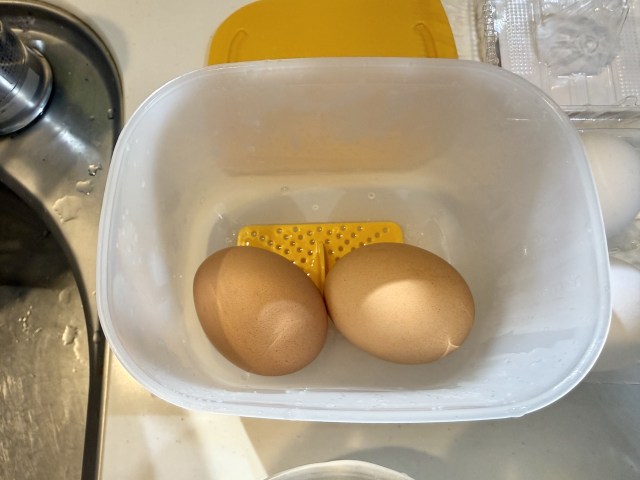
▼ Now for the exciting part – comparing these freshly made hot spring eggs with store-bought ones.
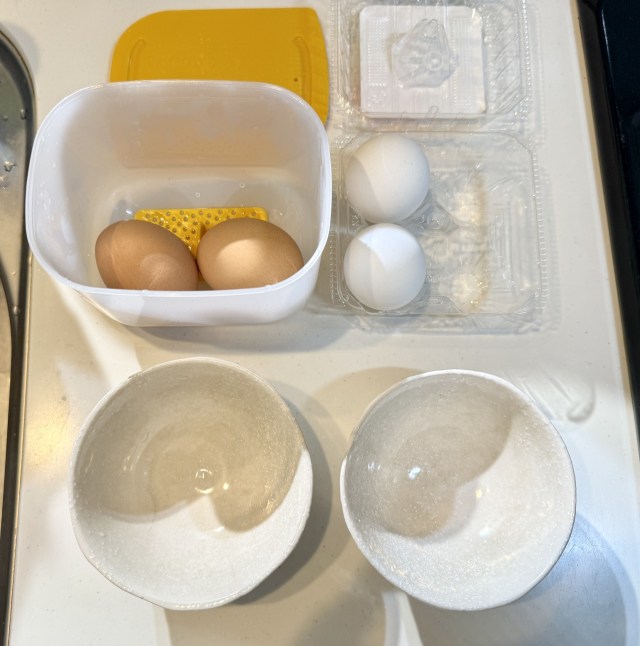

Go started the comparison by cracking open a store-bought hot spring egg, which turned out to be exactly to his liking – soft and jiggly, with a nice, glossy appearance.
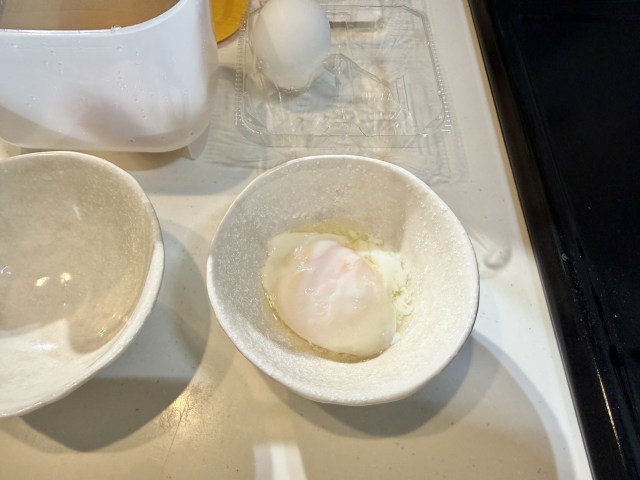
▼ So what happened when he cracked into his homemade hot spring egg?
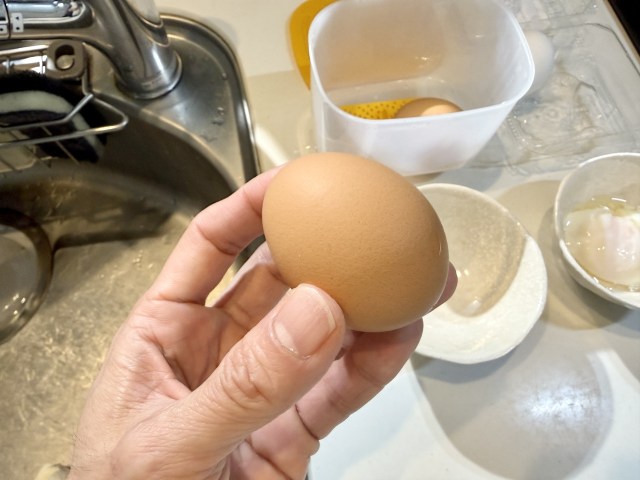
▼ Ah.
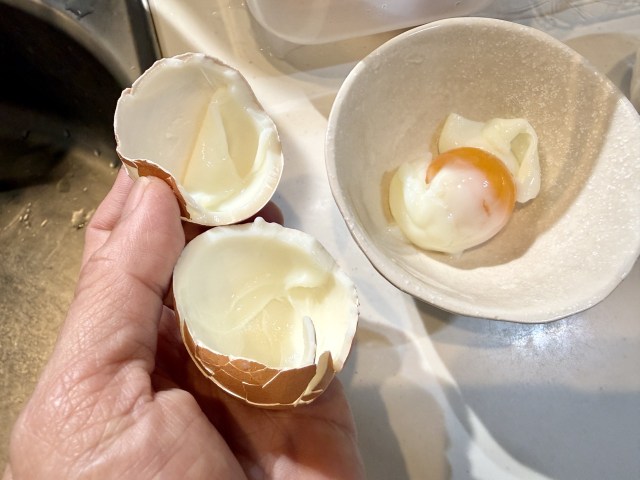
There was clearly a difference in look and texture, with the white of the egg being much harder than it should be, suggesting they may have been left in the hot water for too long.
▼ Perhaps 13 minutes would’ve been a better time at which to pull out the eggs.
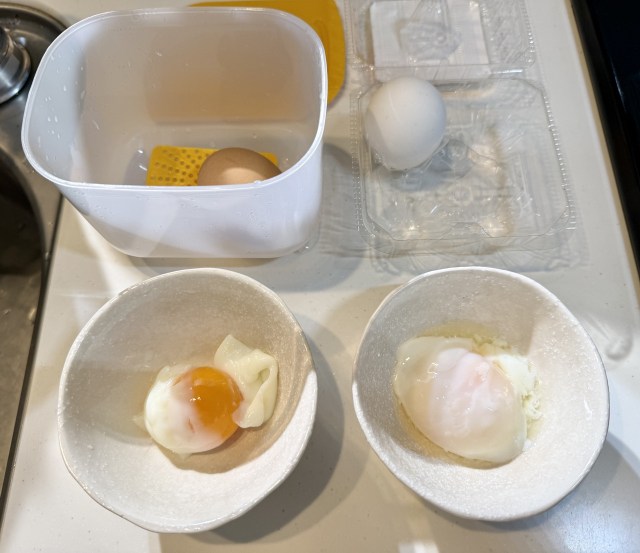

Slightly disappointed with the look of the eggs, Go decided to investigate the texture more closely, using a pair of chopsticks to see how easy it would be to break into the yolk.
▼ A soft and easy break is the sign of a good onsen egg, and that was easily achieved with the store-bought variety.
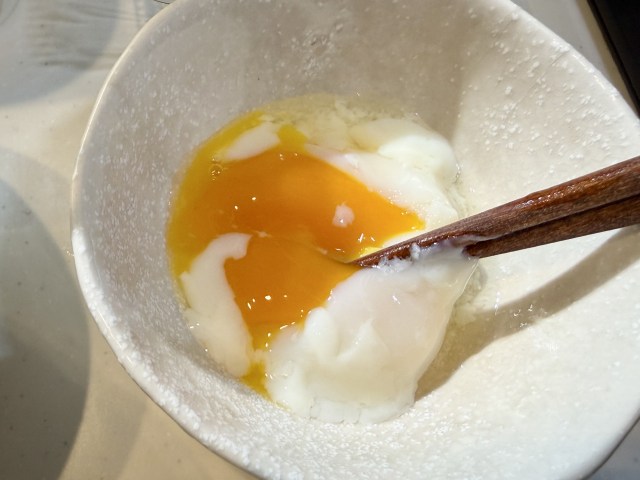
On the other hand, the yolk made in Daiso’s container was a lot harder to break into, as it was firm with very little runniness.
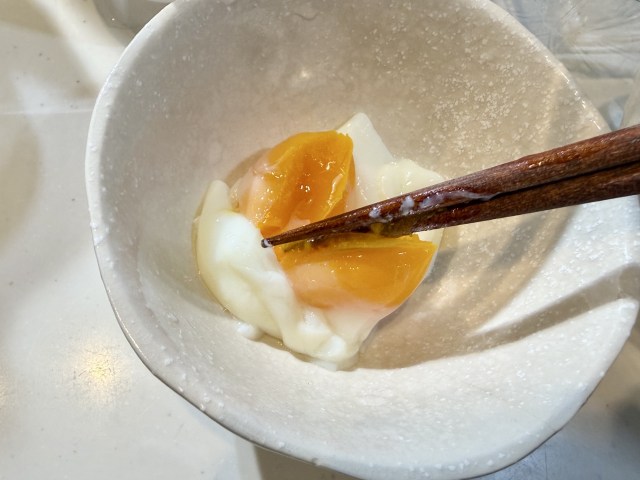
With Go’s egg failing him in terms of appearance and texture, how would it taste? Slurping half of it up in one go, his eyes widened in surprise as the egg actually tasted fantastic. It was just as good as the store-bought egg, and he was happy to eat both of them with a sprinkling of salt and pepper and nothing else.
▼ The Yamada egg maker redeems itself in the end.
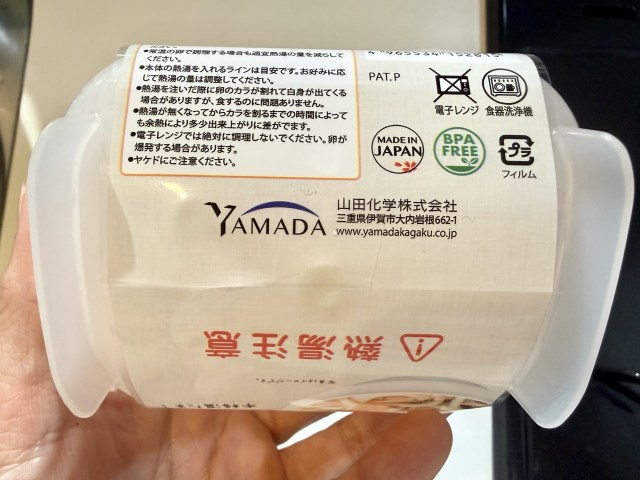
According to Go, the hot spring egg maker is a great contraption that’s well worth the tiny expenditure of 110 yen. He’s since been making his beloved onsen tamago in it and is now totally converted to its ease of use and the eggs it creates. Though he’s yet to fully master the gadget, he says that time is an integral factor that can make a world of difference to the texture, and he’s having a lot of fun eating the eggs he makes on his road to mastery.
Photos ©SoraNews24
● Want to hear about SoraNews24’s latest articles as soon as they’re published? Follow us on Facebook and Twitter!
[ Read in Japanese ]