
Government probably always just assumed common sense was enough.
When it comes to choosing something to eat, there’s always a risk-reward calculation that needs to be done. For example, when it comes to eating pufferfish, even though the risk of dying a horrific, fully-conscious death is rather low, I personally decided that it was mid-tasting enough that I could easily live the rest of my life without ever eating it again, and just drop that risk right down to a flat zero.
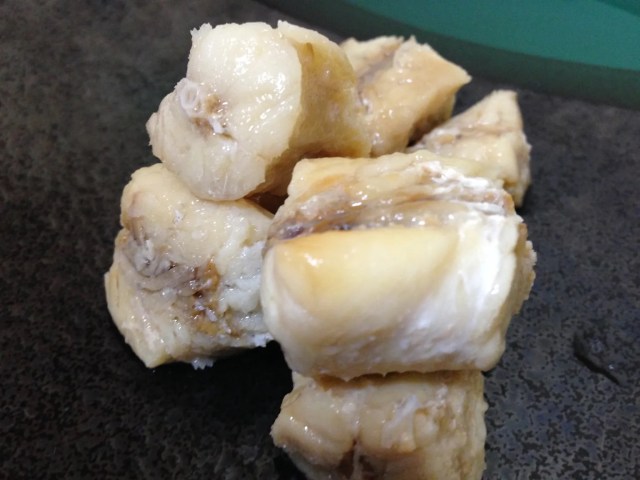
▼ Ironically enough for this topic, I always felt it tasted a bit like chicken.
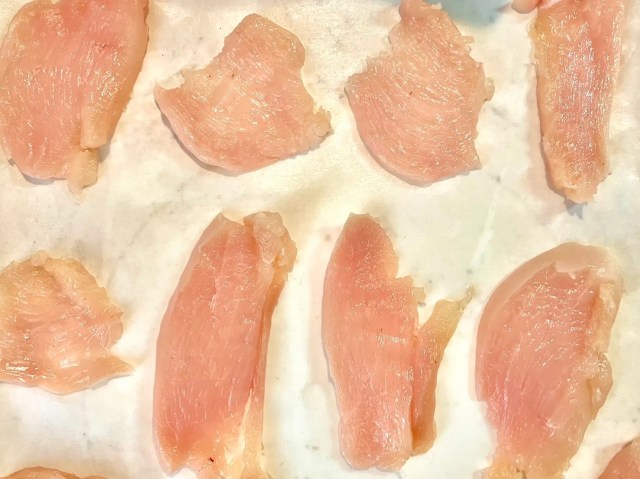
Raw chicken seems like a no-brainer in this sense. In addition to the days of hardcore, toilet-hugging food poisoning it can very easily cause, there’s also an added risk of Guillian-Barré syndrome. This is a particularly terrifying medical condition wherein your own immune system begins to attack your nervous system. The Campylobacter bacteria on chicken meat bears a certain resemblance to nerve cells, which is why it can sometimes trick your own body into assaulting itself on a cellular level, occasionally resulting in death, but if you’re lucky will only result in weeks or months of varying degrees of paralysis.
Considering the vast array of delicious ways to enjoy conventionally cooked chicken, I can’t imagine raw chicken being anywhere near good enough to even bother putting myself in the path of all that. Still, taste is a subjective thing, and it appears quite a few people are rather keen to dine on uncooked poultry regardless.
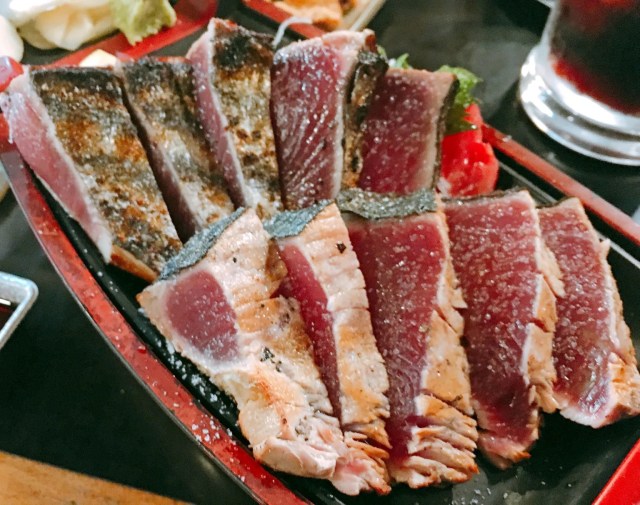
One such way is the tataki method of cooking, in which the outside is flash-seared, leaving the middle raw or extremely rare. Katsuo no tataki is probably the most famous version of this, in which skipjack tuna is seared on the outside and raw on the inside. The conventional thinking in Japan is already that if seafood is served fresh enough, then it is safe to eat raw, and preparing it tataki-style makes it even less daunting to eat.
▼ Katsuo no tataki

While that applies to a lot of seafood, though, chicken is an entirely different matter. In fact, freshly slaughtered chicken is even more hazardous to consume raw, because the Campylobacter is also just as fresh and thriving at that time.
Another problem is that eating raw chicken is a bit of a recent trend in Japan. Other meats are either prohibited from being eaten raw, like pork, or heavily regulated, like beef. Raw chicken always flew under the radar legally because it hadn’t really been a thing. One exception has been Kagoshima Prefecture, where serving raw chicken was refined over centuries, and more recently high standards on a local governmental level have been enacted to make it safe to eat.
But more and more, restaurants all across Japan are offering tataki-style chicken, only without the same stringent precautions developed in Kagoshima. As a result, cases of food poisoning and even Guillian-Barré have been occurring. So, the Ministry of Health, Labor and Welfare have announced they will finally enact guidelines for the proper consumption of raw chicken.
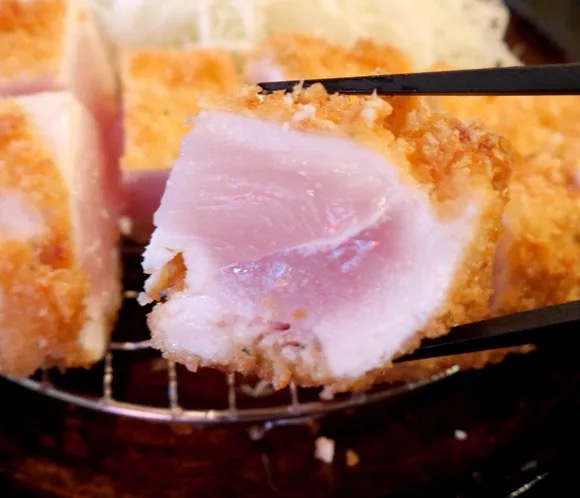
▼ While not quite tataki, we tried a very rare chicken cutlet that easily bordered on raw on the inside.

The guidelines are still in development, but are likely to include rules regarding the separation of chicken meat meant for cooking and serving raw, methods to sterilize the surface of meat by searing, and storage methods. In addition, the ministry knows that this will not eliminate the chance of illness, so they will likely also require businesses serving raw chicken to warn customers of the health risks involved.
Going by online comments, a lot of people said this was a long overdue decision, but many also felt the Kagoshima, at least, had it all under control already, and should be able to continue with their cultural heritage.
“It’s about time.”
“I saw some places in Tokyo serving chicken tataki, but was too scared to try it. I’d only ever try it in Kagoshima.”
“I think raw chicken should be banned everywhere except Kagoshima and Miyazaki Prefectures.”
“I do really like it when I get fried chicken that’s just a little undercooked.”
“Forget guidelines. Just throw the book at any restaurant that poisons customers. Charge them with assault too.”
“We evolved from monkeys and learned to use fire on meat, but some people still insist on this…”
“This is a perfect use for irradiating food. If only people weren’t so ignorant about radiation.”
That last comment brings up an interesting point. Since the dawn of the atomic age, for about half a century, there has been intensive study about the effects of sterilizing food with radiation, the logic being that it destroys the DNA of bacteria and viruses while leaving the meat safe to eat. The WHO, EFAS, FDA, and EPA have all concluded that doing so adds no hazardous chemical changes to the meat beyond standard cooking techniques.
However, it’s not a universal solution, since some forms of food poisoning aren’t caused by the bacteria themselves, but by the toxins they leave behind, which radiation has no effect on, but in the case of Campylobacter it would be theoretically effective. The biggest hurdle is really just marketing meat that’s been blasted with gamma radiation to people, and it’s also possible the process can have some effect on the overall taste for the really discerning raw-meat aficionados out there.
It’s a good example of how understanding the science behind the food you eat can really help you know the risk that goes along with it, allowing you to both stay safe and get the best dining experience possible.
Source: NHK One, Twitter/@nhk_news, Hachima Kiko, EPA
Photos ©SoraNews24
● Want to hear about SoraNews24’s latest articles as soon as they’re published? Follow us on Facebook and Twitter!