

The average overseas visitor now consumes more rice in a day than a Japanese local.
On 27 July, Japan’s Ministry of Agriculture, Forestry and Fisheries (MAFF) released its fiscal 2025 data on rice consumption by foreign visitors to Japan, and the results revealed that foreign tourists are eating significantly more rice than anticipated.
According to the data, collected through questionnaires completed by visitors from 14 countries and regions, MAFF now estimates that overseas visitors consume an average of 570 grams (20 ounces) of cooked rice per day during their stay in Japan, which is roughly the equivalent of four standard bowls of rice.
▼ This is a significant increase from its previous estimate of around 350 grams, or about 2.5 bowls, per person per day.
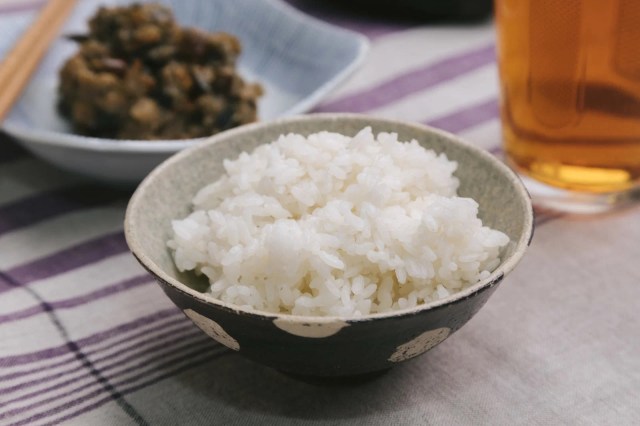

Topping the list for rice consumption was Vietnam, at 718 grams, followed by Indonesia (714 grams), the Philippines (695 grams), and Thailand (629 grams). Visitors from the U.S. consumed an average of 565 grams, while those from China consumed 546 grams. The lowest average among the surveyed groups was Hong Kong, whose visitors still consumed 468 grams.


To put these figures into perspective, the average person in Japan is said to consume roughly 330–340 grams of cooked rice a day. That means the average foreign visitor eats around 70 percent more rice for each day of their stay than the average Japanese resident.
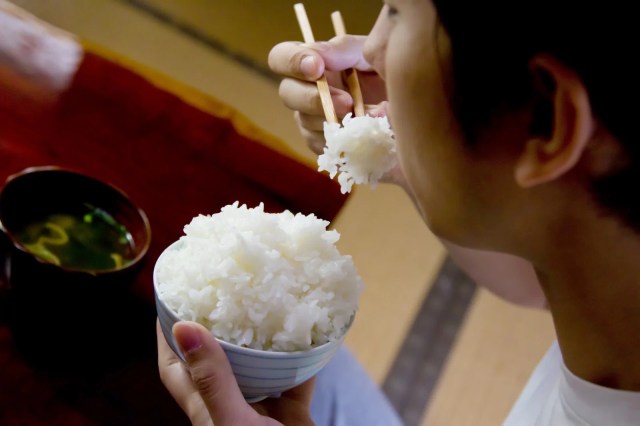
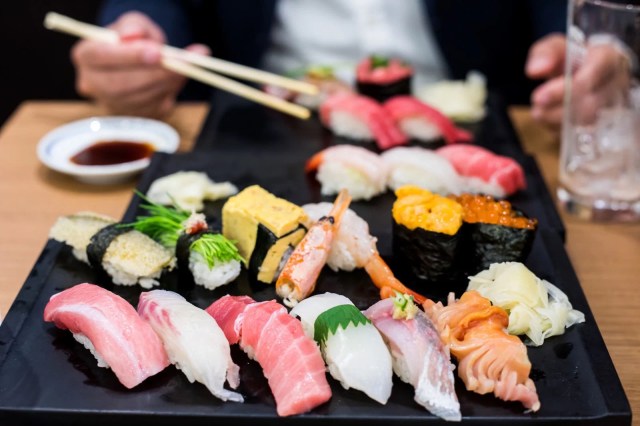
MAFF says the higher figures are linked not only to meals at sushi restaurants but also to the popularity of onigiri rice balls, with many tourists enjoying rice multiple times throughout the day.
Japanese locals, on the other hand, are more likely to add other carbohydrate sources to their daily diets, largely in the form of bread and noodles, in addition to their everyday rice consumption.
▼ Of course, burgers are now part of the diet too.

By the ministry’s latest calculations, foreign visitors are estimated to have consumed approximately 82,000 tonnes of polished rice, equivalent to 91,000 tonnes of brown rice, between July 2025 and June 2026. This is a substantial upward revision from the previous estimate of 61,000 tonnes in March of this year.
The updated estimate comes in the wake of Japan’s 2024 rice shortage, dubbed the “Reiwa Rice Riots”, when soaring prices and empty shelves caused concern across the country. While poor harvests linked to extreme heat were a major factor, record numbers of foreign visitors that year also raised questions about whether tourism demand had been underestimated.
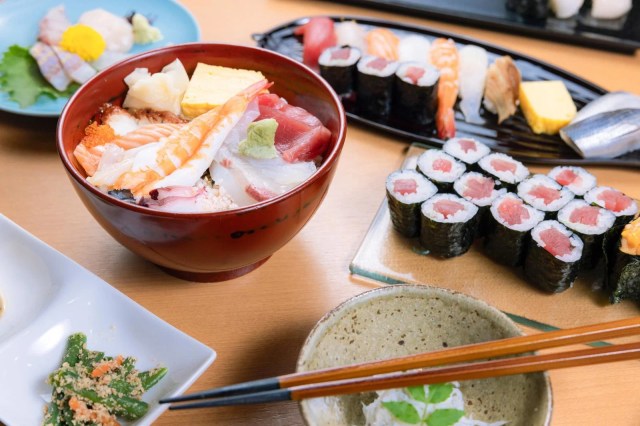
Following the shortage, the government decided to look into foreign visitor consumption, as it was something that hadn’t previously been considered. By including the rice-eating habits of visitors, these latest figures now provide a more comprehensive account from which to properly assess supply and demand and better prepare the industry for possible changes.
Whether this leads to increased rice production remains to be seen, as factors such as small farm sizes, an ageing, dwindling workforce, and longstanding policies designed to control rice production still have a strong hold on the industry.
However, the government has expressed a willingness to move away from some of the older supply-control measures to effectively meet modern demands. With inbound tourism now being taken into consideration, here’s hoping future forecasts better reflect the reality of the situation so measures can be put in place to deal with any potential shortages ahead of time and prevent a recurrence of the Reiwa Rice Riots.
Source: Ministry of Agriculture, Forestry and Fisheries via Yahoo! News Japan/Kyodo
Top image: Pakutaso
Insert images: Pakutaso (1, 2, 3, 4, 5, 6)
● Want to hear about SoraNews24’s latest articles as soon as they’re published? Follow us on Facebook and Twitter!