Ryakuji – easy on the fingers but hard on the eyes.
Anyone who’s studied Japanese knows that there’s a world of difference between reading printed Japanese and handwritten Japanese. You may think you know how to read kanji no problem in books, but then when you have to read a written note from your boss, it feels like everything you’ve learned just went out the window.
Part of that is due to handwriting just being harder to read in general, like it is in all languages, but another part of it is ryakuji, or “abbreviated characters.” Not everyone wants to write kanji with a million strokes, so some shortcuts are taken, some of which are crazier than others.
That’s why today we’re counting down the top five most ridiculous kanji handwriting shortcuts. Don’t expect your Japanese teacher to mark these as correct on your Japanese tests though – a lot of theses are similar to writing abbreviations in English like “b4 u h8 me get 2 no me” (instead of “before you hate me get to know me”).
So before you hate the ryakuji, let’s get to know them, starting off with…
#5. Katakana kanji
Having trouble remembering Katakana? This anime chart should help! #Japanese #nihongo pic.twitter.com/QMDG6lRO
— NEO Magazine (@NEO_Magazine) June 7, 2012
Sometimes people wonder why Japanese even needs kanji in the first place. It already has not only one, but two, perfectly good syllabaries: hiragana and katakana. And it seems that sometimes even Japanese people agree because one of the most common forms of ryakuji is replacing complicated parts of kanji with a katakana.
▼ Take ki (“machine”) for example. The right half is a doozy. Since it’s pronounced
“ki” though, you can just replace that mess with the simple katakana ki.
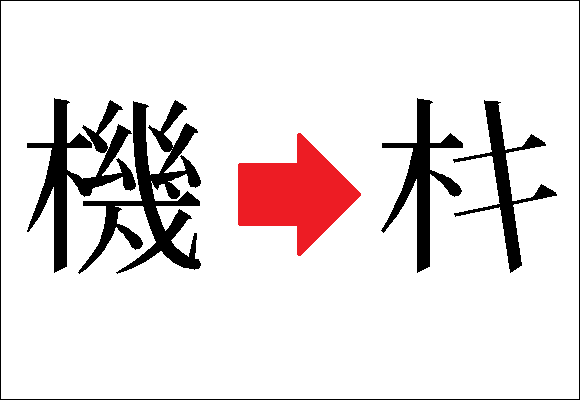
▼ Here’s the ryakuji for ki caught out in the wild (fifth kanji from left).
Sometimes ryakuji are chosen just for their aesthetic appeal.
こういう看板好きだわ♪
— さーまる (@sakura_dd51) September 26, 2015
機の略字「木キ」を看板にしちゃうあたりレトロ pic.twitter.com/pax4a4Eg9a
▼ The katakana doesn’t even have to spell out the whole kanji either,
like how just ya replaces the difficult bottom part of yaku (“medicine”).
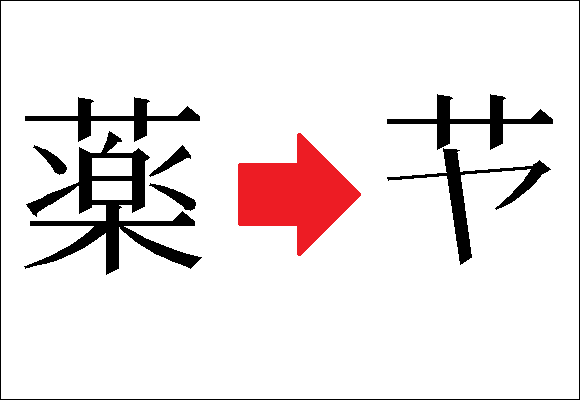
▼ And sometimes multiple kanji can turn into the same katakana ryakuji forms,
like both of these monstrosities (“demon” and “rub”) that are pronounced ma.
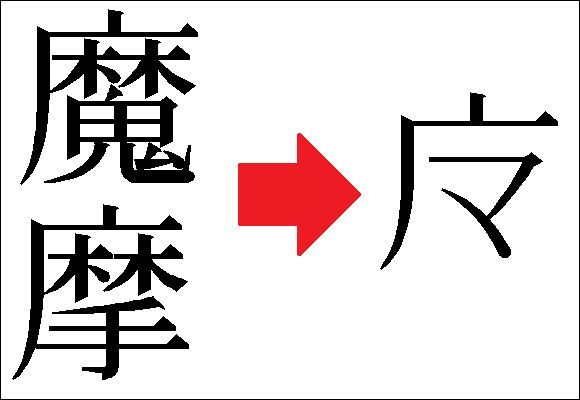
Replacing difficult parts of kanji with katakana makes sense. You get the semantic meaning/general shape from the original part, you get the phonetic component from the katakana, and it all comes together nicely in one easy-to-write ryakuji.
From here on out though, they start to make less sense. Like when…
#4. The strokes flow together
When you’re writing with a pen or pencil (or a giant brush like above), you don’t have time to make every single individual stroke – sometimes they flow together.
While many people have their own unique ways of combining strokes, here are some of the most universally used:
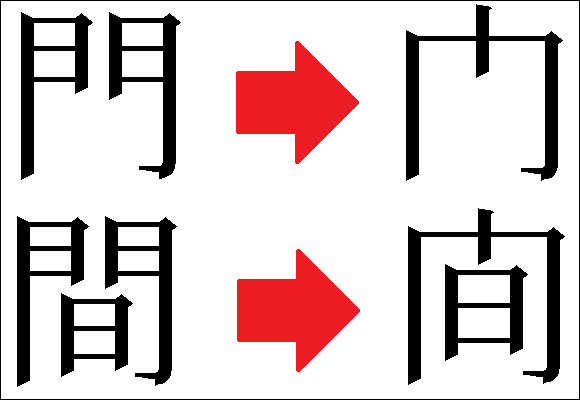
▼ One of the most common is turning the radical mon (“gate”) into more of a
claw-machine thing. This one applies to pretty much all kanji with mon in it.
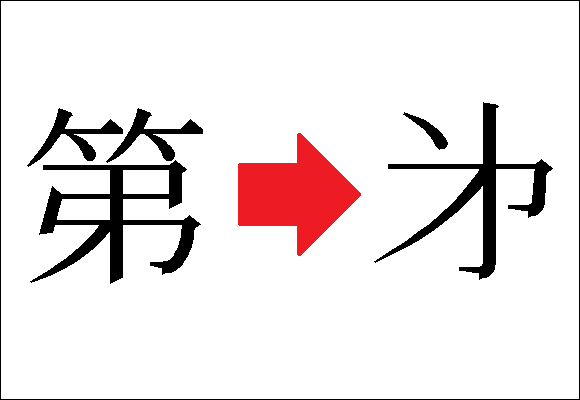
▼ Another one that appears often is removing the top half of dai
(“number”) and kind of crunching down the rest of it like an aluminum can.
▼ One of the most confusing is the bottom half of mae (“before”) turning into
what looks like a katakana “o.” It’s not even an abbreviation for omae (“you”)!

Reading ryakuji when the strokes flow together can be a bit hard at first, but there’re enough patterns that it’s not too bad to get used to. It’s also pretty easy to tell that they’re abbreviations of other kanji and not new kanji themselves because of their strange shapes.
However, some ryakuji make you think that you’re encountering brand new kanji when they…
#3. Swap out difficult parts for easier ones

So you’re going along reading a handwritten note from a coworker just fine (maybe even chuckling to yourself as you easily make sense of a few katakana ryakuji and flowing-stroke ryakuji), but then you encounter a kanji you’ve never seen before. You look it up in a dictionary, and grumble to yourself about how there’s always kanji to learn…
…only to discover that it’s a kanji you do already know, but it’s had one of its parts swapped out.
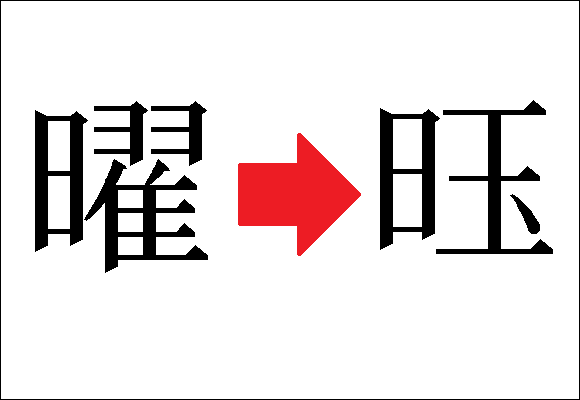
▼ Like yō (“day of the week”), where the complicated right part has
been swapped out and looks like a brand-new kanji.
▼ These guys liked the ryakuji for yō (“day of the week”) so much they
put it on a sign (fourth kanji down) to say they’re closed every Monday.
機会彫刻文字。ちょっとぎこちない筆運び? 曜の略字あり。毎の形もいいね pic.twitter.com/xktwvpYUIe
— ねこまろくはち㌠ (@nekoma68) January 27, 2017
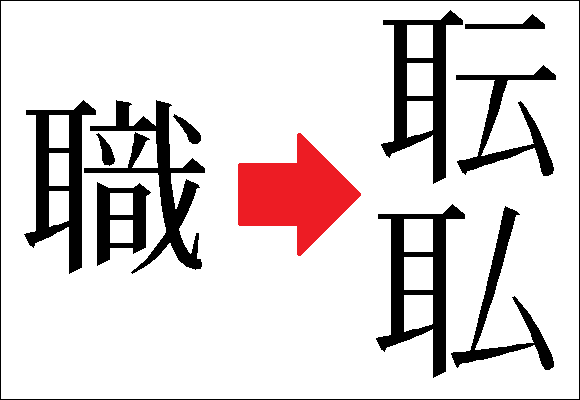
▼Or how about shoku (“job”) which has not one, but two ryakuji
forms that also look like completely new kanji.
▼ And hey, why bother writing out toshokan (“library”) as three kanji when
you can just merge them into one brand new kanji instead?
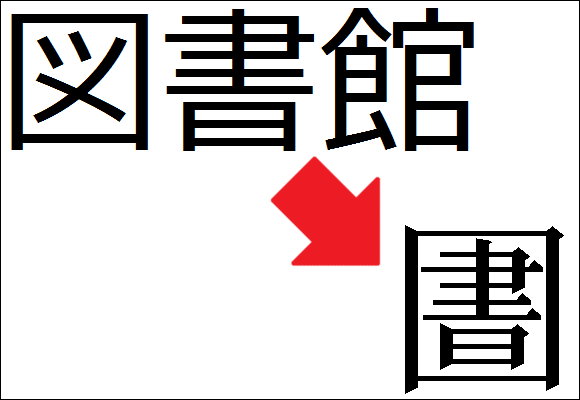
▼ Actually, let’s go further. That ryakuji for toshokan is still kind of complicated,
so let’s turn it into a ryakuji itself by replacing the inside with a katakana “to!”
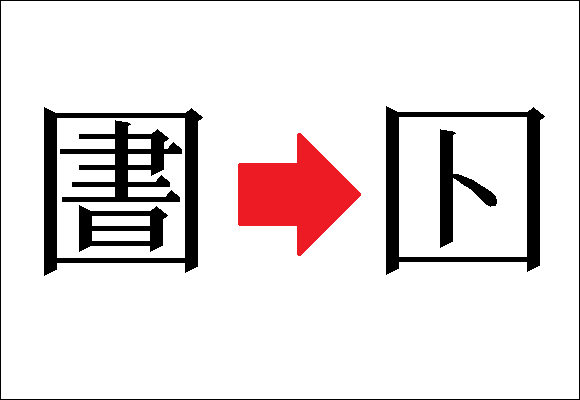
▼ Yo dawg, we heard you like ryakuji, so we turned a ryakuji
into a ryakuji so you can abbreviate while you abbreviate!
Yo Dawg! I heard you like goal challenges! So we challenged a challenge while you were challenging! #Oilers #Sharks pic.twitter.com/dOAdXh63sp
— Avry's Sports Show (@Avry) January 27, 2017
Again, it’s important to note that even Japanese people who use ryakuji still don’t consider them “correct.” Just like English-speakers would only use abbreviations like TBH (“to be honest”) or IMO (“in my opinion”) in casual writing, you can expect the same from ryakuji in Japanese.
And just like there’s plenty of English-speakers who have no idea what TBH or IMO means, there are ryakuji that make Japanese speakers go…
#2. “Uh, yeah, sure, why not?”
Sometimes there’s such a thing as making TOO much sense.
There are a lot of kanji out there that look very similar to the concept they’re trying to convey. For example the kanji yama 山 (“mountain”) kind of looks like a mountain, and the kanji kawa 川 (“river”) kind of looks like a river.
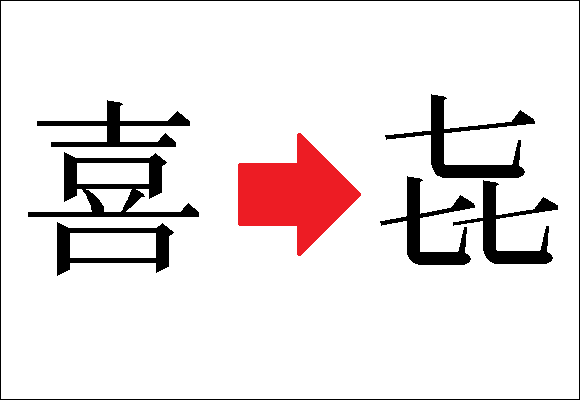
However not all kanji fit into those nice tidy boxes. Take the kanji ki 喜 (“happiness”) for example. Since you can’t draw “happiness,” this one instead puts together the kanji for “mouth” on the bottom and “edible plant” on the top, giving the meaning of “happiness is having food to eat.”
But writing out all those strokes for 喜 (“happiness”) can be a chore. Isn’t there a way to represent “happiness” that’s easier?
▼ How about changing it into three sevens instead? (七 is the kanji for “seven.”)
I mean, there’s no greater happiness than hitting the jackpot, right?
▼ This restaurant Ramen Suzuki uses the ryakuji
for ki (“happiness”) as the last kanji in its name.
I'm at ラーメン寿々㐂 https://t.co/jYB2xDmUoc pic.twitter.com/rG3dHzlsJE
— ponkichi. (@ponkichimaru_S) January 19, 2017
▼ And who wants to write out two whole kanji for chikuwa (“fish cake tube”)?
Just create a new kanji with “fish” on the left and a circle on the right!

▼ Yup, that ryakuji checks out for me.
竹輪って上手いよな(´^ω^`) pic.twitter.com/li7pW5oKjY
— たけたま@またけた (@taketama55) December 26, 2016
But there’s one type of ryakuji that puts even chikuwa circles to shame.
And the #1 most ridiculous kanji handwriting shortcut is…
.
.
.
.
.
.
.
.
.
.
1. Alphabet kanji
Forget using katakana, forget making little circles, we’re going back to the basics here… the ABCs. Why bother writing the full kanji when you can just replace part of it with a letter from the alphabet?
These are among the least used, but also most ridiculous, of ryakuji. Most Japanese people would have no idea how to read them if they were to see them, let alone use them themselves.
▼ For example, the two kanji for kakunin (“confirm”) can be abbreviated by
chopping off their complex right halves and replacing them with a K and N.
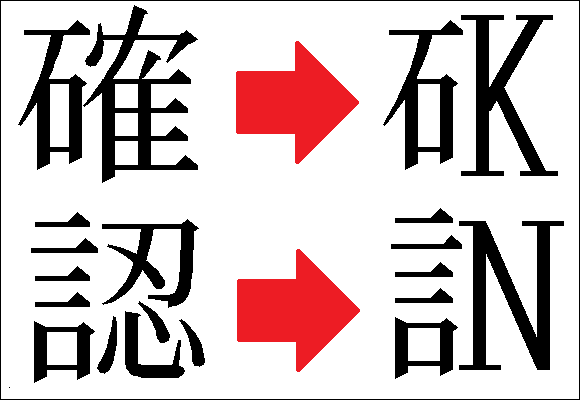
These types of ryakuji are similar to the katakana ones in that they retain a part of their original kanji (sometimes the part that helps with the meaning of the kanji), and replaces another part with a letter of the alphabet that helps pronounce it.
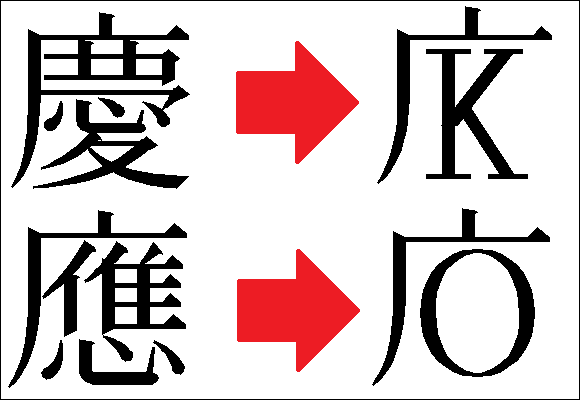
▼ One of the most well-known of these ryakuji is Keio University replacing the
difficult kanji that make up its name (Keio) with an easy K and O.
▼ And then we can go one level deeper by combining them into a single
ryakuji for Keio Univeristy. I wonder if they sell shirts and hats with that on it?
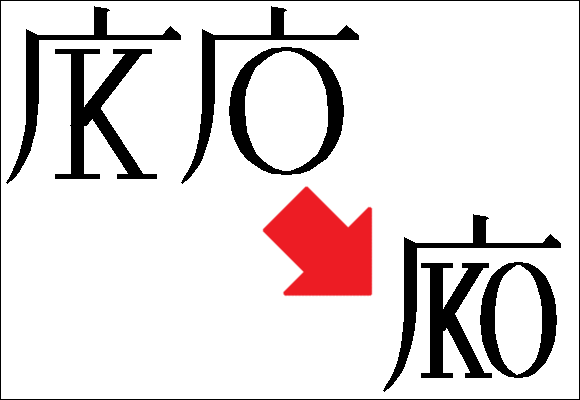
▼ Enh, close enough.
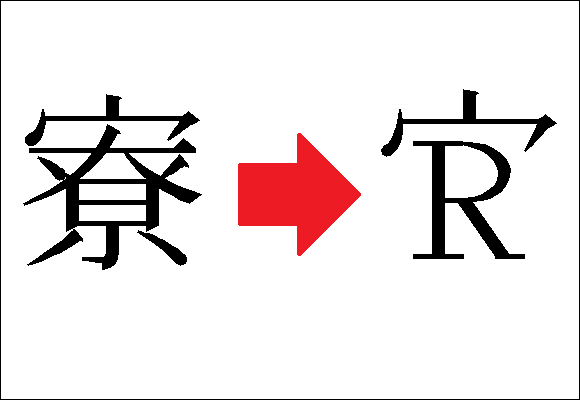
https://twitter.com/RugbyNakaway/status/816124108811341824▼ And where do students live at Keio Univeristy? In ryo (“dorms”) of course.
But who wants to write that complicated thing? Let’s just use an R instead!
So there you have it, the top five craziest kanji handwriting shortcuts. Have you seen any other kanji writing shortcut that have blown your mind? Let us know in the comments, and when you’re tired from writing all those ryakuji, take a nap by sleeping on the floor Japanese style… because it’s awesome.
References: Wikipedia, Naver Matome, Kuwana City Central Library, Vista Taio Kanji Blog
Top image: PAKUTASO (edited by RocketNews24)
Insert images: GlyphWiki (edited by RocketNews24)
W.T.F. Japan will be back next Thursday. In the meantime, give me a follow on Twitter and let me know if there’s any topics you’d like to see covered. See you next week!