Guidebooks love to say it’s because Japanese people think tipping is rude, but that’s not even close to the whole story.
There are a lot of things to love about restaurant dining in Japan, and one of the nicest comes at the very end of the meal, since there’s no need to leave a tip.
With Japanese cuisine becoming more popular overseas, one American sushi specialist has incorporated the no-tip policy of Japan’s restaurant industry into its own operations, as this photo of the receipt from a restaurant in New York City (believed to be Sushi Yasuda) went viral after being originally shared through Imgur.
This Japanese restaurant in #New York York doesn't allow tipping. https://t.co/nSXQfskcxv pic.twitter.com/90NY76jksp
— bluenile (@bluenile) August 9, 2018
The bottom of the receipt reads:
“Following the custom in Japan, [this restaurant]’s service staff are fully compensated by their salary. Therefore gratuities are not accepted. Thank you.”
The photo above has been met with cheers of approval as it makes its way around the Internet, proving that’s a desire for no-tip restaurant dining in America. So let’s take a look at how Japanese restaurants amanage to function without earning a single yen in gratuities.
1. Tipping isn’t part of Japanese culture
A lot of cultural guidebooks claim that tipping is considered “rude” in Japan, but that’s not really the case. Actually, it’s just seen as weird.
For example, imagine you’re at the supermarket buying groceries. Your total comes to $18, but instead you give the clerk a twenty, and say “Keep the change.” The clerk isn’t necessarily going to be offended, but definitely will be confused, because why would you tip a supermarket cashier?
At some point in time, American society decided that certain service sector jobs, like restaurant wait staff and taxi drivers, deserve tips, and others don’t. Japan sort of did the same thing. It just decided that no service sector jobs require tipping, and so employers have to offer an hourly wage that’s high enough to attract people to work as waiters and waitresses.
2. But Japan does have a form of pseudo-tipping
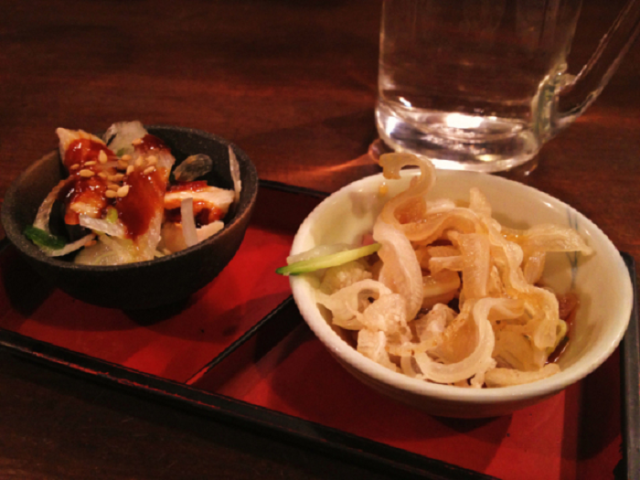
In Japan, there’s no need to pay anything more than the amount on your bill. However, that doesn’t mean that your total is equal to the cost of the food and drink you ordered. At many Japanese restaurants, after you’re seated you’ll automatically be brought a small-portioned appetizer. However, this isn’t a complimentary nicety like the hot or cold hand towels that are also brought to the table. The appetizer, called an otoshi, is something you’re required to pay for, regardless of whether you want it or not.
Otoshi usually cost somewhere in the neighborhood of 500 yen (US$4.50) per person in your party, though at more upscale establishments they rise towards 1,000 yen. While that might seem like an agreeable price for a regular-sized appetizer, the average otoshi is small enough to be consumed in two or three bites and is usually a simple salad-like vegetable dish made with inexpensive ingredients. Really, its purpose is to smooth over applying a service charge to the meal, and while 500 yen isn’t a huge amount, if you ran up a 2,000-yen tab, it works out to essentially being a hefty 25-percent tip.
Most casual eateries, like ramen joints, revolving sushi restaurants, and okonomiyaki paradises, don’t have an otoshi system, even if they do have table service. At izakaya taverns and gastropubs, though, otoshi are pretty much standard, often with no explicit mention of their cost until you get your bill.
3. Japanese restaurants often take long breaks in the afternoon

One rationale for paying wait staff low wages supplemented with tips is that it acts as an incentive/reward for working during the restaurant’s busiest hours. After all, if there’s hardly any customer traffic between 2 and 6 p.m., a no-tipping restaurant is pretty much paying its staff comparatively high wages just to stand around, right?
But take a look through our restaurant reviews, and you’ll notice it’s common for Japanese restaurants to shut down entirely during the late afternoon. While fast food branches are usually open continually from morning to night, independent restaurants, and even some casual chains, shut down completely after the lunch rush, going dark for a few hours before reopening around the time hungry office workers clock out, and wait staff shifts are often scheduled to end as the break starts.
Some izakaya and upscale restaurants aren’t even open for lunch at all, catering exclusively to the dinner crowd, once again cutting down on the total number of paid hours for waiters and waitresses (though they often stay open later than their American counterparts).
4. Makanai
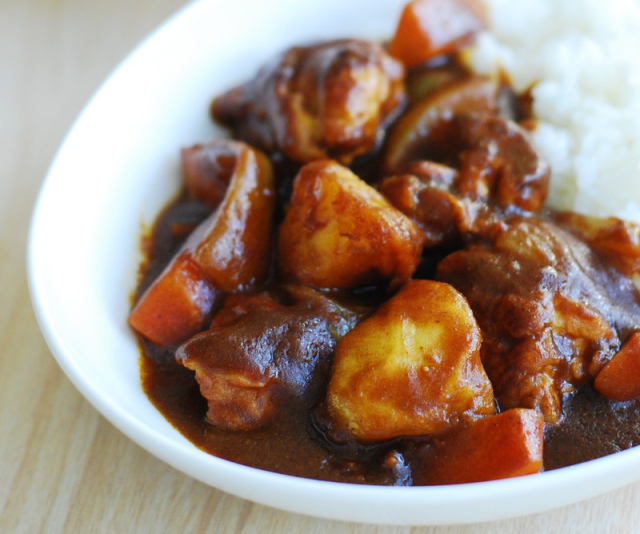
Obviously, one of the reasons restaurant workers need a paycheck is so that they can buy food for themselves, and all else equal, having no tips gives them less money with which to do that. But if you work at a Japanese restaurant, you’re likely to get at least one meal a day taken care of.
Makanai refers to meals made in the restaurant’s kitchen and supplied to the staff for free. Obviously these aren’t going to be high-ticket menu items (curry made with whatever is on hand in abundance is a common makanai), but makanai are still made with restaurant-quality ingredients. Some restaurants’ makanai are so tasty they eventually get promoted to regular menu items for paying customers.
5. Bad service isn’t part of Japanese culture, from either a business or a customer’s perspective

Perhaps the biggest reason for tipping in American restaurants is the belief that it keeps customer service from slipping. Heavy social pressure aside, you’re not legally required to tip in the U.S. Giving the customer the final say in exactly how much to pay ostensibly keeps servers on their toes, since any rudeness or laziness on their part will come back to bite them in the form of a reduced, or absent, tip when the meal ends.
Japan doesn’t feel the need for customers to dangle that sword of Damocles over the cost of each individual meal, though. Taking pride in your work, no matter how humble your profession, is deeply ingrained in Japanese culture. The (generally accurate) assumption is that workers will give a 100-percent effort, not some lesser amount that requires a potential financial bonus in order to boost it to maximum. That work ethic is such a part of Japanese society that if you don’t display it, odds are your boss can easily find someone else who does. Restaurants don’t worry about the possibility of their wait staff loafing on the job if they get paid the same either way, because doing that will get you axed and replaced in short order.
Likewise, Japanese customers have extremely high service standards, but if they’re not met, they don’t feel the need to need to hit a waiter in his wallet…they’ll just never come back to the restaurant again, even after just one bad experience. The potential threat of losing your job because your restaurant went out of business is, in many ways, a much bigger motivator than the prospect of getting a few extra bucks as a tip.
Now none of this is to say that no-tip restaurants aren’t a viable business plan for the United States. It’s also not to say that Japan is the only country where such a thing is possible, but simply that Japan’s version of no-tip restaurant dining isn’t just a case of cranking up the hourly wage, but a number of related social and cultural characteristics.
Top image ©SoraNews24
Insert images: Pakutaso, SoraNews24, Pakutaso (2, 3, 4)
There’s no need to leave a tip after following Casey on Twitter.