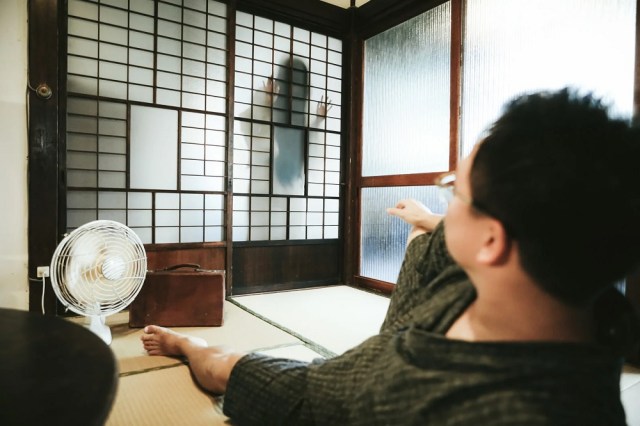
”But you see, I was drunk at the time!” is an unusual way to justify kicking someone in the face.
In what’s no doubt one of the weirder lawsuits to come before the Japanese judicial system this summer, the Osaka High Court was recently tasked with deciding where the responsibility lies in an incident in which a ghost had its jaw broken by a karate master.
The lawsuit stems from an incident that took place over a decade ago. In September of 2011, a group of coworkers visited the Toei Kyoto Studio Park (also known as Toei Uzumasa Eigamura) theme park in Kyoto, as part of a company trip. In addition to filming locations for production company Toei’s period samurai movies and TV shows, one of the attractions the coworkers checked out was a haunted house.
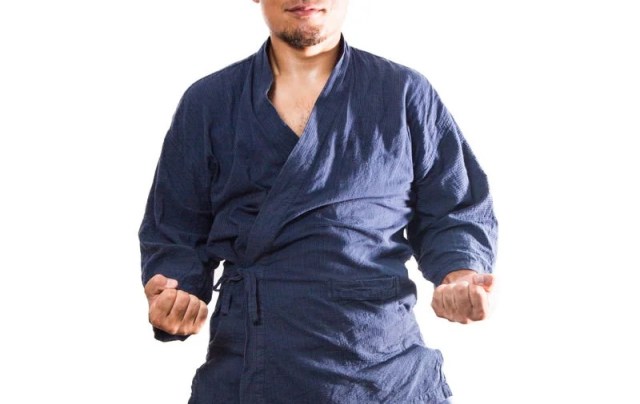
One member of the group, a karate yudansha (a karate practitioner who has reached the upper/dan certification levels) entered the haunted house while holding hands with his companion. It’s unclear whether this was a sign of affection or to steady his nerves, but if it was the latter, it apparently failed to do the trick. At some point of the pair’s journey through the haunted house, a Toei Kyoto Studio Park staff member, dressed in a scary costume, emerged, and as soon as he did, the karate man lashed out with his right foot, kicking the park employee in the face and breaking his jaw.
Oh, and perhaps not coincidentally, the karate man had been drinking prior to entering the haunted house.
▼ Take note: If you ever find yourself thinking “This is the perfect time to employ my drunken karate skills!”, no, it is not.
A lawsuit ensued, with the ghost/employee seeking compensation, and in 2015 a settlement was reached in which the karate man agreed to pay 10 million yen (approximately US$8,350 at that time) in damages. However, the karate man then filed his own lawsuit against the theme park’s managing company, saying that they too were responsible for the incident and should share the financial burden and cover a portion of the damages the karate man had agreed to pay.
The karate man based this claim on four factors:
1. There was no partition or physical barrier between the “ghost” and guests
2. The park had failed to train its employees to avoid attacks from customers
3. The park failed to adequately inform customers that the haunted house contained human workers acting as ghosts
4. The park should have prohibited the man from entering the haunted house because he had been drinking
It’s really not the most solid case. For starters, costumed staff acting as ghosts and monsters are the norm for walk-through haunted houses in Japan like the one at Toei Kyoto Studio Park, and without railings or walls separating them from the guests, so those features are really to be expected. With the vast majority of patrons able to make it all the way to haunted houses without assaulting the “ghosts,” it also seems like a bit too heavy of a responsibility to place on the park to train employees to block, dodge, or otherwise neutralize attacks, especially ones coming from trained karate experts. And finally, “Hey, this is your fault because I was drunk!” is pretty low on the list of convincing arguments when passing out blame.
And so in January of this year, an Osaka district court threw out the karate man’s suit, denying his request that Toei Kyoto Studio Park take on 4.8 million yen of the 10 million in damages the man had agreed to pay. The karate man then responded by filing an appeal with the Osaka High Court, upping his request to one that the park cover 7 million yen of the damages.
Last month, the High Court gave its ruling, and once again ruled in favor of the park. “While it is true that the aim of the staff portraying the ghosts to surprise customers, this is done with the understood principle that the haunted house is something that can be safely enjoyed,” said the court in its ruling. “Unlike within the story of a movie or TV show, the ‘ghosts’ are not actually attacking the customers, so there is no need for them to physically fight back,” the ruling continued, coming to the conclusion that “It is difficult to find any justifiable motive or logical rationale for [the karate man’s] actions.”
So remember, everybody, if you’re a trained fighter with speedy combat reflexes, easily startled, or drunk, you might want to skip the haunted house, and you definitely should if you’re all three of those things.
Source: Sankei Shimbun, Kyoto Shimbun
Top image: Pakutaso
Insert image: Pakutaso
● Want to hear about SoraNews24’s latest articles as soon as they’re published? Follow us on Facebook and Twitter!