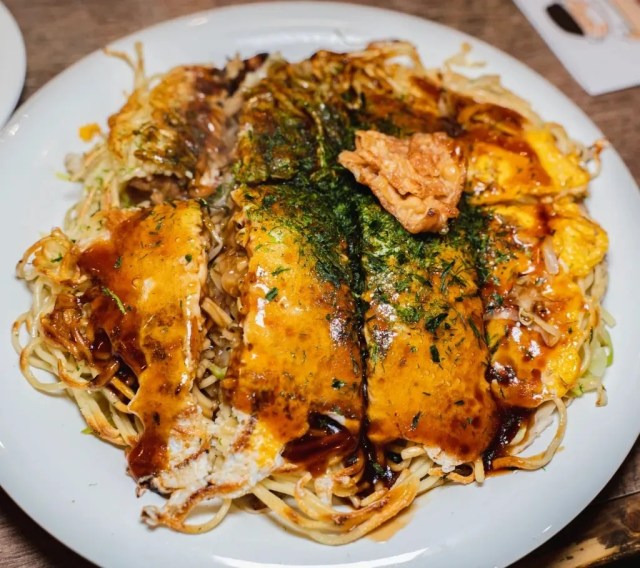

There are two main types of okonomiyaki, but people in Hiroshima don’t like one of the names the rest of the country has for theirs.
Okonomiyaki isn’t just one of Japan’s most delicious foods, it’s also one of its most linguistically complex. The –yaki suffix can be used for all sorts of different types of cooking, but in this case it’s referring to flat-grilling. And the okonomi part? That translates to “what you like,” and it’s there because while okonomiyaki is a sort of round, savory crepe, aside from cabbage the fillings are pretty much whatever you want to put in there. All sorts of meat, seafood, and vegetables, as well as things like mochi, mentaiko (spicy cod roe), and cheese, are all fair game if they’re what you like.
But the other linguistic quirk about okonomiyaki is that different parts of Japan make it in different ways, and different parts of the country call those styles different things. Basically, the two centers of okonomiyaki power are Hiroshima and Osaka, with the latter also representing Japan’s central Kansai region as a whole.
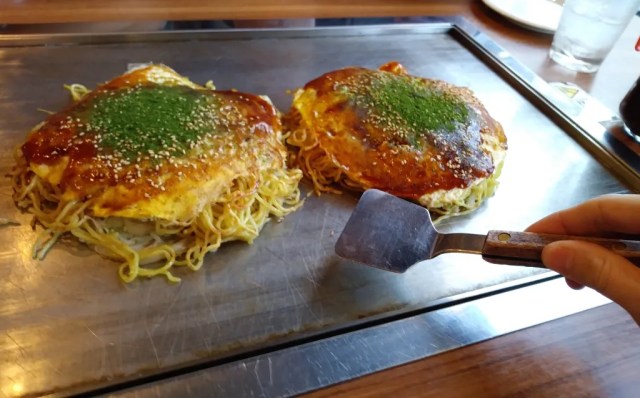
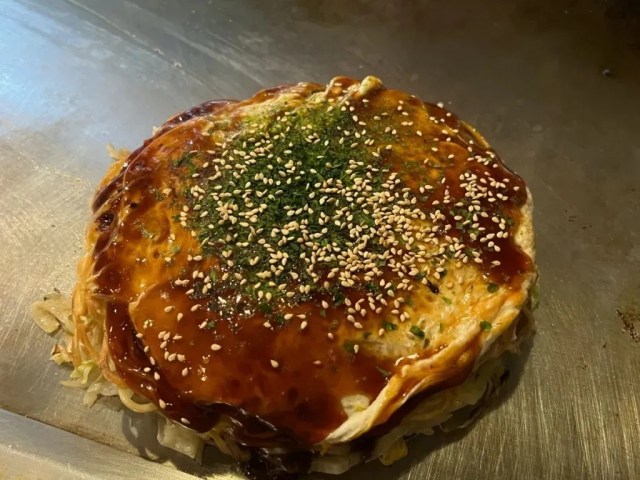
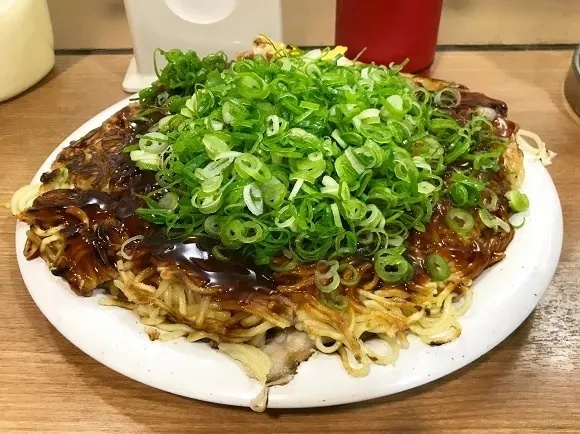
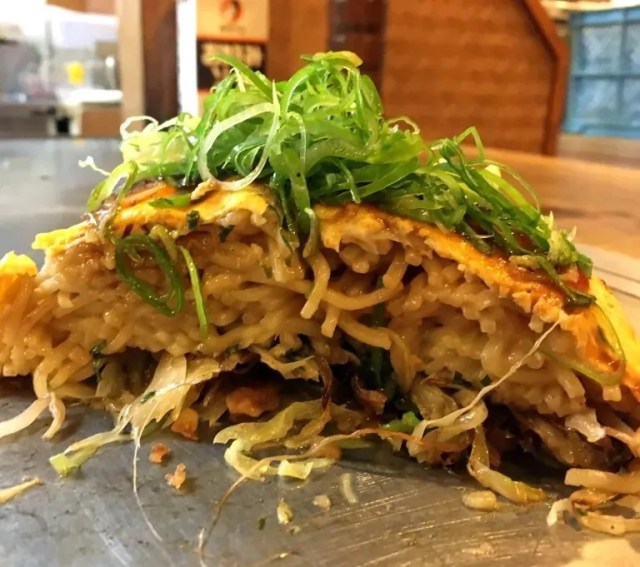
In Hiroshima, okonomiyaki is cooked in layers. You have the crepe on the bottom, shredded cabbage and bean sprouts on top of that, then the fillings, and as a topping a fried egg. Yakisoba noodles are also a common okonomiyaki ingredient in Hiroshima, but it’s the layered structure, not the noodles, that’s the defining point.
▼ Hiroshima okonomiyaki

Meanwhile, over in Osaka/Kansai, the first step in making okonomiyaki is to put all of the ingredients, including the crepe batter, into a bowl and mix them together. It’s also common to add in grated yamaimo, a type of yam, to help the different ingredients stick together. Then you pour the bowl’s contents onto a flat grill, hot plate, or frying pan and cook them all together at once.
▼ Osaka okonomiyaki
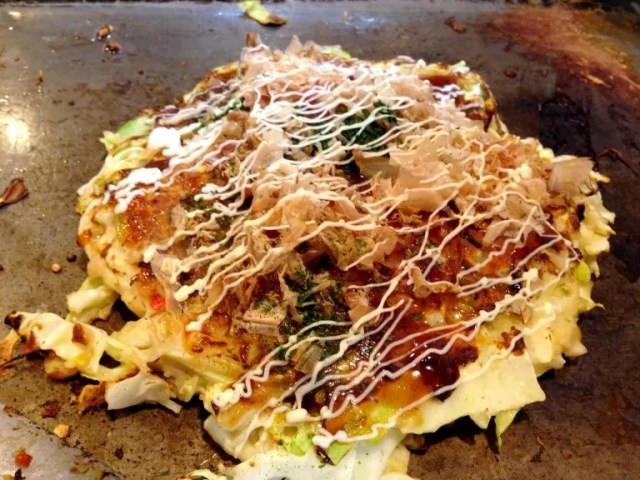

While the contents are often largely the same, the different cooking styles make for very different textures, and their different ingredient ratios (okonomiyaki in Hiroshima tends to use a greater quantity of vegetables) make for two distinct flavors too. While you’re not likely to find too many people who love one and hate the other, okonomiyaki makes for a rather different eating experience depending on which type you’re eating, and this is where we get back to the linguistics.
Osaka is Japan’s third most populous city, and when you factor in the other major metropolitan centers in Kansai, such as Kobe and Kyoto, there are a lot more people living in the Osaka okonomiyaki sphere than the Hiroshima one. Osaka-style okonomiyaki is also easier to make at home, since, as mentioned above, you can cook it in a frying pan. Since the Hiroshima version calls for cooking the layers separately, but at the same time, it usually requires a larger counter-sized teppan flat grill, which is fine if you’re running a restaurant, but too big for most home kitchens. Because of that, the Osaka-style okonomiyaki is also the more prevalent version in Tokyo, east Japan, and northern Japan, even if okonomiyaki restaurants aren’t as common in those regions as they are in Hiroshima or Kansai.
So when they hear the word “okonomiyaki,” many people in central, eastern, and northern Japan will first think of the Kansai style. That means that they often feel like they need to use a different word to specify the kind of okonomiyaki made in Hiroshima and west Japan, and one of the words that came into use is “Hiroshimayaki.” To the people who use it, it probably seems like an easy solution. It’s the style of (okonomi)yaki made in Hiroshima, right?
Here’s the thing, though: People in Hiroshima don’t like the word “Hiroshimayaki.”
Our Japanese-language reporter P.K. Sanjun became aware of this through a series of awkward interactions with friends he’s made who grew up in the Hiroshima area. Every time he’s slipped up and said “Hiroshimayaki” when talking with them, they make it a point to correct him. It’s happened enough that P.K. decided to ask them, directly, if they get upset or irritated when people say “Hiroshimayaki,” and here’s what they had to say.
“It’s not irritating, but it’s confusing.”
“I wouldn’t say it irritates me. But it’s a clear sign that the person who’s talking isn’t from Hiroshima.”
“Yep, ticks me off. It’s called okonomiyaki.”
“Irritating. How irritating? So much that I wanna pour a bottle of Otafuku sauce [Hiroshima’s favorite brand of okonomiyaki sauce] on whoever said it. And it’s even more irritating if someone from Osaka says it.”
P.K.’s friend’s comment about “Hiroshimayaki” being an immediate giveaway that the person isn’t from Hiroshima is spot-on, by the way. Personally, I’m a borderline fanatical supporter of the Hiroshima version of okonomiyaki, and pretty much every time I’ve ordered it in a restaurant that calls it “Hiroshimayaki,” it’s been really poorly made.
Still, for someone like P.K., whose first mental image of okonomiyaki is the Kansai version, it feels unintuitive to say just “okonomiyaki” when he means the Hiroshima version. So next he asked the same four people how they feel about the term “Hiroshima-fu okonomiyaki” (fu being a suffix that means “style,” though an unskilled translator might mistake it for something else). This time, their answers were:
“I can allow it. It distinguishes it from Kansai-fu okonomiyaki, so it avoids any confusion.”
“Sure, it’s fine. I call the other kind Kansai-fu okonomiyaki, so it’s fair.”
“Dude, we already went over this. It’s called ‘okonomiyaki.’”
“I’m OK with it, as long as they don’t shorten it down to just ‘Hiroshima-fu.’ It still feels like a deviation from the normal usage, but as long as they keep ‘okonomiyaki’ in there, it’s fine.”
The point about “Hiroshima-fu okonomiyaki” being fair because people in Hiroshima say “Kansai-fu okonomiyaki” or “Osaka-fu okonomiyaki” brings up an interesting point. While people outside Hiroshima sometimes call Hiroshima-style okonomiyaki “Hiroshimayaki,” no one, including people in Hiroshima, call Kansai/Osaka-style okonomiyaki “Kansaiyaki” or “Osakayaki.” It’s possible that part of the reason some people in Hiroshima bristle at the word “Hiroshimayaki” is because it sounds like it’s reducing all of Hiroshima’s food culture down to just one dish, or that it carries a subtle but condescending connotation that the thing they make in Hiroshima isn’t actually okonomiyaki.

And much like how the separate strata are the defining feature of Hiroshima-style okonomiyaki, there’s another layer at play too for some people, as one of P.K.’s friends added a bit of historical context. Hiroshima-style okonomiyaki became the city’s representative dish following the end of World War II. Having been hit by an atomic bomb in the closing days of the war, the city was devastated, and while okonomiyaki might translate to “grill what you like,” in those early years of reconstruction the reality of the dish was closer to “grill what you’ve got.” At first, that meant whatever meager amounts of shredded cabbage and bean sprouts the people of Hiroshima could scrape together, but as time went on and things got better both agriculturally and economically, gradually more and more fortifying, hearty ingredients could be added to Hiroshima-style okonomiyaki.
“Okonomiyaki, in some ways, is a symbol of Hiroshima’s recovery,” one of P.K. friends told him. “It got better and better as the years went on, just like the city itself did. For that reason a lot of people in the Hiroshima area take pride in their okonomiyaki. We grew up hearing it called ‘okonomiyaki,’ so we don’t want other people to take that out of the name they call it by.”

So to conclude, you’re probably not going to cause outright offense to people from Hiroshima if you say the word “Hiroshimayaki,” and it’s probably not going to require you to make a public apology (unless you’re a prominent politician anyway). People from Hiroshima definitely will notice your choice of words, though, and they’re not going to be particularly happy about it, so if you want to make a linguistic tip of your hat to the local food culture, at least remembering the term “Hiroshima-fu okonomiyaki” is the nice thing to do.
And hey, it’s still less complicated than the Japanese dessert that has six different names.
Photos ©SoraNews24
● Want to hear about SoraNews24’s latest articles as soon as they’re published? Follow us on Facebook and Twitter!
[ Read in Japanese ]