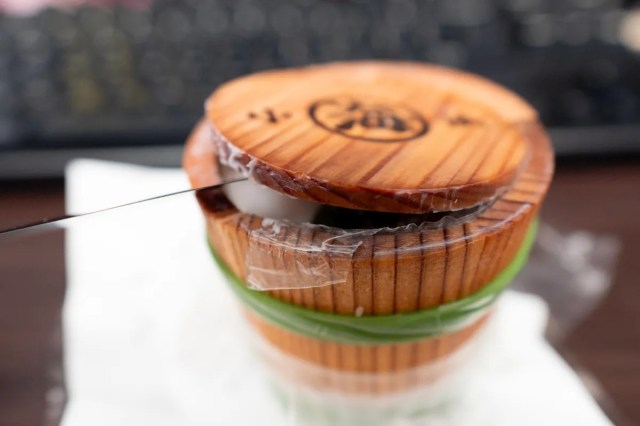

This Obama delicacy impresses with its sashimi-like flavor, which is almost unthinkable for a preserved food.
Despite its popularity among dinosaur enthusiasts, Fukui remains among the more undervisited prefectures of Japan, and even fewer people still manage to make their way out to the small city of Obama in the western reaches of the prefecture. However, aside from its “I love Obama” desserts, there’s a local fish that could outshine Japan’s most famous celebratory fish.
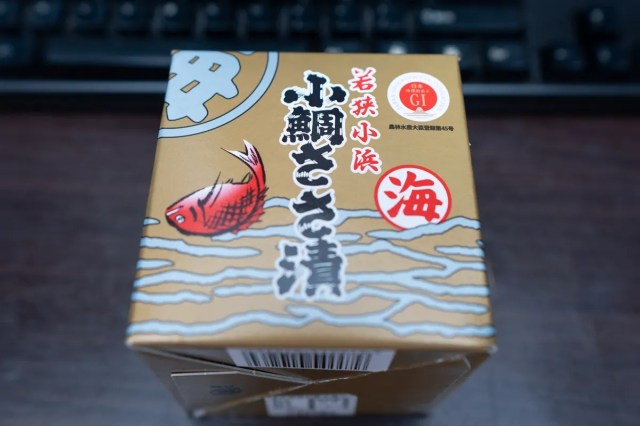
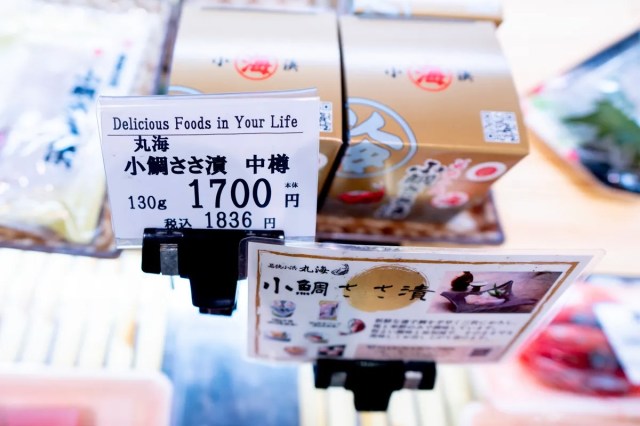
Japan’s food culture is extensive, filled with deeply historical and regional specialities, many of which never leave their hometowns, and Obama has one too: Kodai no Sasazuke (1,836 yen [US$11.72]).
In Japan, sea bream (called tai) is quite a big deal, with the most famous variety, called madai (red sea bream), being traditionally served at weddings and celebrations because its name sounds like medetai (“auspicious” or “joyous”).
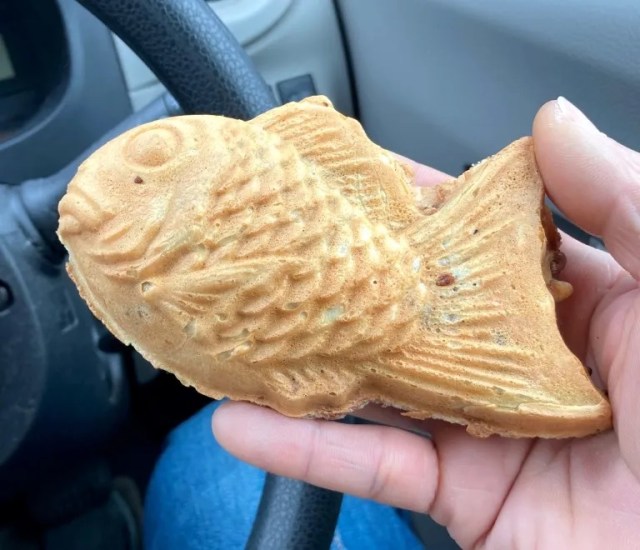
▼ Yes, it’s the same “tai” from the delicious fish-shaped dessert taiyaki (which doesn’t actually contain any fish).

While madai is still enjoyed in the coastal Wakasa region of Fukui, where Obama is situated, it’s the variety of renkodai (yellowback sea bream) that is the darling of the region, all thanks to sasazuke.
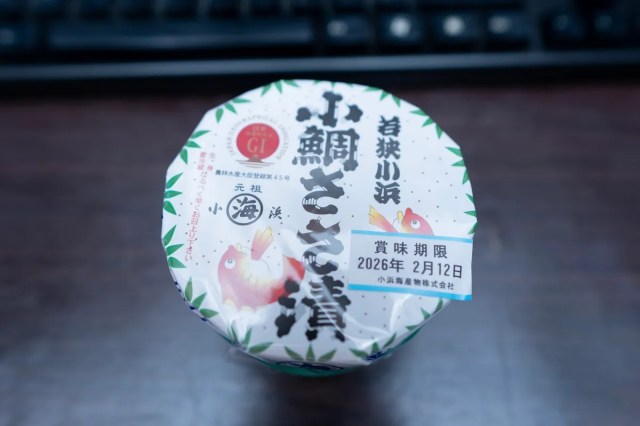
Sasazuke was developed in the late 19th century, before refrigeration, when fish from the Sea of Japan needed to survive the journey inland to Kyoto along the historic trade route known as the Saba Kaido (Mackerel Road). The solution of the time was to lightly salt the fish, cure it in rice vinegar, and pack it into small cedar barrels, resulting in a preserved product that somehow still manages to taste remarkably fresh.
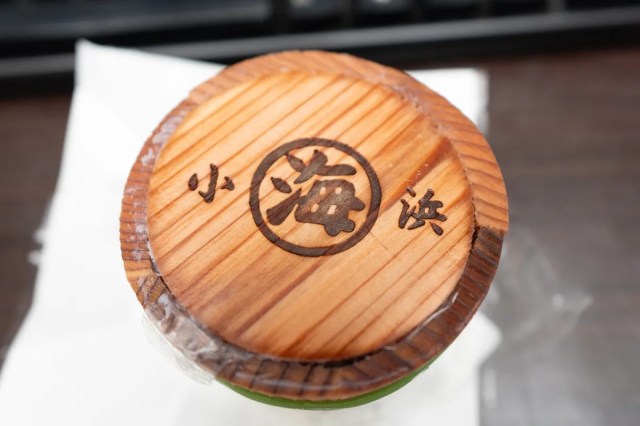
▼ Nowadays, they come with plastic cups to catch any leakage, since leaks are an intended feature of the design.
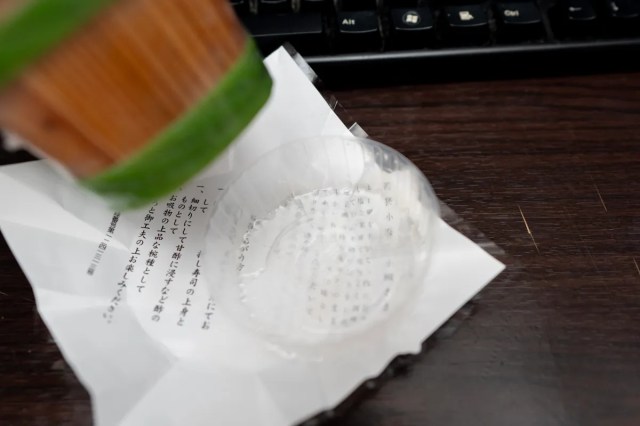
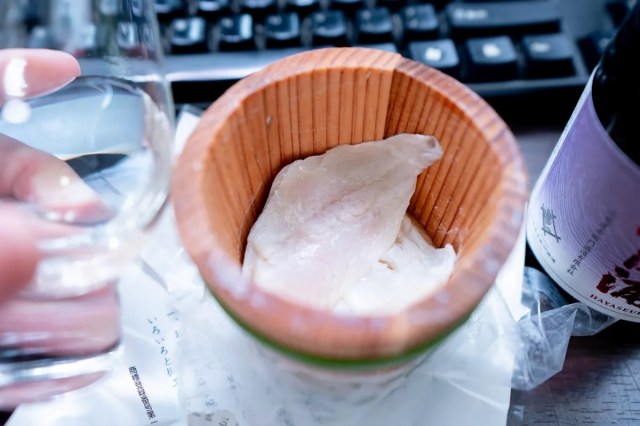
Opening up a barrel of Kodai no Sasazuke, there’s no strong fermented smell to be found, nor does it look heavily pickled.
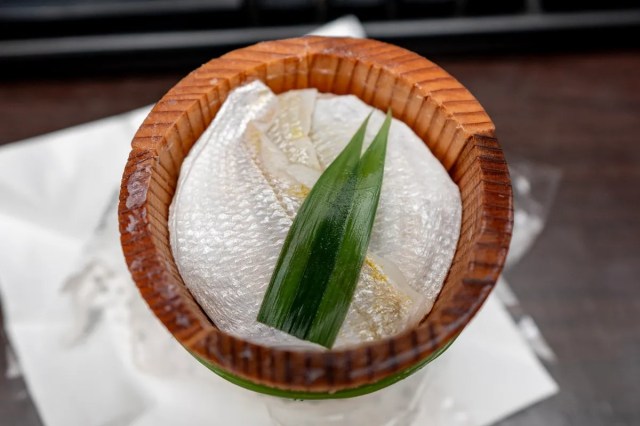
Instead, it resembles sashimi (raw sliced fish) with a light color and firm texture, and the flavor lacks the sour and salty tastes commonly associated with preserved foods, presenting the clean sea bream flavor with an enhanced umami. While it is a marvelous dish just by itself, according to the instructions on the wrapping, it can also be used in sushi, vinegared dishes, or clear soups.
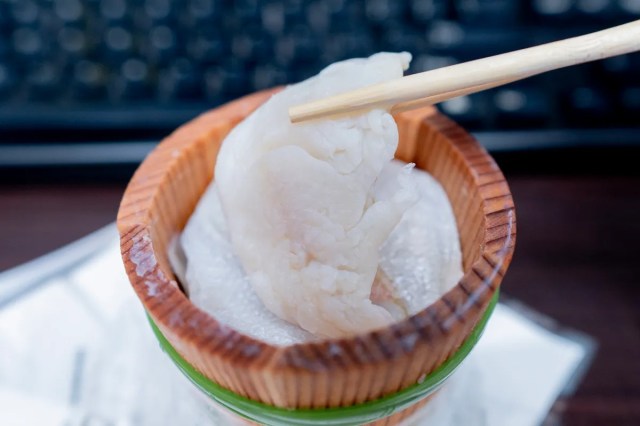
Compared to other contemporary preservation methods, sasazuke must have been revolutionary to the residents of Kyoto who could enjoy the delightful taste of something very close to the fresh seafood that they lacked easy access to.
Even today, sasazuke remains a special part of life, with the cedar barrel making it appear as if it’s some sort of ceremonial offering. Although locals don’t tend to eat it in their everyday lives, it’s pretty common to give it as a gift, even among other Fukui natives.
Pair it with local Japanese sake rice wine, and you’ll find yourself with a bite of luxurious indulgence.
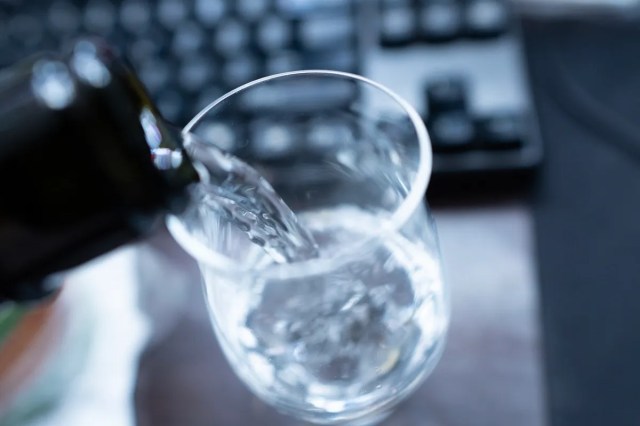
A refined daiginjo (a highly polished rice wine, typically light, smooth, and highly aromatic) made from Fukui’s modern sake rice, Hayaseura’s Sakahomare, offers pear-like aromas and crystal clarity that match perfectly to the umami of the fish.
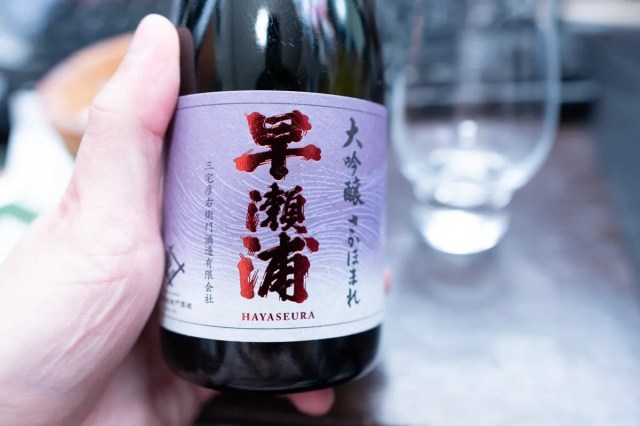
A slice of sasazuke with wasabi and soy sauce, followed by a sip of Sakahomare sake, is a blissful treat fit for a connoisseur.
Japan has many foods that it is known for, but its culinary charm can often lie far from the tourist trail, in the quiet, regional towns and cities. So, the next time you’re passing through an unfamiliar place, maybe stop and take some time to uncover what delicious delights the area has been keeping to themselves.
Photos ©SoraNews24
● Want to hear about SoraNews24’s latest articles as soon as they’re published? Follow us on Facebook and Twitter!
[ Read in Japanese ]