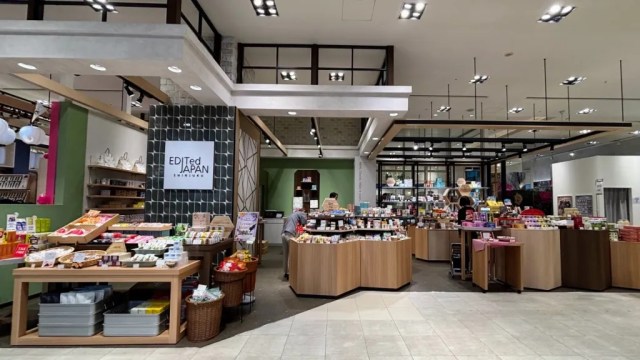

There’s a new sweets curator in downtown Tokyo.
In an ideal world, we’d spend every single day on a meandering journey through Japan, stopping see the sights and sample the delicacies whenever and wherever the mood struck us. Unfortunately, we don’t have the copious amounts of money or free time that such a lifestyle would require, but there is a way to send your taste buds on a trip across Japan for a very affordable price, as we found out on a recent visit to the Marui Annex department store in downtown Tokyo’s Shinjuku neighborhood.
On the first floor of the building you’ll find a shop named Edited Japan Shinjuku, which just opened in September . “Edited” isn’t being used with the meaning of revising or altering something, though, but more in the sense of an “editor’s selection,” as Edited Japan is a curator of Japanese regional sweet and salty snacks. The store is stocked with over 100 different items, representing all of Japan’s prefectures, and unlike some food souvenir shops that only offer large-quantity boxes, Edited Japan specializes in individual-serving sizes, letting you pick out a variety of treats without making any major commitment as you search for a new favorite.
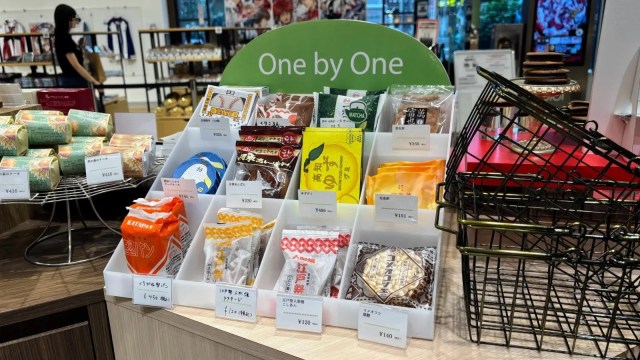
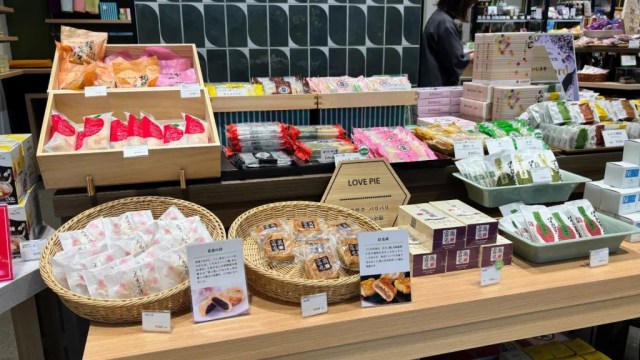
Another cool thing about Edited Japan is the store’s focus on snacks that are a genuine part of everyday life in their local communities. You won’t find anything that’ll win you brownie points with a snooty coworker or snobby classmate here. Instead, the shelves are filled with things that present a combination of high quality and reasonable price. Think more “This is something people in Kyoto would munch on if they want something sweet on a Sunday afternoon” than “Bring this to the next party you’re invited to so you can show off your refined sensibilities.”
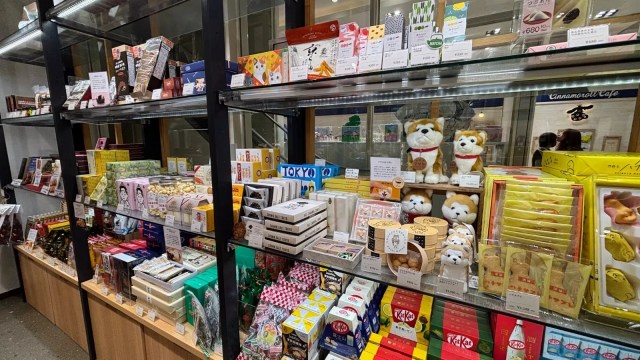
So we decided to see how many prefectures’ treats we could taste with a budget of 1,000 yen (US$6.30), and we mean a hard limit of 1,000 – not a single yen more.
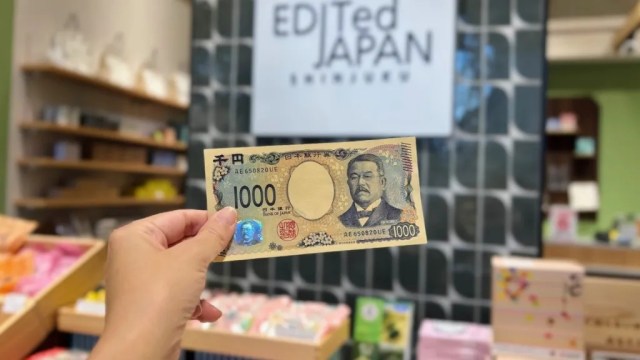
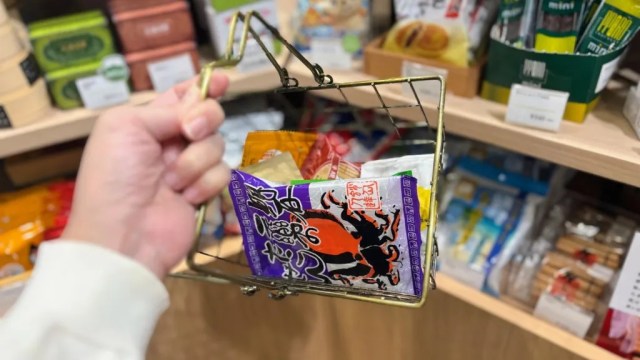
Thankfully, this still gave us plenty of room to work with, since most of Edited Japan’s items are somewhere in the 100-200 yen range. We had to do some mid-shopping calculations to make sure we didn’t go over, but in the end, we were able to put together a bundle of snacks from six different prefectures, with the total coming to 995 yen.
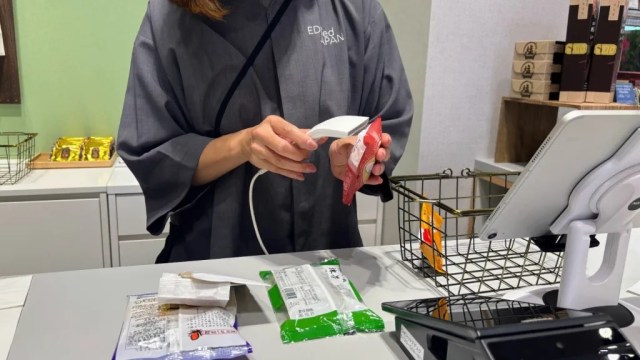
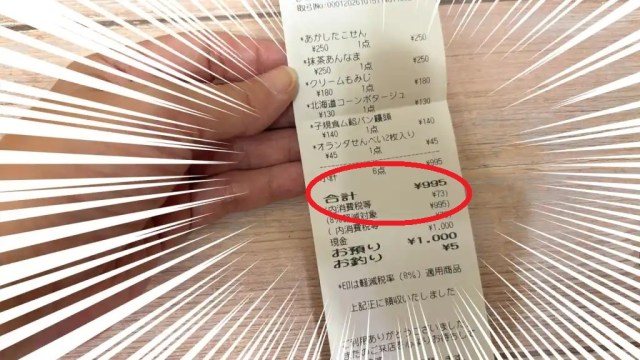
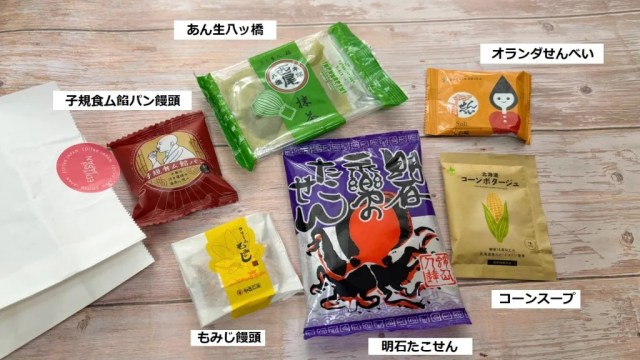
So what did we get? Let’s start at the north of the country, and work our way down, which makes our first entry on the list Hokkaido Dining Kitchen’s Corn Soup (130 yen), from Hokkaido Prefecture.
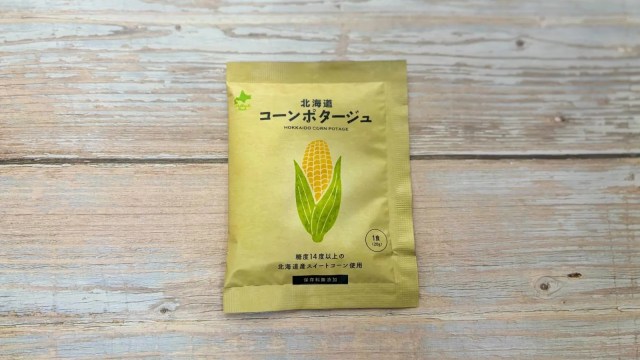
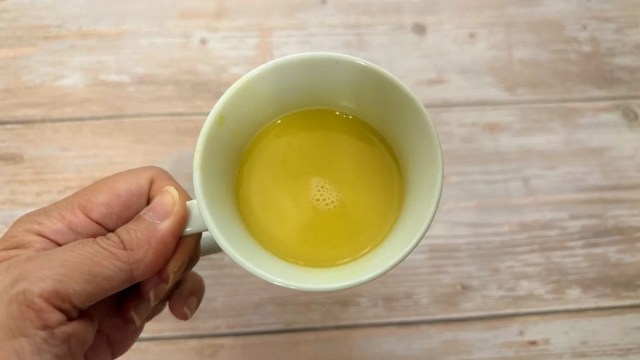
Soup may not be counted as a “snack” in some cultures, but certain varieties in Japan do sort of get treated that way. Corn pottage, for example, is commonly seen as something that’s tasty and moderately filling even when it’s not served as part of a meal, which is why you’ll often see cans of corn soup for sale in Japanese vending machines during the fall and winter. This powdered corn pottage mix, though, is tastier than what you can get from a can, as it’s made with an especially sweet variety of Hokkaido-grown corn and contains no artificial flavors or preservatives.
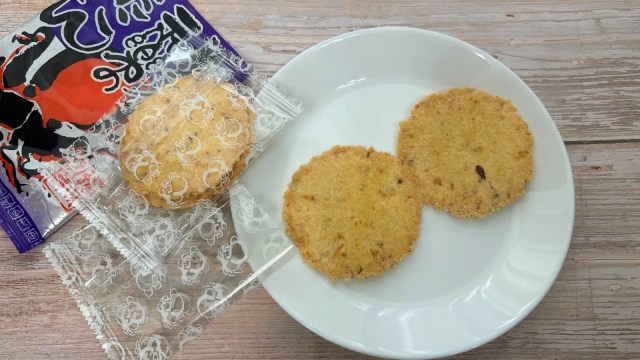
Next have Dutch Senbei rice crackers, from Yamagata Prefecture’s Sakata Beika, which were the value all-star of our shopping trip, priced at just 45 yen.
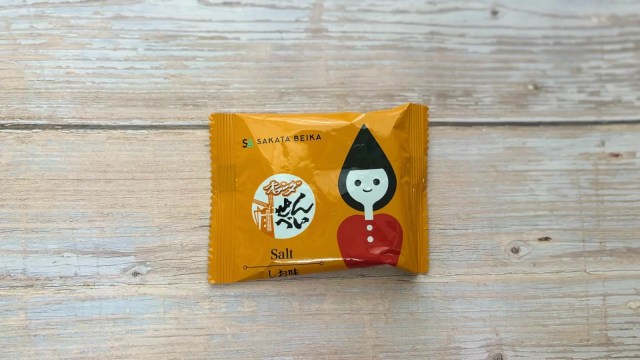
This brand of rice cracker has been a big hit in Yamagata since 1962, but what makes them “Dutch,” other than the cap that person is wearing in wrapper illustration? There are two theories, one of which is that the distinct bumpy texture of the crackers is said to resemble the footprints left by visitors from Japan to the Netherlands, some of the first foreigners to set foot on Japanese soil back in the feudal era, and thus some of the first people to be seen walking around in Western footwear, which was much bulkier than the straw sandals that were the norm for Japanese people at the time.
The other possible explanation is that Oranda, the Japanese word for both Holland and Dutch, sounds similar to orada, a way of saying “we” in the Yamagata dialect, which would make “Oranda Senbei” (as the snack is called in Japanese) sound similar to saying something like “the rice crackers we made.”
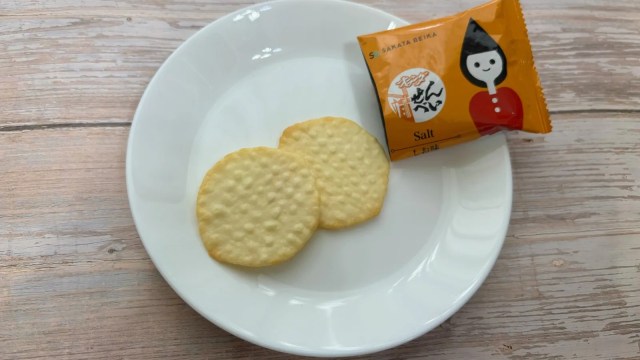
Regardless of why they’re called that, though, Sakata Beika’s Dutch Senbei are crisp and refreshing, lightly salted to enhance, but not replace, the natural flavors of the non-glutinous Yamagata-grown rice that they’re made with.
Next we move on to Kyoto, which means it’s time for nama yatsuhashi.
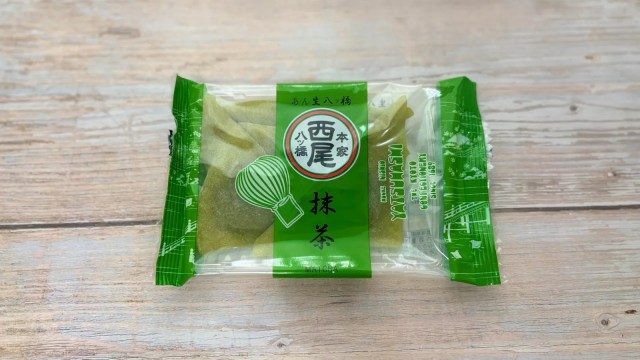
Nama yatsuhashi is a folded triangle of soft mochi with a dollop of anko (sweet red bean paste) inside. Chewy and sweet, with just a touch of sophistication from a dusting of cinnamon, nama yatsuhashi are so popular with Kyoto residents and visitors that there are a few different companies that make them. Nishio, who makes the 250-yen matcha-flavored version we picked up, is one of the most respected, because if your company has been around since 1689, you’ve earned a lot of trust.
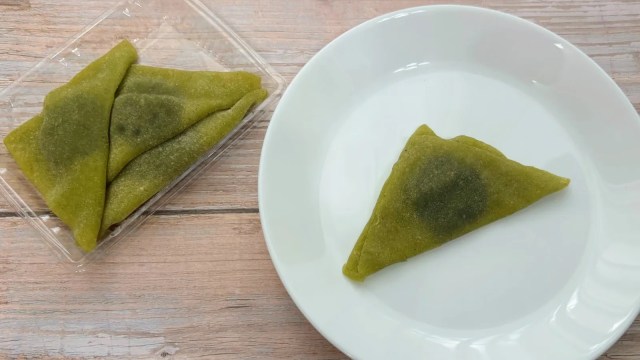
Since nama yatsuhashi’s simple ingredient list lends itself well to experimentation, most makers, Nishio included, have a cycle of seasonal flavors that are only offered at certain times of year, but the matcha ones are so well loved that they’re available pretty much all the time, as long as the day’s stock isn’t sold out.
Continuing west, our taste buds arrive in Hyogo Prefecture, where the coastal town of Akashi brings in some of the country’s most delicious octopus, inspiring rice cracker maker Eirakudo to make Akashi Takosen senbei (250 yen).
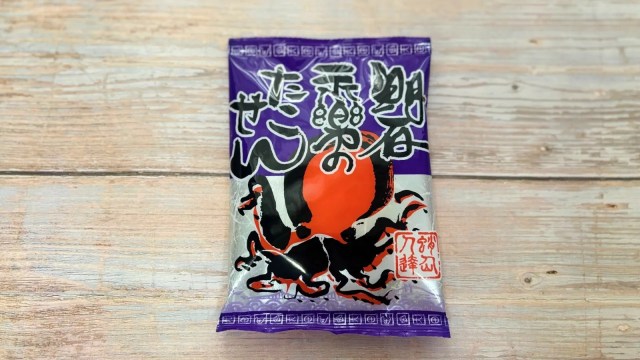
These deep-fried senbei are made with Akashi octopus and treated with a savory, slightly sweet sauce, and they’re just as suited for a midday snack as they are for a pairing with a nice cold beer after work.
We shift back into sweets mode as we reach Hiroshima Prefecture, which, like Kyoto, has a particular dessert that’s overwhelmingly associated with it: the momiji manju.
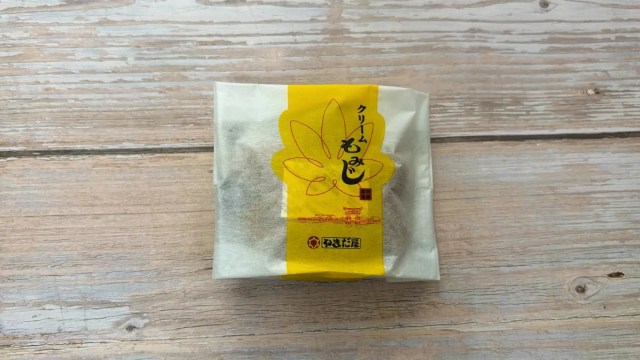
Hiroshima Prefecture is famous for its beautiful maples, called momiji in Japanese, and these manju (sweet dumplings) are shaped like the trees’ leaves.
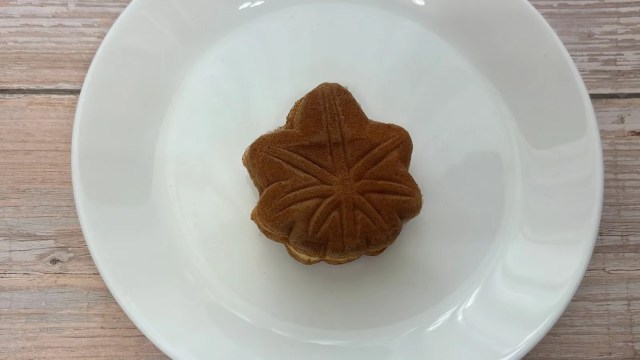
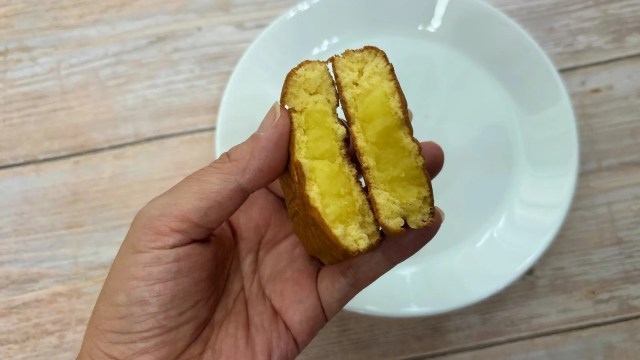
The outside is a sponge cake similar in flavor and texture to a dorayaki or castella cake, and while the most traditional filling in anko, momiji manju come in all sorts of different flavors, and we opted for a custard cream version from maker Yamadaya, from the island of Miyajima, for 180 yen.
And last, we come to the end of our sweet pseudo-odyssey in Ehime Prefecture with the linguistically dense Shiki Hamu Anpan Manju (140 yen), from confectioner Ichiroku.
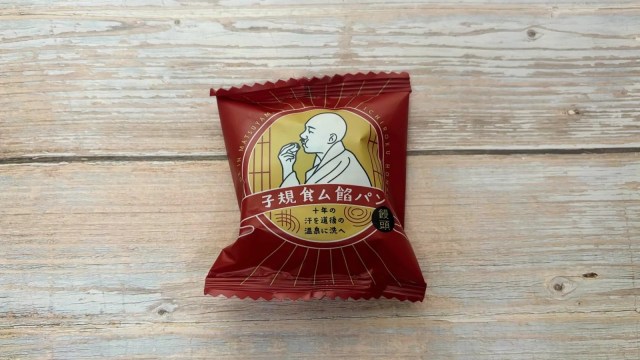
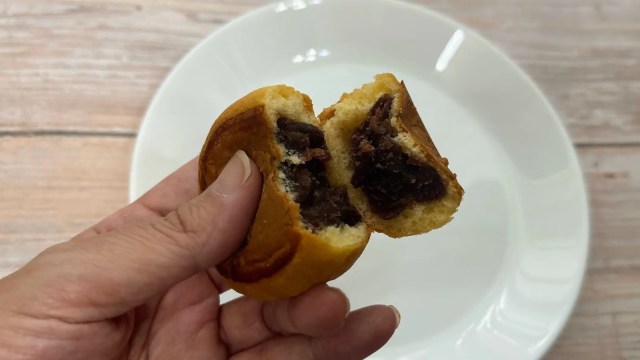
We’ve already covered the meaning of manju, and anpan is a hybrid dessert of a western-style baked bread bun with anko inside. Hamu is an old-fashioned/literary way of saying “eat” in Japanese, and the Shiki being referred to here is Masaoka Shiki, a 19th century poet who’s considered one of the greatest haiku masters in Japanese history.
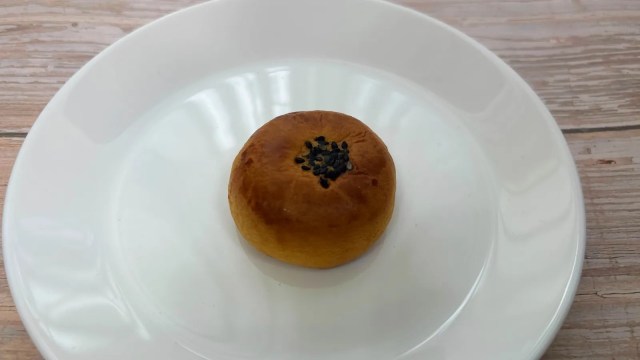
Masaoka was born in Ehime, and is also said to have been a big anpan fan. So while this is still a manju, the cake is a little more substantial, and it’s crowned with black sesame seeds, a common addition to anpan.
We were a little bummed out that we weren’t able to fit some snacks from Kyushu or Okinawa into our taste buds’ itinerary, but we really can’s complain after enjoying six different delicious desserts for just 1,000 yen, especially when we got a taste of so many different parts of the country. Now that we’ve got the snack-travel bug, we’ll have to make sure to swing by Edited Japan whenever we’re in the neighborhood but also kind of wishing we could be someplace else.
Shop information
Edited Japan Shinjuku
Address: Tokyo-to, Shinjuku-ku, Shinjuku 3-1-26, Shinjuku Marui Annex 1st floor
住所 東京都新宿区新宿3丁目1-26 新宿マルイ アネックス 1F
Open 11 a.m.-8 p.m.
Website
Photos ©SoraNews24
● Want to hear about SoraNews24’s latest articles as soon as they’re published? Follow us on Facebook and Twitter!
[ Read in Japanese ]