The Tokyo Shimbun has discovered that workers involved with national government controlled cleanup projects resulting from the accident at the Fukushima Daiichi Nuclear Power Plant are being ripped off by subcontractors.
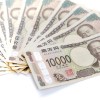
Despite being able to rent lodging facilities from the government and others for free or for very little money, contractors forcibly deduct inflated accommodation and meal charges from workers’ pay. When the 10,000 yen (US$111) a day “danger pay” provided to contractors by the government (read: taxpayers) is taken into consideration, it means the contractors themselves end up forking out a measly 1,000 yen (US$11) a day per worker.
Due to the risk of radiation exposure during decontamination work, the national government provides danger pay of 10,000 yen a day per worker. However, the allowance is paid to workers through operators contracted to undertake the cleanup work, resulting in a breeding ground of corruption due to the opacity of contractor wage payments.
In one case, workers carrying out hazardous decontamination work in Tamura City, Fukushima Prefecture, received 6,000 yen or so from the contractor each day, close to Fukushima’s minimum wage. The contractor then deducted between 4,500 yen and 4,750 yen for food and lodging, meaning the workers were only receiving a little over 11,000 yen per day after the government-funded 10,000 yen “danger pay”.
The source of funding for the danger pay is tax revenue, and it should thus be paid directly to the workers. However, because it is paid to the contractor, in this case it let them get away with paying in effect only a little over a 1,000 yen a day per worker after deductions.
The juicy bit for the contractor is in the food and accommodation fees it charges the workers. As it can essentially rent lodging facilities from the government for free, practically all the fees the contractor charges its workers end up as outright profits on its books.
In a similar case, another contractor recruited people to work for 11,000 yen a day without providing a breakdown of the pay. When workers began to question the contractor about the danger pay they were supposed to receive, the contractor explained that their daily pay was in fact 16.000 yen, including the danger pay, but that an accommodation fee of 3,700 yen and a separate 1,000 yen meal charge were being deducted.
In this case, the contractor was renting bungalows for 4,000 yen a piece and assigning four to five workers to each bungalow. It was thus collecting between 14,800 yen and 18,500 yen per bungalow. After subtracting its outlay of 4,000 yen, it meant the contract was booking a straight profit of between 10,800 yen and 14,500 yen a night per bungalow. According to an individual familiar with the situation, the contractor also kept meal costs down to about 300 yen per person.
In addition to less than clear wage breakdowns, many workers have not been provided with written contracts, only verbal agreements.
According to a Fukushima labor department official, the department has for the most part ascertained the reality of the situation in Tamura City and issued instructions to contractors there to improve conditions. However, similar instances of unclear terms and conditions for wages are also occurring outside of Tamura.
During its investigation, a public relations officer for a prime contractor told the Tokyo Shimbun, “In the past, there were instances of danger pay not being properly turned over to workers; however, we are repeatedly informing subcontractors of the need to do so. Regarding labor contracts and other matters, we are providing individual guidance (to the subcontractors) to help ensure contracts are based on law.”
Danger Pay
Due to the risk of radiation exposure, danger pay was set by the Ministry of the Environment as a special work allowance for those involved in Fukushima-related decontamination work controlled by the national government. The amount public servants received for entering hazard areas was used as a guide in determining the danger pay amount, which was set at 10,000 yen per day. For those engaged in work at the Fukushima Daiichi Nuclear Power Plant, where risks are higher, Tokyo Electric provides danger pay in accordance to the situation on the ground, such as the amount of radiation recorded. However, complaints are surfacing with regard to the amount of danger pay being provided as not enough of it is reaching workers.
Source: Tokyo Newspaper