Radiation
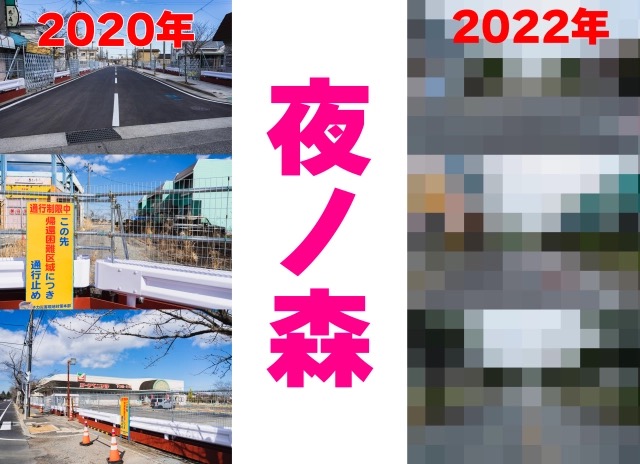
Awareness campaign for plan to dump radioactive water into ocean lands creators in hot water.
Video released on same day approval is granted for waste water project at Fukushima nuclear power plant.

Lawsuit claims Tepco misled scale of 2011 Fukushima disaster, causing relief workers to be exposed to radiation.
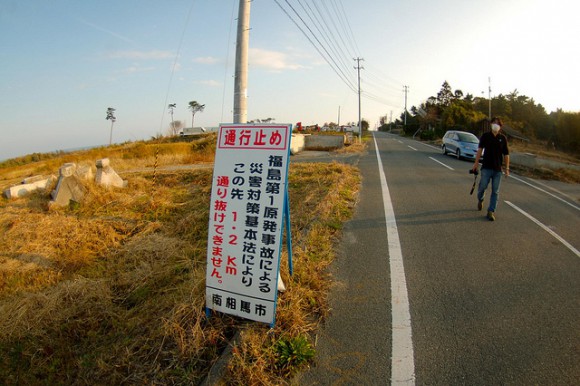
Following the events of the 2011 Tohoku earthquake and tsunami and the subsequent meltdowns at the Fukushima Daiichi Nuclear Power Plant complex, radiologists in Japan have been closely observing the area for potential changes. A new report by the National Institute of Radiological Sciences now suggests that the fir trees in Fukushima may be exhibiting strange growth patterns, with the radiation from the disaster being named as a possible factor.
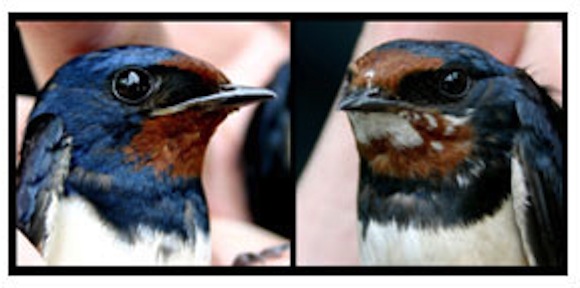
Dr. Timothy Mousseau, professor of Biological Sciences at the University of South Carolina and researcher for the Chernobyl and Fukushima Research Initiative, presented new findings to the International Ornithological Congress in Tokyo last week that suggest radiation contamination around Fukushima Daiichi, even at low levels, is negatively impacting biodiversity and wildlife populations.
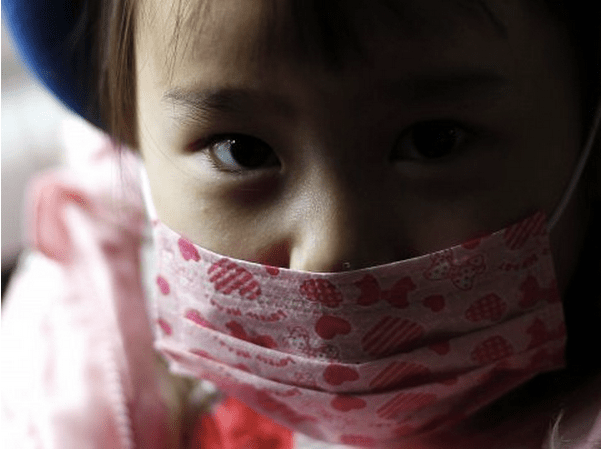
A “cancer cluster” detected in kids near the Fukushima disaster is probably due to the increased examination of these children, not because of the disaster itself, according to epidemiologist Norman Kleiman of Columbia University.
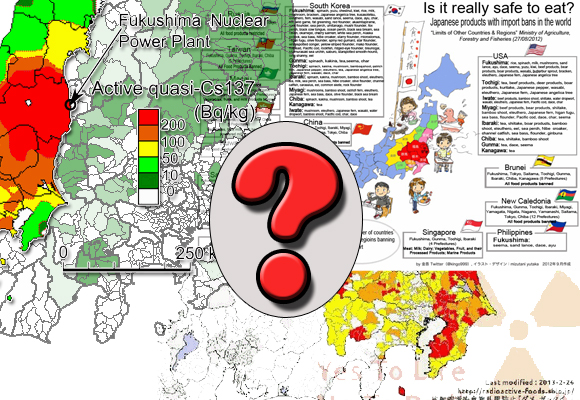
When the announcement was made that Tokyo would host the 2020 Olympic Games, there was much reason for celebration in Japan. Leading up to the decision, the Japanese leader for the Olympic bid emphatically stressed that the Fukushima disaster would have no impact on life in Tokyo–a claim that was reiterated after the bid was won.
Around that time, a cartoon appeared in a French newspaper depicting mutating sumo wrestlers in front of radiation suit wearing spectators. The Japanese government took issue with it and angrily reaffirmed the safety of the rest of Japan. Still, among many of the citizens, there is sneaking yet widespread suspicion over how safe the Tohoku and Kanto regions actually are, especially with regards to their food products.
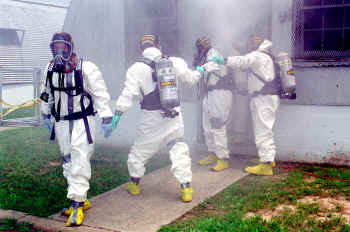
It’s often sad to see the workers at the Fukushima Daiichi Plant or any other radioactive site around the world. It’s a dangerous job that requires brave workers, and brave workers deserve a cool looking uniform. Firefighters get those axes and huge trench coats, police often have cool looking bulletproof vests, but workers in areas of high radiation have to wear those white or yellow suits that look like trash bags.
Thankfully, this sad state of affairs may soon change with the development of a fabric which blocks x-ray and gamma-ray radiation.
A thesis which assesses the risks of internal radiation exposure within Fukushima Prefecture following the explosions at the Daiichi Nuclear Power Plant, suggests that the effects of internal radiation fall far below that recorded after Chernobyl.
Ryugo Hayano, who works as a professor at Tokyo University’s Science Research Department, has collected the findings of doctors who conducted research into internal radiation exposure among those living inside of the Fukushima Prefecture. He consolidated these findings into an English journal entitled ‘Proceedings of Japan Academy Series B89’, which is available on the net.
The latest journal is a collection of reports that looks at the degree of radiation exposure through daily food consumption and it is reported to be the first of its kind.
A dinner of boiled vegetables and 3.3 square meters of floor space for sleeping, those are the harsh conditions awaiting laborers who undertake government-mandated decontamination work necessitated by the nuclear accident at Tokyo Electric’s Daiichi Nuclear Power Plant in Fukushima Prefecture. In some cases workers are basically laboring for free when taxpayer-funded danger pay is excluded from their pay packets.
Read More
On March 14, Hiroshima City announced tentative plans to remove molded plastic mannequins depicting the horrors of the atomic bombing from its Peace Memorial Museum by 2016. The proposed removal is in line with a review suggesting displays within the facility be switched to include more that depict actual articles belonging to the deceased and other real items from the period. Opinions from visitors to the museum are split on whether or not the mannequins should be removed.
The three mannequins in question are of an adult woman, a college-aged woman, and a small boy shown wondering through the blast aftermath in a severely burned state. Originally made from wax, the mannequins have been on display at the museum since 1973, and in their current form since 1991.
Read More
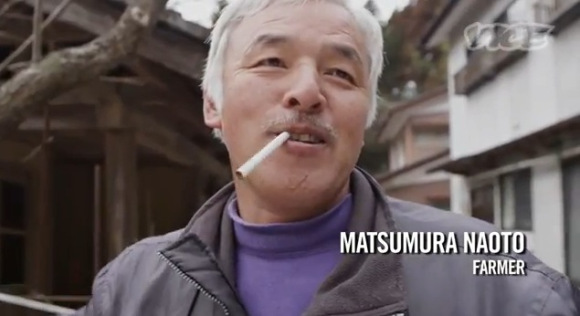
After the great earthquake and tsunami that came with the calamities of March 11 2011, many residents to the Kanto region of Japan experienced turmoil on an unprecedented scale. If natural disaster wasn’t enough, there was also the explosion at the Fukushima nuclear plant, spreading radioactive contamination even as far as Tokyo. Now after two years, Fukushima’s 20-kilometer radioactive exclusion zone still remains in place.
While most families fled the contaminated areas in the early stages following the explosion, one brave man remained undeterred by it all, staying put in his hometown. Naoto Matsura (53) is believed to be the sole inhabitant within the 20-kilometer red zone.
Matsumura’s determination to remain rooted in the same place and see through the nuclear catastrophe has caught the attention of many, with his accounts even being adapted into a documentary. The documentary tells of the events after the great earthquake and Mutsumura’s reasons for remaining at his home despite all those around him fleeing, never to return. Perhaps even more interestingly, it gives some rather candid accounts of this man’s feelings towards Tokyo Electric Power Company (TEPCO), the company that operated the stricken Fukushima Daiichi Nuclear Power Plant.
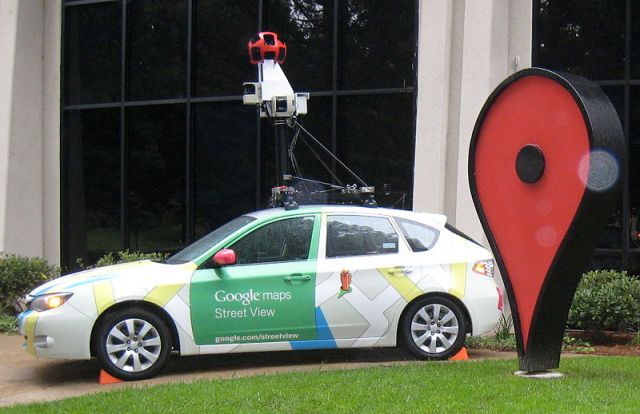
It wasn’t just the earthquake or tsunami of March 11, 2011 that shattered the town of Namie in Fukushima Prefecture, it was the subsequent radiation. Slowly creeping across the once fertile land, it ripped families from their homes and banished them to evacuation centers elsewhere. Today, nearly two years after the worse nuclear disaster since Chernobyl, the entire 86 square miles of Namie have been declared uninhabitable due to high levels of radioactive cesium. Even if families wanted to return, they can’t.
Amid this tragic loss, Google Street View is giving the people of Namie a chance to visit the town they were forced to flee.
Paying Just $11 a Day, Subcontractors Ripping Off Fukushima Nuclear Accident Decontamination Workers
The Tokyo Shimbun has discovered that workers involved with national government controlled cleanup projects resulting from the accident at the Fukushima Daiichi Nuclear Power Plant are being ripped off by subcontractors.
Despite being able to rent lodging facilities from the government and others for free or for very little money, contractors forcibly deduct inflated accommodation and meal charges from workers’ pay. When the 10,000 yen (US$111) a day “danger pay” provided to contractors by the government (read: taxpayers) is taken into consideration, it means the contractors themselves end up forking out a measly 1,000 yen (US$11) a day per worker.
Read More
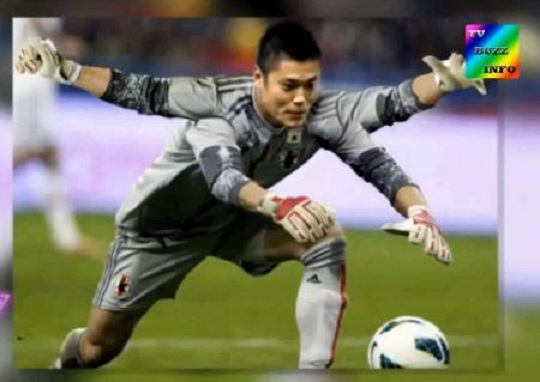
Following Japan’s 1-0 victory over France in the friendly football (soccer to our North American readers) match last week, a French variety show host made a joke that has touched a nerve here in Japan.
Alluding to Japanese goalkeeper Eiji Kawashima’s impressive skills on the field, the show presented an edited image of the player, showing him with four arms.
The show’s presenter then suggested that Kawashima’s additional limbs might be the result of “the Fukushima effect” and that they had grown after exposure to radiation leaked from the nuclear plant damaged by the earthquake and tsunami in March 2011. While the joke went down well during the show, many Japanese are understandably very upset…
Since the accident at the Fukushima Daiichi Nuclear Power Plant following the terrible East Japan Earthquake in March last year, radiation has unfortunately been a topic of concern for everyone in Japan. It is therefore not surprising that a team of scientists at Tokyo University, where some of the top minds of Japan can be found, conducted a study on how radiation in seafood can be reduced. However, the results which have been reported in the media recently are not what you may expect from Japan’s premier academic institution.
According to reports, the team at Tokyo University, headed by Professor Shugo Watabe, concluded from their experiments that up to 95% of the radioactive cesium contained in fish can be removed by reducing the fish into very small pieces, close to paste form, and washing it repeatedly with water. Read More
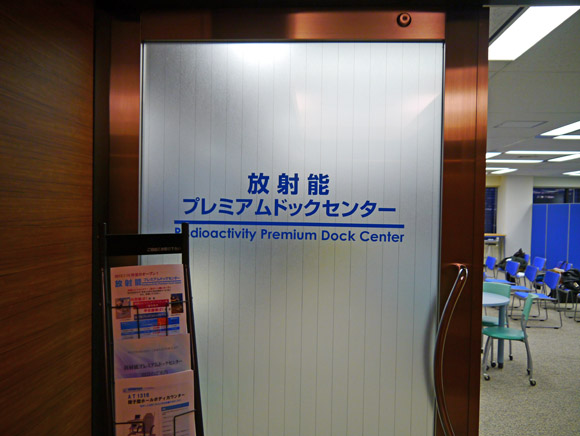
On January 16th, a clinic was opened in Tokyo’s Shinagawa Ward to check the levels of internal radiation exposure. The clinic, loosely translated as Radioactivity Premium Dock, offers a complete body scan for radiation levels, among other services, which the general public can access for a fee. The company hopes to reduce anxiety resulting from the Fukushima Daiichi disaster and to help the public manage their health.
Read More
MOST POPULAR
Today
 What’s it like to stay in a Japanese container hotel?
 New Tokyo facility promises to make you feel reborn, time in the womb and all [Photos]
 Japan’s newest anime figure crane game prize may also be the world’s weirdest hanger [Photos]
 Pizza Hut in Japan now serves spicy glass noodle pizza
 Do Komeda’s beefy rice balls continue the chain’s hallowed tradition of “reverse fraud”?
 Japanese milk carton cakes are a genius idea that the world needs to know about
 Family Mart releases 47 convenience store socks and stickers, one for every prefecture in Japan
 New Studio Ghibli notebooks are a beautiful reason to write and draw by hand [Photos]
 Tokyo train station will play Godzilla theme song as new departure melody
 Free-flowing cocktails, natural onsen water, and custom pillows make this Osaka hotel a steal
Weekly
- Tokyo train station will play Godzilla theme song as new departure melody
- Family Mart releases 47 convenience store socks and stickers, one for every prefecture in Japan
 Experimenting with making hot sandwiches in the microwave with a device from Japan’s 3COINS
- New Studio Ghibli notebooks are a beautiful reason to write and draw by hand [Photos]
 Osaka man arrested for running little pet shop of horrors with dangerous crocodile
- Japanese milk carton cakes are a genius idea that the world needs to know about
 Make-your-own-Totoro plushie workshop event coming to Ghibli Park park this fall
 Giant wagashi cushions will turn your home sweet home into home sweet Japanese sweets home
 Burger King serves up Pickleball Burgers in Japan, with a tasty nod to the number 11
 Starbucks Japan releases new Halloween Frappuccino and drinkware, but are they worth buying this year?
Monthly
 Japan announces new permanent residency guidelines, foreigners must earn more than average Japanese person
 Starbucks Japan unveils new Pokémon collaboration with Pikachu Latte and exclusive goods
 Studio Ghibli’s Calcifer is ready to light up your home as a magical-looking candle lamp [Photos]
- Family Mart releases 47 convenience store socks and stickers, one for every prefecture in Japan
 Lady Gaga and Family Mart team up for a Japanese convenience store work video [Video]
 New Gundam Base superstores coming soon in the U.S., with one opening this month
 Studio Ghibli releases new plush mascot character collection with a focus on friendship
- Tokyo train station will play Godzilla theme song as new departure melody
 Do Japan’s new single-minded convenience store bento show depressing poverty or satisfying focus?
 Studio Ghibli unveils new anime stationery collection, with a Spirited Away River God memo stand
Yearly
 Japan announces sudden 400-percent increase in visa fees for foreigners entering the country
 Japan’s human washing machines will go on sale to general public, demos to be held in Tokyo
 Studio Ghibli has a new anime out, and there’s only one place in the world where you can see it
 Starbucks Japan releases new drinkware and goods for Valentine’s Day
 Starbucks Japan releases new sakura goods and drinkware for cherry blossom season 2026
 Japan’s newest Shinkansen has no seats…or passengers [Video]
 Tokyo subway installing new ticket gates that don’t accept payment through Suica or other IC cards
 Japanese ninja certification exam attracts 131 candidates from Japan and abroad
 Salomon releases Japan-exclusive Mt. Fuji hiking gear that doubles as an amazing souvenir
 Japan reportedly adding Japanese language skill requirement to most common foreigner work visa
RECOMMENDED STORIES
 Japanese milk carton cakes are a genius idea that the world needs to know about
 Family Mart releases 47 convenience store socks and stickers, one for every prefecture in Japan
 New Studio Ghibli notebooks are a beautiful reason to write and draw by hand [Photos]
 Tokyo train station will play Godzilla theme song as new departure melody
 Free-flowing cocktails, natural onsen water, and custom pillows make this Osaka hotel a steal
 Sushi Bus starts running in Japan, but is it a tourist trap or tourist must-do?
 Final Fantasy Fat Chocobo Curry coming to fill up fans, even if they can’t attend Fan Festival
 Japan announces new permanent residency guidelines, foreigners must earn more than average Japanese person
 Giant wagashi cushions will turn your home sweet home into home sweet Japanese sweets home
 Japan lodges formal complaint with China for calling Prime Minister Sanae Takaichi Sanae Takaichi
 Japan’s new travel route literally through the mountains links two other beautiful alpine courses
 7-Eleven Japan now has Milk Miso Curry Ramen, but is that too much for one cup? [Taste test]
 Do Japan’s new single-minded convenience store bento show depressing poverty or satisfying focus?
 Starbucks Japan unveils new Halloween goods with secret glow-in-the-dark details
-
