In Part One of our series of articles on some original ways to enjoy the ancient city of Kyoto, I described what it was like to stay in a restored traditional machiya house during my recent trip to the city. Now, in the second article of the series, I’d like to introduce a tourist spot I visited which may not be at the top of people’s list of places to visit in Kyoto but nonetheless is both historically and architecturally interesting. The building, known as Sumiya, is literally one of a kind, as it is the only “ageya-style” structure that remains in Japan today. So, let’s take a look at this unique ageya building with a fascinating history over three-and-a-half centuries old.
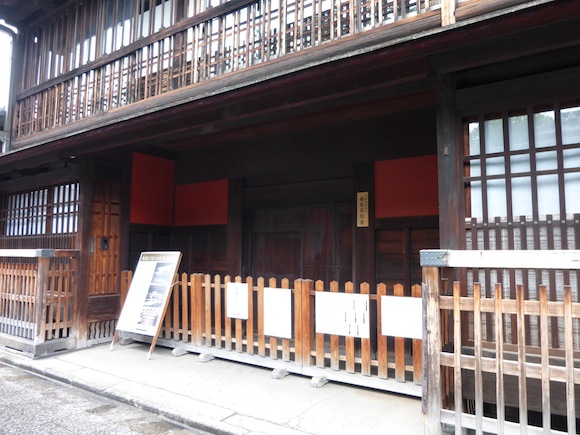
▼ The Sumiya building seen from the outside
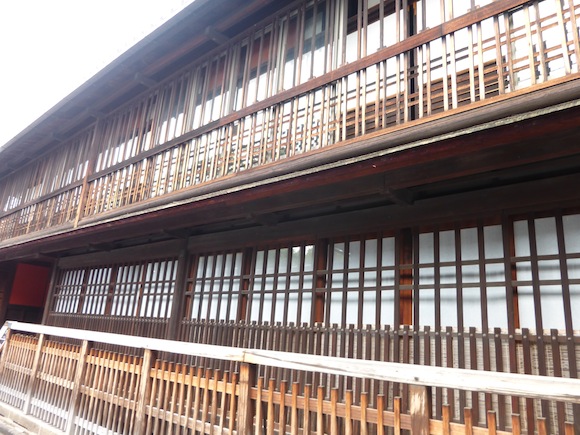
But what exactly is an ageya? Ageyas were restaurant-type establishments that operated mostly during the Edo Period (1603-1868), where banquets could be held and guests entertained by geisha and even tayū (particularly talented and high-class geisha). The Sumiya building, which is now open to the public as a museum, was an ageya in the Shimabara district of Kyoto, an area that in itself has a very interesting history.
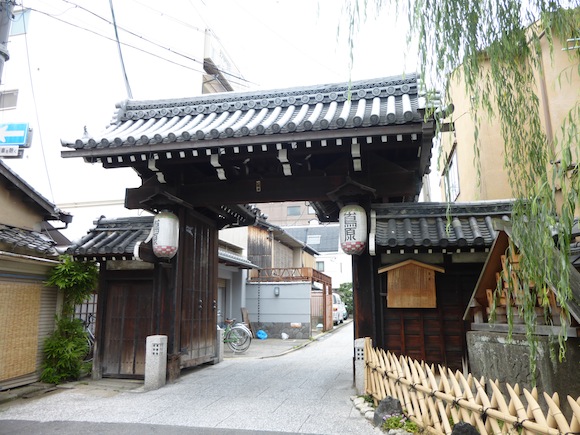
Shimabara was one of the three designated “yukaku”, or pleasure districts established in the first half of the 17th century by the Tokugawa shogunate that ruled Japan during the Edo Period. (The other two were Yoshiwara in Tokyo, which was known as Edo at the time, and Shinmachi in Osaka.) Shimabara eventually became a hanamachi (entertainment district) as well, where trained geisha, as opposed to prostitutes, also worked. (There definitely is a distinction in Japan between geisha and prostitutes, but where exactly the boundary lies can be a tricky matter, I think, even for the average Japanese today.) However, the district is now defunct as a hanamachi, as there are no longer any active okiya where geisha live and operate from in the area. Today in Shimabara, there is still one operating ochaya (tea house) where geisha entertain guests.
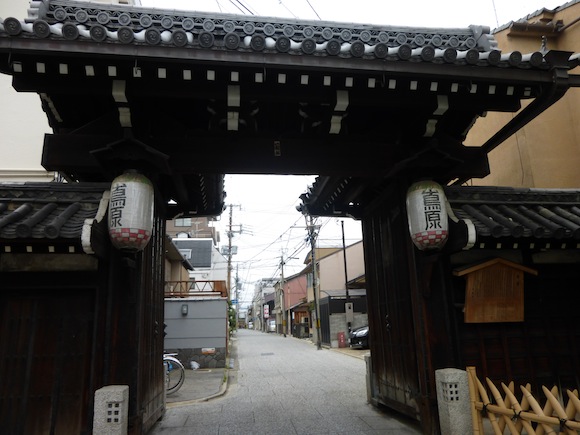
▼ The imposing gate marking the entrance to the Shimabara district — a reminder that you are entering what was once an area that was set apart from the outside world.
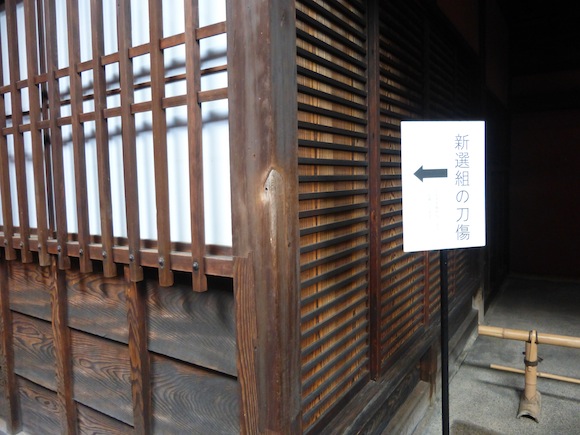
Sumiya began operating as an ageya at its current location in Shimabara in 1641 and served not only as a dining facility but as a salon and meeting place for artists and writers, as well as political figures including famous reformers in the late Edo Period such as Ryoma Sakamoto and Takamori Saigo. Of particular interest to Japanese history buffs may be the fact that you can see several actual sword marks left on parts of the building by members of Shinsengumi (a special police force of the late Edo Period based in Kyoto). Such evidence of violence in part reflects the political unrest of the times, but at least one of the marks is said to have been left by a disgruntled Shinsengumi member when he found out that he was no longer allowed to run up tabs at Sumiya. Some aspects of social life and human behavior haven’t changed much over the centuries, have they?
▼ An actual sword mark from a katana (samurai sword) left by a Shinsengumi member
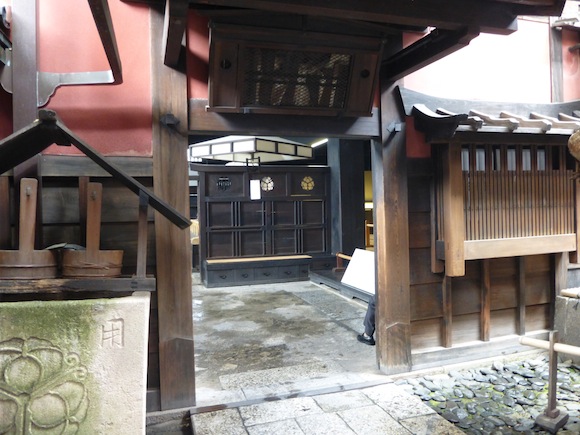
▼ The entrance gate and hall in the front area of the building
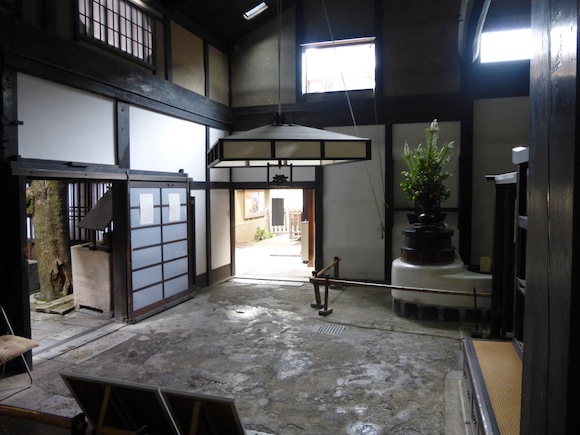
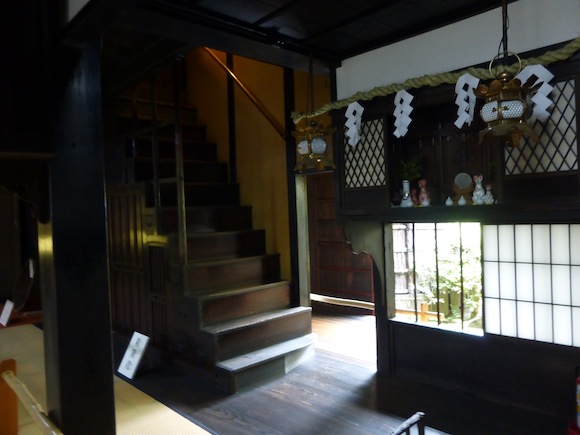
▼ Next to the stairs you can see a small domestic altar, known as kamidana, that can be found in some traditional Japanese homes as well as offices and shops
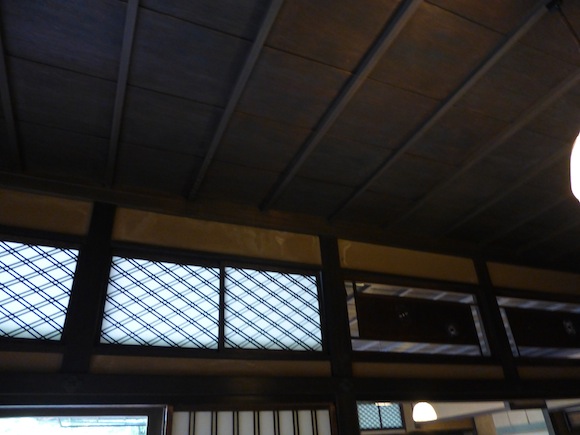
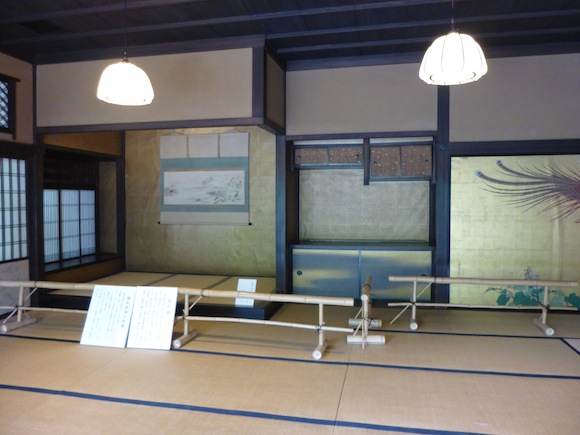
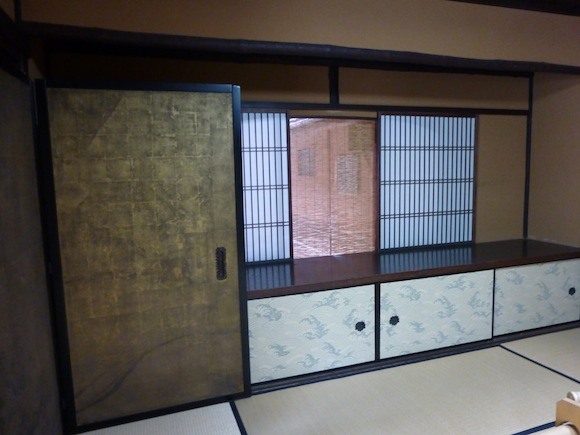
As a property of cultural value, Sumiya has some amazing sliding doors and folding screens decorated with works of famous Edo-period artists such as Yosa Buson, who is probably even better known as a haiku poet, and Maruyama Ōkyo. In addition, the intricate details that can be seen in the various structures of the building itself are works of architectural art worth viewing.
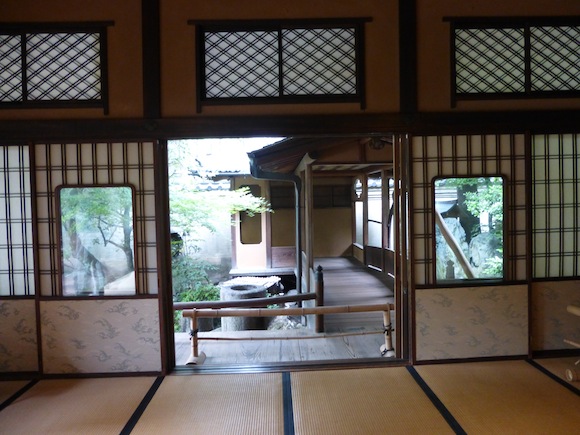
▼ See the beautiful wooden lattice-work
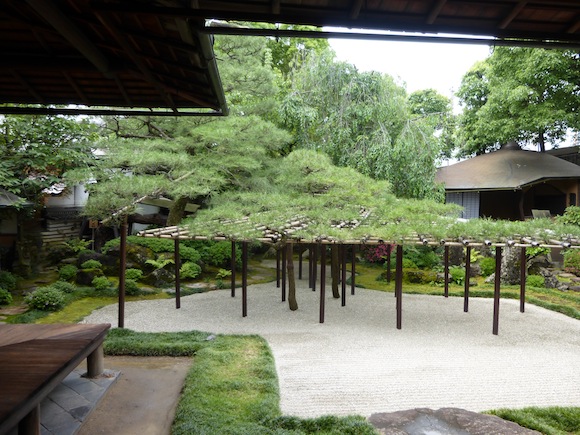
▼ Some views of one of the rooms and garden on the first floor

▼ We can’t forget that Sumiya was a restaurant first and foremost, so of course it had a large kitchen with giant cauldrons for cooking rice
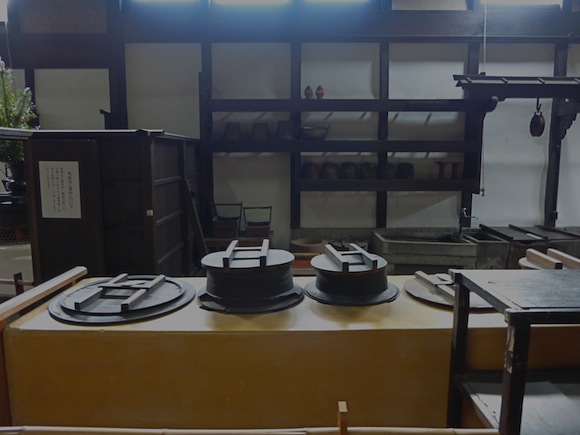
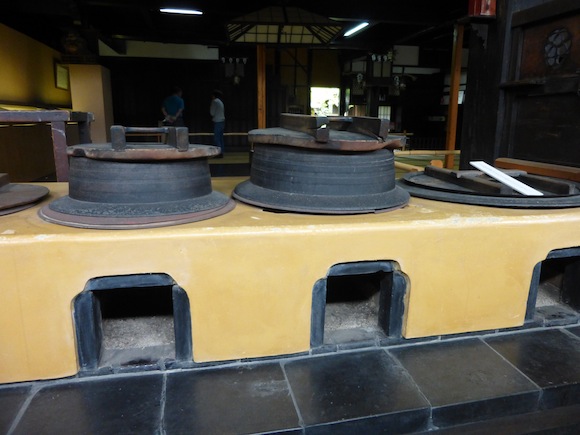
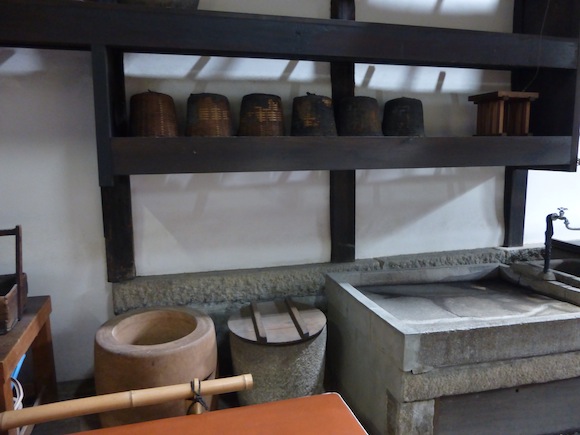
▼ The washing area in the kitchen
The second floor of the building also has some very interesting connecting rooms but is open only to museum guided tours, which unfortunately is currently available only in Japanese. An interesting tidbit I learned from the museum guide was that at one point the Sumiya building–despite its artistic and architectural value, or perhaps rather because of it–was almost torn down by the Japanese government for being “too extravagant and ostentatious”. It only narrowly escaped destruction because, as it so happens, many years of lighting the interior with numerous candles had covered and darkened all the surfaces of the rooms with soot. Had the artwork in the rooms been in their original condition with their bright and golden colors, the building almost surely would have been demolished by the government. Sumiya was designated an “Important Cultural Property” by the Japanese government in 1952, but it continued to operate as a dining and banquet facility until 1985 when it closed business.
The Sumiya museum is actually open only for about seven months of the year, from mid-March to mid-July and also from mid-September to mid-December, to coincide with the peak tourist seasons in Kyoto, so you’ll want to check the dates if you’re interested in visiting. There’s an entrance fee of 1,000 yen (US$10) for adults (discounts for children available), and advanced reservations are required for the Japanese guided tour given four times a day, which costs an additional 800 yen.
By the way, if you make a leisurely visit to Sumiya in the morning, a perfect place to have lunch is at the sushi and Kyoto cuisine restaurant Otobun, which is what I did after the museum tour. It’s just a very short walk from Sumiya, and you can have beautiful sushi there.
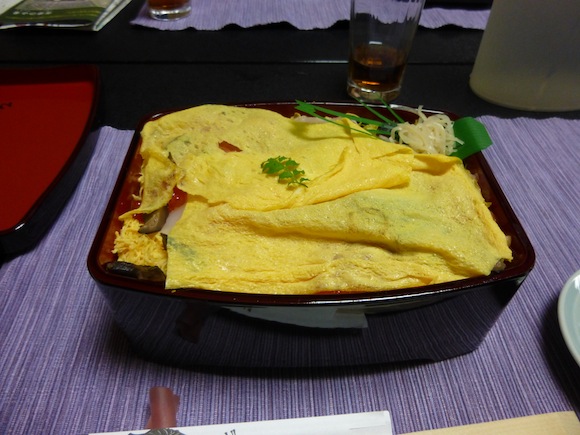
▼ I had the Tokujo Noren Chirashi Sushi ($26) — a sushi lunch here would cost about between $12 and $35
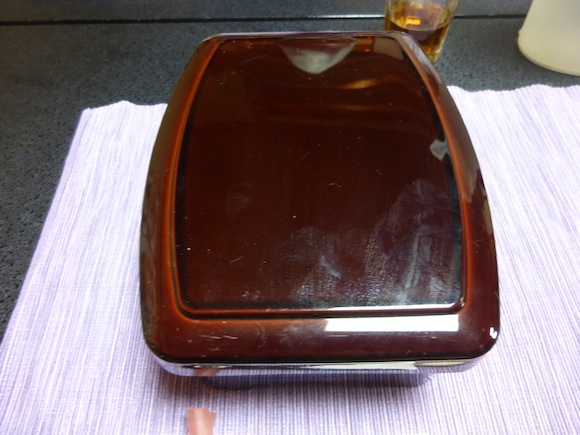
▼ The sushi was covered with a delicate layer of cooked egg

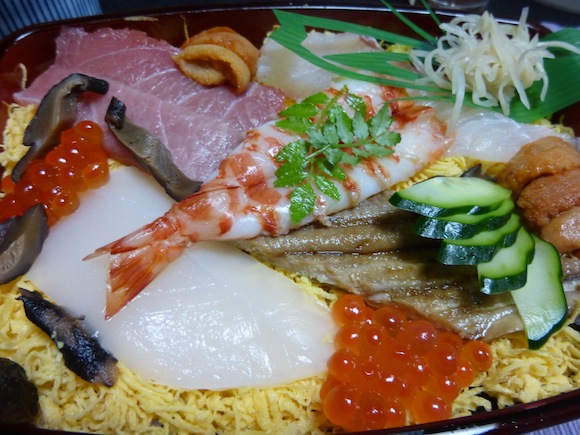
▼ The sashimi and other sushi ingredients are placed on top of a bowl of vinegared rice in a chirashi-style sushi dish

▼ Absolute sushi heaven!
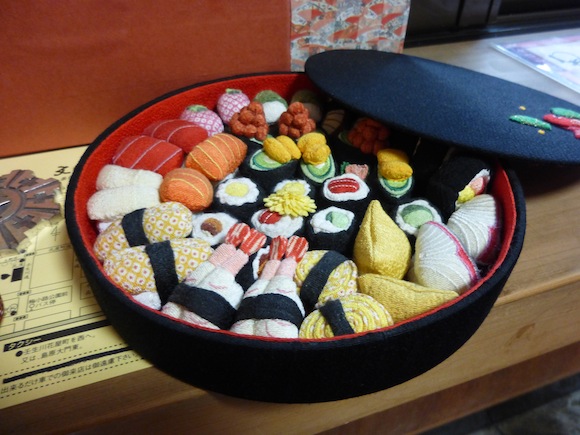
▼And a darling set of fake sushi made from cloth I saw displayed at Otobun
So, how’s that for a morning and lunch hour well-spent? You can see and experience a bit of Japanese history and architecture (and feel like you’ve done something educational and worthwhile), and also satisfy your more human cravings in less than half a day! Personally, I have to say it was one of the most delightful experiences I’ve ever had anywhere, but then, I have a sneaky feeling that many people would feel the same way about a visit to an interesting historic site and nice sushi, right?
Reference: Sumiya website
All photos: RocketNews24