The world of traditional Japanese music is incredibly varied–there’s exciting min’you folk music, austere gagaku ancient imperial court music, and the ethereal tunes of Noh plays. But one genre in particular stands out among the all others: tsugaru-jamisen.
A fast, lively style of playing born out of min’you as performed by traveling entertainers, tsugaru-jamisen hails from Aomori Prefecture and is the youngest genre of “traditional” Japanese music. And, from Hiromitsu Agatsuma and the late Takahashi Chikuzan to the Yoshida Brothers and Kevin Kmetz, there is no shortage of talented, inspiring performers in the tsugaru-jamisen world.
But for us, one duo in particular stands out: Ki&Ki.
Even if you don’t recognize the name, you may already be familiar with these two incredibly talented young women thanks to their numerous YouTube videos. Recently we got the chance to sit down with the pair to learn a little bit about their history with tsugaru-jamisen.

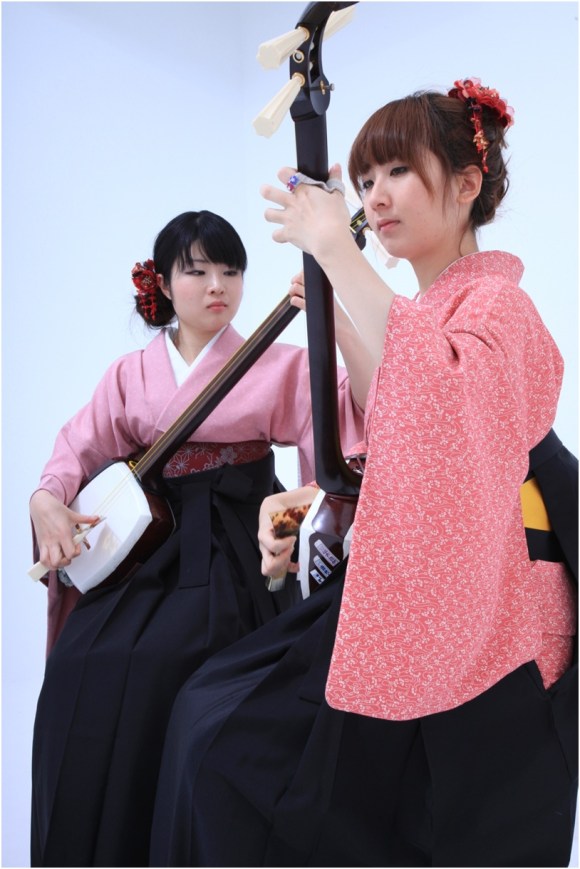
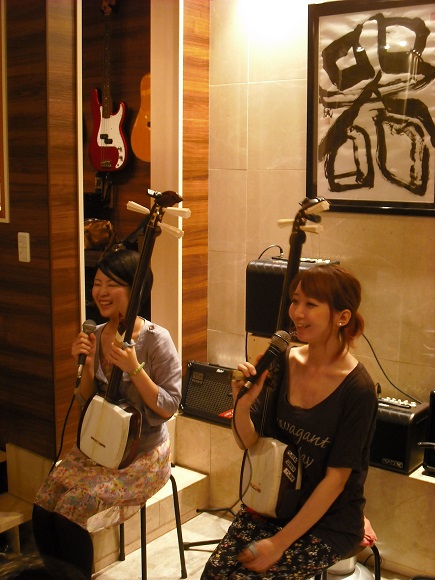
The tsugaru-jamisen duo consists of Kanami Takeda (above, left), 24 years old, and Hikari Shirafuji (right), 23 years old. Though they’re both still in their early 20s, they have nearly two and a half decades of playing experience between them: Hikari started when she was only nine, thanks to her grandmother, and Kanami picked up the instrument when she was 14 after being amazed by a guest performance at her school. While the shamisen is generally seen as being an instrument for older people, these two took an instant liking to it and haven’t stopped playing since–though Hikari did mention that she kept her playing to herself in high school to avoid being teased by her classmates.
▼She’s definitely not hiding it any more!

First, we wanted to know how Ki&Ki came to be.
It turns out that Kanami is from Aichi Prefecture, about half way between Tokyo and Osaka, and Hikari is from Hyogo Prefecture—on the opposite side of Osaka. It’s quite a distance, so we wondered how in the world they met.
Through national tsugaru-jamisen competitions, of course!
While tsugaru-jamisen is still not a major instrument in Japan, there are a number of national competitions every year, which are divided by age group and gender. Both of the women regularly attended—and placed very highly—in these competitions from a young age, becaming “competition friends.” When they both moved to Tokyo for university in 2008, they took the opportunity to form their own group.
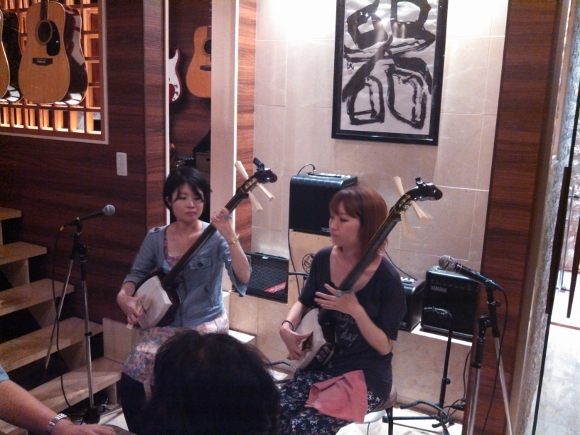
▼Kanami sings a traditional song as Hikari accompanies her on shamisen.

What’s with their name?
Written in Japanese as 輝&輝, the group’s name is pronounced “ki ki.” The kanji 輝, which can be read as “teru,” “ki,” or “kagayaku,” means “to shine,” the perfect word to describe their fast, energetic music. When asked why they chose the name, Hikari explained that as they come from very different places and obviously had different teachers, their playing styles really aren’t similar at all. Kanami added that there are different “colors” to how they play their instruments, so when their two styles are combined, it creates an altogether newer, brighter style!
So what do they sound like?
For those of you who are already familiar with tsugaru-jamisen, their music may not always be exactly what you’re expecting. While they do play many traditional songs—always a crowd-pleaser—they write and perform original songs as well, though they manage to imbue every note with the tsugaru-jamisen spirit.
On the other hand, if you are new to the shamisen, you’re probably wondering what it sounds like in general. When asked how to describe their instruments to someone who’d never heard a shamisen before, they replied that it was like “a Japanese banjo!”
Still, some things simply need to be seen (and heard) to be understood, so here’s a video of some of the highlights from the show we caught last weekend. Bet you wish you had been there!
What is “tsugaru-jamisen”?
The tsugaru-jamisen is quite different to the average shamisen in shape and in how it’s played–being noticeably larger and louder. The extra size makes the instruments sturdier, which in turn allows performers to play more aggressively. Like Takahashi Chikuzan, who helped popularize the style after World War II, tsugaru-jamisen players “attack” the strings with their bachi–a wide-headed plectrum which looks oddly similar to a paint scraper. Thanks to the instrument’s natural reverb and the percussive playing, many compare tsugaru-jamisen to rock music–or even heavy metal.
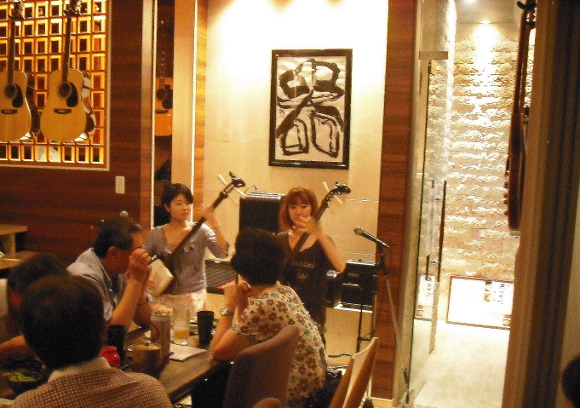
▼The crowd listens carefully as the young women fly through a song.
When asked how their original songs differ from traditional tsugaru-jamisen songs, they explained that they like to use western rhythms with a “tsugaru-jamisen heart.” Our favorite original song is “Teruteru,” a swinging number with a tongue-in-cheek name: much to the chagrin of Ki&Ki, many people mispronounce their name as “Teru Teru.” A sense of humor is important, right? “Besides,” they told us, “it still sounds cute!”
▼Taking a moment to have a laugh with the audience.
In addition to their original songs and the more traditional tsugaru-jamisen songs, they also play a number of cover songs reworked for their instruments, like the legendary “The Path of the Wind” from My Neighbor Totoro. This combination of musical stylings perfectly typifies the group, capturing both their youthful spirit and their dedication to traditional music.
Where can you see them?

We mentioned before that you may have noticed their videos on YouTube—they have dozens showcasing performances in places all over Tokyo–from Ueno Park to various national competitions to a moving train. The pair keeps very busy, playing multiple times a week, often with Heaven Artist, an organization that provides permits and locations for street performers. They keep an updated list of their future performances on their website, which can be found here. Unfortunately, it’s Japanese only–but maybe we can talk them into posting an English version as well!
This is their sixth year performing as Ki&Ki, but what’s next?

“To perform and get famous!” they laughed before adding that they’re trying to help tsugaru-jamisen grow. The pair is especially keen on fostering interest in the music among young people—hence their wide variety of songs. By combining traditional music with contemporary, they hope they’ll be able to attract a wider audience.
They also mentioned a special event/performance on September 8 with a slew of guest artists contributing to the show. Called “Yuenchi,” or amusement park, their goal is not merely to entertain the audience–they also want to get the audience involved. As tsugaru-jamisen music is fundamentally “folk music” developed by buskers, there’s lots of clapping, shouting, and singing for the more enthusiastic audience members.
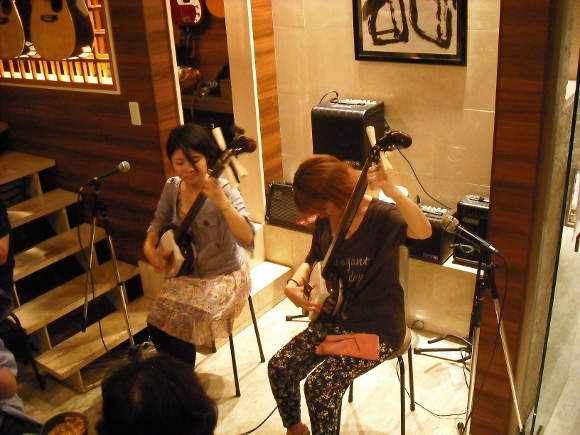
▼The shamisen often requires retuning while playing!
Okay, by now, you’re probably ready to hear some more of this amazing music, right?
Here’s their music video for the food-themed song “Motsunabe.”
We hope you enjoy Ki&Ki’s music as much as we do! If you’re interested in hearing more, you can check out videos on their website or on YouTube. They also have CDs available, which can be ordered online. Fortunately, the form is in English and, yes, they ship internationally!
Finally, if you are going to be in Tokyo in September, you’ll surely want to attend their Yuenchi event. Tickets are available online (Japanese only), as well as at their shows or at the door on the day of the concert if not sold out.
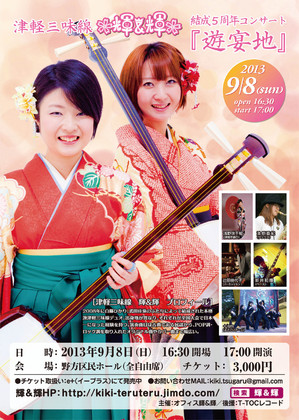
Event name: Yuenchi
Performers: Ki&Ki, Sachie Asano (Tsugaru dance), Kazuki Arai (bass), Kayoko Tsujita (percussion), Aki Ikehara (saxophone), +ism (salaryman dance/performance)
Date: September 8, 2013
Time: Doors 4:30, Start 5:00
Tickets: 3,000 yen (about US$30)
Location: Nogatakumin Hall
Address: Tokyo, Nakano, Nogata 5-3-1
Finally, if you’re interested in learning more about tsugaru-jamisen, the pair recommended Bachido, a web-based community where you can learn more about the history of tsugaru-jamisen and find free music lessons.
All images by RocketNews24, except featured photo by Ki&Ki.