Chinese officials are set to discuss ways to stimulate the country’s sputtering housing market during its Central Economic WorkingConference later this month, according to Chinese state media.
The goal will be to create demand for empty houses in second- and third-tier cities that overbuilt during the country’s construction boom. According to government figures, unsold housing inventory is up 17.8% from this time last year.
That unsold housing is a drag on the economy. China’s growth was built, in large part, on the back of infrastructure development, including property.
Migrant workers hold the names of new migrants as they wait to pick up them from a railway station in Guangzhou, capital of Guangdong Province, February 7, 2003.
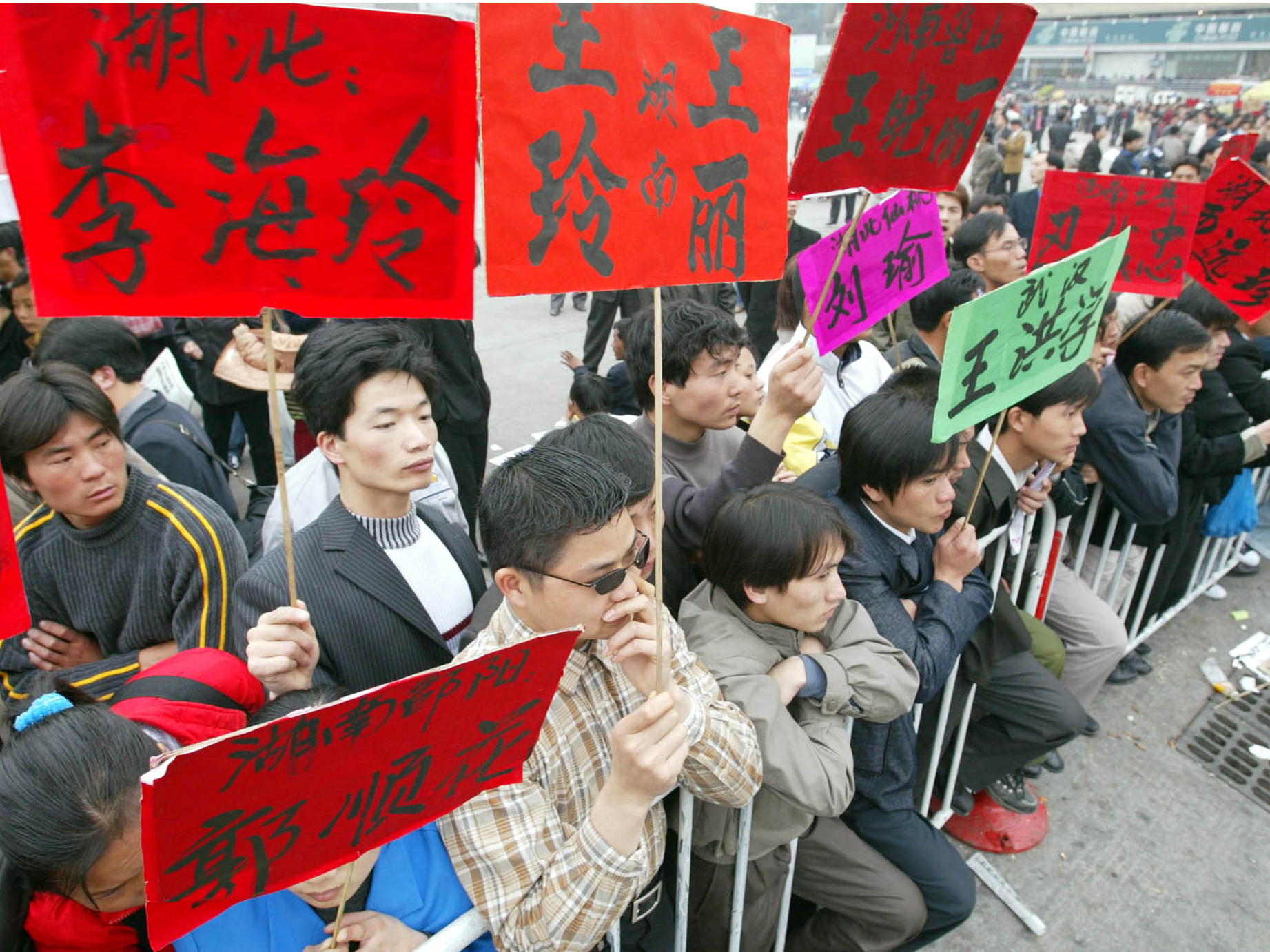 Reuters
Investors poured billions into projects, creating what some analysts consider China’s first big asset bubble. As such, it’s one of the most indebted sectors in an economy where debt, and its impact on growth, have become a central concern.
China’s plan to address the unsold housing could include moving around 100 million people from the country to cities, where there’s excess housing capacity.
The Chinese government announced a plan to move citizens from rural areas to cities last year, but it didn’t disclose any details. Now officials are connecting a resurrection of that plan to the talks to address the unsold housing, according to real-estate website Mingtiandi.
“Premier Li Keqiang … told a cabinet meeting that the government should overhaul China’shousehold registration system to encourage more rural residents to settle in cities and boosthouse sales,” the Chinese state-media report said.
Such a move would pose a logistical nightmare, and present a direct challenge to a system that has classified Chinese people based on their place of birth and family since the 1950s: the hukou system.
A migrant worker sleeps as his wife waits with him at a bus stop.
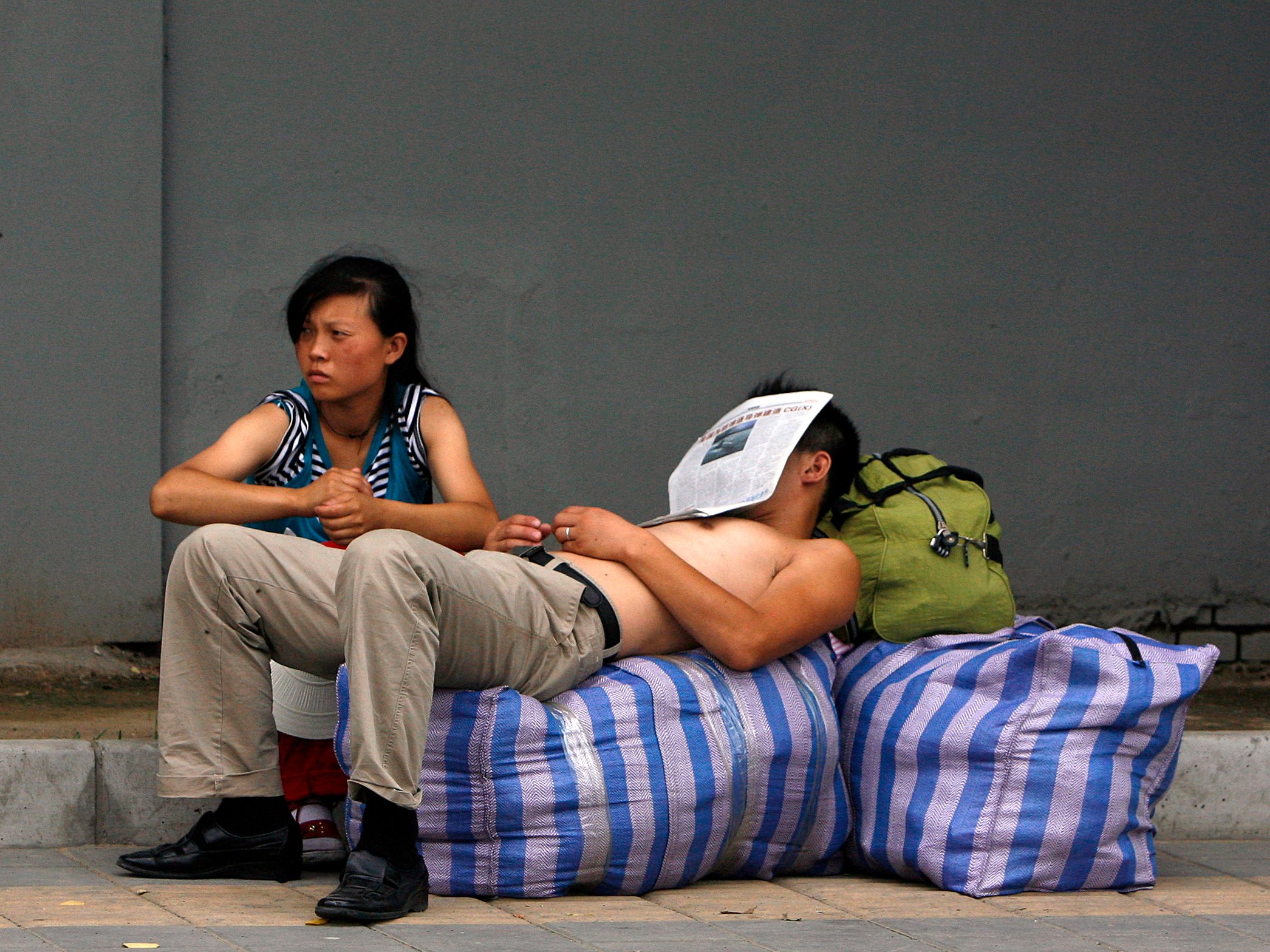 Reuters/David Gray
What the heck is hukou?
The hukou system is basically a residency-permit system. It designates where people are supposed to live based on their family and where they were born. It became a dominant force in shaping the Chinese identity in 1958, when leader Mao Zedong made it official party policy.
“Without registration one cannot establish eligibility for food, clothing or shelter, obtain employment, go to school, marry, or enlist in the army,” Judith Banister wrote in her 1991 book “China’s Changing Population.”
The government put this system in place to restrict the movement between the city and country. The government needed to keep cities from overcrowding with migrants looking for work, and it needed farmers to stay in the country to grow food.
The hukou system makes it so that certain social services available to city dwellers are still not available to people with country hukous. If someone from the country applied for a city permit, they would have to give up their land.
The system effectively created a source of cheap labor for city factories. Migrant workers from the country who move to cities to work are still classified as country people, and as such are not eligible to apply for certain jobs in urban areas.
That means they have to take manufacturing jobs that don’t pay well, since better-paying jobs are closed to their hukou. Some have said this makes hukou like a caste system.
“China cannot be continuing to do all this low-cost production,” Kam Wing Chan, a University of Washington professor, said in 2010. “It’s not the way out. There were great merits for doing that in the 1980s, but continuing it today is not the right strategy. They should let people gradually move into the city, get an education and social services, and focus on producing better products rather than just cheap products.”
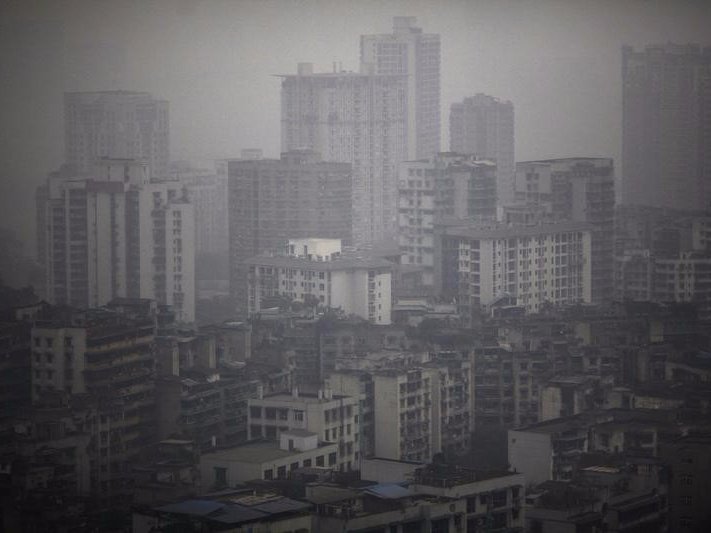
Buildings are seen on a hazy day in downtown Chongqing, one of China’s third-tier cities.
 Thomson Reuters
Liberalize it
It seems the Chinese government has come around to Chan’s thinking. With the housing market lagging as it is and debt piling up, China needs those in the country to put what little money they have to work in key parts of the real-estate sector.
Here is the Mingtiandi article:
“According to an account in the China Securities Journal, the government is preparing to not only provide these would-be urbanites with urban hukous, the official family register that entitles them to city services, but also to lower financial barriers to home ownership.”
Additionally, China plans to recognize around 13 million undocumented people — with no hukou whatsoever. A lot of these people are second children born in violation of the country’s one-child policy.
The question is, of course, whether an undocumented person in, say, Beijing, will want to have the government give them a hukou in some third-tier city. What happens if people won’t move?