
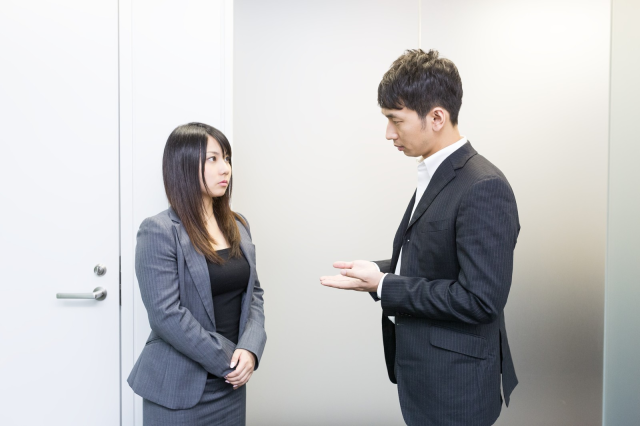
What’s obvious for some is far less so for others, and can lead to frustration when the listener doesn’t get the speaker’s message.
People who grew up overseas can sometimes find communication tricky in Japan, and not just because of the language barrier. Some would argue that the bigger challenge comes from how Japanese cultural norms influence personal interactions and perceptions, which can present hurdles no multilingual dictionary or grammar diagram can explain.
One person who’s been feeling the friction from this is conflict facilitator and career consultant Mia Daya. Though Daya was born in Sendai, capital of Japan’s northeastern Miyagi Prefecture, she spent her formative years in Switzerland, living in the European country from the age of 8 to 20.
Daya now resides in Tokyo, but being back in the land of her birth doesn’t mean she’s effortlessly transitioned to life in Japan. She recently took to Twitter to air some of her thoughts regarding a recurring problem that, even after 10 years living here, she still sometimes struggles with.
スイス育ちの私が日本育ちの人との議論で根本的にズレるのは、西洋では「人はみんな違うから確認と質問が不可欠。勝手に思い込むの失礼。」というのを前提に話をするけど、日本人は「普通こうでしょ。みんなこうでしょ。確認するのは信頼してないってこと!」と同じであることを前提に話すところ。
— daya@発売中「日常のなかのワールドワーク」 (@dayanow) November 28, 2018
“I was raised in Switzerland, and when I get into discussions with people raised in Japan, there’s a fundamental difference in how we debate. In the west, there’s the preexisting shared notion that ‘People are all different, so it’s absolutely essential to confirm your impressions and ask questions. Making assumptions is impolite.’ But in Japan, the attitude is ‘Everyone feels this way, so it’s normal. If you have to double-check about everything, it’s proof that you don’t trust the person!’”
As any expat who’s ever been criticized by a Japanese boss, teacher, host parent, or romantic partner can attest, one of the go-to phrases for expressing frustration in Japanese is a sputtering and rhetorical “Futsu desho?”, literally meaning “Isn’t that normal?” but carrying a weight closer to “Isn’t that obvious?” It’s something you can hear whether the source of critics’ displeasure is your failure to do something they think you should have or exasperation at your inability to perceive the unintended problems your actions have created for them.
▼ No need to draw someone a picture if the proper conduct is obvious, right?

It would be going too far to say that extensive double-checking is always seen as a lack of faith in Japan, but it’s safe to say that, on average, Japanese conversationalists are less likely to explicitly nail down every detail than their western counterparts are. Japanese society, starting at an early age, stresses the importance of thinking about other people’s feelings and circumstances. In its idealized form, the concept gets extended all the way to not only trying to provide for the needs or preferences of others, but to preemptively act in a way so that they won’t have to incur any self-placed guilt by directly stating what their problem is or asking you to accommodate them. And in a country where traditions and ceremony are so highly valued for their ability to create harmony, there’s often a surprisingly high chance of both people in the conversation having the same image of what counts as “normal” or “obvious” for a given topic. But as Daya points out, the success rate isn’t 100 percent, and when a message someone thinks should be “obvious” isn’t quickly conveyed to the listener, the aura of consideration and courteousness can break down pretty quickly.
伝わらないと相手の理解力の問題だとするのもよくある。
— daya@発売中「日常のなかのワールドワーク」 (@dayanow) November 28, 2018
あなたの伝え方かもしれないし両方かもしれない。
分かりあおうわかりたいと思えばまだ歩み寄れるし気持ちも変わるけど日本では議論は論破することがゴールだと思い込んでる人も少なくない。
おしゃべりは曖昧でフンワカしてて綿あめみたい。
“If someone’s words aren’t understood, they often blame the listener for not being smart enough to understand. But it could be that the speaker’s way of explaining is lacking, or some combination of both problems. As long as you both are committed to understanding one another, you can meet each other half-way, but in Japan a lot of people think that the end goal of a verbal disagreement is to beat the other person into submission.”
It stands to reason that if your opinion is “normal,” than whoever doesn’t grasp it immediately must be unreasonable, and if your take on things is the “obvious” one, it becomes hard to see the non-understanding party as anything other than dumb, and once those switches have been flipped in your head, the conversation isn’t likely to get much smoother. With Japan’s well-publicized reputation as a “conflict-averse” culture, though, some might disagree with Daya’s observation of people in Japan treating verbal disagreements as contests to be won. However, that very lack of experience in discussing conflicting opinions means that when the issue does somehow demand a resolution of some sort, the person you’re talking to might not be used to an assertive exchange of contrasting ideas, which can lead to aggressive debate tactics or a perception that any firm logical challenge is a personal attack.
Since moving back to Japan, Daya says she’s often had people say to her “Do I have to explain that much before you can understand?” and “Your way of communicating is pushy.” Still, she wants to make clear that she’s not trying to judge one style of communication as superior to another. Elsewhere in her thread, she expresses admiration for how Japanese communication encourages thinking of things from other people’s perspectives and allows that, for those who’ve spent their whole lives utilizing what they consider shared perceptions of what’s “normal,” the idea of having to constantly explain yourself must seem exhausting. “I think both styles are rich with possibilities,” she says.
And if this discussion of discussions in Japan has you rethinking your desire to travel to or live in the country, you should be aware that even many Japanese people share Daya’s frustrations, as Japanese Twitter users left comments including “I was born and raised in Japan, but even I don’t think it’s possible to understand everything about someone without asking questions, so I do,” and an exhausted “A lot of the older workers in my company always go off of assumptions about what they think is ‘obvious.’”
There’s also the fact that Daya, being of Japanese descent and a native Japanese-speaker, is more likely to have raised-in-Japan conversational partners who expect her to share their image of what’s “obvious.” People who, based on appearance or language, can be more easily perceived as having not grown up in Japan are probably more likely to have Japanese people explicitly express their ideas and ask questions, since there’s no shared cultural background.
But perhaps the most important thing to remember in all this is that Daya’s frustrations show that communication styles aren’t hard-coded into our ethnicities, but develop naturally as a product of our environments and experiences. As with any discussion of national character, it’s best to think of these traits as broad comparisons of the baselines between Japanese and western cultures, and to keep in mind that even within the same country, zooming in closer will reveal plenty of differences between regions, families, and other social groups. I grew up in the U.S., largely considered the most say-exactly-what-you-feel-all-the-time country on the planet, but it’s not like I never heard anyone grumbling “That goes without saying!” before I moved to Japan, and after arriving here on the other side of the Pacific, I’ve also met Japanese people who’re quite willing to lay their ideas out in the open during a debate.
So keep the baseline differences in mind, but as long as you remember to deal with people as individuals, you should be fine.
Sources: Twitter/@dayanow via Hachima Kiko, Changeconflict.com
Top image: Pakutaso
Insert images: Pakutaso (1, 2, 3)
Isn’t it obvious that you should follow Casey on Twitter?
 Frustrated foreigner living in Japan calls Japanese punctuality a half-truth
 Westerners in Japan – do they really ALL speak English? 【Video】
 The 5 phases of adjusting to life in Japan (from a Western expat point of view)
 Foreigner disappointed by Japan’s hazy concept of “work ending times,” so are Japanese people
 Japan’s workplace drinking party communication is unnecessary, says majority of workers in survey
 Studio Ghibli unveils new interactive stationery dioramas that bring anime movies to life on your desk
 7-Eleven Japan brings back best-selling flat croissant that became a hit on social media
 Studio Ghibli composer Jo Hisaishi just set three Guinness Records
 Anime fans can now wear a Seiko watch inspired by Japan’s One Piece Shinkansen
 Pokémon and Polaroid reveal collaboration with adorable Pikachu and Eeveelution camera and film
 Universal Studios Japan partners with manga horror master Junji Ito’s Tomie
 Starbucks Japan releases two new seasonal drinks that blur the line between summer and autumn
 Japanese man arrested after pretending to be foreigner while trying to rob convenience store
 Tokyo pub prohibits talking or keeping your phone out, only lets you drink in morning on weekends
 New Shinkansen Supreme Class private cabins get try-before-you-ride displays at Tokyo, other stations
 12-year-old British girl who went missing in Tokyo found safe after visiting anime sites around Yokohama
 Study finds hundreds of people in Indonesia legally named after Naruto, Inuyasha, other anime stars
 12-year-old foreign tourist missing in Japan, police asking for help finding her [Video]
 Japan’s Rabbit Island in danger of becoming Boar Island, tourists asked to follow feeding rules
 Japanese gacha machine in Shibuya now sells tiny capsule terrariums
 Stay at a hotel with a bed for your plushie in Japan
 Japanese workers reveal their top five mysterious rules they wish would disappear【Survey】
 Japanese airlines set to cut fuel surcharges for international flights in September and October
 Tokyo subway installing new ticket gates that don’t accept payment through Suica or other IC cards
 New Shinkansen luggage drop-off system begins in Japan, making train travel even easier
 Air-conditioned dress shirts arrive in Japan to save working professionals from sweltering heat
 Japanese Shinkansen becomes an overnight hotel for three nights this summer
 Pokémon Center Online designates first Pokémon items that will require Japanese ID card to buy
 Japanese toilet aims to attract foreign tourists but not everybody is happy about it
 99-year-old woman rescued while attempting to climb Mt. Fuji
 Tokyo’s newest viral dessert is like a Japanese parfait inside a bread bun [Taste test]
 New Japanese vending machine at Shinkansen station sells cups of ice on platform
 Japan announces sudden 400-percent increase in visa fees for foreigners entering the country
 Japan’s human washing machines will go on sale to general public, demos to be held in Tokyo
 Studio Ghibli has a new anime out, and there’s only one place in the world where you can see it
 Starbucks Japan releases new drinkware and goods for Valentine’s Day
 Starbucks Japan releases new sakura goods and drinkware for cherry blossom season 2026
 Japan’s newest Shinkansen has no seats…or passengers [Video]
 Japanese ninja certification exam attracts 131 candidates from Japan and abroad
 Salomon releases Japan-exclusive Mt. Fuji hiking gear that doubles as an amazing souvenir
 Put sesame oil in your coffee? Japanese maker says it’s the best way to start your day【Taste test】
 Majority of Japanese mayors say foreign residents are essential but most see good and bad effects
 Foreign shop clerk and Japanese customer fail to communicate because of Japanese language quirk
 Psychology professor says Japanese people show mood with their eyes, Westerners with their mouths
 How should you respond when a Japanese person gives you a compliment?
 Japanese magazine’s checklist for the ideal girl has a whopping 23 points
 Asian foreigners give their thoughts on what life is like being Asian in Japan
 20 signs that a woman should think about quitting the Japanese company she works for
 Japanese government urging citizens to use generative AI more
 Confessions of a 46-year-old Japanese male pole dancer
 “Which hairstyle makes a woman look good at her job?” asks Japanese survey
 Osaka woman gives foreigner Uber Eats worker fake money, thought he wouldn’t know difference
 Is a woman “middle-aged” at 30? 40? 50? Japanese men and women give different answers in poll
 Japanese woman fed up with being expected to serve male coworkers tea shatters corporate culture
 Our Korean-Japanese reporter’s thoughts on people asking “Is Naomi Osaka really Japanese?”
 The end of the pay phone? Japanese government considering getting rid of phone boxes