
You may have heard there’s only one proper phrase to use, but that’s not true.
According to the common logic of Japanese etiquette, when someone pays you a compliment the best response is to say “Sonna koto arimasen.” If you’ve ever read even the first page of a Japanese phrase book, though, you’ll notice that this is very different from the standard way to say thank you, arigatou gozaimasu.
That’s because sonna koto arimasen doesn’t mean “Thank you,” it means “That’s not true,” or “Not at all.” Humility has always been seen as a virtue in Japanese society, and so classical manners dictate that praise is something to be deflected, lest you look prideful or overly keen to fish for compliments.
But even if old-school etiquette “experts” say it’s poor form to swiftly accept a compliment, is that really how all modern Japanese people feel? A recent tweet from Japanese Twitter user @N_32tree shows that not everyone is quite so rigid in their way of thinking, a least inside their hearts.
容姿褒められたときに「そんなことないです」って返すのは相手の感性を否定することになるから「ありがとうございます」と返すようにしてるんですけど、時々「え?」って顔される
— ナカヤマ皐月 (@N_32tree) October 6, 2020
なんや褒めたやろ今、責任持て
When someone compliments them on their appearance, @N_32tree feels like saying “Sonna koto arimasen” would be the same as rejecting that person’s feelings, and so responds with “Arigatou gozaimasu” instead. Sometimes, though, the compliment-giver then reacts by saying “Huh?” with a surprised expression. “It’s like, ‘You’re the one who complimented me,’” @N_32tree laments, “so take responsibility for what you said.”
The deviation from the standard script being enough to throw some people off balance shows how accustomed Japanese people are to the compliments they give being met with some form of self-deprecation, and indeed, many commenters said they respond with something with a meaning equivalent to sonna koto arimasen, such as iie (literally “no”) or iya, iya (a more casual form of iie, similar to“naw, naw”).
But a number of commenters also shared their frustration at the idea that a compliment is something that must be initially rejected, saying:
“I’ve had do the same thing when I say ‘Thank you’ to their compliment. They look at me like ‘Why are you so quick to accept it?’”
“I’m always worried about what to do. I don’t know whether I need to act accepting of their statement or to act humble about myself.”
“What’s wrong with saying thank you when someone gives you [an emotional] present?”
“I say ‘thank you.’ There are actually times when I honestly think ‘Not at all,’ but I think it’s important enough to thank the person for being kind enough to complement you.”
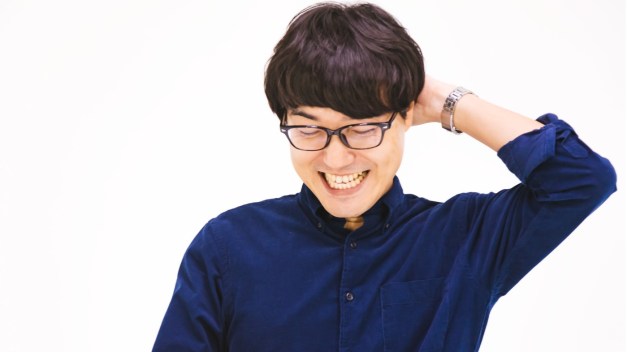
▼ “Thank you” doesn’t always mean “Thank you for noticing how great I am,” but sometimes just “Thank you for trying to make me feel good.”
Still, in a society where humility is so important, there’s a definite danger of rubbing people the wrong way if you respond to every compliment with a self-assured “Thanks!” Because of that, other commenters offered their own alternatives that try to combine the humble tone of sonna koto arimasen with the grateful joy of giving someone the benefit of the doubt that their praise is sincere, such as:
● Osoreirimasu: This word simultaneity means both “Thank you” and “Excuse me/I’m sorry for making you go to that trouble.” As such, it basically lets the person who gave the compliment interpret it in whatever balance of the two sentiments they think is the most appropriate.
● Anata mo: This means “You too.” While it obviously isn’t going to be applicable to every situation, when you do have the opportunity to return the compliment in kind, it lets you sidestep the risks of looking stuck up or unappreciative by turning the atmosphere into one that lifts up both you and your conversation partner.
● Yatta: This literally means “I did it,” but it’s a general-purpose phrase for when something good happens to you. It’s a super-casual expression, but the person who recommended this points out that because it’s so short, it lets you move on to the next conversation topic quickly, instead of making the compliment/how great you are the point of attention.
● Sou ka na?: This directly translates to “Is that so?”, but the na at the end adds an extra note of uncertainty. This lets you express doubt at the compliment about you being an absolute cosmic truth, while not saying it’s a flat-out mistake either. It also lets you put the ball back in the compliment-giver’s court, and if they emphatically say “Yes” you can reply with a “Thank you,” or, if their insistence is lukewarm, you assume it was just idle flattery and use one of the more humble-sounding options instead.
● Sonna koto nai kedo ureshii desu. Arigatou!: The kitchen sink approach, this one covers all possible bases with “Not at all, but it makes me happy [to hear you say that]. Thank you!”

OK, so with all of these options to choose from, which one is the best? That’s going to depend on the nature of the compliment, and also your relationship with the compliment-giver. Frustrating and stuffy as it might seem even to Japanese people, deflecting praise is still considered classically good manners in Japan, so if you respond to a complement from a teacher, boss, or client with a lightning-fast “Arigatou!”, you’re probably not going to make a very good impression, and at least some attempt at a sonna koto arimasen equivalent is the wiser choice. And even if you do eventually accept the compliment, giving some of the credit to your counterparts and teammates, and adding that you hope to do even better next time, is probably a classy move.
But as the Twitter discussion shows, not everyone is averse to people accepting a compliment without first putting themselves down. In casual situations among friends, there’s definitely some wiggle room, especially if you use some of the mixed-purpose responses discussed above.
In other words, even with Japan’s reputation as a country with rigid cultural norms, there’s no single phrase that fits all relationships and situations. At the very least though, if someone has told you that you have to do everything you can to fight off every single compliment a Japanese person may ever give you, lest you deeply offend them with your poor manners?
Sonna koto arimasen.
Source: Twitter/@N_32tree via Hachima Kiko
Top image: Pakutaso
Insert images: Pakutaso (1, 2)
● Want to hear about SoraNews24’s latest articles as soon as they’re published? Follow us on Facebook and Twitter!
Follow Casey on Twitter, where all the compliments he gives are genuine.