A popular pachinko place claims to be “following suggestions by city mayors“, but is what they’re doing helpful?
As threats of novel coronavirus become more alarming in Tokyo and other large cities in Japan, local governments have laid out recommendations for businesses and individuals to practice “jishuku” or “self-restraint from going out/doing business”. While some have really taken those recommendations to heart and have been staying home (in the case of the public) and closing their doors (in the case of businesses), some of both categories are taking those as loose recommendations and not requirements.
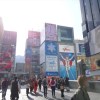
Take, for example pachinko parlor Rakuen, who’s decided to follow city guidelines by turning off some lights and sign boards, while doing nothing about the large crowds that seem to be swarming to their parlors.
こ、、こんな自粛見たことない。 pic.twitter.com/6dP8Kj6C3B
— 投資家けーちゃん (@toushikakeichan) March 29, 2020
In the above photo tweeted by Twitter user Toushikakeichan (@toushikakeichan), the pachinko parlor posted a sign outside the entrance that reads:
“In order to prevent a widespread outbreak of novel coronavirus, we will be practicing business jishuku.
We have received word from various city mayors of prevention policies that we should follow, and therefore, for the time being, we will be shutting off a portion of our exterior lighting and electric sign boards.
We are very sorry for the inconvenience this has caused but we thank you for your understanding.
RAKUEN”
So in short, Rakuen has decided that in order to help combat the spread of an infectious disease, they will be turning off some lights. As Toushikakeichan so aptly wrote: “I…I’ve never seen this kind of ‘jishuku’…”
▼ “Jishuku” recommendations in Japan include avoiding the “three c’s”: closed-in spaces, large crowds, and close-conversation settings.
#COVID19 update: The experts on the novel #coronavirus stress the need to avoid three overlapping conditions. The “Three Cs” are: closed spaces, crowded places and close-contact settings. https://t.co/YYg68WBsxo (please follow the guidelines for the public use of this poster.) pic.twitter.com/dON2CasDAE
— PM's Office of Japan (@JPN_PMO) March 29, 2020
To be fair, the pachinko parlor is indeed following recommendations by the All Japan Leisure Businesses Cooperation Association, which has called numerous times for pachinko parlors, in particular, to practice jishuku in their advertising. Presumably the idea is that, without advertising, customers will be less likely to think of going to pachinko, so Rakuen likely thought that turning off the signboards for the parlors counts as toning down their advertising. In reality it seems more like a, “look, we’re following your recommendations!” rather than an actual concentrated effort to help prevent the spread of the disease, and the fact that they put a sign out apologizing to their customers about it doesn’t do much to counter the irony of their seemingly weak attempt.
In the end, they’re still going to be open, and the people who regularly play pachinko are going to play whether the parlors have their lights on outside or not. Besides, lately pachinko parlors seem to be a popular gathering place for bored Tokyo-ites and other city people right now who are happy to line up for hours to get inside, so, by being a closed-in space with poor ventilation where large crowds gather in close contact, pachinko parlors aren’t avoiding all of the “three c’s” recommended by the Japanese government by remaining open, so their efforts to “follow guidelines” appear shallow at best.
▼ “(Akihabara this morning, lines and other things) The line was for Pachinko & Slot Island. Based on the ticket number at the end of the line there were probably 271 people in line (at around 9:30).”
[今朝の秋葉原、行列・その他]
— ツルミロボ (@kaztsu) March 28, 2020
行列:パチンコ・スロット アイランド=最後尾の整理番号からたぶん271人くらい(9:30頃) pic.twitter.com/HXxpf72atC
Toushikakeichan got quite a bit of attention from other Japanese netizens thanks to their tweet, and those who commented couldn’t believe what they were seeing:
“That’s a pretty high level prank.”
“Planned power outages?”
“Swing and a miss.”
“Sounds like they’re not doing jishuku at all.”
“They’re doing exactly the same thing they did after the 3/11 earthquake. Do they think there isn’t going to be enough electricity?”
“It sounds more like they’re just lowering their expenses!”
“It’s because of bullshit like this that the industry is getting more and more criticism…”
“I don’t think this is some kind of high level technique to fool the masses. I think they’re doing it for the irony, because of the criticism.”
“Are pachinko parlors really this stupid? We should tear them all down.”
“It’s only because they aren’t getting as many customers right now, so they’re trying to cut their expenses, the cheapskates.”
Whatever the real reason they’ve adopted such a policy, I think we can all agree that it’s not really going to be effective in stopping the spread of the virus. If it does lower the amount of customers who go inside, then that’s certainly good, but maybe it would better for them to close their doors altogether, like Tokyo Disney Land and the Ghibli Museum. That might be the most effective way to prevent the spread of the disease.
Source: Twitter/@toushikakeichan via Hachima Kiko
Featured image: Twitter/@toushikakeichan
● Want to hear about SoraNews24’s latest articles as soon as they’re published? Follow us on Facebook and Twitter!