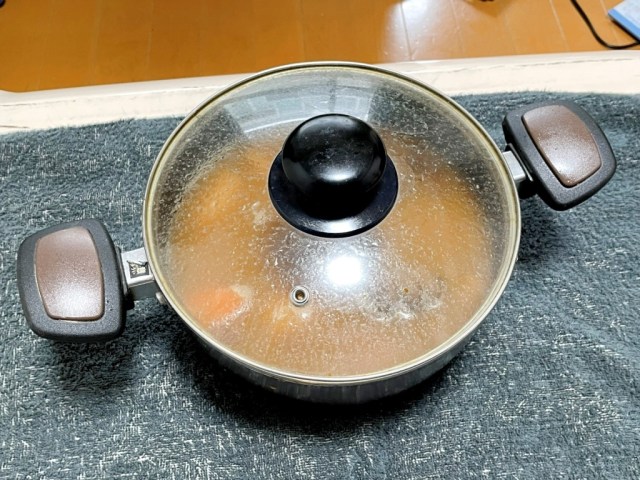

Bear with Seiji as he cooks up some high-quality, high-rarity meat.
When talking about food in Japanese, it’s not uncommon for people, in conversational settings, to simply say “meat” instead of referring to any one particular kind. Maybe it has something to do with syllable counts and word lengths, as it’s quicker to just say the Japanese word for “meat,” niku, instead of the ones for “beef,” “chicken,” or “pork” (gyuniku, toriniku, and butaniku, respectively).
In any case, it’s not startling or unnatural for someone to say “I bought some good meat” without being any more specific, and that’s exactly what our Japanese-reporter Seiji Nakazawa said to fellow SoraNews24 writer Ahiruneko the other day while they were both in the office. As a matter of fact, Seiji had procured enough “good meat” to share, and so he invited Ahiruneko over to his place for some home-cooked hot pot, an invitation Ahiruneko was glad to accept.

Seiji lives within walking distance of Shibuya Station, one of the busiest, liveliest neighborhoods not just in all of Tokyo, but in all of Japan. To help Ahiruneko navigate the crowds, Seiji, thoughtful guy that he is, came all the way out to the station to meet him, so that they could walk to Seiji’s place together.



After a few minutes, they were in a neighborhood so quiet that Ahiruneko could hardly believe how close it was to Shibuya Station.
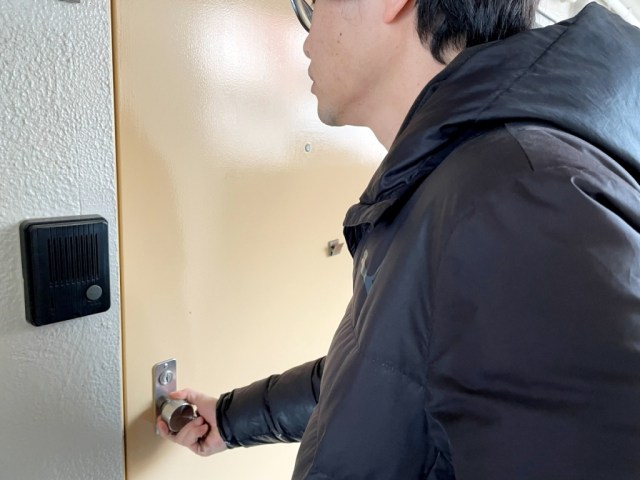
That said, Seiji is still a bachelor living in one of the pricier parts of town, so his apartment’s furnishings are pretty spartan.
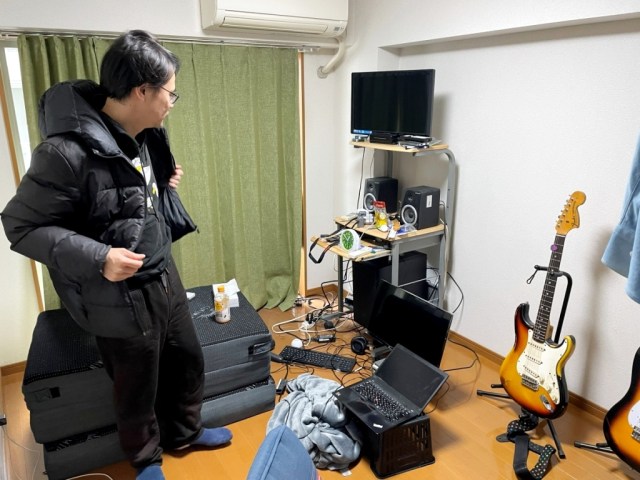
For example, he’s got multiple guitar stands, but no actual kitchen table. Instead, Seiji eats most of his meals on an overturned packing crate.
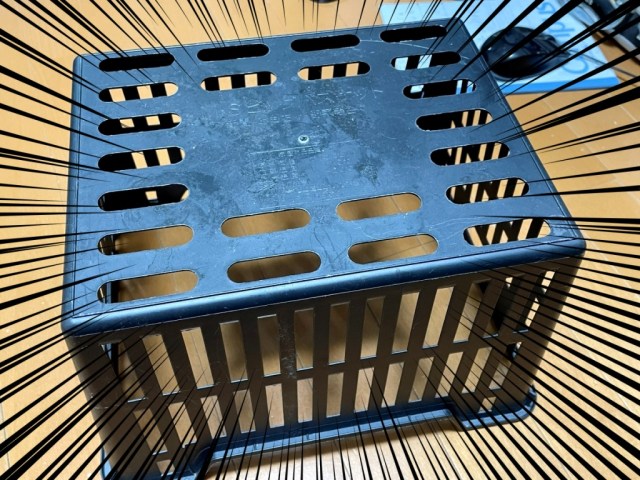
Today, though, he had company, which called for a larger, and more luxurious dining arrangement…
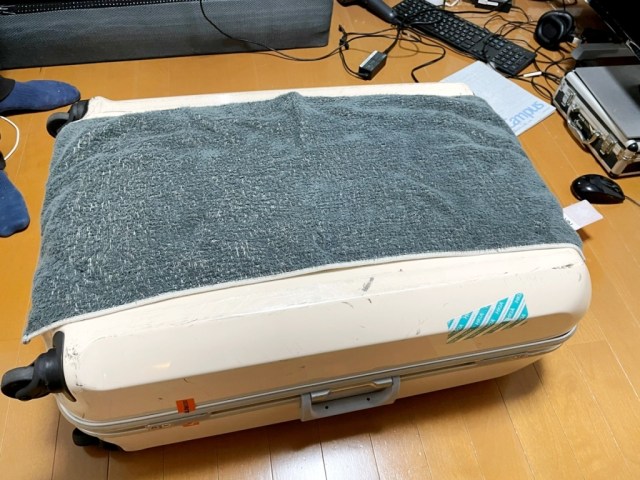
…a suitcase on its side with some kind of towel or floor mat draped over it.
But hey, Seiji said he had good meat, not good furniture, right? As Ahiruneko pondered which side of the suitcase was appropriate for him to sit on, Seiji headed to the kitchenette to put the finishing touches on the hot pot he had simmering there.
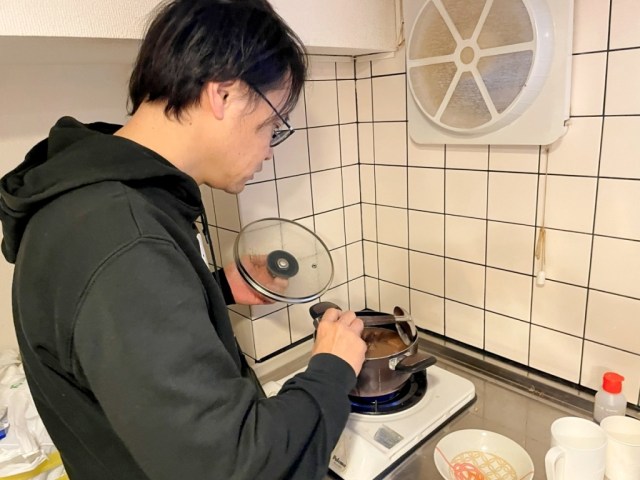
Seeing that it was ready to eat, Seiji picked up the pot and carried it over to the “table.” As he set it down, Ahiruneko peered through the steamed-up glass lid, wondering what kind of meat was waiting inside. Was it beef, chicken, or pork?
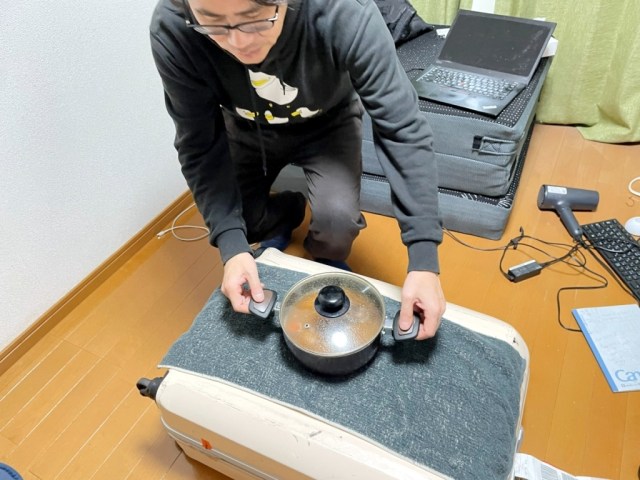
Wait…what…
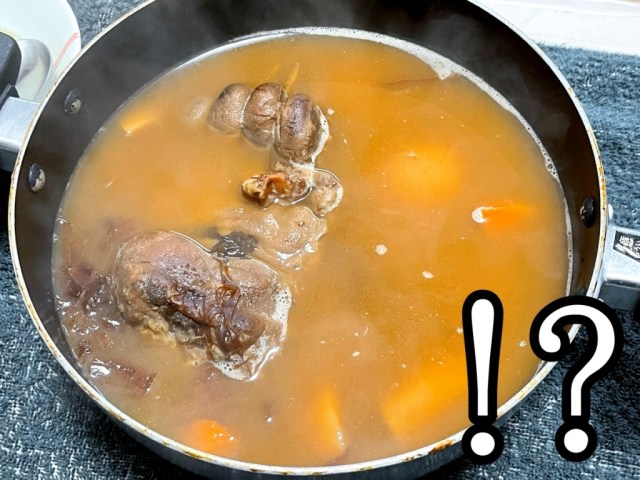
…IS THAT?!?!?
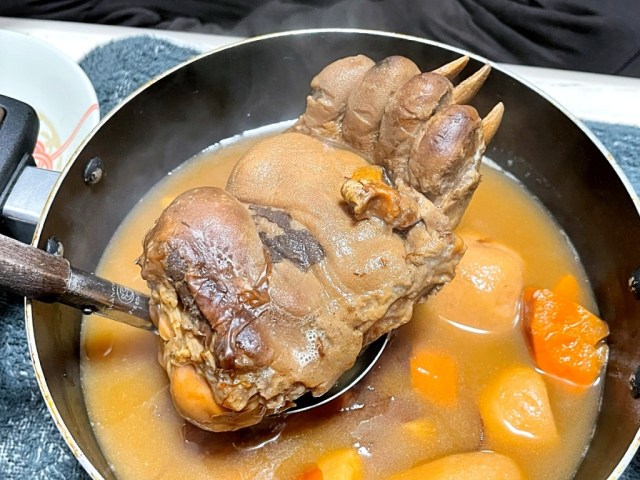
None of the animals that Ahiruneko had expected to be on the ingredient list have fingers…or claws, for that matter.
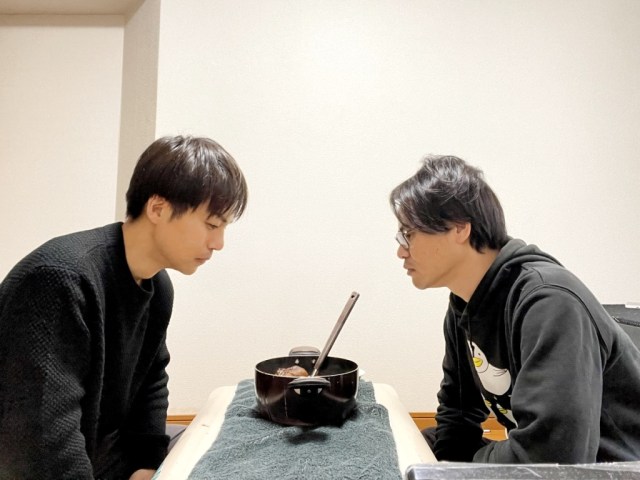
He and Seiji sat there dumbstruck for a few moments…
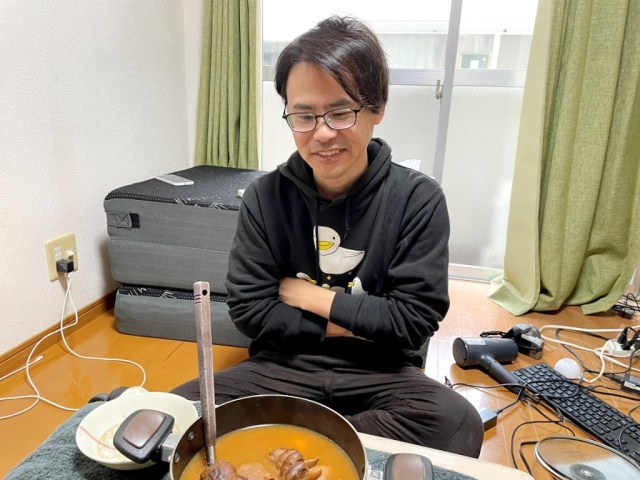
…which was especially strange, considering that Seiji, at least, knew the identity of this mysterious meat.
▼ Ahiruneko: “Dude, like, you’re the one who made this?”
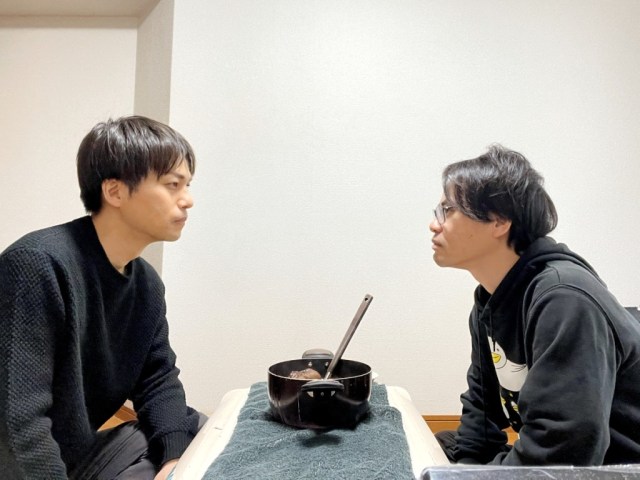
It was only now that Seiji told Ahiruneko what kind of “good meat” he’d acquired: bear, specifically a bear’s paw.
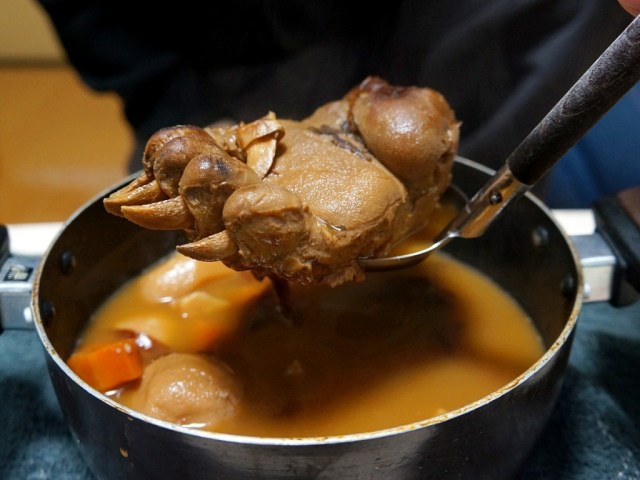
Now, if you’re wondering how Seiji, despite living in the middle of downtown Tokyo, got his hands on a bear’s hand, he did his hot pot shopping at Hunter Works Drive-In, a store and restaurant in Chiba Prefecture that specializes in wild game sourced from culling harmful wildlife. While there, Seiji picked up a bear paw for 8,600 yen (US$55).
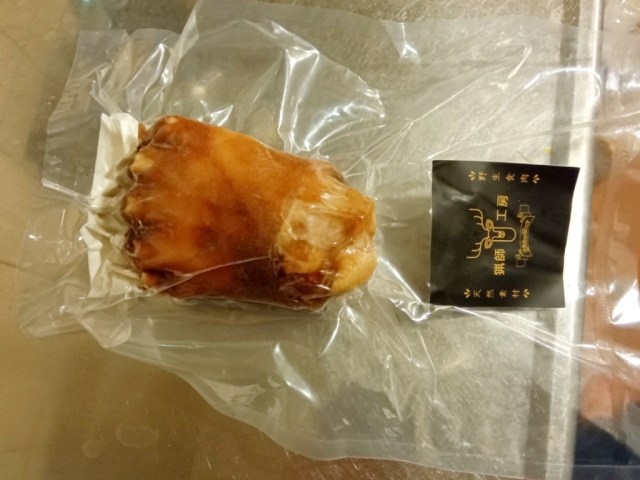
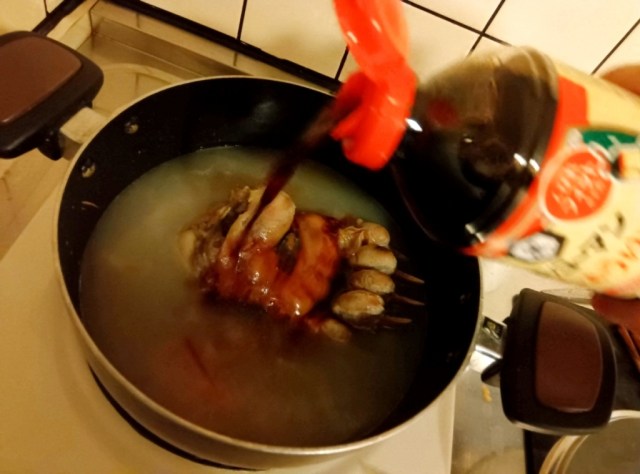
Hunter Works Drive-In partially pre-cooks the paw in a pressure cooker, and they remove all of the fur too, since that’s not something the average home chef is used to doing. After talking with the Hunter Works Drive-In staff about ways to cook this unusual piece of unusual meat, Seiji decided to stew it in a pot with soy sauce, mirin (sweet cooking sake), katsuobushi (bonito stock), and ginger. On the day before Ahiruneko came over, Seiji stewed the paw for three hours, and on this day, he cooked it for another four and half, until the meat had become tender enough that one of the bear’s fingers broke off from the rest of the paw.

And now, finally, it was time to taste it.
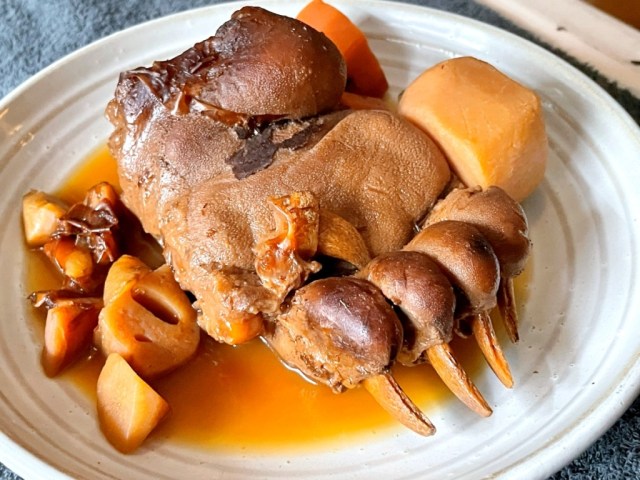
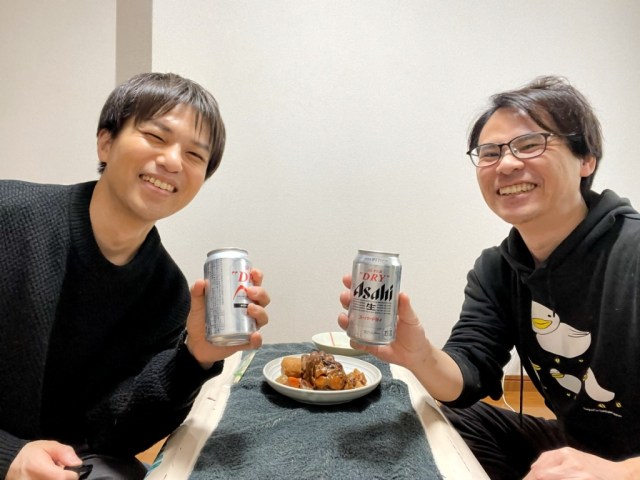
Ahiruneko felt a twinge of awkwardness at the contrast of having the opportunity to eat something so unique and it being placed on top of a suitcase. Following a time-tested solution, the awkwardness was dispelled by adding beer to the situation.
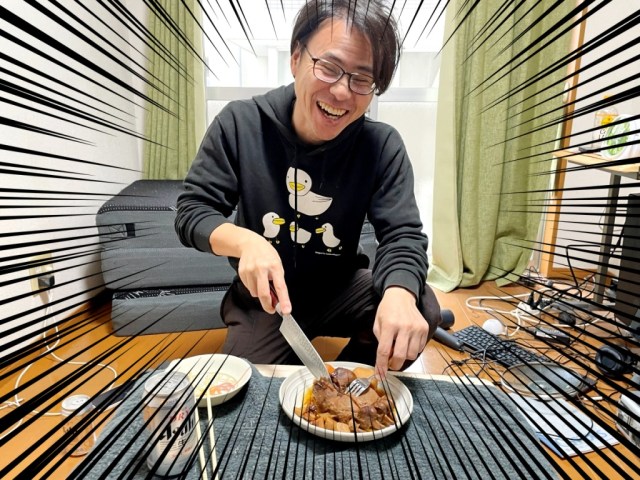
So how do you eat a bear’s paw, especially if you’re sharing it with someone else? Having looked into serving suggestions, Seiji had read that you can simply slice it with a knife, cutting between the fingers and continuing down to the base of the palm.
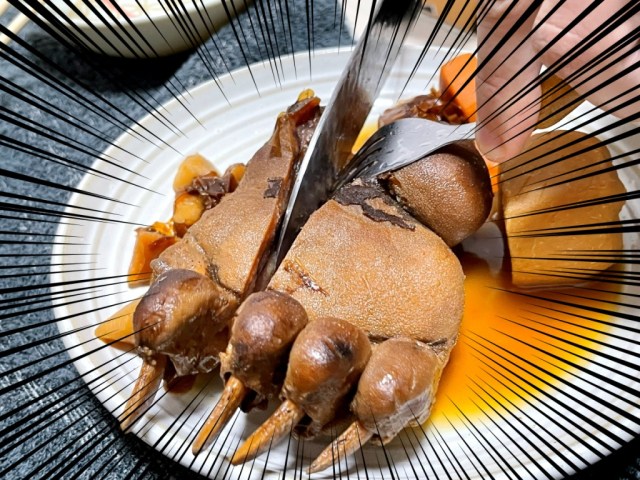
And lo and behold, this worked!
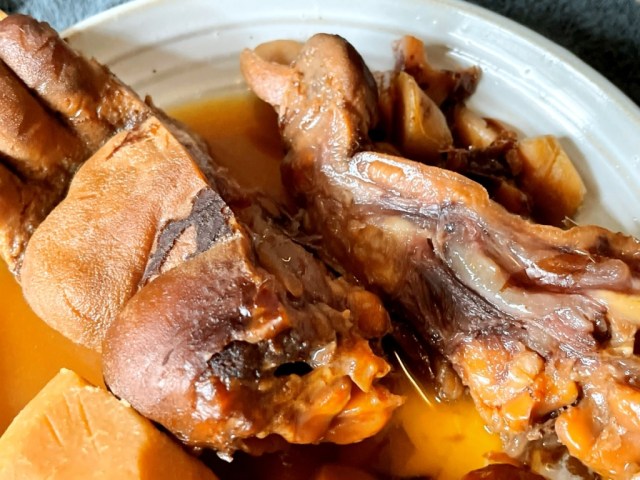
There’s still the matter of the bone inside, but once you’ve cut off a piece in this manner, you can eat it like you would a sparerib or piece of fried chicken.
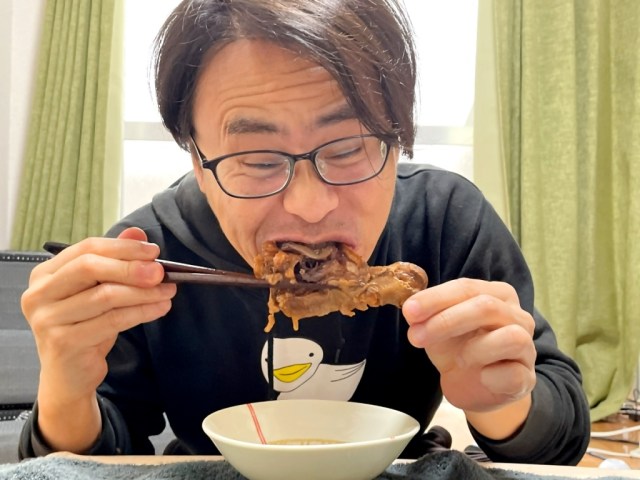
As for the taste, bear paw is incredibly gamey. Even after all the time it had spent in the cooking pot, it was unmistakably different from the beef/chicken/pork triumvirate of mainstream meats.
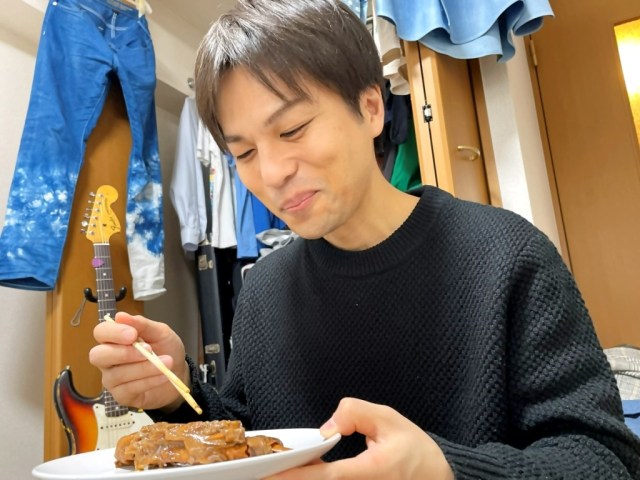
The texture, also, is very gooey, almost like you’re eating a chunk of collagen.
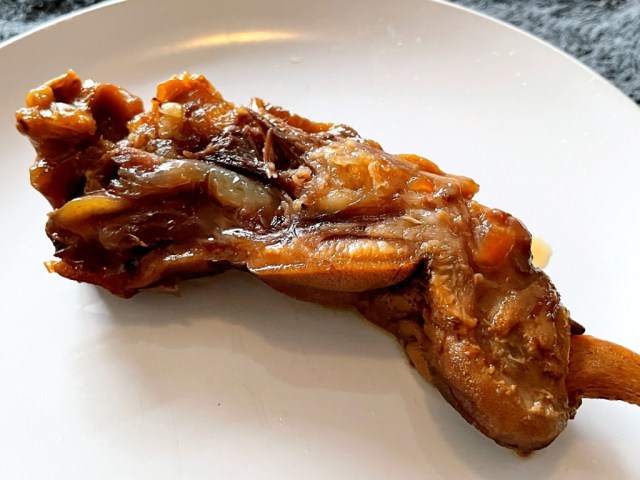
If you were going to equate it to a type of meat more people are familiar with, it’s much, much closer to pork than it is to chicken or beef. To put a slightly finer point on it, stewed bear paw, to Ahiruneko, is reminiscent of the flavor of pork motsu nabe, a traditional Japanese hot pot dish made with pork organs.
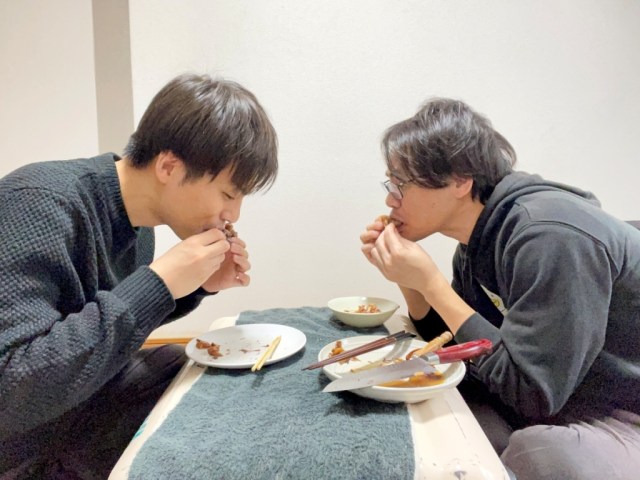
Overall, it wasn’t unpleasant, and as the meal went on, Ahiruneko became accustomed to the unique scent of the bear meat, and it ceased to be an issue. However, even after he stopped being conscious of the aroma, at no time during the meal did Ahiruneko forget, even for a second, that he was eating a bear paw. Again, while there are many kinds of orthodox meat dishes in which there might be bones to eat around, none of them have claws at the end of them.
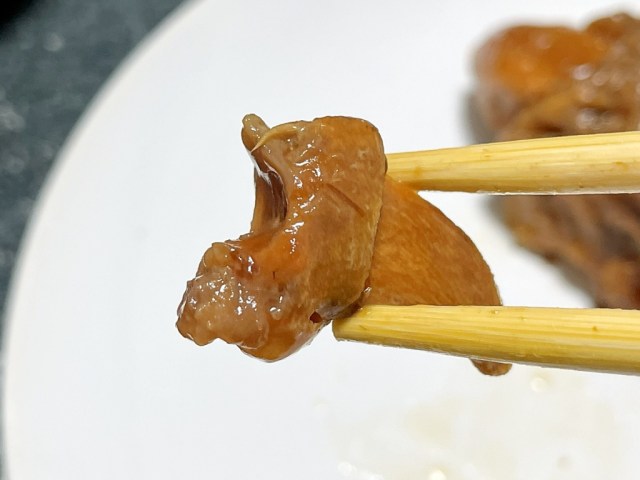
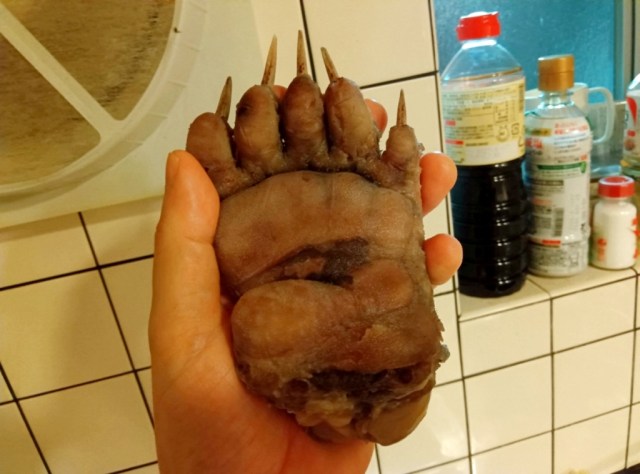
Visually, bear paw isn’t for the faint of heart, but the flavor isn’t intimidating to quite the same degree. Between the cost and difficulty in finding it in stores, though, we understand if anyone wants to wait for an invitation from Seiji before buying a whole paw for their own personal use, and if you’d like an easier way to dip your toes/sink your teeth into the world of bear meat cuisine, there’s this noodle shop in downtown Tokyo to try.
Photos ©SoraNews24
● Want to hear about SoraNews24’s latest articles as soon as they’re published? Follow us on Facebook and Twitter!
[ Read in Japanese ]