
With all the controversy surrounding a recent “racist” All Nippon Airlines ad, the Japanese and Western media have both been abuzz with the question of whether foreign people can ever truly become respected Japanese citizens – accepted by their community and deemed worthy of the right to not be the recipient of extraordinary treatment.
But this conversation has been going on a long, long time in the expat community in Japan, with a lot of otherwise Japanophile foreigners finding it hard to befriend the Japanese on a higher-than-acquaintance level. Why? Well, frequent source of opinion and cultural commentary Madame Riri has compiled a few of the reasons:

The “Gaijin Card”
The so-called “Gaijin Card” is a much-talked about wildcard that foreigners can use to gain instant forgiveness for cultural transgressions in Japan. The famously confrontation-averse Japanese will go to great lengths to avoid having a lengthy or complicated conversation with people in English, which means feigning ignorance of the Japanese language or Japanese etiquette can net you all kinds of bonuses in social situations that a regular Japanese person wouldn’t get. Loudly proclaiming “Nihongo wakarimasen” (“I don’t understand Japanese”) has gotten me extra portions and off-menu items at restaurants and has even gotten me out of more than a few sticky situations with the Japanese police.
But the Gaijin Card is a two-way street: No matter how hard you try to assimilate into Japanese culture, you will forever be a perpetual “other.” The word gaijin, in fact, is a slightly derogatory but universally accepted label for foreigners in Japan that essentially means “outsiders”, and the Japanese will never stop calling you one no matter how close your relationship or how long you’ve been a resident. There is a whole category of Japanese people that foreign exchange students and long-term expats refer to as “Gaijin Hunters;” Japanese that go out of their way to befriend foreigners, typically for self-serving purposes like free English lessons, street cred, or Hollywood movie-style romance, whether that’s a fair label or not.
Comparatively rare, however, is the Japanese person that will treat you like just another human being. Foreigners must constantly endure having their “outside-ness” “discussed openly in conversation, and I’ve had more than one friendship crumble upon learning a Japanese “friend” had actually been keeping me around for the free English lessons.
The constant praise
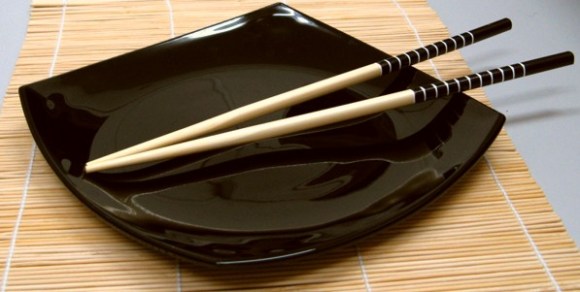
On the surface, this seems like something everybody would want. It feels great when people earnestly praise your language skills, your exotic looks, and your unique skill set. It’s another thing entirely when people constantly compliment your most rudimentary skills like using chopsticks and saying “thank you” in Japanese.
These little backhanded compliments are referred to in sociology by the relatively new term of “Microaggressions.” Essentially, when a Japanese person compliments your basic chopstick use or your above-average pronunciation of rudimentary Japanese phrases, asks, “When will you go back to your home country?” or, “Do you like Japanese women?,” these people are essentially re-affirming your “otherness;” Confirming their own stereotypes about foreigners while at the same time presenting it in a complimentary fashion that feels difficult to refute or take offense to.
The mystery
While I feel conflicted about stereotyping the Japanese right after several paragraphs of complaining about the Japanese stereotyping other people, it really does feel like the Japanese tend to mince words. It’s difficult being friends with a person who never truly tells directly how they feel or what they think. The Japanese language, in fact, lends itself perfectly to dodging around giving your true opinion on something, with phrases such as, “sore ha chotto…” (“Well, that’s a little…”) being readily accepted in the lexicon as a legitimate rejection of an offer. No reason ever need be given to reject or accept an invitation or opinion, often leaving foreigners scratching their heads about their Japanese friends’ true intentions and feelings.

The constant planning
Again, to step into stereotype territory, the Japanese seem to be “planners;” That is, you often must go through lengthy e-mail and phone exchanges to settle on an exact time and place to meet your Japanese friend, and sometimes the ultimate meeting time can be months on the horizon. On the other hand, I’ve been the recipient of a fair amount of Japanese frustration because, as a Midwestern American, I tend to plan things off the cuff; sometimes at the very last minute or at the spur of the moment. That’s just how I roll. But I find this often clashes with the methodical nature of planning social gatherings in Japan.
Is either way right or wrong? No. But are the two styles compatible? Uh… Not really, and many foreigners find this lack of flexibility hard to stomach.
It takes time
When I was in college, I found it incredibly easy to strike up a conversation with another student in line at the food court or sitting next to each other in class. After a few short exchanges, a friendship seemed to instantly sprout up out of the ether. Soon enough, I’d be seeing the same people at parties and hosting them in my disgusting college-boy “apartment” (probably classified by normal people as a “disaster area”).
In Japan, striking up a conversation is easy enough, but it takes months or even years for that first contact to bloom into a substantial relationship. This goes back to the deeply-ingrained Japanese philosophy of “uchi” and “soto;” Essentially, close co-workers, family members and long-term friends are “uchi” (“inside”) and everyone else is “soto” (“outside”). Working your way up from soto to uchi thus takes a very long time and a lot of favor giving-and-taking.
This all isn’t to say that meaningful relationships with Japanese people is impossible. On the contrary, I’ve had Japanese friends run to my aid in times of need when other Western friends seemed mysteriously absent. On the one hand, close friendships with Japanese people are extremely rewarding and almost always last a lifetime, but on the other hand, getting to that point can quite frankly be a pain in the ass.
Source: Madame Riri
Photos: Feature, Inset 1, Inset 2, Inset 3