
Prime Minister Shinzo Abe’s “womenomics” scheme aims to get more women into the workforce in order to combat the shrinking and aging population and help spur the Japanese economy. While I believe women can save Japan, I don’t think it’ll be through womenomics. As any Japanese woman can tell you, it’s not as easy as it should be for females to work full-time in this country. In the Japanese business world, companies are loath to offer working conditions that males and females alike enjoy in other developed countries, such as reasonable work hours (40 hours a week with optional overtime), work sharing, flexitime and working from home. Whereas in the West the attitude is that as long as you get your work done on time, it doesn’t matter how you do it, in Japan emphasis is more on the hours put in at the office to show your loyalty to the company. Add to that additional cultural biases against gender, age, experience and returning to work after raising children, and you have a recipe for “eternal housewife.”
Clearly, the problem is deeper than merely hiring more women, or adding more day care centers, both actions Abe is pushing. But the good news is that there is a group of women who are beating the system, and who have been for some time now.
This week, as part of our Women in Japan Series, we introduce you to three female entrepreneurs who have successfully forged ahead in the business world by defining their own terms. They can support themselves financially, are able to live more freely, have time for their children and families, and work fewer hours than they’d have to in the corporate world. And the best thing about it? They’re regular women, just like you, me, or your partner. Drum roll please…
1. Mari Tobita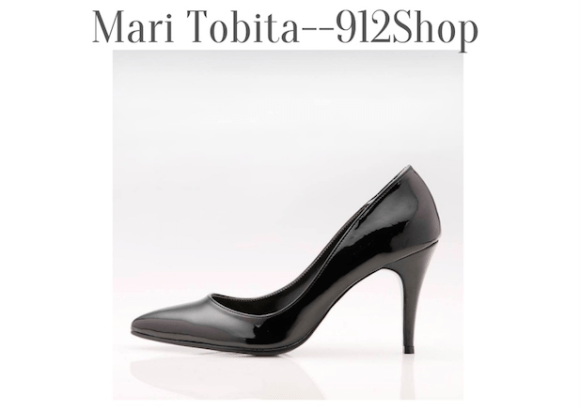
Mari found her knack in online sales even before she graduated from high school. “I went to the U.S for the first time when I was in high school, and I bought some clothes for myself. But the sizes didn’t fit, so I tried to sell them on online auctions in Japan,” she tells RocketNews24 in an online interview. At first, Mari was surprised at how quickly the items sold, indicating there was an untapped market. She also noticed that many brands such as Tommy Hilfiger and Ralph Lauren were cheaper in the U.S. She decided to try to import these items and sell them online in Japan. Mari admits that her business sense probably comes from her family, who are mostly business people. But Mari’s reasons for starting her own business go deeper.
“I always thought it was unfair that females had to quit their jobs when they get married or become pregnant, even when they are making a good income or are very talented. I thought that if I can sell products online, then I don’t have to work for other people.” By the time Mari graduated from high school, she was doing well enough that she didn’t need a part-time job.
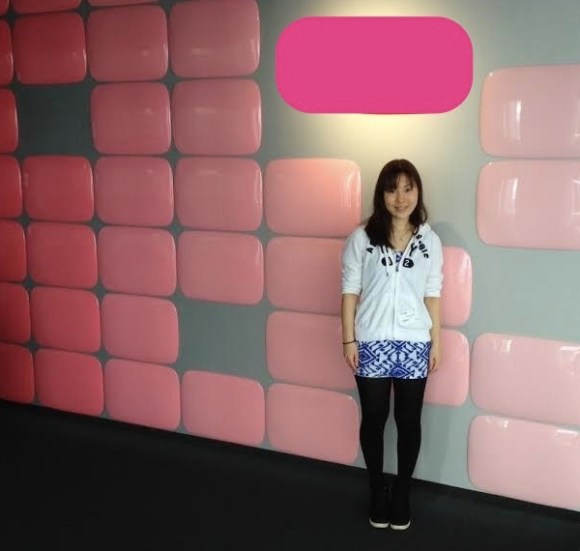
Mari seems very perceptive at uncovering new niches. She eventually settled on selling shoes because not only did she herself find it hard to find shoes that fit her tiny feet, but she realized her foreign friends living in Japan couldn’t find shoes big enough for theirs. In addition, Mari saw another niche that no one was serving yet: the transgender market.
She opened her website, “912Shop,” (pronounced “nine-twelve shop”) in 2010. “This is my fifth year doing this, and my twelfth year doing online business, and it’s always been sustainable, even with economic ups and downs.” When I asked her what the hardest thing was being a woman entrepreneur, she said, “Often men assume they are smarter than you or have more experience, even when you have been doing this business for much longer, or even when you know your market better.”
“I’ve never liked the idea of working at a big company, dealing with the morning and evening commutes or having to wear a suit. Also, as a woman, this way I don’t have to try to climb the corporate ladder to make a decent income. I also love the fact that even when I am overseas, I can still run my business. I don’t have to work a lot of hours to get things done. I’m very satisfied with what I do.”
2. Kuniko Thornley

I’m sitting in Kuniko’s house in Okayama Prefecture while she shows me, rather than trying to convince me through words, how superior Amway products are to other common items on the supermarket shelves of Japan. Her two children, six and ten years old, are at school now so the house is quiet with just she, her husband and I inside.
An Amway “Distributor” for six years, Kuniko started working for the company because she likes their business philosophy. “Amway gives everyone a chance to work, no matter who they are, no matter race, religion or country,” she says while putting a blob of black ink on the back of each of my hands. “They offer products that are environmentally friendly and some organic products too such as soy sauce and miso.” Amway operates in over 60 countries and regions around the world. She dabs some Japanese dish washing liquid on top of the ink on one of my hands. “Take your index finger and start swirling,” she instructs. I “swirl” and the patch of ink becomes a blob of sticky gunk. “Japanese women are very smart housewives, so you have to show them that Amway products are better than what they are currently using, or that Amway products are twenty percent cheaper than proposed prices on supermarket shelves. She dabs a spot of Amway dish washing liquid on my other inked hand and indicates with her index finger for me to swirl. I swirl again but this time, the ink combines with the soft liquid gel. It wipes off easily with a tissue, leaving no residue behind. The magician has made her point.
When selling Amway products, simplicity is key. “You have to show clients that they can make a healthy dinner in just 30 minutes, and be finished in the time it takes to go pick up the kids from school,” says Kuniko while taking the lid off of ginger rice that has been cooking all by itself whilst she was giving me the ink on hand demonstration. “Chicken, ginger, oyster sauce and soy sauce–it’s quick, easy and anyone can do it,” she says as we sit down to lunch with her husband.
▼Kuniko demonstrates how to make a cheesecake without having to bake it.
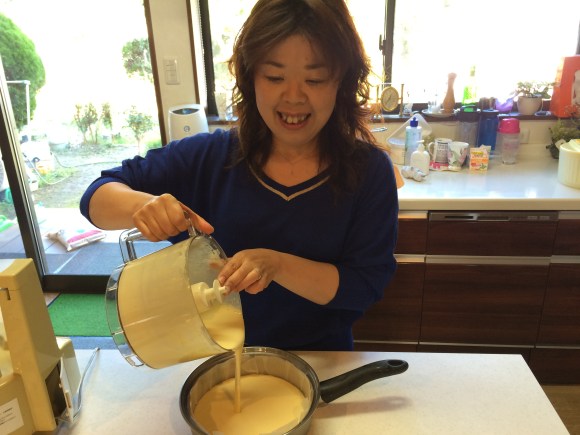
“These days most of my female friends have to work to make ends meet. But daycare is very expensive so many end up spending most of their salary on daycare. So why work?” she says, single-handedly striking down one of Prime Minister Abe’s main agendas–to provide more daycare centers. “And then, daycare centers will not look after sick children, so if their child has a fever, they have to ask their boss for time off, or maybe they have to leave work early to pick up the child from daycare. The boss doesn’t like this, so eventually she must quit in order to take care of her children.”
Kuniko spends an average of four hours a day giving cooking and product demonstrations in her house or visiting other houses, always with an introduction and an appointment first. She even came out to my house a week later, just to let me see how she works; she brings a small suitcase full of products and lets you try them all out in your own environment. Kuniko is nothing short of brilliant. And her business just keeps growing.
“She is so successful and I’m really proud of her,” says her husband, Simon, a U.K. national who has quit his university job and is now a stay-at-home dad. When Kuniko holds demonstrations at home, her clients often bring their children with them, so Simon babysits until the mothers are finished. He also grows organic vegetables in the back yard. But what Simon said next is what really blew me away as it challenges conventional thinking. “The kids really love having both parents at home. There is always someone here for them.” While the rest of Japan (and much of the world) struggles with questions such as whether women should work or stay at home, Simon reminds us that the best thing for the children may be to have both parents at home, an option people rarely, if ever, consider.
3. Yaeko Orikawa 折川八重子
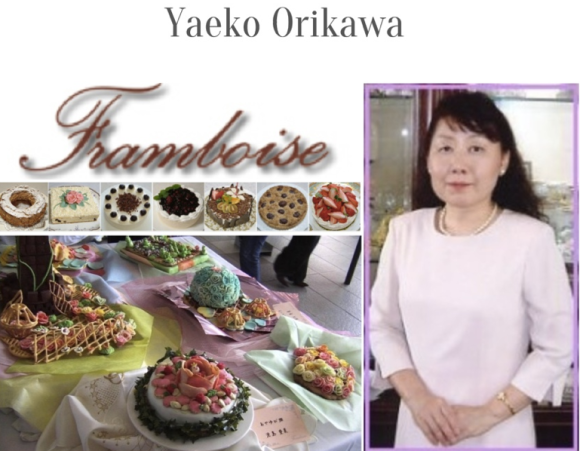
Yaeko Orikawa has been running Framboise Cake Decorating School since 1989. Although nearing retirement now, at one time she had 250 students enrolled at her school. This woman entrepreneur indicates that women have been overcoming the odds in a male-oriented business culture for a long time now. Her reasons for starting her Framboise cake decorating school were completely practical, even for a woman bringing up children 30 years ago.
“I was working for a company when I got married. At that time only ten percent of all the employees were female,” she tells a mixed male and female audience in Onomichi, Hiroshima Prefecture who have gathered on a Sunday afternoon. “After having my second child, I decided I wanted to work in a company where I could have a future and continue working.” She had always loved cooking (and eating) sweets, so she decided to study how to make patisserie. Yaeko was truly at the forefront of the boom in cute and delectable desserts in Japan.
Recognizing how important certifications and qualifications are in this country, Yaeko entered a Japanese patisserie school to receive her confectionery license. She became a member of the Australian Sugar Craft Association and joined the Cake Decorators Guild of NSW in order to thoroughly capture the depth of Western cakes and sweets. She has taken honors in many cake decorating contests.
▼Yaeko served us this American pumpkin pie with coffee.
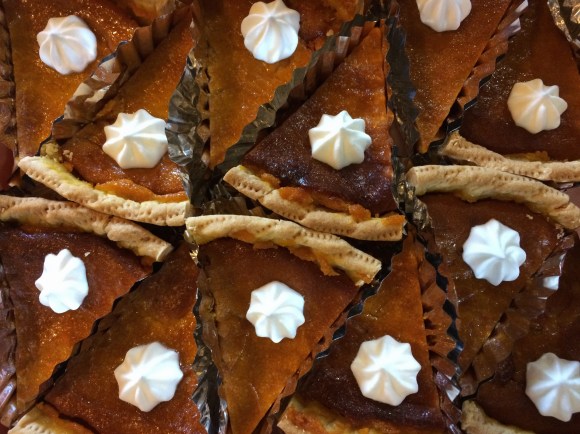
While many Japanese women give up their hobbies after getting married, Yaeko has been able to turn her hobby into a business. She encourages her students to enter their works in contests and exhibitions and to follow their sweetest dreams.
These women sure make it look easy, don’t they? Instead of trying to fit into a male dominated, potentially female-hostile environment, they’ve blazed their own trails. And they have thrived doing so. It’s enough to make us here at RocketNews24 wonder why there aren’t more women entrepreneurs in Japan.
Join us next time in our Women in Japan Series as we discuss why Japan doesn’t produce more female entrepreneurs. We think you’ll be surprised by some of the things we uncover.
Featured Image: Flickr (M. Roeseler)
Cakes Seiichi Matsuura, Framboise Cake Decorating School
All other photos © Amy Chavez/RocketNews24 unless otherwise noted