TOKYO — Japan’s high-tech agricultural businesses are to gather at the Agri World trade fair held in Tokyo this week (Oct 12-14) to showcase the industries next generation of technologies such as plant factories, robotic automation and IT systems, claimed as advancing the “fourth industrial revolution” into the sector.
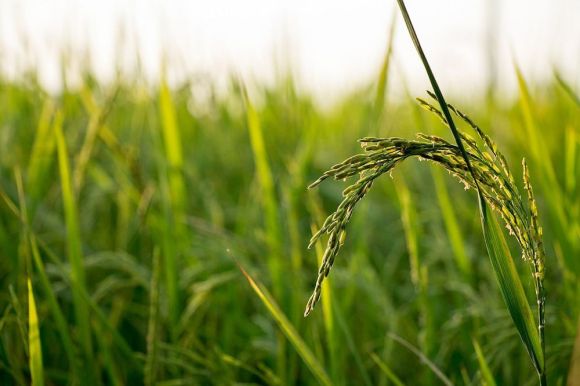 Image: Pixaby
Business analysts forecast the “agri-tech” market is primed for extensive growth internationally over the decades ahead. As global population is expected to reach 9 billion by 2050, food needs would require a doubling of agricultural production, state U.N. World Food Programme experts.
Offering technological solutions, “agri-tech” businesses are marketing a wide variety of products and services for meeting industry demands, to generally increase productivity, lower costs, use less resources such as energy, water and pesticides, and improve produce quality and availability.
There is also a strong demand for labor saving and assistive agricultural equipment driven by a different demographic trend, that of ageing agricultural farmers, whereby according to U.N. figures, in developed countries the average age is 60, and where in Japan it has risen to 67.
Overall Japan has a shrinking agricultural sector, demonstrated by government data showing the number of full-time farmers at 1.7 million in 2014, declining from 2.2 million a decade earlier. Workforce and skills shortages are compounded by the lack of young people becoming farmers. Also, due to the increasing rate of farmers retiring, the overall amount of uncultivated farmland within Japan has doubled over the past two decades, increasing to 420,000 hectares in 2015.
Japan’s reliance on food imports is a further factor of concern, currently estimated at 60%, prompting recent government targets for boosting domestic production to 55% by 2050. Agricultural production at present is valued at around 1 trillion yen of which the government aims to increase to 10 trillion yen by 2020, raising food self-sufficiency as a major agricultural policy.
Another government initiative is 4 billion yen budgeted over the year through March for promoting farming automation technology in order to raise crop yields and make-up for workforce deficits. Specifically, the financial subsidy supports the development of 20 robot types, such as devices which separate over-ripe fruits during harvesting, to enable large reductions in manual farm labor.
As physical activities bring more difficulties for a greater number of aging farmers, technological innovations to assist with and replace workers performing agricultural tasks is an urgent priority.
Japanese tech companies are heavily investing in agricultural technology as a big opportunity for profits in both domestic and global markets such as India and the APAC countries, attracting small scale start-ups to big corporations such as Mitsubishi, Fujitsu, and Panasonic, to name but a few.
There is also a trend for farmland in Japan to be cultivated by “business farmers” and “agribusiness,” at around 50% today, leading to 80% by 2025, according to government estimates.
As an indicator of growth potential in the “agri-tech” sector, the global market for agricultural robots is projected to reach $73.9 billion by 2024, up from $3 billion in 2015, predicted by Tractica, a market intelligence firm. Driverless tractors are trended to gain the highest revenue at $30.7 billion by 2024, with agricultural drones comprising the most amount of units shipped.
The applications of farming technologies are wide ranging and often interconnect. A typical farm scenario could involve a driverless tractor in a rice paddy field utilising a global positioning system, both synchronised to automate cultivation and fertilization after monitoring the soil conditions.
For work that is harder to be automated, wearable robotics put on like a backpack have been designed to assist harvesting and carrying produce, more so for elderly and female farmers.
As well as automating work, high-tech farming technologies provide accurate information which farmers can use to make decisions managing crops. For example, a combination of high resolution drone images, historical weather data from geo-satellites and sensors in the field would generate real-time alerts on mobile devices to inform farmers when to reduce a mandarin orchards water supply, so the trees absorb less water from the soil, therefore increasing sugar levels of the fruits.
The valuable experience and techniques of veteran farmers could also be more accessible to newer farmers via the web, such as learning resources about harvesting times with databases and photos.
Many news items about “agri-tech” businesses have featured in both the Japanese and international media, with reports of indoor “vertical farms” and automated greenhouses gaining the most coverage. There is often a focus on robotic automation, also the use of IT systems and sensors to measure and control growing processes, evidently enhancing work efficiencies, crop yields and produce quality.
For example, GRA Inc is a medium-size Japanese business with an automated indoor greenhouse facility producing strawberries, providing a reliable quality and increased supply all year round.
The company joins conventional farming expertise and technological innovation, employing local farmers as advisors and management, founded by a former IT administrator turned agriculturalist.
Based in Miyagi Prefecture, the business started a few months after the Tōhoku disaster. In an area famous for its strawberries, thousands of greenhouses were destroyed and damaged ensuing huge losses for farmers. The business has therefore helped to modernise and revitalise regional trade.
Such stories show the real potential for young tech-savvy farmers to work alongside older, more experienced farmers, toward overcoming the challenges confronting Japan’s agricultural industry.
Allan Croft is a freelance writer focusing on the latest science, tech and green news in Japan and Asia.