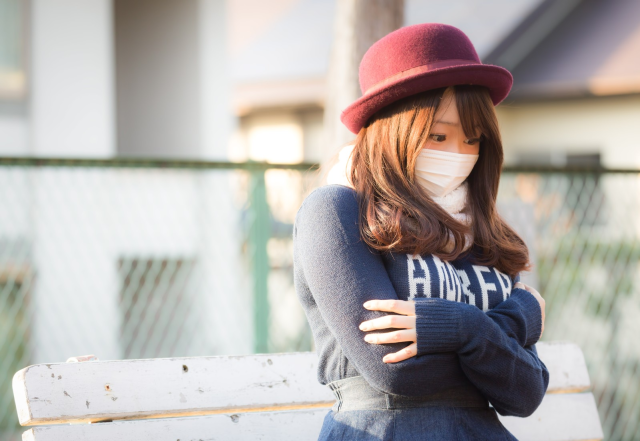
Educator ties theory into why Japanese people wear surgical masks, but not sunglasses, but how solid is his logic?
Just as different cultures have different languages, so too can non-verbal communication differ between countries. This was part of the discussion in a recent lecture at Tokyo Women’s Christian University, given by psychology professor Akihiro Tanaka.
One of Tanaka’s visual aids was a slide labeled “Japanese people’s facial expression comes from their eyes, and Western people’s facial expressions come from their mouths,” as seen in this photo tweeted by Japanese Twitter user @mnishi41.
https://twitter.com/mnishi41/status/1023443014088179712Directly underneath Tanaka’s statement is a row of common Japanese emoticons, representing a wide variety of emotions, and sure enough, all of them have an identical under score for the mouth. Below them is another row of stylized face sketches (meant to be indicative of Western aesthetics) in which the eyes are always the same simple pair of dots, but with vastly different mouths.
Finally, serving as real-world, real-people examples, the slide has a group shot of Japanese people wearing facial masks, and next to it a snapshot of Western women all wearing sunglasses.
The tweet quickly racked up over 140,000 retweets and 385,000 likes. However, looking through the comments, not very many Japanese Twitter users are voicing strong agreement. Instead, most commenters are pointing out that the reasons for the mask/sunglass discrepancy has more to do with differences in socially acceptable fashion between Japan and the West.
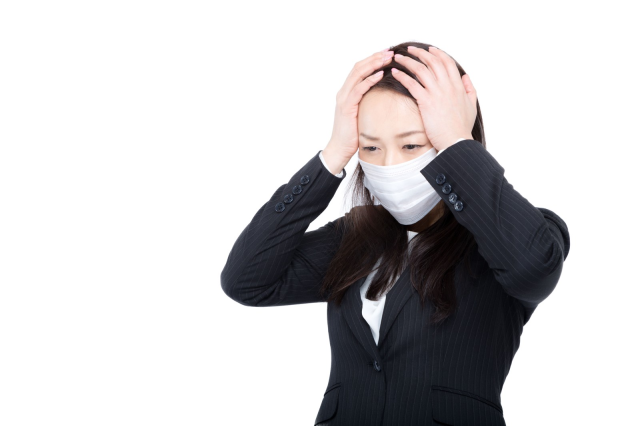
The lecture slide implies that people in Japan are generally OK with wearing masks, but not sunglasses, and that’s quite true. However, the major reasons why people in Japan wear masks in the first place are all respiratory system-related, with the most common purposes being to alleviate the effects of hay fever (a major, nationwide problem because of the highly allergenic strain of cedar that grows in Japan) or to avoid passing off or receiving airborne cold/flu germs on Japan’s crowded trains. Sunglasses don’t provide any benefits related to those concerns, so keeping their eyes uncovered is, in the minds of most Japanese people, completely unrelated to whether or not they’re wearing a mask.
Meanwhile, the reason most Japanese people don’t wear sunglasses isn’t for greater communicative effectiveness, but because near-opaque lenses have long had a stigma in Japan as being a sort of face-obscuring pseudo-disguise. Take a look at any public safety pamphlet, and there’s a 90-percent chance that the illustrations showing burglars and conmen will have them wearing sunglasses. All those media depictions eventually seep into real-world mentality, and thus affect fashion decisions.
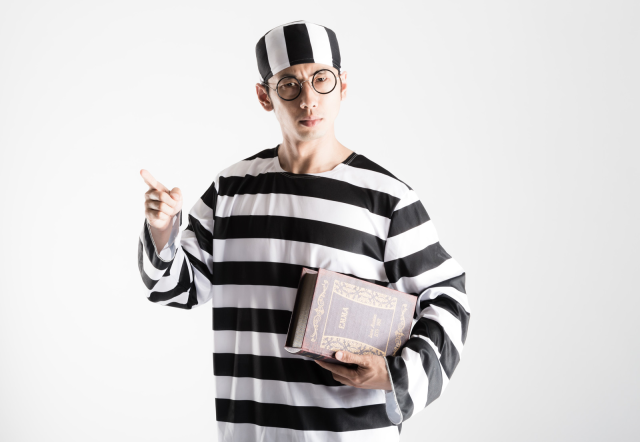
▼ It’s sort of like how even if you like stripes, you probably wouldn’t put together an outfit like this, since it’d make you look like a convict.
Moving over to the other side of the slide, the reason Westerners don’t wear surgical masks in public isn’t so much because they feel the mouth is the critical body part for non-verbal communication, but because it’s a fashion choice that can legitimately frighten people if they see it outside a hospital. Just last year, some shoppers in the U.K. thought a group of Japanese supermarket patrons who were wearing masks might have been planning some sort of bioterrorism attack.
It’s also worth pointing out that in the cherry-picked photo of Western women wearing sunglasses, they all seem to also be wearing identical low-cut tops made out of red leather. The photo is zoomed in too tightly to see much of the surroundings, but there appears to be a race course fence behind them, so it’s likely they’re not just a group of random everyday Westerners, but models promoting some sort of motorsport event, and so they’re wearing sunglasses because they’re literally standing out in the sun for hours on end.
Written reactions to @ mnishi41’s tweet included:
“Not so sure about the logic on the mask/sunglass thing.”
“I think Westerners are just more likely to wear sunglasses because they have lighter irises and are more sensitive to bright light.”
“Isn’t it just that Japanese people think sunglasses are scary, and Westerners think facial masks are scary?”
“Just think if you wore sunglasses and a mask – no one would mess with you.”
Still, Tanaka raises an interesting point when he shows that Japanese emoticons almost always try to get their point across with the eyes, whereas Western doodles tend to favor mouth reconfigurations. One commenter theorized it might have something to do with characters in anime, Japan’s most popular and influential form of contemporary art, having larger, more expressive eyes then their Western cartoon counterparts. But another likely reason is that Japanese culture largely sees stoicism and serenity as a virtue, which often translates to trying to control, or at least manage, strong emotions.
However, that’s something that’s easier said than done, even for Japanese people. As such, the situation of trying to keep a stiff upper lip, literally, but thinking that your eyes (which have a greater amount of involuntary/subconscious muscle movement) might be giving away your true feelings, is immensely relatable to people in Japanese society. It makes sense that those scenarios would be reflected in the caricature-like visual shorthand of emoticons.
So while the theories that Japanese people wear masks because they feel they can communicate everything they need to with their eyes, and that Westerners will casually slap on a pair of shades because their mouth will do just fine on its own, both sound kind of shaky, there might indeed be a bit of an “art imitates life” aspect to those straight-mouthed Japanese emoticons.
Source: Twitter/@mnishi41 via Hachima Kiko
Top image: Pakutaso
Insert images: Pakutaso (1, 2)
Follow Casey on Twitter, where you won’t be able to see his mouth or eyes, and so he could be up to anything.