Don’t miss your chance to attend one of the biggest cock festivals in Tokyo.
If you’ve ever strolled around Kabukicho and the tight alleyways of Shinjuku’s famous Golden Gai drinking district, then you’ve been a stone’s throw away from one of Tokyo’s most important Shinto shrines.
▼ Overlooking Golden Gai is Hanazono Jinja, or Hanazono Shrine, which translates to Flower Garden Shrine.
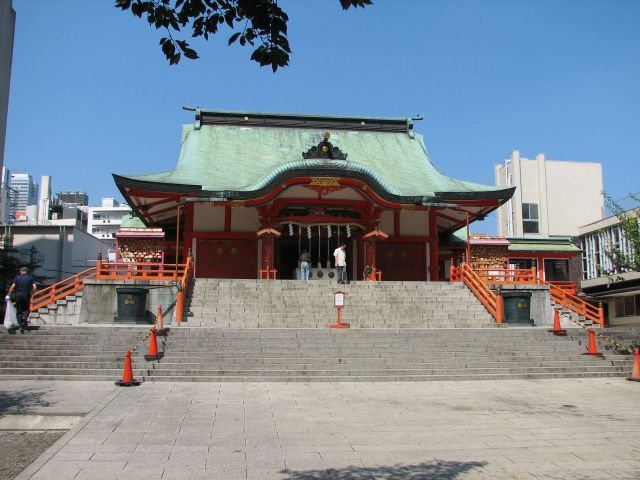
Image: Wikipedia/nnh
Founded in the mid-1600s, when it was once surrounded by land that belonged to the Imperial Gardens, Hanazono Jinja has been renovated and rebuilt over the years due to fire and war damage. Today it remains an important site for one of Tokyo’s most impressive annual festivals: the Tori no Ichi, which translates to cock (or rooster) market.
The festival is held every November on Tori no Hi, or the Day of the Rooster. And seeing as The Day of the Rooster occurs every 12 days in November, the festival can be enjoyed two or three times during the month.
This year, the festival began on November 1, and when we stopped by to check out the grounds a couple of days beforehand, we could see that a wall of lanterns had been set up just outside the main building.
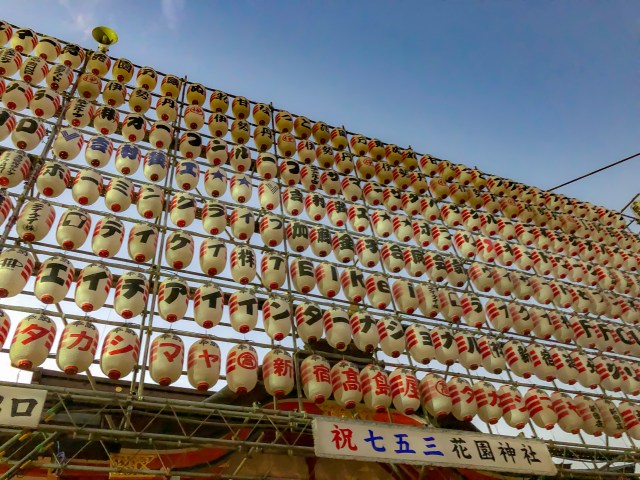
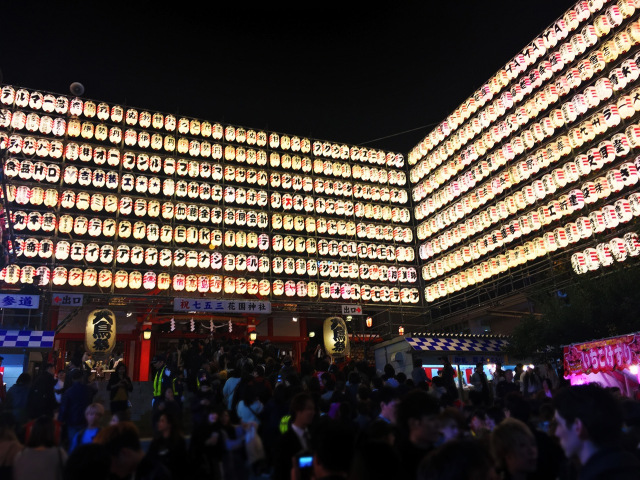
These lanterns show the names of local companies who’ve donated to the shrine, and the impressive display is known for being one of the highlights of the festival.
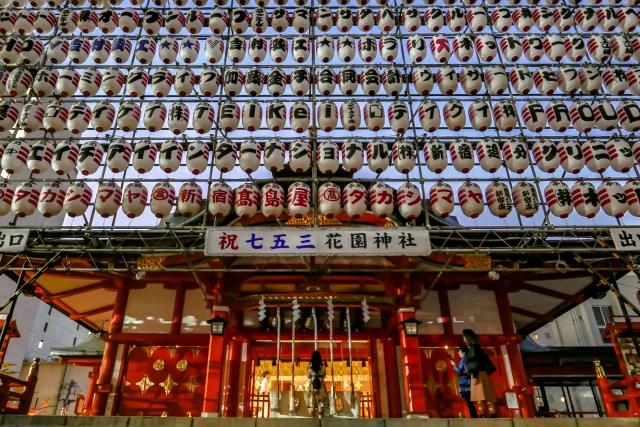
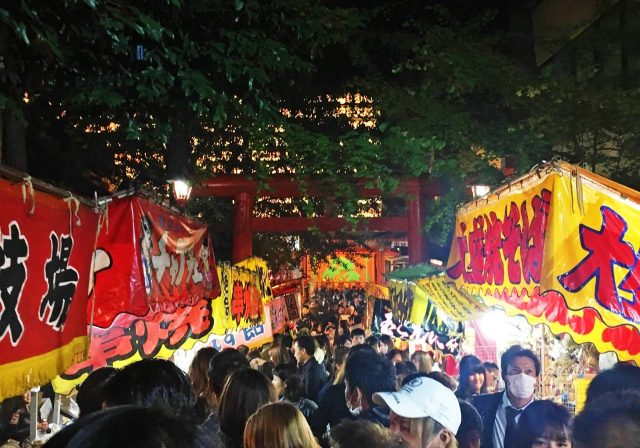
After seeing the stunning wall of lanterns, we decided to return on the actual date of the festival to see them all lit up, and while it was beautifully quiet and peaceful in October, on November 1, the shrine had turned into a hive of activity, with crowds of people making their way through the grounds.
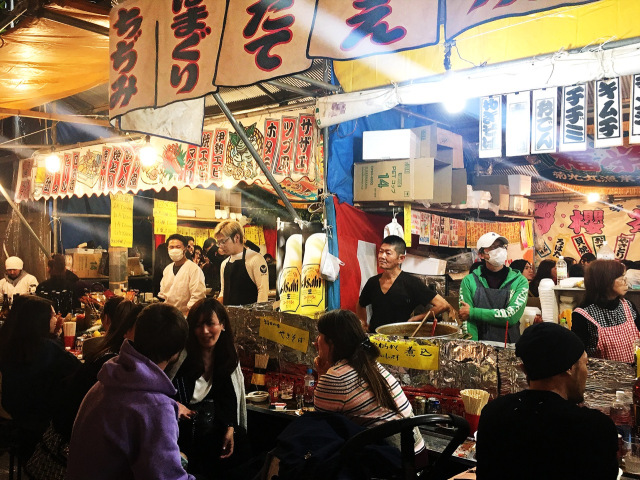
As we made our way into the main area, we were tempted by all the delicious offerings at the brightly lit food stalls.
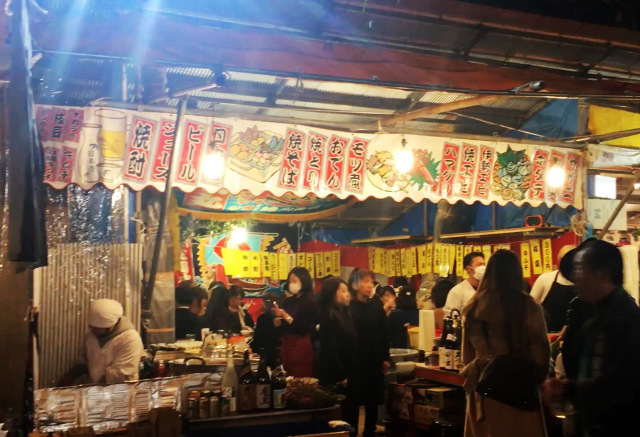
▼ Seating had been set up for diners to eat and drink while soaking up the atmosphere of the festival.
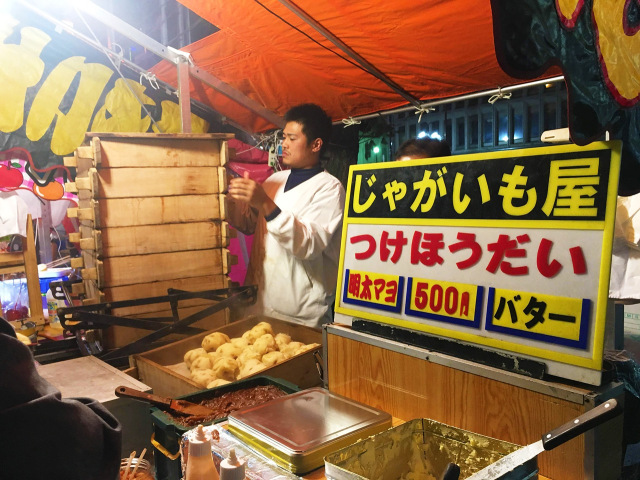
This particular stall beckoned to us with their piping hot baked jacket potatoes, including all-you can-eat butter and pollock roe mayonnaise condiments for 500 yen (US$4.40).
▼ The food stalls stretched well outside the shrine grounds to the main street as well.
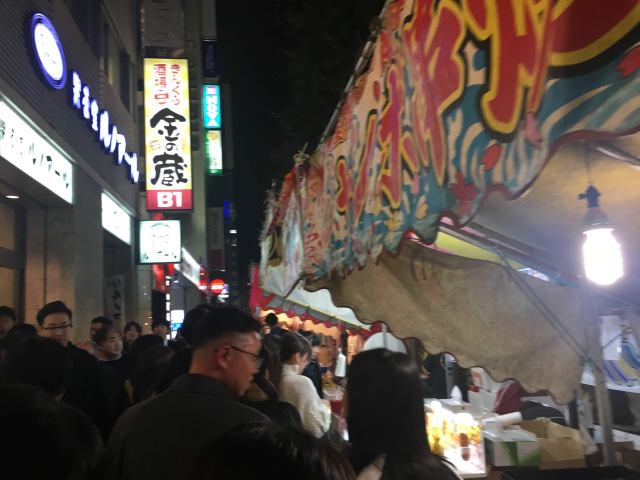
After making our way through the crowd, we could finally catch a glimpse of the lanterns, sitting beautifully above a small stage that was being used for a traditional rakugo performance.
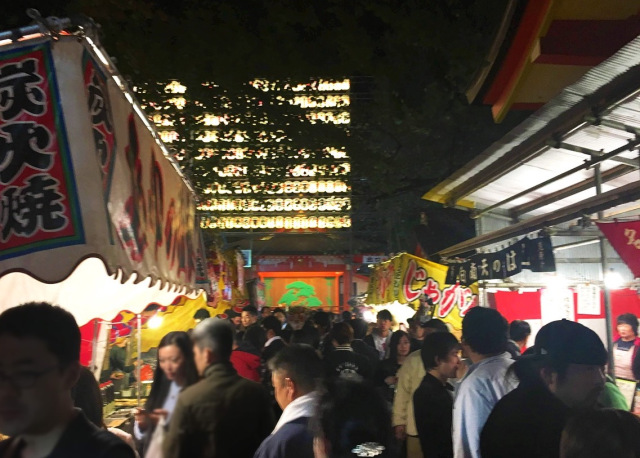
And then we arrived at the plaza in front of the main shrine building. The sea of lanterns above the crowd gave the place an otherworldy feel, which was apt, given that it was set up at one of Tokyo’s most sacred sites. Before joining the queue of worshippers who had lined up to pray, we scanned the lights to read out the names of some familiar companies, including gaming giant Square Enix, whose headquarters are in Shinjuku, in the top right-hand corner of the main section.
While many had come to enjoy the festival among the lanterns, the real reason for the crowds was due to the fact that Tori no Ichi events are known as the place to purchase special bamboo rakes called kumade. These rakes offer wealth, prosperity, and well-being, and are particularly used to wish for good luck and prosperity in business.
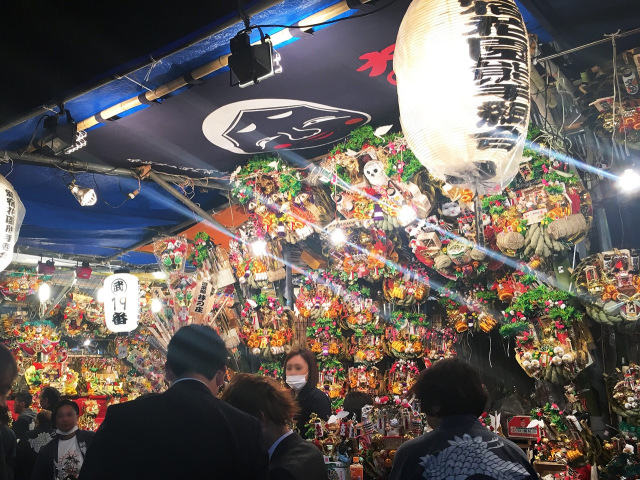
A rake helps to “rake in” customers and prosperity for your business, and the smiling face of Otafuku, the goddess of mirth, is also said to bring in good fortune.
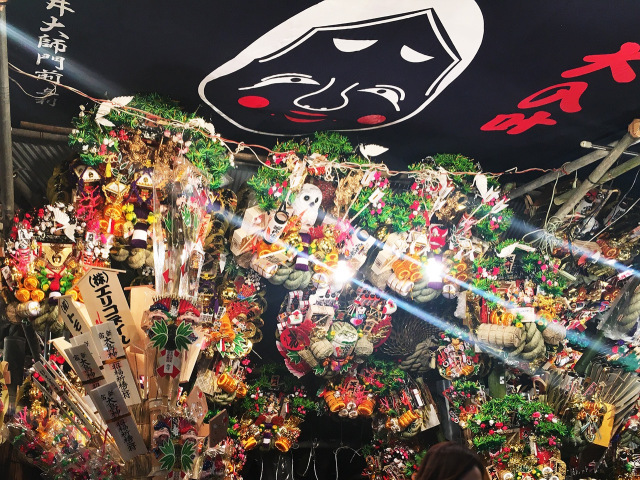
We saw a huge variety of kumade at dozens of stalls, ranging from small handheld types priced at 1,000 yen, up to more extravagant ones priced at well over 10,000 yen.
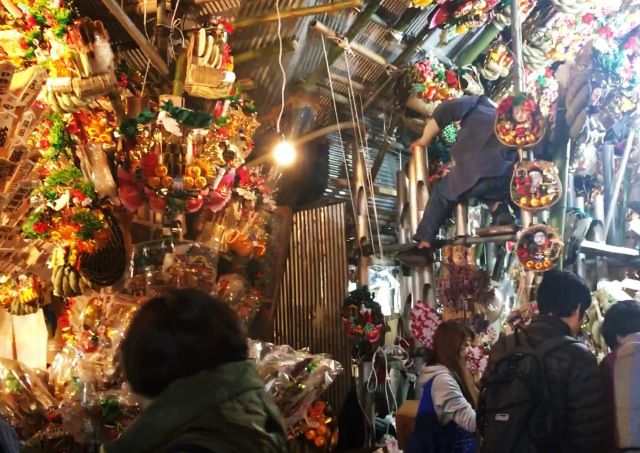
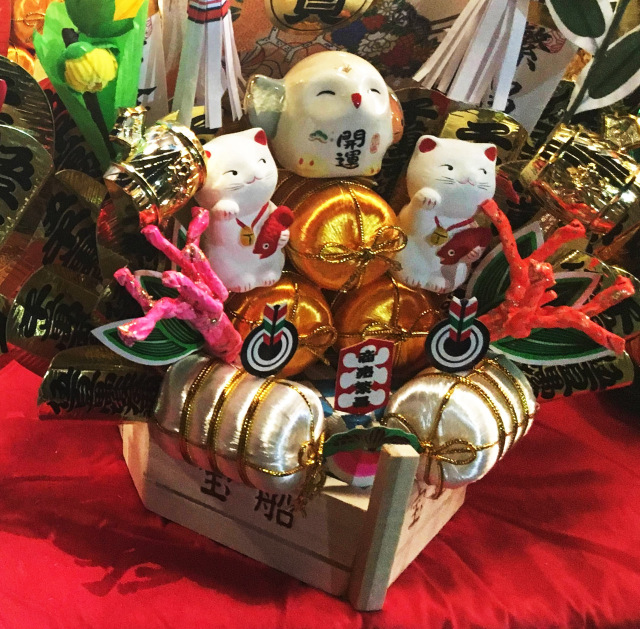
Kumade, which is written out using the kanji for “bear” and “hand”, are filled with a wide variety of good luck symbols. Some commonly used symbols include: The Seven Lucky Gods, who represent different types of good luck such as wealth, knowledge, longevity, good health, art, happiness, and beauty; The Lucky Mallet, which comes from a story called Issun Boshi (“One Inch Boy“), where the mallet grants the boy his wish; beckoning cats, who beckon customers in for business; and the Koban, which is a Japanese oval gold coin that symbolises money and fortune.
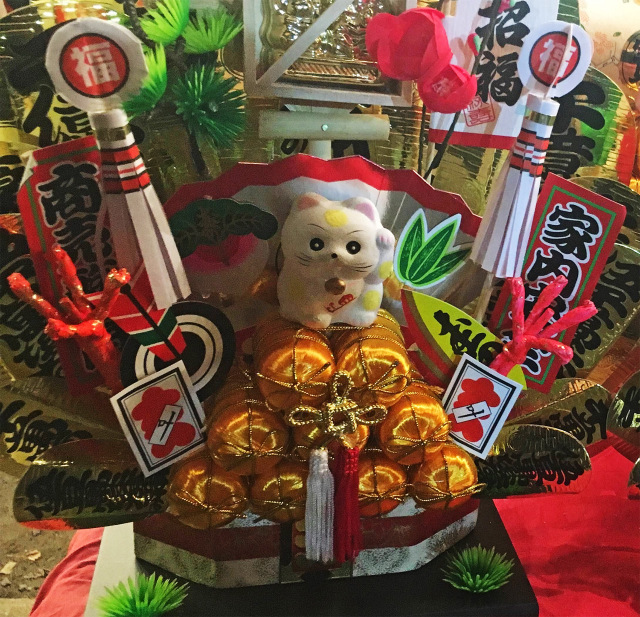
Other symbols include rice barrels, to represent a good harvest season, and the owl, called fukurou in Japanese, which sounds like the word fuku (happiness).
Whether you’re looking for business prosperity or a stroll through an enchanting festival, the Tori no Ichi event at Hanazono Jinja is a great way to enjoy a slice of traditional Japan in amongst all the high-rises and bright lights of Shinjuku. While the festival was held on November 1 and 13, the good news is there’s still one more chance to experience it, on its last day on 25 November.
Event Information
Hanazono Jinja / 花園神社
Address: Tokyo-to, Shinjuku-ku, Shinjuku 5-17-3
東京都新宿区新宿5-17-3
Website (Japanese)