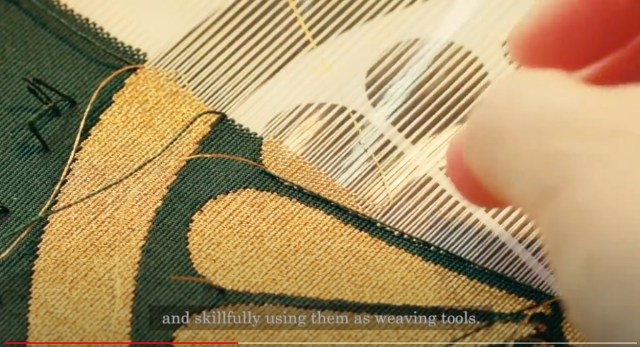
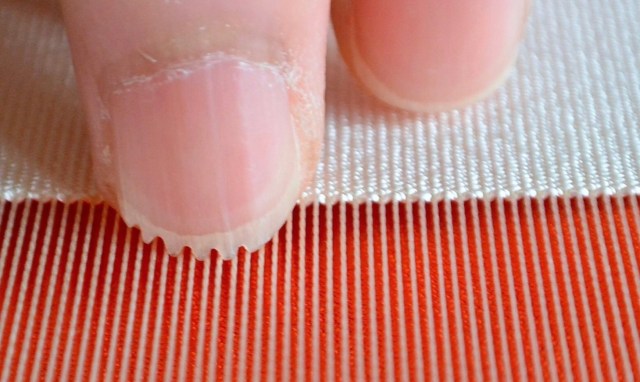
These artisans carve out an essential tool at the end of their fingertips.
Whether they’re shaving wood like cheese or painting intricate freehand patterns with ease, there’s something inherently fascinating about watching experienced craftspeople at work.
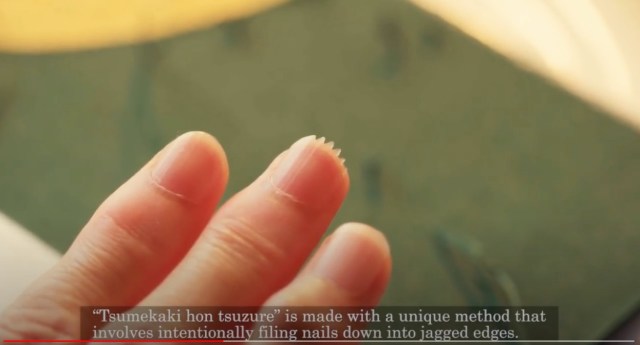
This week it’s time to turn our attention to yet another captivating traditional craft, and this one comes to us from Shiga Prefecture, where the artisans involved all have one common physical feature: little jagged edges carved into their fingernails.
The craft these artisans are involved in is called tsumekaki hon tsuzure ori, which literally translates to “nail-scratching genuine-tapestry weave“. As the name suggests, this technique involves the use of nails in order to create the weave, and it’s the oldest type of Nishijin Ori, a traditional textile produced in the Nishijin district of Kyoto.
Made in Japan for over 1,000 years, one company in Shiga Prefecture is working hard to promote the ancient craft and keep it relevant for today by using it to create products suited to modern lifestyles. Called Kiyohara Orimono, the company has also produced this video to give us a behind-the-scenes look at the weaving process, and the reason why those jagged little nails come in handy.
The video above shows how the filed nail is used as a tool for weaving, scratching the threads together with its serrated edge, as it’s been done for centuries.
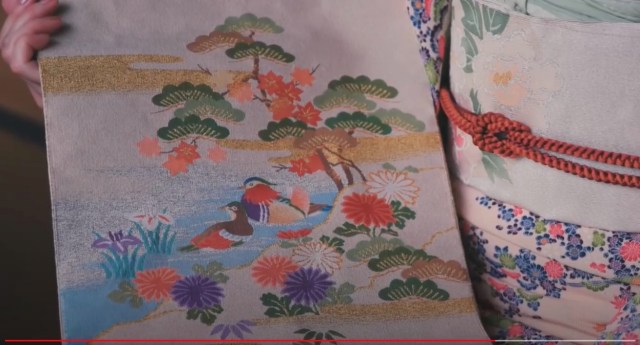
The result of this painstaking process is a fabric with elaborate patterns that look as if they’ve been painted on with a brush.
Surprisingly, not a lot of people in Japan were aware that this technique existed, and when Kiyohara’s Senior Managing Director Seiji Kiyohara brought it to everyone’s attention with this tweet on Twitter, it quickly went viral.
https://twitter.com/Sksk72957267/status/1295567078947041280And to answer everyone’s question about how the nails are filed into such precise little triangular tips, this is how it’s done.
https://twitter.com/Sksk72957267/status/1295717816696479746Kiyohara, who says his goal is to ensure that traditional Japanese weaving techniques never die, is now using age-old fabric-making methods to make stylish products for everyday use under the Sufuto brand.
Though you can’t really put a price on centuries of tradition, Sufuto’s prices start at 3,080 yen (US$29.11) for wind chimes featuring hand-woven fabric, which can be purchased online here.
It’s nice to see ancient traditions throughout Japan being adapted for today in all sorts of interesting ways, bringing us unique products like lattice wood bicycles and 100-year cosmetics brushes. Here’s hoping these traditions survive well into the future, because carrying our watermelons just wouldn’t be the same without them.
Source, images: YouTube/株式会社清原織物
● Want to hear about SoraNews24’s latest articles as soon as they’re published? Follow us on Facebook and Twitter!






Ojiya Chijimi: the amazing centuries-old Japanese craft that bleaches kimono textiles with snow
Studio Ghibli store Donguri Republic announces opening of first-ever store in America
Tokyo’s life-size Gundam is getting a new look before its end-of-summer removal
When is miso ramen not miso ramen? When it’s the new ramen at one of Japan’s top beef bowl chains
Reinvented traditional Japanese hearths may be coming to a restaurant near you
Forget Tokyo go-karts – there’s a new way to sightsee on four wheels in Japan
Abandoned pirate pleasure ship sinking south of Tokyo Bay, city orders destruction
Japan’s Pokémon Slowpoke Train goes on hiatus, but a mini version could be yours to own
Universal Studios Japan is giving Frieren anime fans the chance to make unforgettable memories.
New Japanese overnight train coming to connect Tokyo with Tohoku in sleep-travel style
Japanese bento shop touches hearts by selling super cheap boxed lunches for around a dollar
East Japan Railway announces plans to abolish magnetic-strip tickets
New Square Enix Cafe reveals Final Fantasy, Dragon Quest, Nier, and Fullmetal Alchemist menu items
Japan’s cheap beef bowl chain goes upscale with Matsuya Premium, but is it worth the higher price?
Family Mart commits “reverse fraud” in new Giant All-Star Festival, and we couldn’t be happier
7-Eleven Japan joins the craze for Korean Gamja Cheese Balls
Shakey’s Japan creates matcha mochi, Kyoto fish, and Kansai Chili Con Carne pizzas
Anne Hathaway creates PR frenzy in Japan after mentioning Tottori in Devil Wears Prada interview
7-Eleven Japan has a new Creamy Iced Cafe Latte that’s a hit on social media
Kanji ice cream becomes a sell-out hit in Japan
Uniqlo reveals third round of massive 100-year-anniversary manga T-shirts for Jump’s Shueisha
Even at twice regular Daiso price, this handy item is still great for summer travel in Japan
New official Ghibli anime food cookbook will teach you how to make Ponyo’s ramen and more
Japanese convenience store Lawson launches new “mini supermarket” chain, L Minimart
Japan’s real-world Pokémon hot spring’s first photos are here![Photos]
Kyoto public junior high school becomes first in Japan with a hoodie school uniform
Japanese convenience store shows us how to dress for the rainy season
Starbucks Japan unveils new Frappuccino showcasing “mottainai” culture
Japan’s human washing machines will go on sale to general public, demos to be held in Tokyo
Starbucks Japan releases new drinkware and goods for Valentine’s Day
We deeply regret going into this tunnel on our walk in the mountains of Japan
Starbucks Japan releases new sakura goods and drinkware for cherry blossom season 2026
Japan’s newest Shinkansen has no seats…or passengers [Video]
Major Japanese hotel chain says reservations via overseas booking sites may not be valid
Put sesame oil in your coffee? Japanese maker says it’s the best way to start your day【Taste test】
Japan reportedly adding Japanese language skill requirement to most common foreigner work visa
Japan’s 5.3 million beautiful Hitachi Nemophila flowers are now in full bloom[Photos]
Pokémon and Ikea Japan cross over into each other’s worlds with collaboration events