Just a half-hour outside downtown Tokyo, legends say that if you enter this thicket, you’ll be spirited away and never return.
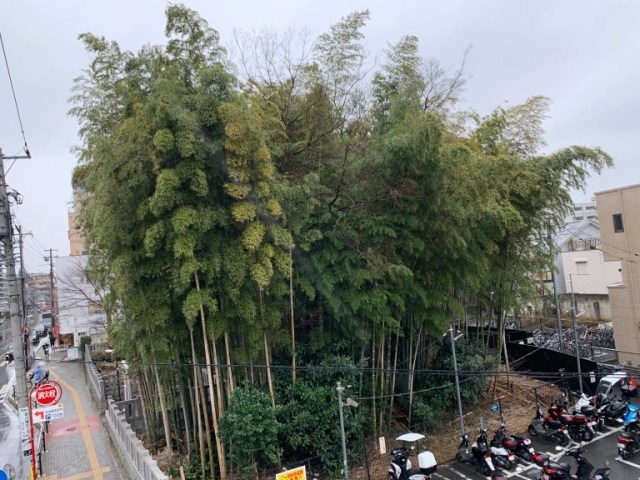
Ichikawa is a fairly large and developed city in Chiba Prefecture. less than half an hour from downtown Tokyo and with a population of nearly 500,000 people. So when you come across this, it really sticks out.
That’s Yawata no Yabushirazu, a leftover clump of forest right in the middle of an otherwise thoroughly modernized part of town. But more so than the jarring shift in the urban landscape, what makes Yawata no Yabushirazu famous is that folktales say it’s a forbidden place, and should you set foot inside the grove, you’ll never return.
So naturally we decided to visit.
How did Yawata no Yabushirazu get its reputation as a kinsokuchi, as such mysterious lands with a do-not-enter legend are called in Japanese? No one is quite sure. The most prevalent theory is that the grove has a connection to Taira no Masakado. A samurai warlord who ruled the area in the 10th century, Masakado led a bloody rebellion against the emperor, seizing control of a section of east Japan before he was killed by his cousin Sadamori in the year 940.
▼ Though, to be fair, Masakado (seen here) had already started the familial bloodshed by killing his uncle/Sadamori’s father as part of his rebellion.
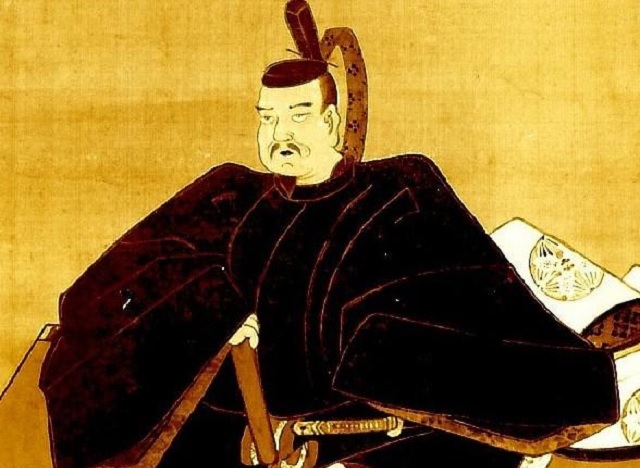
In the millennium since, Masakado’s status as Japan’s most vengeful ghost has only grown, and various rumors attest to Yawata no Yabushirazu being the site of Masakado’s death or where his true remains were buried. Other theories include the thicket being a graveyard for local nobles, and some even say that a depression in the middle of the grove seeps poison gas (though considering how close the thicket is to homes and businesses that haven’t reported any such health issues, this one seems unlikely).
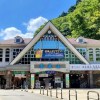
But while the legends say that you’ll be spirited away and never return if you enter the forest, getting to Yawata no Yabushirazu is a pretty simple matter, as it’s just three minutes’ walk from Moto-Yawata Station on the Chuo-Sobu and Toei Shinjuku Lines.
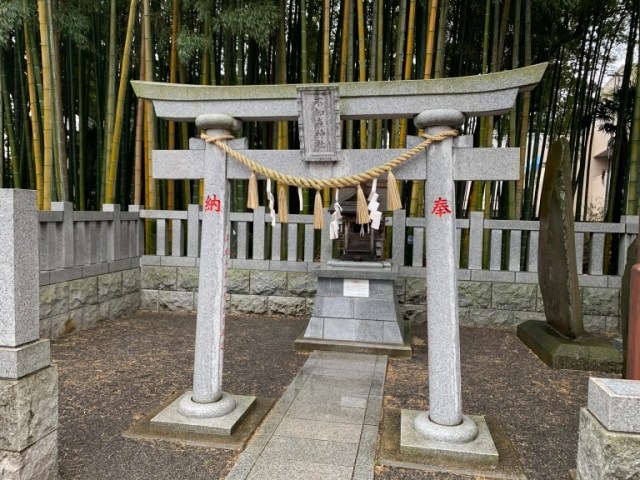
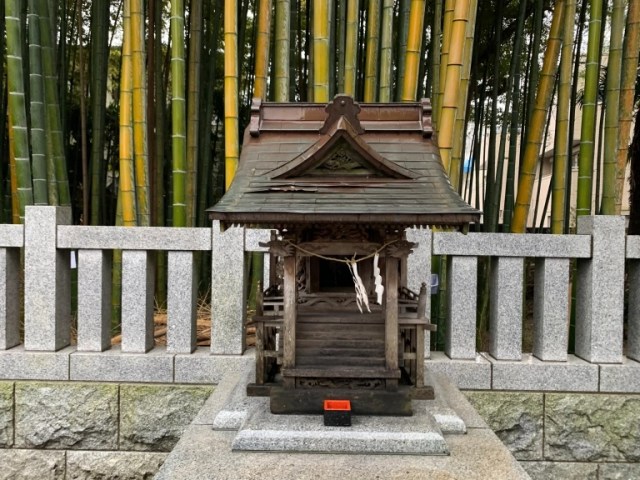
While there’s no shrine building on the premises, there is a stone torii gate on the premises, and beyond it a sort of altar/miniature shrine called a hokora. We stopped here to say a prayer, and to peer into the trees.
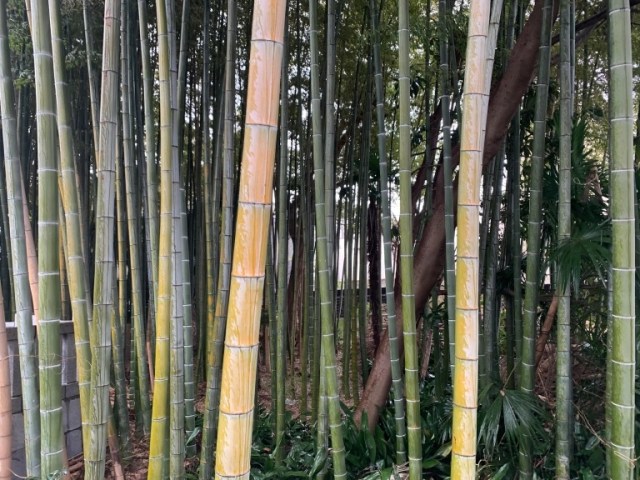
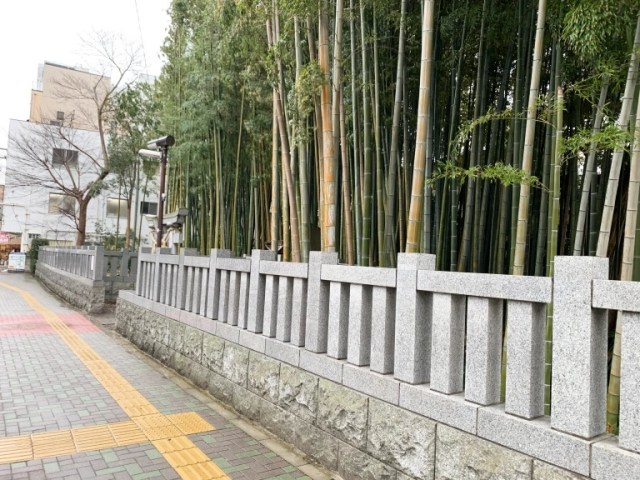
However, we weren’t able to test the theory that entering the forest is the last that anyone will ever see of you. There’s a stone fence encircling it, a modern, non-mystical way of saying “keep out.” As we strolled around the perimeter, we came across a sign from the community historical society which recounted many of the theories we’d already heard, but also mentioned one possible explanation we hadn’t known about.
Not far from Yawata no Yabushirazu is Katsushika Hachimangu Shrine. It’s said that the shrine used to observe a practice called hojoe, in which fish were released into a pond at regular intervals as a way to give thanks to the creatures’ brethren that were eaten, providing sustenance for humans at the cost of their lives. Naturally, it wouldn’t be much a show of gratitude if the fish released as part of the hojoe were then caught and eaten by fishermen. So the shrine’s priests told villagers to stay away from the pond, which was located inside Yawata no Yabushirazu, and this imposing aura remained even after the pond dried up and the ceremonies stopped being held there. This theory would also explain why there’s a basin at the center of the thicket, making it the spot where the pond used to be. It also fits with traditional Japanese culture’s reverence for the lives that humans consume as part of their position at the top of the food chain.
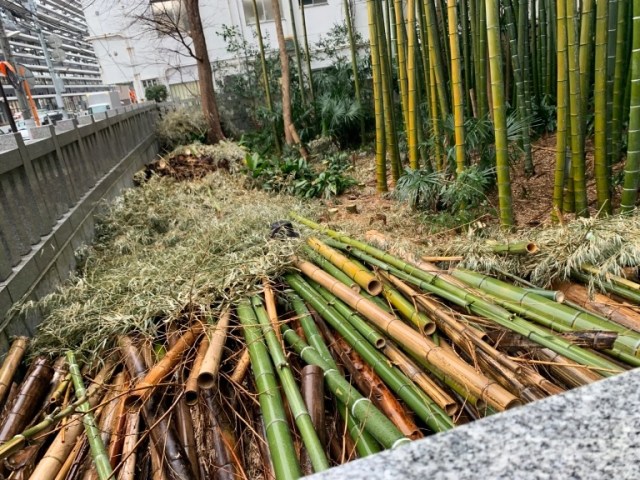
▼ We also spotted evidence of landscaping work done by maintenance crews…although we didn’t see any of the gardeners themselves, so we can’t confirm that they weren’t spirited away during their shift.
With no definitive answer as to how Yawata no Yabushirazu became known as a forbidden place, it’s really up to individual visitors to decide which story makes the most sense to them. Still, it’s a reminder that even as Japan modernizes, its past is still usually just a very short walk away.
Photos ©SoraNews24
Taira no Masakado image: Wikipedia/ロロ~commonswik
● Want to hear about SoraNews24’s latest articles as soon as they’re published? Follow us on Facebook and Twitter!
[ Read in Japanese ]