Legends say Sai no Kawara exists on the border between the realms of the living and the dead, but the map says it’s in Tottori.
Our Japanese-language reporter Ikuna Kamezawa was born and grew up in Tottori Prefecture, so it’s a part of the country she’s very familiar with. And yet, until recently, Ikuna had no idea that Sai no Kawara, the river of the dead, is in Tottori.
First, a little cultural background. According to Japanese Buddhist tradition, Sai no Kawara is a river/riverbank that divides the worlds of the living and the dead. It’s sort of like Greek mythology’s River Styx, but Sai no Kawara is especially associated with the souls of children who die before their parents. On the riverbank, the souls of the children gather and are tasked with building stone stupa towers to earn salvation, but demons regularly come to knock the structures down before they can be completed, and the children can only persevere with the merciful help of the Jizo Bodhisattva.
Ikuna can’t recall having ever seeing any of those things during her days in Tottori, but when an acquaintance told her that Sai no Kawara is in her home prefecture, she was intrigued. So Ikuna whipped out her phone and fired up the map app, and sure enough, there it was in the town of Daisen, Sai no Kawara.
▼ 賽の河原 = Sai no Kawara
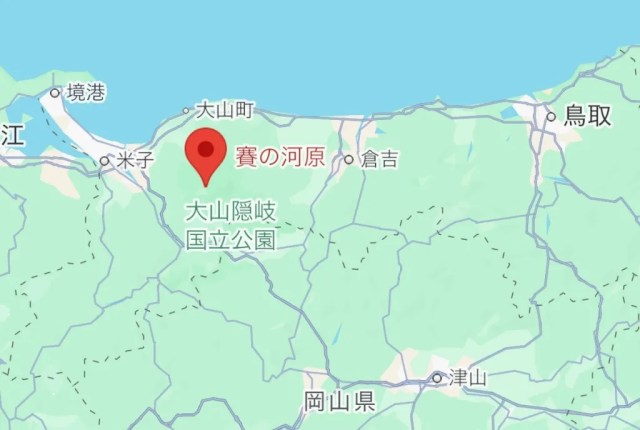
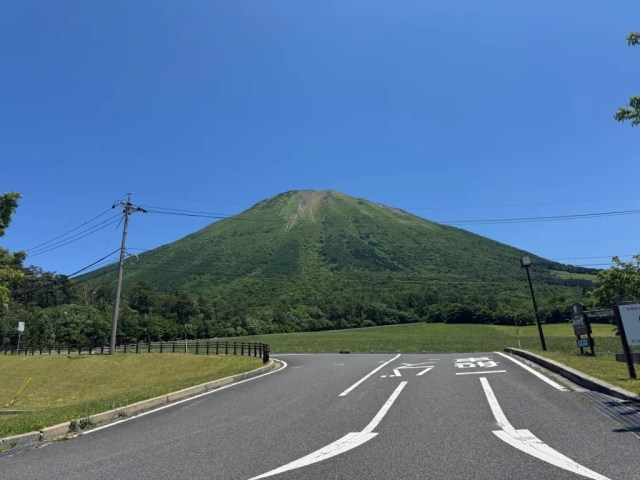
But this only made Ikuna more confused. Daisen is where you’ll find Mt. Daisen, the tallest mountain in west Japan. Ikuna has hiked the mountain and also visited the town at its base multiple times, and never knew the river of the dead was in the area until now.
So Ikuna knew what she had to do: go back to Tottori and investigate.
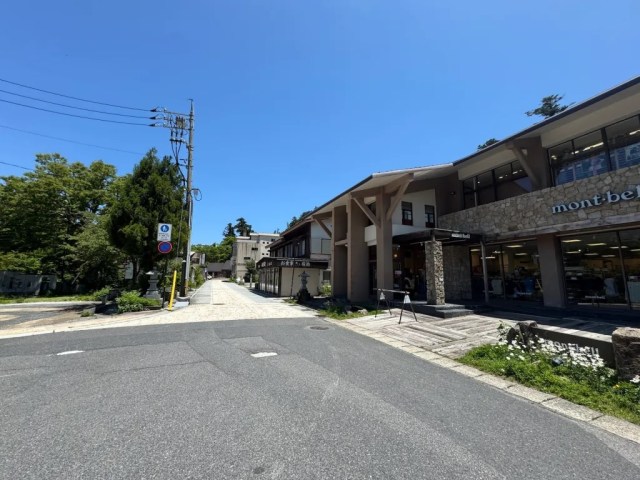
You can drive partway up Mt. Daisen, and the part near Daisenji Temple is a popular sightseeing spot. But since the map showed Sai no Kawara isn’t on the drivable street network, Ikuna was going to have to go the rest of the way on foot.
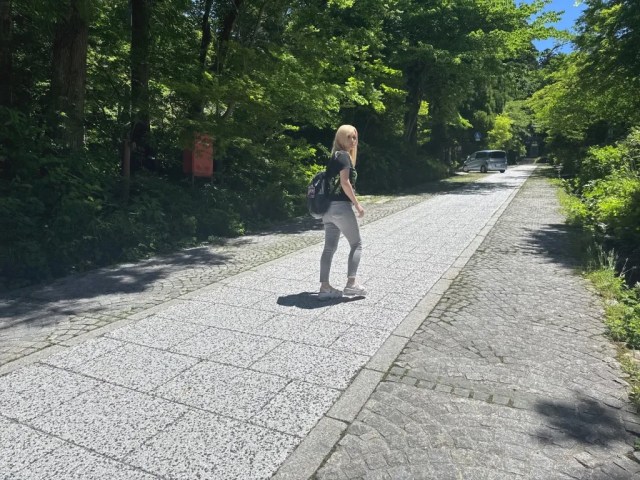
The path started out easy enough, but as she got farther away from the town, the smooth walkway began to get bumpier, and the path started a steady incline.
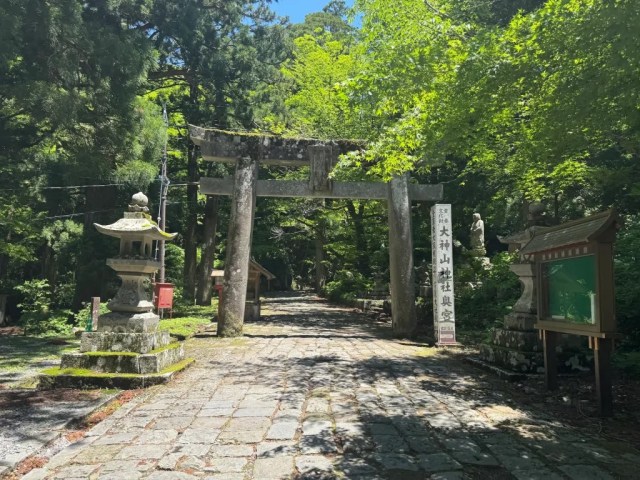
Eventually the road turned into cobblestones, and then irregularly shaped rocks which had Ikuna wishing she’d chosen more outdoorsy footwear than a pair of stylish sandals.
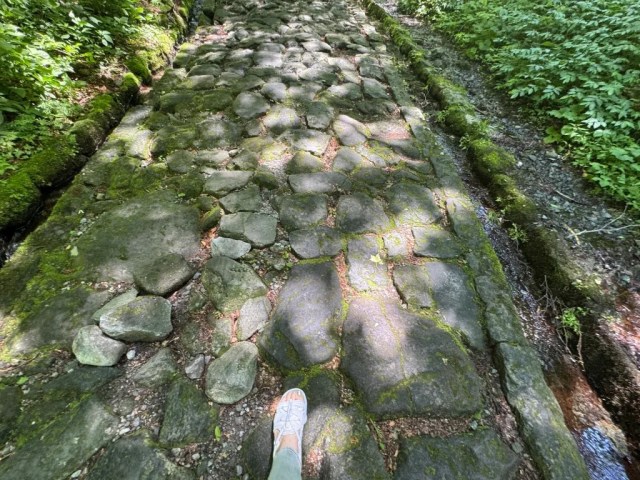
On the other hand, the scenery was beautiful. Though she was ostensibly headed towards the river of the dead, she was surrounded by lush plant life, with the trees’ leaves a bright shade of green in the early summer sunlight.
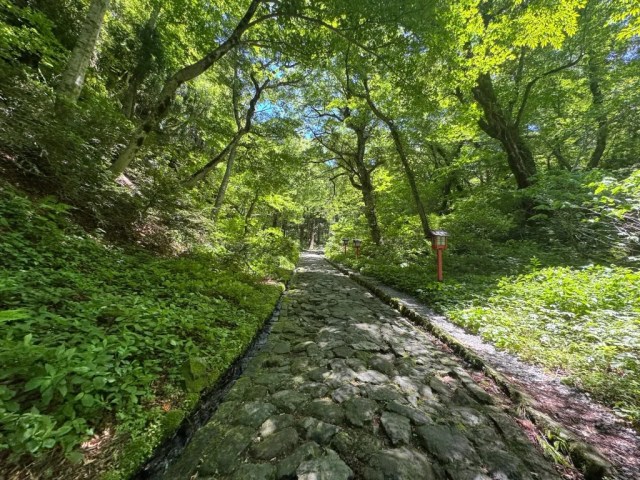
But while she saw plenty of picturesque forestland, Ikuna hadn’t seen a river, so she stopped to check the map once again, only to find that she’d apparently already passed Sai no Kawara.
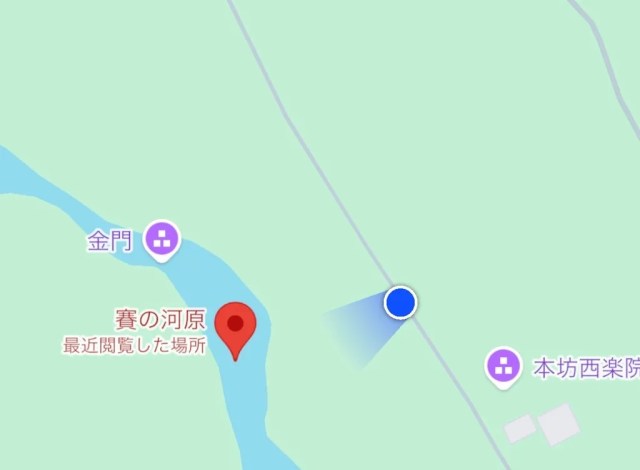
Spinning around and heading back in the direction she’d come from, Ikuna kept an eye out for any sort of indicator of where she was supposed to turn off to get to Sai no Kawara, but she never saw one.
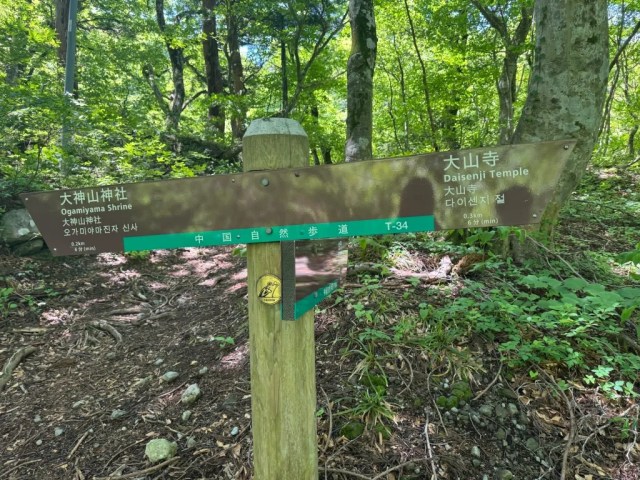
However, when she got to this sign, located about six minutes on foot from Daisenji Temple and roughly halfway between it and Ogamiyama Shrine, her map app said she was very close to the river, and now she noticed something she hadn’t when she’d passed by here before. There was a trail leading off from the main path.
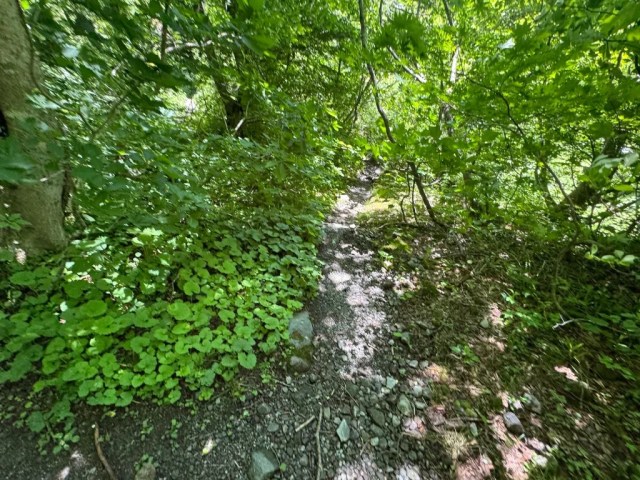
Now Ikuna really wished she’d worn hiking boots, or at least sneakers. With each step, she could feel buzzing bugs, sticky spider webs, or scratchy underbrush on her exposed toes. But still, she bravely pushed onward, and soon she could hear the sound of running water, telling her that she was getting closer to her destination.

And Ikuna’s courage and determination were rewarded when she passed through the last line of trees…
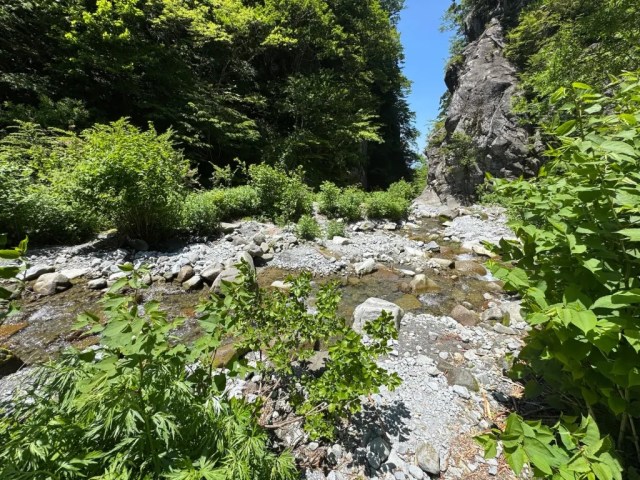
…and arrived at Sai no Kawara!
With Ikuna’s reserves of bravery already depleted, she was glad to see there were no ghosts of demons here, just some lovely, tranquil scenery.
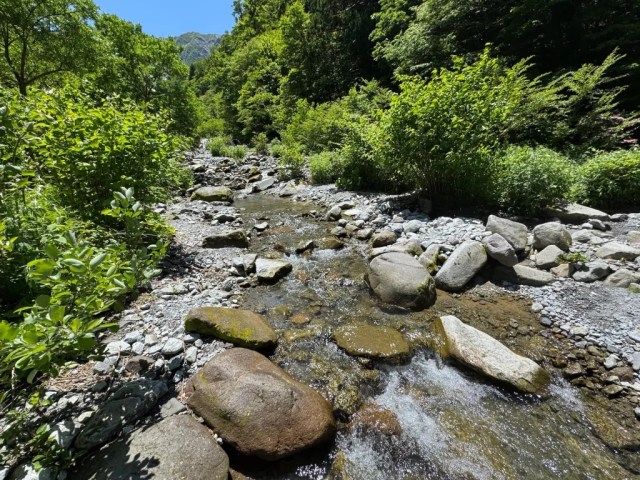
And yet, this really is Sai no Kawara. There’s even a sign marking it as such.
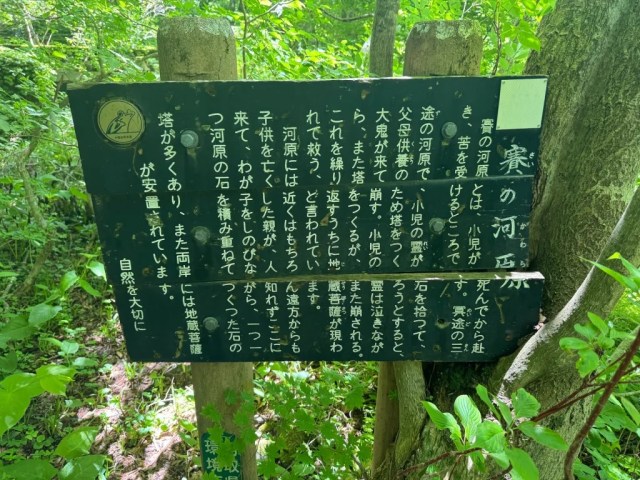
So how did this place come to be known by that name? At some point in the region’s history, it became a custom for parents whose children had passed away to visit this river. As mentioned above, at the Sai no Kawara in the realm of the dead, the children’s efforts to construct stupas are constantly undermined by demos, so here in the world of the living, parents who came to this shoreline in Daisen would make stacks of stones for their children’s sake, in hopes of providing them with comfort in the afterlife.

It’s a tradition that carries on to this day, and Ikuna did indeed see stacks of stones along the river, though she decided not to photograph them. However, visitors aren’t discouraged from visiting this place, and Sai no Kawara has its own page on the official Mt. Daisen Tourism Guide website here, where it’s listed as a historical site.
Ikuna herself is fortunate enough to have never had to experience the sadness of losing a child, but seeing the stone stacks built by parents as a sign of love from parents to their children who’ve passed on left her with a deep sense of gratitude to her own mom and dad, and while her first thought after arriving back in town was to be happy that her toes were no longer at risk, her second was that she should give her parents a call and see how they’re doing.
Photos ©SoraNews24
● Want to hear about SoraNews24’s latest articles as soon as they’re published? Follow us on Facebook and Twitter!
[ Read in Japanese ]