
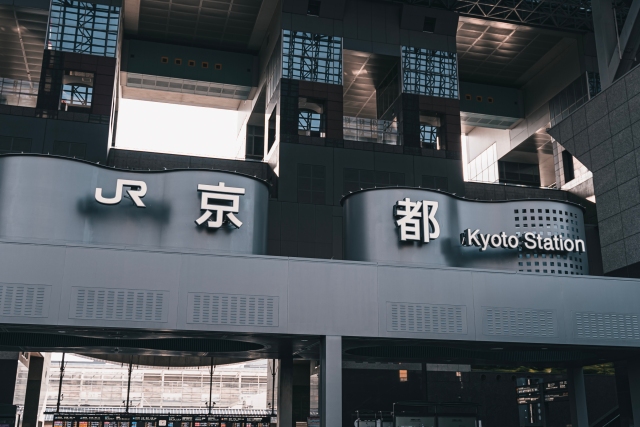
How true is the left-in-Tokyo, right-in-Kyoto standing rule?
There are plenty of differences that set the Kansai region, in and around Osaka, apart from the Kanto region, in and around Tokyo, and one of those differences is which side people stand on.
The difference in sides is most commonly seen when using escalators, with people in the Kansai area standing to the right and people in the Kanto area standing on the left. However, on a recent trip to Kyoto, our Tokyo-based reporter Egawa Tasuku found that this oft-spoken about standing etiquette isn’t as clear-cut as many assume it to be.
As soon as Egawa stepped off the train at Kyoto Station, he headed to the escalators, reminding himself to stand on the right when he got there, seeing as he was now in the Kansai region. However, when he glanced up at the line of people on the escalators, he found that…
▼ …they were all standing on the left, Tokyo-style.
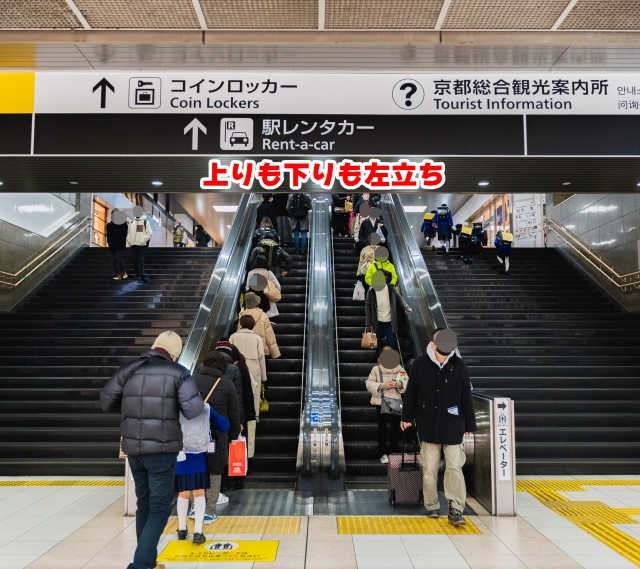
People on the ascent and descent were both standing to the left, which Egawa wasn’t expecting, so he just stepped in line and followed suit. But then, after only a few minutes, he decided to return to the same set of escalators, and that’s when he found something even more peculiar.
▼ People on the up-escalator were still standing to the left, but people on the down-escalator were now standing to the right.
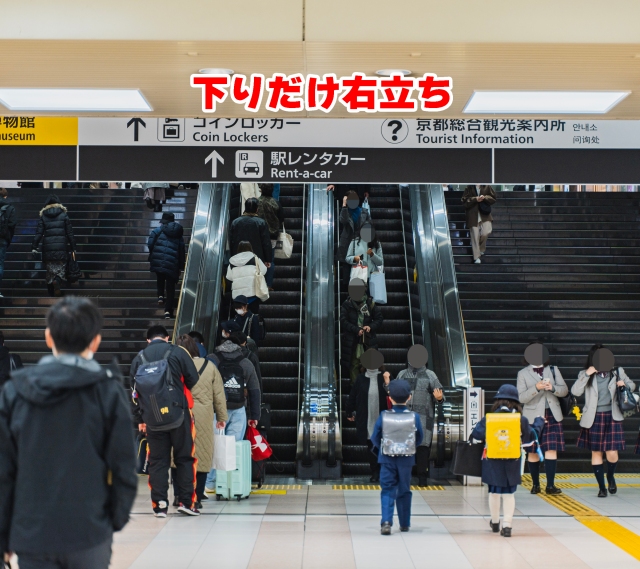
This was the first time in his life to see this type of standing arrangement, and making it even more bizarre was the ease with which it had changed in such a short amount of time. Nobody seemed fussed about it either, which made Egawa wonder if people in Kyoto were used to this fluid style.
Egawa continued his investigation, seeking out other escalators at the station, where he found that this one followed Kanto-style etiquette….
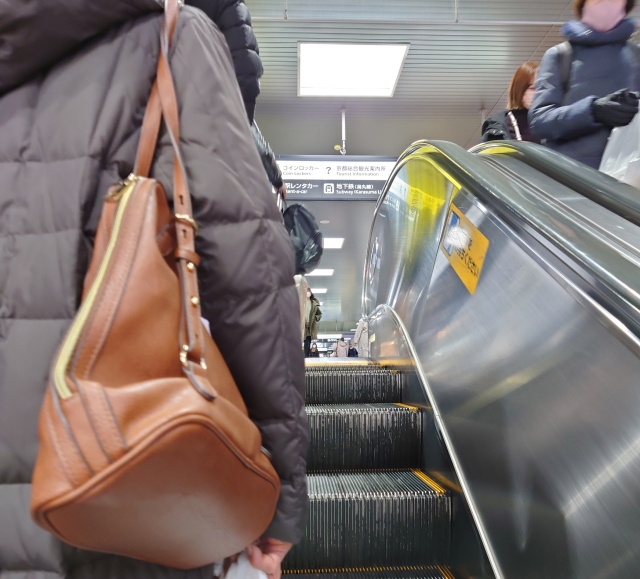
▼ …but this one close by conformed to the Kansai way of doing things.

As he travelled from floor to floor throughout the immediate area, he discovered that the escalator etiquette appeared to be a mix of east and west styles.

This certainly wasn’t what our Tokyo reporter had been expecting, as he’d grown up hearing the rules about standing to the right in the western region of Kansai. So when he got back to the office, he decided to ask his Kyoto-born colleague, Yuuichiro Waza, whether he’d noticed that the rules were actually more relaxed than rigid in his home city.

Yuuichiro, who, as the above photo shows, is generally more interested in the differences between steamed buns than the etiquette between Tokyo and Kyoto, said he’d never really paid much attention to what was happening on the escalators in his hometown.
However, after Egawa grilled him about it further, Yuuichiro gave the matter some more thought, and said:
“In Kyoto, like Osaka, there is the unwritten rule that you should stand on the right. However, Kyoto Station and Gion Shijo Station are frequented by a lot of tourists, so people from countries where it’s the norm to stand on the left will probably just naturally do that there.”
Egawa immediately piped up to challenge this point-of-view, saying that a lot of the people he’d seen standing on the left looked like locals, including young elementary school children, who obviously weren’t tourists.
Without missing a beat, Yuuichiro replied with:
“Kyoto people living in tourist areas may not know which side to stick to anymore because they’ve encountered so many people standing to the left. As a result, the culture of standing to the right may be gradually declining as left-standing culture infiltrates the area.”
Yuuichiro backed up his argument about rules being more relaxed in tourist areas by saying:
“In my hometown area of Kyoto, not a lot of tourists visit and almost 100-percent of people stand to the right.”
After chatting to Yuuichiro about it, Egawa realised that Kyoto Station and the surrounding downtown area is unlike a lot of other areas in Japan. It’s not just a place where traditional culture and architecture coincide with the modern — it’s a place where people from east and west Japan come into contact with each other frequently.
Because of that, it’s no wonder the culture and etiquette has become so mixed as well. While the region’s right-hand traditions still exist, it appears that locals will generally get in line behind the person in front of them, regardless of what side they’re standing on.
Egawa likes to respect and support local traditions, though, so he told Yuuichiro he would try his best to stand on the right when possible next time he visits the area, in the hopes that people will follow suit behind him. And he’ll remember another rule of etiquette that applies to escalators all around Japan — that walking up them is becoming more taboo.
Images © SoraNews24
● Want to hear about SoraNews24’s latest articles as soon as they’re published? Follow us on Facebook and Twitter!
[ Read in Japanese ]