

Kiryu seems like the kind of guy who should know that effort is never meaningless, and this time is no exception.
Kazuma Kiryu is the primary protagonist of Sega’s Like a Dragon video game franchise, which previously was known as Yakuza in English-speaking territories. As such, when we first meet Kiryu, he’s part of a criminal organization, and even when he’s not he an official member, he spends much of the series lending his strength to one faction of gangsters or another.
But as fans will be quick to point out, Kiryu’s role as a quasi-mobster is mainly a device by which to easily insert the character into dramatic, action-packed adventures where he can do things the police wouldn’t be allowed to, like, for instance, beat up a mugger and roast the would-be robber’s head in a microwave. Kiryu himself is never motivated by a lust for power or hunger for wealth, and if you’re completing all the optional side missions, he’ll actually spend as much time helping random people with everyday problems as he will doing yakuza stuff. He’ll dress up as a mascot character to help promote local tourism, provide a home for stray cats, and try to overcome the language barrier to help a foreign resident who may or may not be in desperate need of a pizza.
And speaking of language barriers, Kiryu is now helping language-learners in the real world, thanks to the official Ryu ga Gotoku/Like a Dragon Twitter account’s “Like a Dragon English Conversation That You Absolutely Will Never Use” lesson.
The lesson deals with the word chikau, which means “to swear,” in the sense of swearing that something is true. Taking a line from Yakuza 0, the tweet shows Kiryu saying “I swear to you that I didn’t kill that man.”
Now, while the intended target audience is native speakers of Japanese looking to pick up a new English phrase, with a little reverse engineering we can use this to learn some Japanese too. To start with, the whole sentence, “I swear to you that I didn’t kill that man,” becomes “Ore wa chikatte koroshi wa yattemasen,” but there’s a bit of a caveat here, which is that the Japanese rendering of the line doesn’t actually include “that man” since it was inferable from the context of the conversation before Kiryu declared his innocence. So before we go deeper, let’s add that in explicitly, which gives us:
Ore wa chikatte ano otoko wo koroshi wa yattemasen.
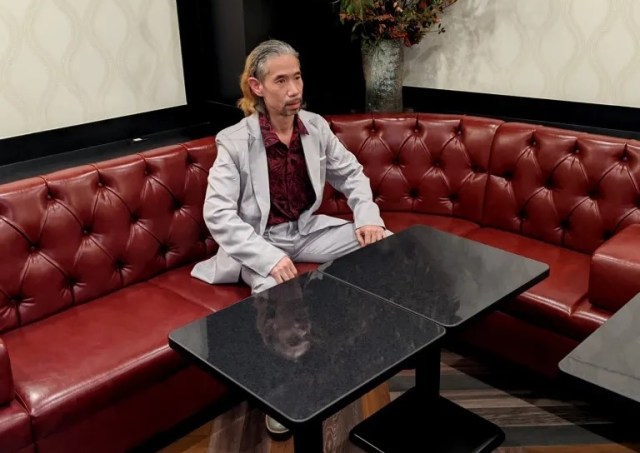
▼ Also, for the record, even when cosplaying as Kiryu, our ace reporter Mr. Sato didn’t kill that man either.


However, much like “I swear to you that I didn’t kill that man,” is a phrase you’ll probably never have occasion to say in English, odds are you won’t ever need to actually tell someone “Ore wa chikatte ano otoko wo koroshi wa yattemasen.” But if we take a minute and figure out how those pieces fit together, maybe we can swap in something a little more useful for those of us not living the yakuza life.
● Ore wa = I
We start off with ore, which means “I.” However, one unique quirk of Japanese grammar is that you have to verbally mark the subject, which we do here with wa.
● chikatte = swear
Ore wa chikatte…
Like we mentioned above, chikau means “swear.” However, since it’s being used in this sentence as a sort of helper verb, it takes on a different form, chikatte
● ano otoko wo = that man
Ore wa chikatte ano otoko wo…
We’ve got two Japanese grammar points to discus here. First, unlike in English, where the object comes after a verb, in Japanese the object usually comes before the verb, so we’re going to need to say ano otoko, “that man,” before we get to the killing part. Also, sort of like how the subject has to be designated with wa, the object has to be verbally marked with wo, which is pronounced like a long-vowel O.
● koroshi wa = killing
Ore wa chikatte ano otoko wo koroshi…
The standard form of the word for “kill” is korosu, but Kiryu is making a dramatic, and emphatic, statement here. Koroshi is the noun form of korosu, and by slowing down the pace of the sentence just a bit, it’s going to help give Kiryu’s words some extra gravitas.
● yattemasen = did not do
Ore wa chikatte ano otoko wo koroshi wa yattemasen.
Since we changed the verb korosu into the noun koroshi, Kiryu has to cap off the sentence with a statement about whether he did, or did not, do the killing, and he does that with yattemasen. Translated literally, yattemasen is a present-tense verb meaning “am not doing,” but this verb conjugation can also be used in situations where there’s some unsettled doubt as to whether or not a person has done something. Ah, and if you’re thinking that we should have used koroshi wo yattemasen instead of koroshi wa yattemasen, since wo is supposed to mark the object of a verb, that would be the usual rule, but Kiryu is making an allowable exception here, once again to give his words more weight, with a tone akin to “As for the killing of that man, I swear that I wasn’t the one who did it.”
▼ And, we repeat, it wasn’t Mr. Sato either.

OK, so now that we’ve gone through the building blocks of “I swear I did not kill that man,” can we use that knowledge to make a sentence that’s more likely to be useful in daily life? Let’s start by smoothing down some of the dramatic edginess.
● Watashi wa ano otoko wo koroshiteimasen.
I did not kill that man.
We’ve made a couple of changes here. First, while ore does mean “I,” it has a macho, arguably rough tone to it, depending on the atmosphere and topic of conversation, so we’ve swapped in watashi, the most general-purpose way of saying “I” in Japanese. We’ve also dropped chikatte/“swear” and simplified the verb down to a more straightforward way of saying “did not kill,” koroshiteimasen.
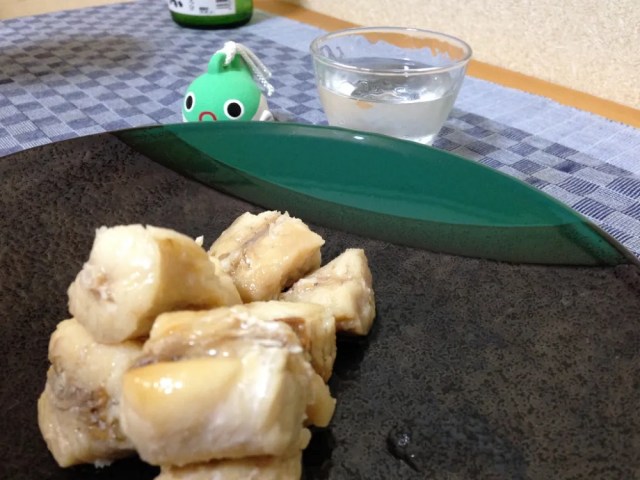
I’m going to go out on a limb here and assume that during your time in Japan, you probably won’t be accused of killing anyone, but now that we’ve got a framework for making “I did not/have not ~” sentences, let’s try plugging in some other vocabulary. For instance, if you want to tell someone you’ve haven’t eaten (tabeteimasen) blowfish (fugu) while on your trip in Japan, you could say:
Watashi wa fugu wo tabeteimasen.
Or if you haven’t yet bought (katteimasen) those Catbus cookies (Nekobasu kukki) from Tokyo’s Ghibli-themed bakery?
Watashi wa Nekobasu kukki wo katteimasen.
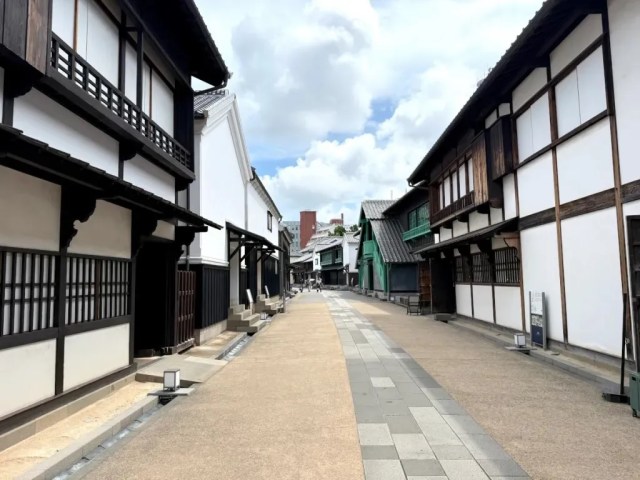
And once you know that ni means “to,” you can explain that you haven’t gone (itteimasen) to Dejima, the only place foreigners were allowed to live in Japan for a period of about 200 years.
Watashi wa Dejima ni itteimasen.
The Like a Dragon English Conversation That You Absolutely Will Never Use tweet is labeled with a number 1, signaling that there are more non-usable phrases to come. Just remember, though, that even if you’re never going to repeat Kiryu’s dialogue verbatim, knowing why he says the words he does can help you find the right ones for you.
…
Ah, I just realized we didn’t go over the “to you” and “that” parts of “I swear to you that I didn’t kill that man!” In sentences like these in Japanese, there’s no direct equivalent to “that,” since it can be understood from context. As for “to you,” that’s anata ni, but again, it’s understood from context, so there’s no need to explicitly state it. We could go into more detail about that, but we should probably wrap this up before I talk your ears off about Japanese linguistics.
…
Oh, and speaking of ears, did you know that there’s a Japanese phrase, mimi ni tako ga dekiru, which means “to get callouses in your ears,” that you use when someone keeps repeating the same thing to you over and over? And since the Japanese words for “callouses” and “octopus” are homonyms, there’s a pun that they turned into a fashion accessory, and then, you see…
Source: Twitter/@ryugagotoku via Hachima Kiko
Photos ©SoraNews24
● Want to hear about SoraNews24’s latest articles as soon as they’re published? Follow us on Facebook and Twitter!
Follow Casey on Twitter, where he just might be into this whole linguistics thing.