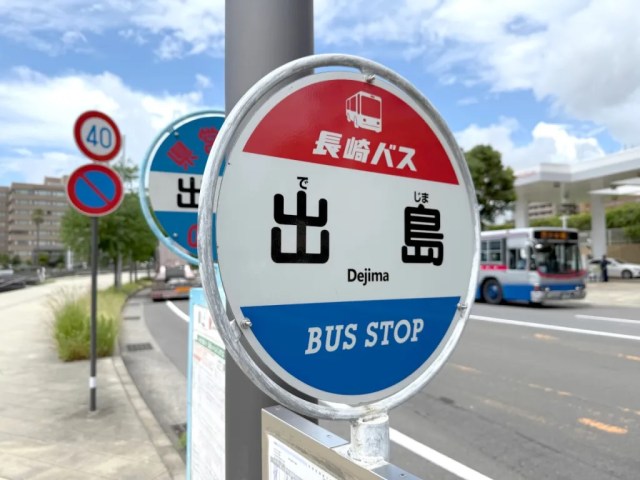
Designed to let foreign goods in while keeping foreign ideas out, this Nagasaki neighborhood is one of the most historically significant places in Japan.
The feudal government of Japan had a dilemma in the early 1600s. Contact with European traders during the recently ended Sengoku period of civil war had shown just how far behind the West Japan was slipping in terms of science, technology, and commerce in general, so it wanted to continue having access to goods and knowledge from the outside world. At the same time, there were concerns that foreign influences, particularly the introduction of foreign religions, could erode the power of the Shogunate, having seen such incidents as when samurai warlord Omura Sumitada converted to Christianity and announced his intent to cede Nagasaki to Jesuit missionaries.
So to keep trade flowing while limiting the unwanted impact of foreign thoughts and ideas, the Shogunate came up with the idea of Dejima, a man-made island in Nagasaki City where Dutch traders would be allowed to live, and would also be strictly confined. Dejima contained living quarters and work facilities, but its foreign residents were prohibited from traveling anywhere else in Japan, as official decrees by the Shogunate forbade anyone leaving or entering the country from any other ports. Dejima’s initial construction was completed in 1636, and it remained the only place where people from the West, limited to Dutch traders, were permitted to live in Japan for the next 200-plus years until Japan finally reopened its borders as part of the governmental reforms and modernizations of the Meiji Restoration.

Today, Dejima is, of course, no longer a foreign containment settlement, but has instead become a historical district of preserved, restored, and reconstructed buildings, as well as a museum telling the tale of the community. Since the island originally served as a trading outpost, it’s located very close to the city center, less than a 10-minute taxi ride from Nagasaki Station, or about 20 minutes on foot, if you’re up for a stroll along the waterfront to get there.
▼ Walking route from Nagasaki Station to Dejima

Our Japanese-language reporter P.K. Sanjun recently paid a visit to Dejima for the first time. After crossing the bridge that stretches across the canal and paying the 520-yen (US$3.50) admission fee, he began walking the streets of Dejima, which has 20 buildings.


The wooden structures are primarily restorations and reconstructions of Edo-period structures from the mid-1800s, such as residences for ship captains, warehouses, and clerks’ quarters. There’s an interesting mix of architectural styles, as the designs are mostly similar to other Japanese buildings of the day, but certain aspects, like the glass windows on the second floor of the head clerks’ quarters in the pictures below, wouldn’t have been seen on the homes of Japanese people.

Photo: Dejima official website

Photo: Dejima official website
Likewise, stone and brick structures, like this restored warehouse from the 1860s, wouldn’t become commonplace in the rest of Japan until decades later.


▼ Traditional Japanese warehouses of the Edo period looked closer to these, which are also among Dejima’s restored buildings.

Photo: Dejima official website

Photo: Dejima official website
As mentioned above, once foreign traders arrived at Dejima, they were confined to the island until they sailed home. Because of that, while Dejima was primarily a working environment, there were still cultural and social functions held within the community, and one of the many buildings that visitors can go inside of includes a banquet hall, once again showing a mix of aesthetics by placing Western-style chairs and a table atop tatami reed flooring mats.

However, while the historical significance of Dejima is immense, the place itself is startlingly compact. Talking with the staff at the museum, P.K. learned that Dejima’s surface area is only about 4.7 hectares (a little under 506,000 square feet), or, to use a unit of measurement that might be easier to visualize, only about 1/3 the size of the Tokyo Dome baseball stadium.

Looking at the museum’s displays chronicling how traders made the voyage to Dejima, their last ports of call before arriving in Nagasaki were usually in Indonesia, and traveling by sail-powered vessels meant the trip usually took six weeks. After spending that much time cooped up on ship, P.K. couldn’t help feeling that then spending months, or years, restricted to Dejima’s confines must have felt suffocating to some of them. “Yes, it was definitely a very small area that they were restricted to,” one of the museum’s historians replied when P.K. brought up the subject. “The small size of Dejima shows how huge the Edo shogunate’s fear of Christianity was.”
In time, though, the shogunate’s grip on the country began to loosen, in no small part due to a growing sentiment that centuries of isolationist policies had not only impeded progress, but had created such a gap between Japan and the rest of the world that the country would be unable to defend itself against external threats. By the end of the 1800s, the shogunate would be abolished, and in 1866 Dejima was folded into Nagasaki’s much expanded foreign settlement area, which would itself eventually be dissolved due to officially enforced zoning laws.

Despite being established as a way to isolate disruptive foreign thoughts from the rest of the country, today Dejima is widely considered to have been not just an entry point for trade goods, but an important source of knowledge on subjects such as science and medicine that still managed to trickle out, bettering the lives of people of all classes in Japan, helping it make strides to becoming the modern, stable society it is today.
Related: Dejima official website
Photos ©SoraNews24 unless otherwise noted
● Want to hear about SoraNews24’s latest articles as soon as they’re published? Follow us on Facebook and Twitter!
[ Read in Japanese ]