
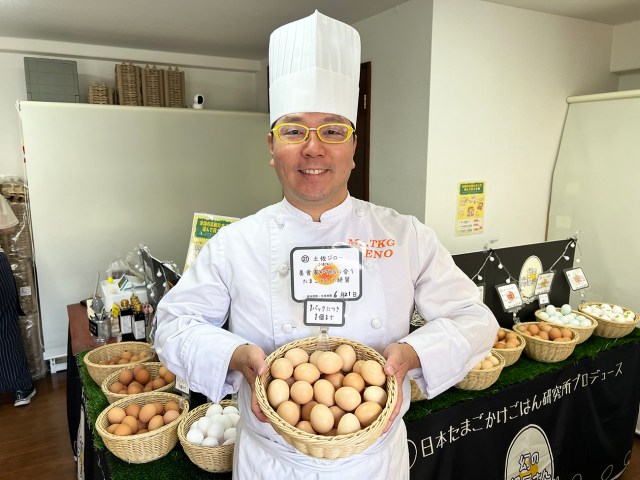
In-house expert Mr. TKG gives us his top three egg recommendations.
When people in Japan with niche interests hone in and get serious about something, they get really serious. Case in point is a new store that recently opened in Komagome in Tokyo’s Bunkyo Ward, which specialises in Japanese eggs. These aren’t just any eggs, but rare varieties you won’t find in regular supermarkets, and the hard-to-encounter nature of them is reflected in the store name: Gen no Tamagoya San, which translates as “Phantom Egg Shop”.
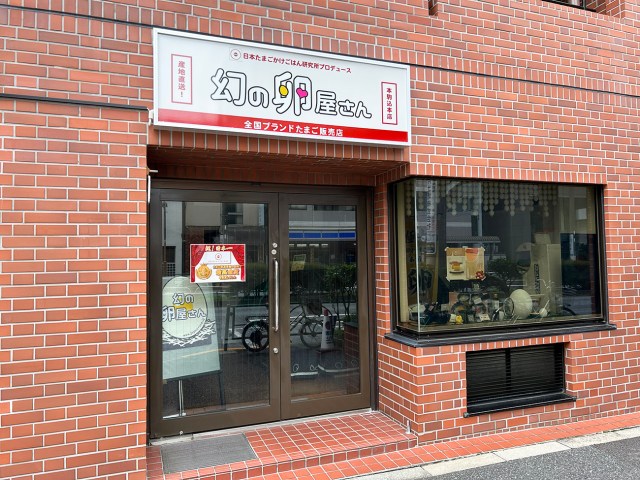
Our reporter Mr Sato stumbled upon the store by chance on 13 June, which happened to be the day it opened, and when he stepped inside, staff told him he was their very first customer. Feeling a sense of joy at this unexpected achievement, Mr Sato decided right then and there that he would seek to find an egg that would elevate his love of tamago kake gohan, a popular raw-egg-cracked-over-rice dish that goes by the colloquial name of “TKG”.
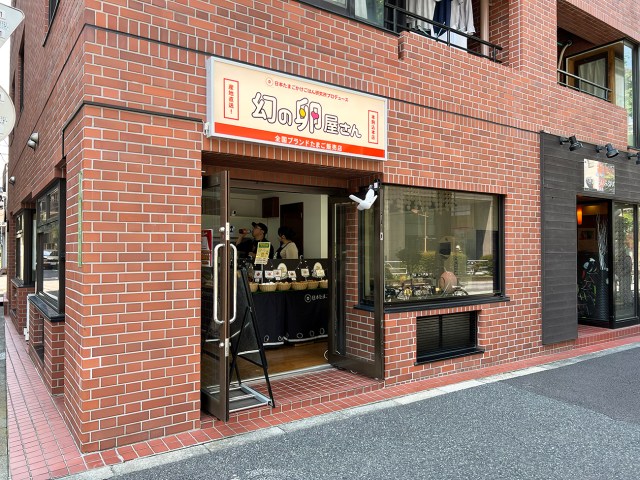
Luckily for him, the place is run by a man known as “Mr TKG”, and he was on hand to answer all of Mr Sato’s burning egg questions.
▼ Mr TKG, or Mr Ueno, is also the representative director of the Japan TKG Research Institute.


Mr Sato first asked if this was Mr TKG’s first permanent retail store, to which he answered: “Yes. We’ve been involved with shops as a wholesaler, but this is our first directly operated permanent store.”

Mr Sato: Why did you decide to open a directly operated permanent store?
Mr TKG: “These eggs aren’t widely available so online sales have been our main focus, but this store also acts as a base for our online shop. Of course, customers can also come in and purchase items in person.”
Mr Sato: After taking a quick look around, I noticed that all the eggs on display are varieties I’ve never seen before. You wouldn’t even find them in a department store food hall, let alone a supermarket.
Mr TKG: “Farmers are generally focused on production, and tend to sell locally. For example, they might supply ryokans or high-end restaurants in their region. Brand eggs are often distributed within this type of closed system.
However, during the COVID-19 pandemic, a lot of ryokans and similar businesses had to close so sales rapidly declined, and we started hearing cries of concern from farmers all over the country. That’s when we thought we should try to help bring high-quality eggs to a wider audience, and that’s how the ‘Phantom Egg Shop’ began. At present, around 130 different brand eggs are registered, with between 70 and 100 available at any one time.”
Mr Sato: Wow, that’s a lot! Is there a screening process involved?
Mr TKG: “Yes. We do turn applications down quite often, and we’re quite strict about the screening process. The eggs that make it into our store lineup are all carefully chosen.”
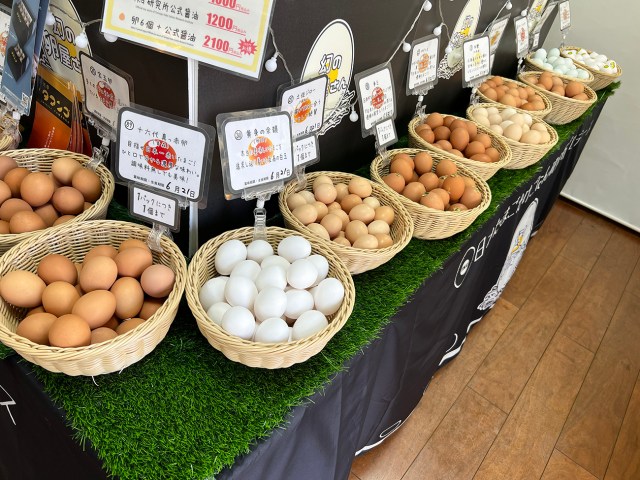
Mr Sato definitely got the impression that all the eggs here weren’t just rare varieties, but top-quality ones too. When he visited, there were 12 different types of eggs to choose from, with many being brand eggs that are usually hard to come across.
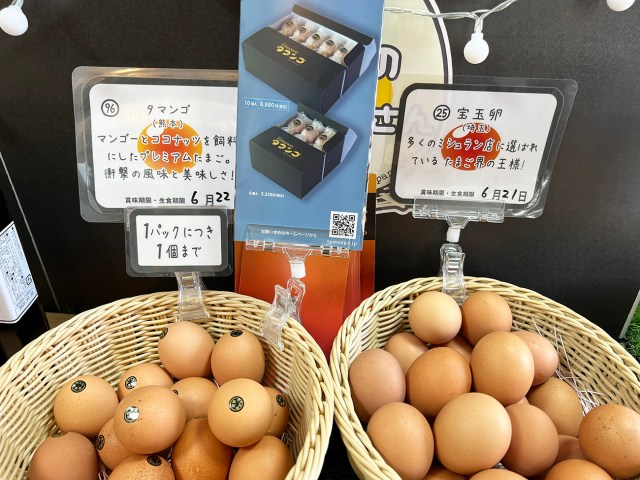
▼ There were a lot of eggs to see here, including one from Okinawa, which had a bluish tinge to its shell.

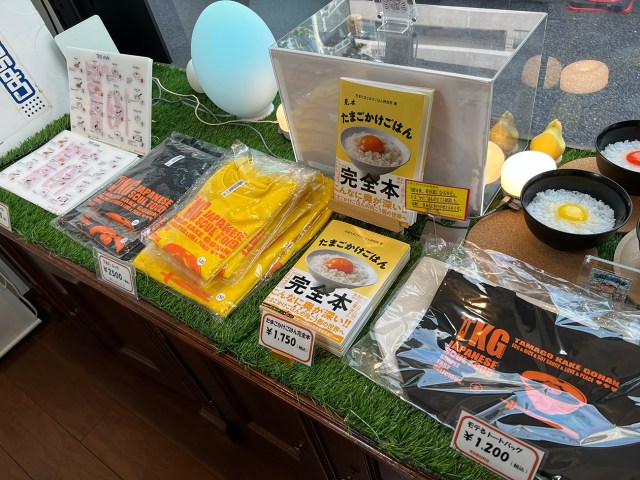
▼ The store also has a selection of merchandise, making it a must-visit for egg lovers.
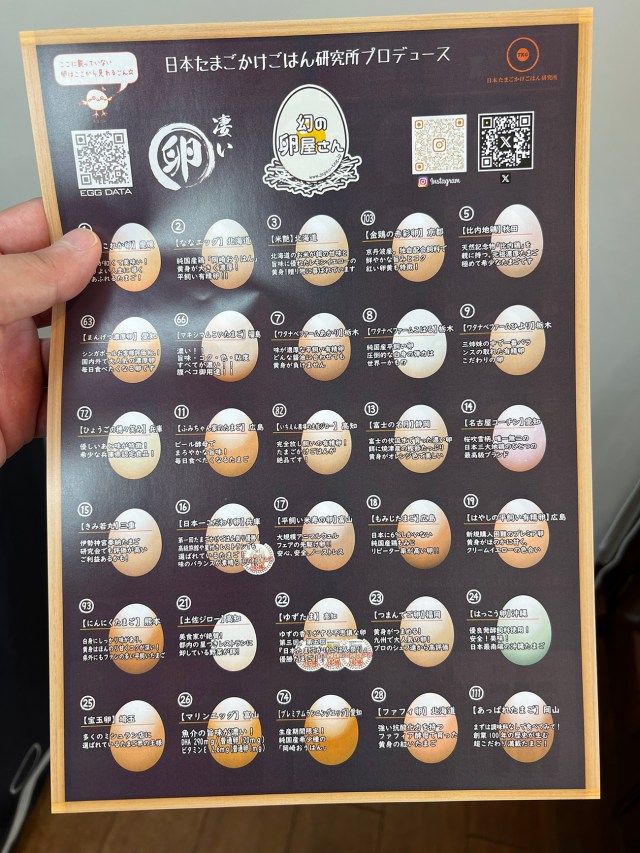
▼ Mr Sato received a pamphlet to help him make his choices, and although the store didn’t stock all these eggs at one time, he couldn’t believe how many special brand eggs exist in Japan.

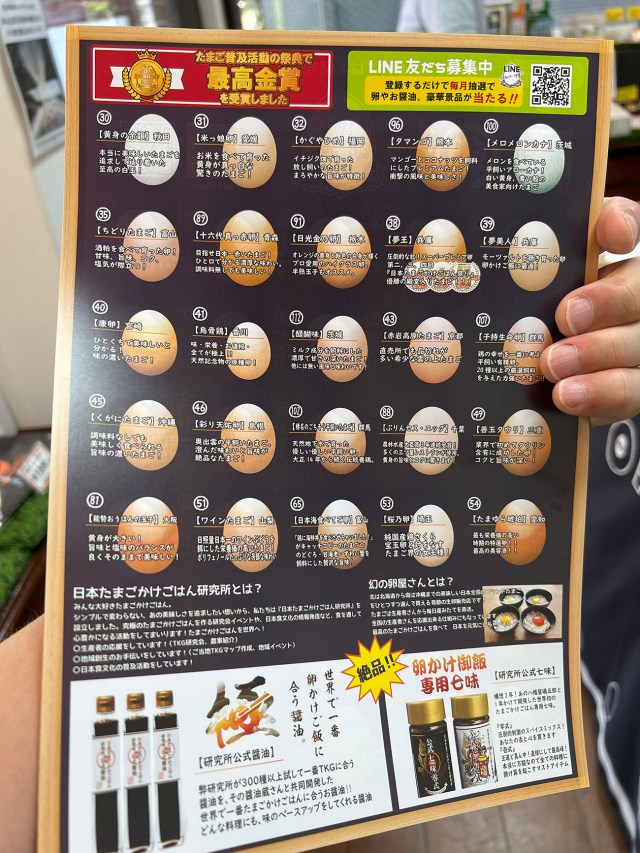
When Mr Sato asked Mr TKG for recommendations, he said that the most expensive egg currently available is Tamango, a premium egg from Kumamoto where the chickens are fed mango and coconut. Priced at 880 yen (US$5.46) per egg, this was even more expensive than the silkie chicken egg Mr Sato tried recently, which he thought was expensive at 756 yen per egg.
▼ Tamango on the left.
Mr TKG also recommended the “ultimate white egg”, Akita’s Kimi no Yoin, which is said to have been presented to the Imperial Household.
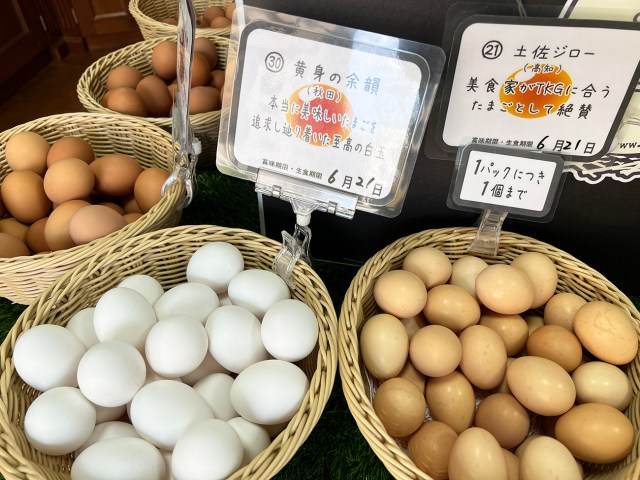
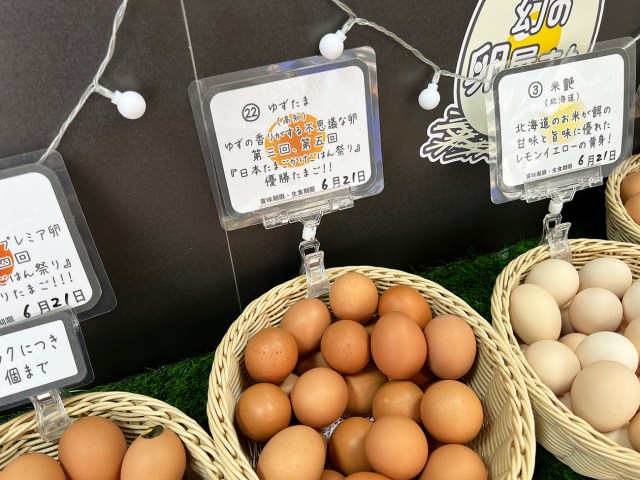
Mr TKG’s third recommendation was Yumeou, an egg that won the 2nd, 3rd, and 4th iterations of the “Japan TKG Festival”, earning it a place in the Hall of Fame. There were also plenty of others deserving of praise, such as Kochi’s Yuzutama, said to be popular among women for its citrusy yuzu aroma, and Kochi’s Tosa Jiro, highly praised by foodies as being perfect for TKG.
▼ Yuzutama in the middle basket.
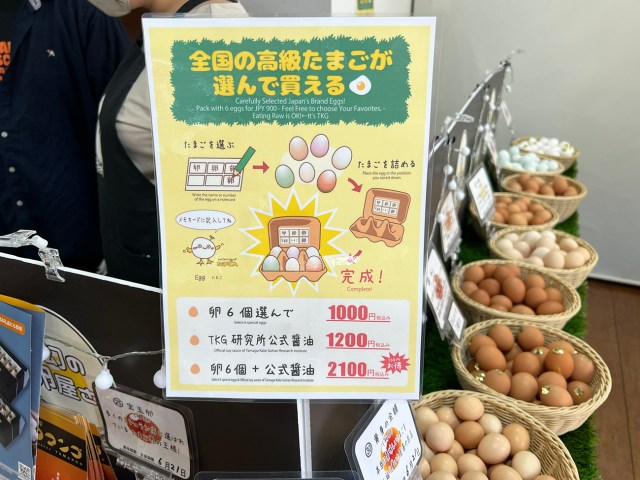
While these eggs would normally go for a high price per piece, the store has a fantastic deal that lets you purchase a carton of six of your favourites for just 1,000 yen.
▼ Simply fill out the ones you like on a card, then put them in the pack according to that order so you don’t mix them up at home, and then pay at the register.
▼ Mr Sato went home with (clockwise from top left): Tamango, Hougyokuran (from Saitama), Yumeou, Hakkou (from Okinawa), Kimi no Yoin, and Jurokudai Makka Tamago (“16th Generation Deep Red Egg” from Aomori).


This was a fantastic deal for just 1,000 yen, and as soon as he got home Mr Sato cracked into Mr TKG’s top three recommendations to see just how good they were.
▼ Tamango, the mango-coconut egg
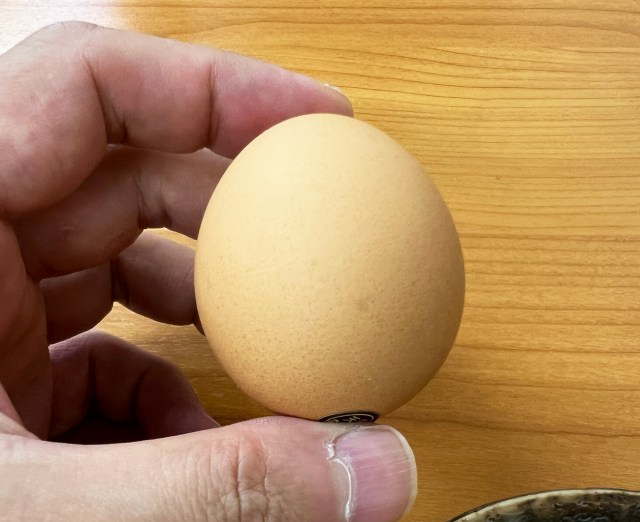

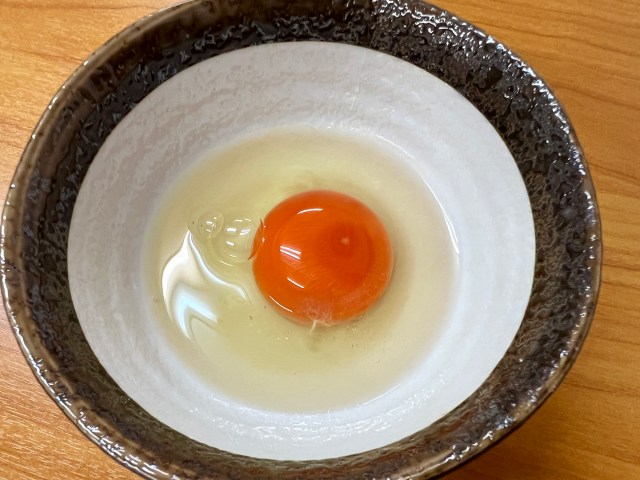
▼ Kimi no Yoin, with links to the Imperial Family
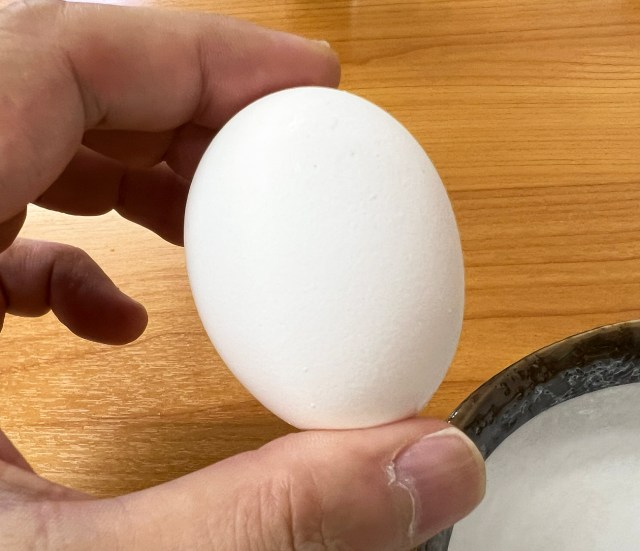

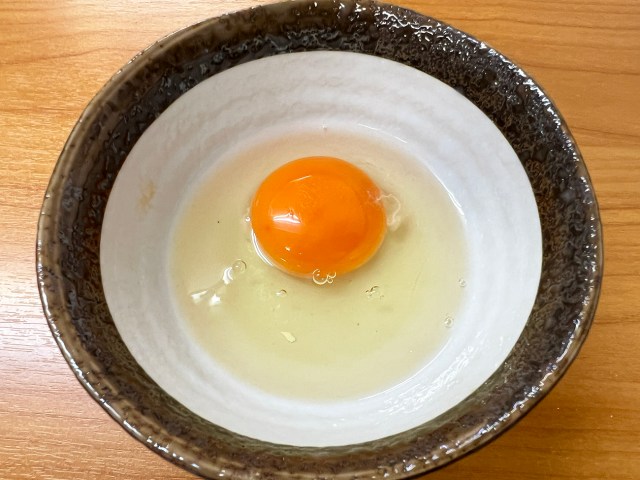
▼ Yumeou, the award-winning Hall of Fame recipient.


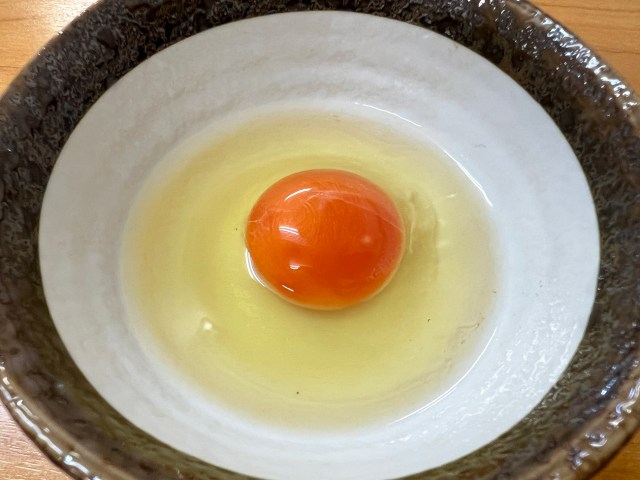
Tasting them side by side revealed some surprises, with the main difference being the texture after they had been mixed. The Tamango was rich and slightly thick, while Kimi no Yoin and Yumeou were much lighter and more fluid.

This difference also came through in the tamago kake gohan, affecting the overall mouthfeel. As someone who particularly loves the rich, mellow flavour of egg yolk, Mr Sato found the Kimi no Yoin to be especially delicious, with its pronounced depth of richness.
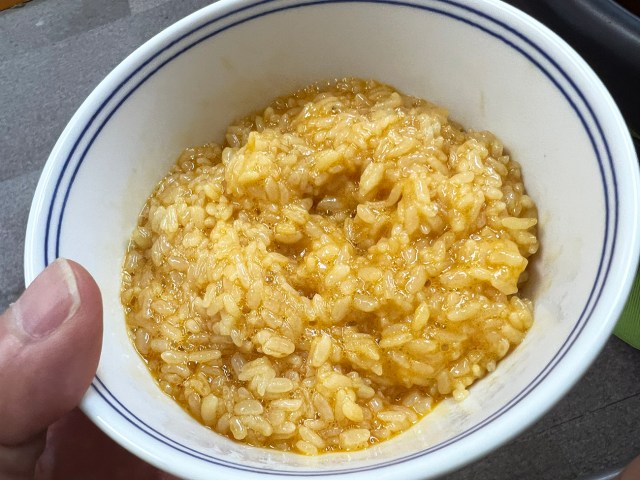
What surprised him most, however, was the consistency in quality. Though personal preferences may differ, for Mr Sato all these eggs were eclipsing a state of perfection, if such a thing exists, and he says you can’t go wrong with any of Mr TKG’s top three recommendations. While you can have your eggs any way you like, Mr Sato does recommend trying them raw over rice, and if you need tips on how to make the best TKG, then this guide will help you out.
Store information
Gen no Tamagoya Honkomagome Main Store / 幻の卵屋さん 本駒込本店
Address: Tokyo-to, Bunkyo-ku, Honkomagome 5-72-1
東京都文京区本駒込5-72-1
Open 2:00 p.m.-7:00 p.m.
Closed Mondays and Tuesdays
Photos ©SoraNews24
● Want to hear about SoraNews24’s latest articles as soon as they’re published? Follow us on Facebook and Twitter!
[ Read in Japanese ]