We find out if premium prices mean superior flavour.
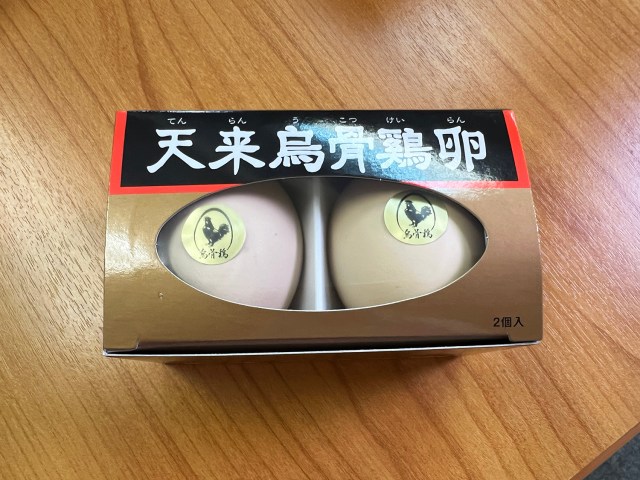
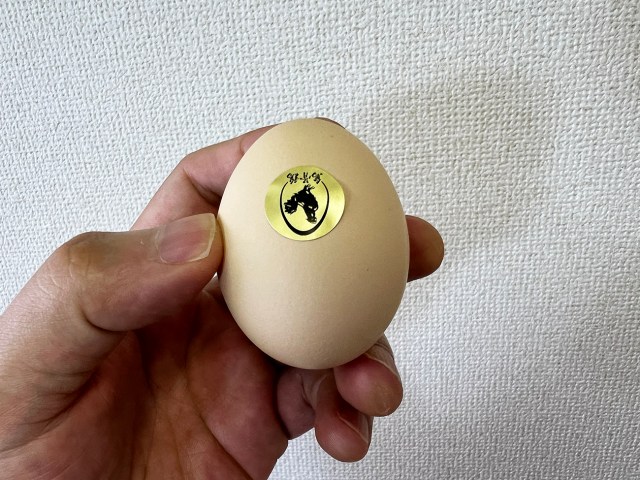
While browsing the upmarket Isetan department store in Shinjuku the other day, we came across a surprising product called Tenran Ukokkei Ran. Literally translating as “Tenran Silkie Chicken Eggs”, the two-pack came with the eye-popping price tag of 1,512 yen (US$10.40), making them 756 yen each.
▼ The brand name “Tenran” is only used for eggs sold by Kanazawa-based company Ukokkei from the Silkie chickens they raise under its management in Ishikawa Prefecture.
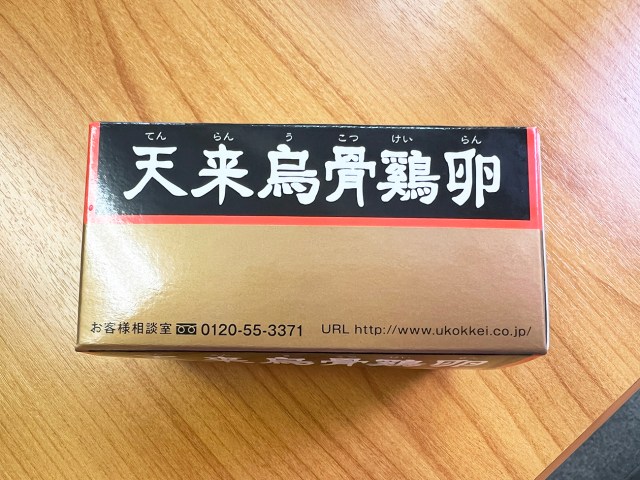
As silkie chickens are difficult to raise and produce fewer eggs than ordinary hens, the eggs are sold as a luxury product and gift item.
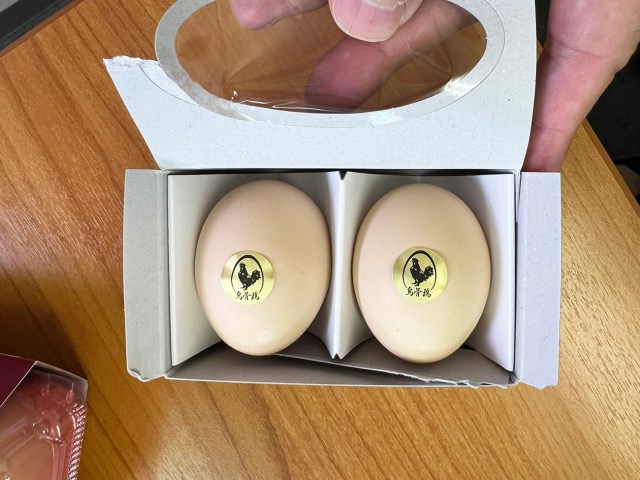
▼ Produced in 石川県 (Ishikawa Prefecture)
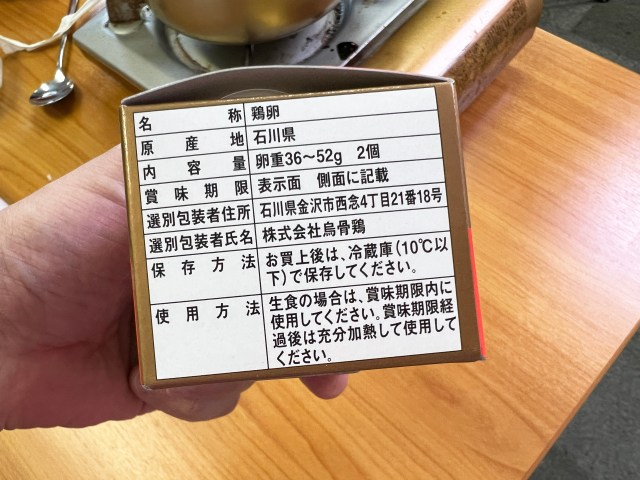
At this price point, these are eggs you wouldn’t want to drop, and thankfully we didn’t when we purchased them and took them back to the office for a taste test. In order to get a better understanding of why these eggs cost so much, we decided to compare them to an ordinary supermarket egg, so we picked up a regular 10-pack for 366 yen, which worked out to 36 yen per egg.
▼ Raising their hands for the taste test comparison were our Japanese-language reporters Seiji Nakazawa, Go Hatori and Mr Sato.

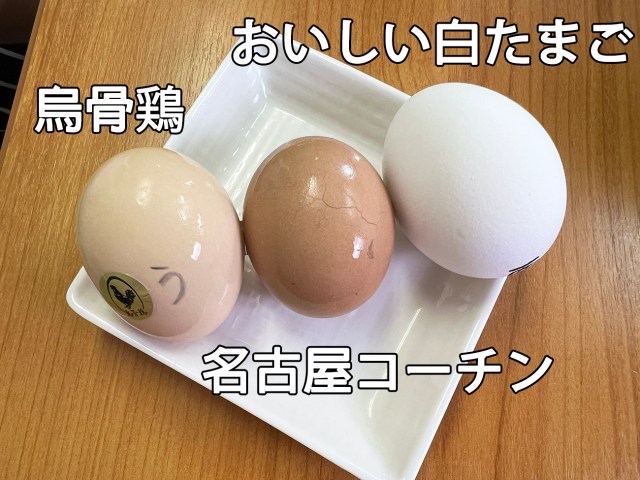
With the silkie chicken egg costing 21 times more than the regular chicken egg, our taste testers were keen to find out if the higher price equated to better flavour. To really put the eggs, and their palates, to the test, they decided to boil both types, while also adding another famous variety laid by a Nagoya Cochin chicken, a premium Japanese breed originating from Nagoya.
▼ Following Go’s advice, they placed the eggs in a pot of cold water before turning on the heat and boiling them for 10 minutes.
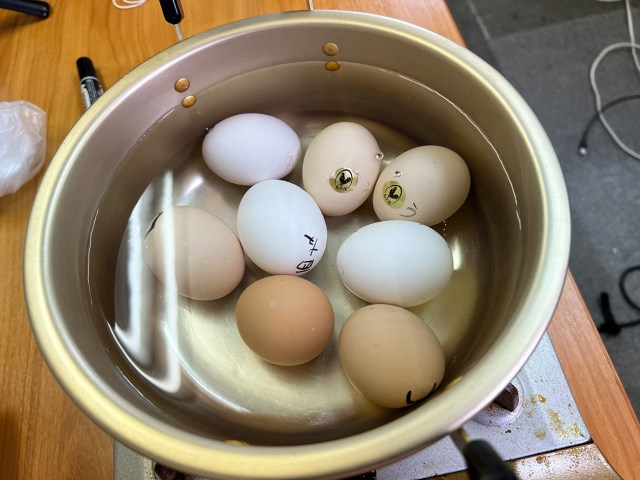
Exact cooking times can vary depending on the pot’s thermal conductivity, and after using the cheap stainless steel pot at the office, the boiling process ended up taking around 12 minutes.
▼ Taking the eggs out, our three reporters felt that the “Tenrai Ukokkei” eggs looked the best.
After peeling them all, there weren’t any obvious differences, apart from the fact that there were more marks on the silkie egg, leftover from the awkward peeling process. So now we have the 756-yen silkie egg on the left, the 36-yen regular egg on the right, and in the middle, the Nagoya Cochin, which cost 710 yen for a six-pack, making it 118 yen and placing it in the mid-tier range.
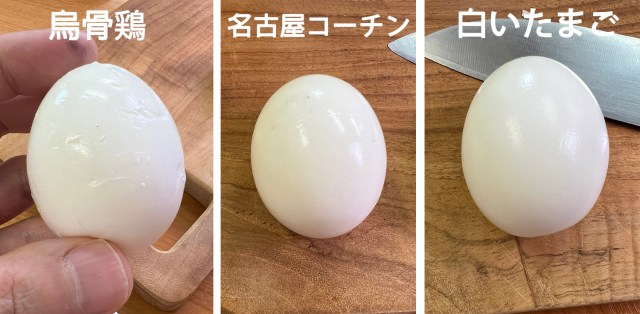
Biting into each of them, our reporters remarked that all three…tasted surprisingly identical.
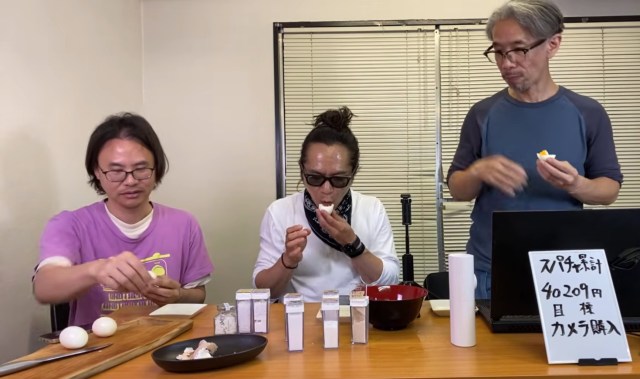
Seiji and Go were particularly confident that there was barely any difference between the eggs, saying they wouldn’t be able to tell them apart in a blind tasting. Even after trying them all with a pinch of salt, they weren’t able to identify any major differences in flavour or richness. However, from Mr Sato’s point of view, there was a distinction to be made, as he believed that the Tenran Ukokkei eggs had a uniquely springy yet delicate egg white that almost melted in the mouth. He also noted a clear difference in texture compared to the cheaper egg, but Seiji and Go couldn’t relate.
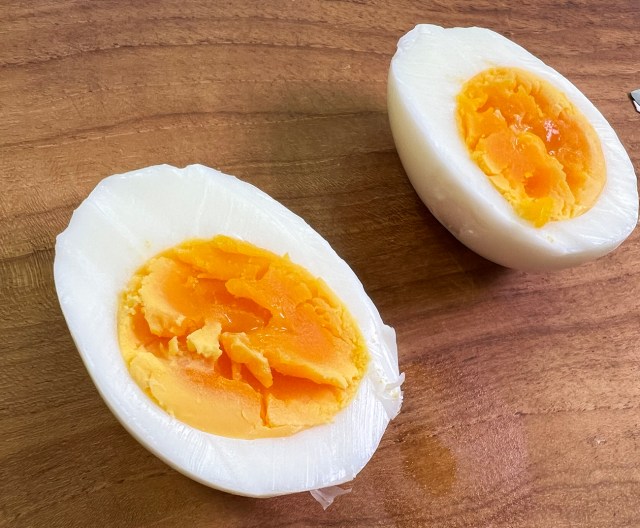
After some discussion, Go did admit that the Tenran Ukokkei egg reminded him slightly of pidan, or “century egg”, a traditional preserved egg that originated in China and spread to many parts of East and Southeast Asia.

Go wondered if it was the texture of the egg white that gave him that impression, suggesting that the main difference between the eggs lay in the mouthfeel of the outer layer. With Seiji unable to concur, it appeared that all three reporters had different opinions after the tasting, but one thing they could agree on was the fact that the taste of the yolk didn’t seem to differ all that much.
This was an interesting result, because our reporters usually judge an egg based on the flavour of the yolk, so they were surprised to find the egg white actually contributed a lot to the overall impression. Still, they did admit that the cooking method may have skewed the results somewhat, so they decided to try again, but this time with a raw tasting, by cracking the eggs over rice to make the popular Japanese comfort dish tamago kake gohan.
Like the boiled egg test, which was streamed live on the team’s YouTube channel, the raw egg comparison will also be livestreamed, this time on 17 June, as part of the new weekly livestreams that are scheduled to take place every Wednesday at 7:30 p.m. (JST).
▼ You can check out the boiled-egg livestream here.
If you’d like to see the trio give us their verdict on raw eggs, be sure to join the fun on Wednesday – they look forward to seeing you there!
Photos ©SoraNews24
● Want to hear about SoraNews24’s latest articles as soon as they’re published? Follow us on Facebook and Twitter!